Energy Transition Minerals Ltd
ETM Strikes Critical REE Gold in Greenland — With a Game-Changing Twist: Uranium Below the Legal Threshold
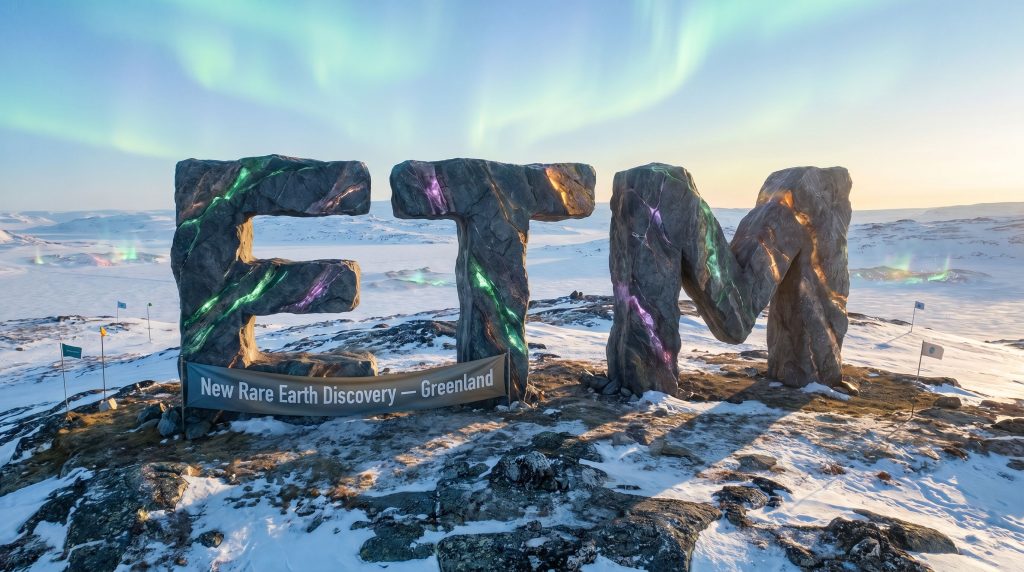
Energy Transition Minerals (ASX: ETM) has announced a major exploration breakthrough at its Kvanefjeld licence in south-western Greenland, uncovering ten previously unknown rare earth element (REE) mineralised zones — including an 1,800-metre-long trend where uranium concentrations fall below the critical 100 parts per million (ppm) threshold set out under Greenland's Uranium Act. The Energy Transition Minerals Kvanefjeld rare earth discovery in Greenland stems from the company's 2025 semi-regional field programme, representing a potentially pivotal development in ETM's long-running efforts to unlock one of the world's largest undeveloped rare earth deposits.
"The discovery of extensive REE mineralisation at surface associated with uranium values below Greenland's Uranium Act 100ppm threshold is a highly encouraging outcome from our 2025 exploration field season."
— Daniel Mamadou, Managing Director, Energy Transition Minerals Ltd
When big ASX news breaks, our subscribers know first
What the 2025 Field Season Uncovered
Between June and November 2025, ETM's technical team — comprising the company's Technical Lead, specialist REE consultants, and student geologists from the University of Copenhagen — conducted detailed geological mapping and rock chip sampling across under-explored areas within the Kvanefjeld exploration licence.
The programme delivered results that significantly exceed what the company had previously mapped in the region:
- 772 sites visited across the licence area
- 214 rock chip samples collected and dispatched to ALS Geochemistry laboratory in Ireland
- 10 new high-priority REE mineralised zones identified for the first time
- 1 new 1,800-metre mineralised trend characterised by REE grades above the deposit average and uranium below 100ppm
- 1 new trachyte-hosted REE target discovered via helicopter-based sampling at higher elevation
All samples were prepared and analysed at ALS Minerals Laboratory in Ireland using internationally recognised geochemical methods. Quality control included blind certified reference materials and blanks, with all standard results falling within two standard deviations of certified values.
The Numbers That Stand Out
Multiple rock chip samples returned grades that not only confirm mineralisation is present, but exceed the established average resource grade of the existing Kvanefjeld deposit — which stands at 10,900ppm TREO, 9,600ppm LREO, and 400ppm HREO (based on the 2016 Feasibility Study at 150ppm uranium cut-off).
Peak Sample Results
| Sample ID | Rock Type | TREO (ppm) | LREO (ppm) | HREO (ppm) | U (ppm) |
|---|---|---|---|---|---|
| KS-25-331 | Fenite (FEN) | 39,695 | 37,705 | 656 | 585 |
| KS-25-332 | Fenite (FEN) | 32,143 | 31,032 | 381 | 231 |
| KS-25-043 | Lujavrite (LUJ) | 25,187 | 22,619 | 688 | 582 |
| KS-25-169 | Lujavrite (LUJ) | 24,961 | 22,976 | 588 | 501 |
| KS-25-146 | Naujaite (NAU) | 19,424 | 9,412 | 4,017 | 509 |
How Many Samples Beat the Existing Resource Grade?
Of the 214 samples collected, a striking proportion surpassed the Kvanefjeld deposit's average resource grades:
| Metric | Samples Exceeding Resource Grade | Total Samples | Proportion |
|---|---|---|---|
| TREO (>10,900ppm) | 69 | 214 | ~32% |
| LREO (>9,600ppm) | 61 | 214 | ~29% |
| HREO (>400ppm) | 82 | 214 | ~38% |
The Critical Discovery: High REE Grades, Low Uranium
The most strategically significant finding is not simply the high REE grades — it is where those grades sit relative to uranium. Greenland's Uranium Act restricts exploration activities linked to uranium above 100ppm.
The identification of an 1,800-metre-long zone along the south-western margin of the Ilímaussaq Intrusive Complex, where REE mineralisation is strong and uranium concentrations are consistently below 100ppm, is therefore materially important to ETM's ability to pursue further exploration in Greenland.
Key metrics from the low-uranium trend include:
- Peak HREO value (U <100ppm zone): 1,989ppm HREO — sample KS-25-329
- Dysprosium (Dy₂O₃): up to 539ppm
- Terbium (Tb₄O₇): up to 86ppm
- Yttrium (Y₂O₃): up to 3,061ppm
- LREO along the trend: grades up to 18,816ppm, also with uranium below 100ppm
Additionally, sample KS-25-146 — a highly enriched fenite boulder found adjacent to Taseq Lake — returned some of the highest heavy REE values seen across the project:
- Dysprosium (Dy₂O₃): 1,112ppm
- Terbium (Tb₄O₇): 161ppm
- Yttrium (Y₂O₃): 5,994ppm
- LREO:HREO ratio of slightly greater than two — indicating exceptional heavy REE enrichment
While uranium in this particular sample exceeds 100ppm, the sample highlights the HREO potential of the fenite system more broadly, with the 1,800-metre trend itself maintaining uranium below the threshold.
Understanding the Geology: Why Fenites Naturally Separate REE from Uranium
What Is a Fenite?
A fenite is a metasomatic rock — meaning it has been chemically altered by hot, alkaline fluids rising from a cooling magma body deep in the earth. These fluids are rich in sodium, potassium, fluorine, carbon dioxide, and chloride, and they have the ability to both transport and deposit rare earth elements as they cool and react with surrounding rocks.
Why Do Fenites Concentrate REE While Removing Uranium?
This is the key scientific insight behind the Energy Transition Minerals Kvanefjeld rare earth discovery in Greenland. Rare earth elements travel efficiently in high-temperature alkaline fluids and rapidly precipitate when those fluids cool — making the fenite zone an effective "chemical trap" for REEs.
Uranium, however, behaves very differently. Under the oxidising conditions that accompany fenitisation, uranium shifts from an immobile form (U⁴⁺) into a highly soluble species (uranyl: UO₂²⁺) that forms stable complexes with carbonate in the fluid. Rather than precipitating with the REEs, uranium remains dissolved and is actively carried away from the alteration zone.
The investor-relevant takeaway is straightforward: the same geological process that concentrates REEs in this zone simultaneously strips uranium out of it. This natural geochemical decoupling means these targets can host high-grade REE mineralisation while remaining below the 100ppm uranium threshold central to Greenland's regulatory framework.
Glossary of Key Terms
| Term | Definition |
|---|---|
| TREO | Total Rare Earth Oxides — the sum of all rare earth element oxides including yttrium |
| LREO | Light Rare Earth Oxides — lanthanum, cerium, praseodymium, neodymium, samarium |
| HREO | Heavy Rare Earth Oxides — europium through lutetium, plus yttrium |
| Dysprosium (Dy) | A critical heavy REE essential for high-performance permanent magnets used in EVs and wind turbines |
| Terbium (Tb) | A scarce heavy REE used in green phosphors and high-strength magnets |
| Fenite | A metasomatically altered rock surrounding alkaline intrusions; an important REE trap |
| Trachyte | A fine-grained volcanic rock that can host REE mineralisation; noted host of the Dubbo REE deposit in NSW |
| ppm | Parts per million — the standard unit for expressing mineral grade in rock samples |
| Lujavrite | A key ore-forming rock in the Ilímaussaq Intrusive Complex; dominant host of Kvanefjeld REE mineralisation |
A New Target Type: Trachyte-Hosted REE Mineralisation
Beyond the fenite system, ETM's 2025 programme also identified a distinct new REE target — mineralised trachyte rocks at higher elevation within the licence area. These fine-grained, reddish-orange rocks have only recently become accessible as permanent ice and snow coverage has reduced in the area.
Key characteristics of the trachyte target include:
- Elevated niobium values up to 5,280ppm Nb
- REE mineralisation confirmed in both TREO and LREO
- Uranium values consistently below 100ppm
- Represents a geologically distinct target type from the lujavrite and naujaite units hosting the main Kvanefjeld deposit
Furthermore, the Dubbo REE-Zirconium-Niobium project in New South Wales, Australia — a globally significant REE deposit — is also hosted in trachyte, underlining the potential significance of this newly identified target type.
Exploration Licence: The Elephant in the Room
ETM has been transparent about the regulatory position facing the Kvanefjeld project. The Kvanefjeld exploration licence (MEL 2010/02) expired on 31 December 2025. The Greenlandic Ministry has indicated it intends to recommend that a renewal not be granted, on the basis that an exploitation licence cannot be issued under the current legislative framework.
The company's subsidiary, Greenland Minerals A/S (GM), is filing its formal consultation response and objection to the proposed denial on 15 June 2026. ETM and GM have stated they will take all relevant legal measures to preserve their rights.
Key context includes:
- The exploration licence had already been successfully extended once after the Uranium Act came into force — a precedent that ETM views as contradicting the current authorities' position
- The timing of a final decision from the Greenlandic government remains unclear
- Planned 2026 field activities — including helicopter-supported drilling and an airborne magnetic and radiometric survey — have been suspended pending licence resolution
- The 2025 field programme was completed in full prior to the licence expiry
The discovery of high-grade REE targets with uranium below 100ppm is directly relevant to the licence dispute, as it demonstrates that meaningful, uranium-compliant REE mineralisation exists within the licence area — which may carry weight in ongoing legal and regulatory discussions.
The Investment Thesis in Focus
The Energy Transition Minerals Kvanefjeld rare earth discovery in Greenland delivers several distinct layers of value for investors tracking the company's progress.
1. New exploration upside on a world-class platform
The Kvanefjeld project already hosts one of the largest undeveloped rare earth deposits in the world. The identification of 10 new mineralised zones — several with grades exceeding the existing resource average — confirms the broader prospectivity of the licence area is not yet fully understood.
2. A geologically credible path through Greenland's uranium restriction
The identification of an 1,800-metre-long surface trend with high REE grades and uranium below 100ppm is not simply an interesting scientific result — it is a strategically critical data point. It demonstrates that the project contains mineralisation outside the restrictions implied by the Uranium Act.
3. Heavy REE emphasis adds commercial relevance
Dysprosium and terbium are among the most commercially critical heavy rare earths for permanent magnet manufacturing — sectors experiencing sustained demand growth from electric vehicles and wind power generation. The presence of meaningful HREO grades across the new zones is, therefore, commercially significant.
4. Multiple project pillars beyond Kvanefjeld
ETM is not solely dependent on the Kvanefjeld outcome. The company is in the process of completing the acquisition of the Penouta Tin-Tantalum-Niobium Mine in Galicia, Spain, and holds early-stage positions in the Villasrubias Lithium-Tantalum Project in Spain and the Solo and Good Setting Lithium Projects in James Bay, Quebec. This diversification provides ongoing corporate activity regardless of the Kvanefjeld licence outcome.
What Comes Next
The immediate near-term focus for ETM centres on the licence dispute and its resolution. Beyond that, the 2025 exploration results lay the groundwork for a more extensive follow-up programme if and when access is restored.
| Upcoming Milestone | Details |
|---|---|
| Consultation response filing | GM to file formal objection to licence denial — 15 June 2026 |
| Greenlandic government final decision | Timing unclear; ETM and GM pursuing all legal avenues |
| 2026 field programme | Suspended pending licence resolution; planned activities include helicopter-supported drilling and airborne geophysical surveys |
| Penouta Mine acquisition | Ongoing — Spain-based tin-tantalum-niobium asset |
The next major ASX story will hit our subscribers first
Why Investors Should Keep Watching ETM
ETM occupies a rare position in the critical minerals landscape: it holds a direct interest in one of the largest undeveloped REE deposits globally, at a time when western supply chain diversification for rare earths — particularly heavy REEs for magnet manufacturing — is attracting sustained industrial and strategic attention.
The Energy Transition Minerals Kvanefjeld rare earth discovery in Greenland represents more than routine exploration results. The discovery of a geologically coherent, surface-outcropping, 1,800-metre REE trend with uranium below Greenland's legislative threshold is the kind of data that reshapes the narrative around a project that has faced considerable headwinds.
Whether that data proves to be a catalyst for licence renewal, legal resolution, or a renegotiated path forward, it materially strengthens ETM's technical and legal position. In addition, the emergence of a distinct trachyte-hosted target — a geological style that hosts some of the world's notable REE deposits — adds another dimension to the exploration story that has not previously featured at Kvanefjeld.
Key Takeaway
Energy Transition Minerals has positioned itself as the holder of a world-class REE asset, with new exploration data demonstrating high-grade, uranium-compliant mineralisation across an 1,800-metre surface trend. With a formal licence objection lodged, legal proceedings underway, and ten new REE targets awaiting follow-up drilling, the next 12 months of regulatory and exploration developments at Kvanefjeld deserve close attention from critical minerals investors.
Want to Be First When the Next Major Mineral Discovery Hits the ASX?
Discovery Alert's proprietary Discovery IQ model delivers real-time alerts on significant ASX mineral discoveries — including critical minerals and rare earth plays — instantly translating complex geological data into actionable investment insights for both short-term traders and long-term investors. Explore how historic discoveries have generated substantial returns on Discovery Alert's dedicated discoveries page, and begin your 14-day free trial today to position yourself ahead of the broader market.