August 3, 2026
The Engineering Revolution Behind Remote Mining Power Infrastructure
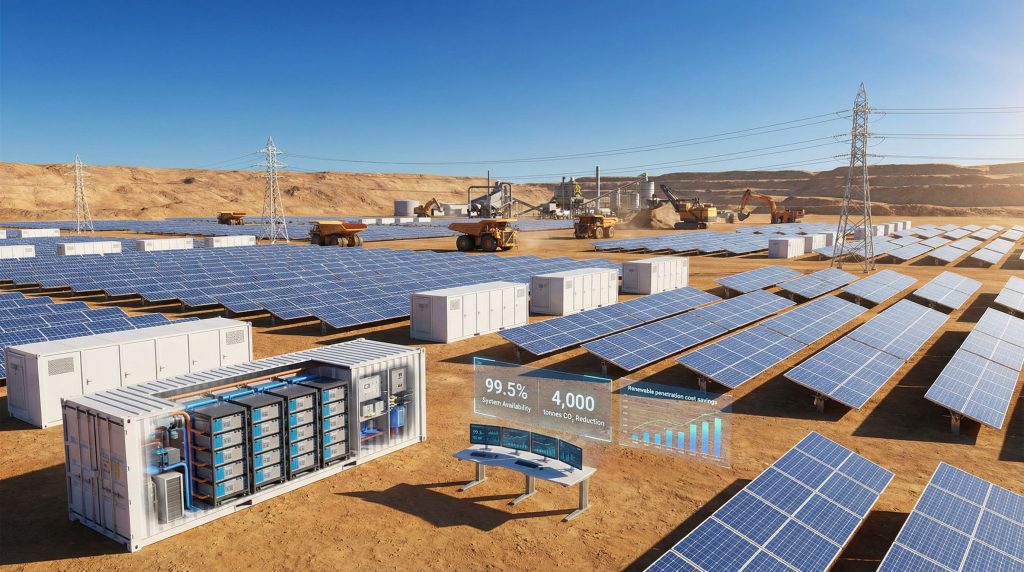
The transition toward sophisticated energy management systems in remote industrial operations represents a fundamental shift in how mining companies approach power generation and distribution. Traditional diesel-only systems, while reliable, have become increasingly costly and environmentally challenging as mining operations expand into more isolated locations. Modern Aggreko off-grid renewable hybrid architectures combine multiple generation technologies to create resilient, scalable energy solutions specifically engineered for the demanding requirements of continuous mining operations.
These integrated systems utilise advanced power management algorithms to coordinate between renewable energy sources, battery storage systems, and thermal backup generation. The coordination between these components creates a dynamic energy ecosystem that can adapt to variable operational demands whilst maintaining the reliability standards critical for mining technology evolution.
When big ASX news breaks, our subscribers know first
Advanced Hybrid System Architecture and Integration Technologies
Aggreko off-grid renewable hybrid systems represent a sophisticated approach to mining power infrastructure through their modular design philosophy. The core technology integrates multiple power generation sources into a single managed system capable of delivering consistent energy output regardless of environmental conditions. These off-grid hybrid power solutions demonstrate remarkable engineering innovation in challenging environments.
Primary System Components:
- Modular Solar Arrays: Scalable photovoltaic installations ranging from 4-30 MW capacity
- Battery Energy Storage: Advanced lithium-ion systems providing 2-16 MWh capacity
- Thermal Generation: Diesel or natural gas backup systems for continuous availability
- Smart Grid Management: Automated switching and load balancing technology
- Monitoring Infrastructure: Real-time performance tracking and predictive maintenance systems
The Build-Own-Operate-Maintain model transforms the traditional capital expenditure approach into an operational expense structure. This framework eliminates upfront infrastructure investments whilst transferring technical risk to specialised energy providers. Mining companies benefit from predictable energy costs through long-term service agreements that include comprehensive maintenance and system optimisation services.
Operational Risk Transfer Benefits:
- Complete elimination of capital expenditure for power infrastructure
- Fixed operational costs through structured service agreements
- Professional maintenance reducing system downtime risks
- Technology upgrade pathways without additional capital requirements
Dynamic Energy Management and Optimisation Protocols
The sophisticated energy hierarchy within hybrid systems creates multiple operational advantages through intelligent load management and generation optimisation. Primary solar generation provides the foundation during daylight hours, delivering zero-fuel-cost electricity directly to mining operations. This approach aligns with broader energy transition strategies across the mining industry.
Battery storage systems function as the critical bridge between variable renewable generation and consistent operational demands. Advanced battery management systems predict energy requirements based on operational schedules and weather forecasting, optimising charge and discharge cycles to maximise renewable energy utilisation.
Generation Priority Framework:
- Solar Primary: Maximum utilisation during optimal irradiation periods
- Battery Dispatch: Strategic energy release during peak demand periods
- Thermal Backup: Guaranteed availability during renewable energy shortfalls
Performance monitoring indicates fuel consumption reductions between 20-40% compared to traditional diesel-only systems. These savings translate to operational cost reductions of 1.5-2.5 million litres annually for typical mining installations. Carbon emissions decrease by approximately 4,000-6,000 tonnes per year through reduced diesel consumption and improved operational efficiency.
The scalable nature of hybrid systems allows capacity expansion as mining operations grow or change. Furthermore, modular components can be relocated as mine development progresses, providing flexibility unavailable in traditional fixed power infrastructure.
Performance Benchmarking and Measurement Standards
Comprehensive performance tracking across hybrid installations reveals consistent operational benefits across diverse mining environments and operational profiles. Industry data demonstrates measurable improvements across multiple performance indicators when compared to conventional power generation approaches.
| Performance Indicator | Typical Achievement Range | Measurement Protocol |
|---|---|---|
| Renewable Energy Integration | 35-65% of total generation | Annual kWh renewable/total kWh |
| Fuel Consumption Reduction | 1.8-2.8 million litres/year | Baseline comparison analysis |
| Carbon Footprint Reduction | 4,500-7,000 tonnes CO₂/year | Emissions calculation methodology |
| System Uptime | 99.3-99.8% | Continuous availability monitoring |
| Financial Payback Period | 4-8 years | Total cost of ownership analysis |
Measurement Methodology Standards:
- Renewable energy penetration calculated through integrated meter systems
- Fuel savings verified against historical consumption baselines
- Emissions reductions validated using standardised carbon accounting protocols
- System availability tracked through automated monitoring infrastructure
- Economic returns evaluated using discounted cash flow analysis
These performance metrics require independent verification through third-party auditing to ensure accuracy and reliability. In addition, standardised measurement protocols enable meaningful comparison between installations and operational environments.
Optimal Site Characteristics and Market Segmentation
Mining operations achieving the greatest benefits from hybrid power systems share specific operational and geographic characteristics that maximise the effectiveness of renewable energy integration. Understanding these factors enables informed decision-making regarding system deployment. Recent projects like Australia's largest hybrid power facility demonstrate the scale of these opportunities.
Critical Site Assessment Factors:
- Location: Remote sites beyond economical grid extension range
- Power Demand: Continuous requirements between 5-50 MW capacity
- Operational Timeline: Minimum 5-year remaining mine life
- Environmental Conditions: Solar irradiation exceeding 4 kWh/m²/day
- Corporate Strategy: ESG commitments requiring emissions reduction
Industry Sector Applications:
- Gold Mining: Western Australian operations with consistent power demands
- Copper Extraction: Remote processing facilities requiring reliable power
- Coal Seam Gas: Consistent power requirements for extraction equipment
- Iron Ore Processing: Isolated facilities with high energy consumption
Market analysis indicates approximately 40% of global mining operations meet the basic criteria for hybrid system deployment. However, current adoption rates remain below 15%, indicating significant expansion potential as technology costs continue declining and environmental regulations strengthen.
Geographic distribution shows the highest concentration of suitable operations in Australia, parts of Africa, and remote regions of North and South America where grid infrastructure remains limited and solar resources abundant.
Battery Storage Technology and Grid Stabilisation
Advanced lithium-ion battery systems within mining hybrid installations provide multiple operational functions beyond simple energy storage. These systems serve as dynamic grid management tools capable of responding to rapid changes in power demand whilst maintaining system stability. Modern battery recycling innovation ensures sustainable lifecycle management for these critical components.
BESS Operational Functions:
- Load Levelling: Smooths power fluctuations from variable mining equipment
- Peak Management: Reduces thermal generator operation during high-demand periods
- Reserve Capacity: Provides instantaneous backup for critical mining systems
- Frequency Regulation: Maintains power quality within operational specifications
Current lithium-ion technology delivers energy densities enabling compact installations suitable for space-constrained mining sites. Round-trip efficiency ratings exceed 90% for quality systems, minimising energy losses during charge and discharge cycles.
Technical Specifications for Mining Applications:
- Operational temperature ranges from -20°C to +60°C for extreme environments
- Cycle life ratings exceeding 6,000 cycles at 80% depth of discharge
- Response times under 100 milliseconds for grid stabilisation functions
- Modular expansion capability supporting operational growth
Thermal management systems protect battery performance in harsh mining environments through active cooling and heating systems. Consequently, advanced battery management systems monitor individual cell performance and optimise charging patterns to maximise operational lifespan, typically achieving 12-18 years of productive service.
The next major ASX story will hit our subscribers first
Economic Analysis and Financial Performance Modelling
Detailed financial analysis reveals significant cost advantages for hybrid systems across multiple economic scenarios and operational profiles. The elimination of upfront capital requirements through the BOOM model fundamentally changes the economic equation for mining companies.
| Cost Category | Traditional Diesel | Hybrid Solution | Improvement Potential |
|---|---|---|---|
| Energy Generation | $0.18-0.28/kWh | $0.10-0.18/kWh | 25-35% cost reduction |
| System Maintenance | High wear rates | Distributed wear | 15-25% cost reduction |
| Capital Requirements | Moderate investment | Operational model | Capital preservation |
| Regulatory Compliance | Increasing costs | Reduced exposure | Variable improvement |
Financial Performance Indicators:
- Internal Rate of Return: 15-22% for typical mining installations
- Net Present Value: Positive returns within 4-6 years
- Levelised Cost of Energy: 20-30% below diesel-only alternatives
- Cash Flow Impact: Immediate operational savings from reduced fuel consumption
Economic sensitivity analysis indicates robust financial performance across varied fuel price scenarios and operational profiles. Rising diesel costs and carbon pricing mechanisms strengthen the financial case for hybrid system adoption.
The BOOM model structure provides predictable energy costs through long-term service agreements, enabling more accurate financial planning and budget management for mining operations.
What Are the Regulatory Drivers for Hybrid Power Adoption?
Environmental regulations increasingly favour clean energy adoption in mining operations through carbon pricing mechanisms and emissions reporting requirements. Mining companies face growing pressure from investors, regulators, and communities to demonstrate environmental responsibility.
Regulatory Drivers Supporting Hybrid Adoption:
- Carbon pricing policies in major mining jurisdictions
- Scope 1 and Scope 2 emissions reporting requirements
- ESG performance metrics affecting capital access
- Environmental impact assessment preferences for cleaner technologies
Compliance benefits extend beyond emissions reduction to include enhanced sustainability reporting capabilities and improved stakeholder relationships. Mining companies utilising hybrid systems demonstrate measurable progress toward environmental targets whilst maintaining operational efficiency.
Future regulatory trends indicate strengthening environmental requirements and potential penalties for high-emission operations. Therefore, hybrid power systems provide future-proofing against evolving regulatory landscapes whilst delivering immediate operational benefits.
Implementation Challenges and Engineering Solutions
Deploying Aggreko off-grid renewable hybrid systems in mining environments requires addressing unique technical challenges related to equipment variability, environmental extremes, and operational reliability requirements. Modern AI-driven optimization techniques help address many of these complexities.
Primary Engineering Challenges:
- Variable Load Management: Mining equipment creates highly unpredictable power demand patterns
- Environmental Resilience: Systems must operate reliably in dust, heat, and remote conditions
- Integration Complexity: Multiple generation sources require sophisticated coordination
- Maintenance Access: Remote locations complicate routine maintenance and emergency repairs
Advanced Solution Strategies:
- Predictive load management algorithms utilising historical operational data
- Ruggedised equipment designs meeting industrial environmental standards
- Redundant system architectures preventing single points of failure
- Remote monitoring capabilities enabling proactive maintenance scheduling
Advanced power management systems utilise machine learning algorithms to predict power demand patterns based on operational schedules and equipment utilisation. These systems optimise energy generation and storage to minimise costs whilst ensuring reliability.
Future Technology Integration and Development Pathways
Emerging technology trends indicate expanding capabilities for mining hybrid systems through integration of additional renewable sources and advanced energy management technologies. The development of battery-grade lithium refinement capabilities supports this technological evolution.
Technology Development Areas:
- Wind Integration: Adding wind turbines to create tri-generation systems
- Hydrogen Production: Utilising excess renewable capacity for hydrogen generation
- AI Optimisation: Machine learning algorithms for predictive energy management
- Microgrid Networks: Interconnected systems serving multiple mining operations
Future performance targets project 70%+ renewable energy penetration by 2030 through improved storage technology and generation forecasting. Advanced hybrid configurations may achieve carbon-neutral mining operations through comprehensive renewable integration and efficiency improvements.
Integration with autonomous mining equipment creates opportunities for coordinated power and operational optimisation, potentially reducing total energy consumption whilst maintaining production levels.
Strategic Evaluation Framework for Mining Companies
Mining companies considering hybrid power implementation require comprehensive evaluation frameworks addressing technical, financial, and strategic considerations specific to their operational contexts. Understanding the importance of Aggreko off-grid renewable hybrid solutions requires careful assessment of multiple factors.
Technical Evaluation Criteria:
- Current and projected power demand analysis
- Site-specific renewable resource assessment
- Existing infrastructure compatibility evaluation
- Operational flexibility and expansion requirements
Financial Assessment Framework:
- Total cost of ownership modelling over mine life
- Capital requirement optimisation through service models
- Risk allocation preferences between company and service provider
- Performance guarantee structures and service level agreements
Strategic Alignment Considerations:
- Corporate ESG commitments and sustainability targets
- Regulatory compliance requirements in operating jurisdictions
- Stakeholder expectations regarding environmental performance
- Long-term energy strategy integration with operational planning
Successful implementation requires detailed site assessment, financial modelling, and stakeholder alignment to ensure optimal system configuration and performance outcomes.
This analysis is based on general industry trends and publicly available information. Mining companies should conduct detailed feasibility studies specific to their operational requirements and consult with qualified engineering and financial professionals before making implementation decisions.
Ready to Capitalise on the Next Mining Technology Breakthrough?
Discovery Alert's proprietary Discovery IQ model delivers instant notifications when ASX-listed companies announce significant technological advances in mining power infrastructure, enabling subscribers to identify actionable investment opportunities before the broader market recognises their potential. Begin your 14-day free trial today to position yourself ahead of emerging trends transforming the mining industry.