May 19, 2026
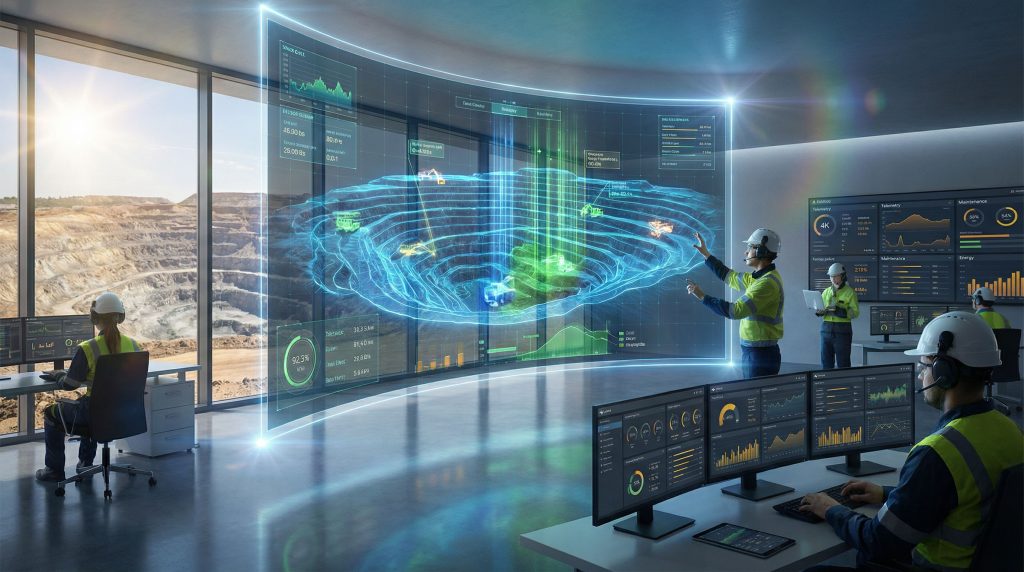
The mining industry stands at the threshold of a technological revolution, where the convergence of artificial intelligence, IoT sensors, and advanced analytics creates unprecedented opportunities for operational transformation. As global demand for critical minerals intensifies and environmental regulations tighten, mining companies face mounting pressure to optimise efficiency while minimising ecological impact. Traditional operational approaches, relying on reactive maintenance strategies and static planning models, increasingly prove inadequate for meeting these complex challenges. Enhancing mining operations with digital twin solutions emerges as a transformative approach, offering mining operations sophisticated virtual modelling capabilities that bridge the gap between physical assets and data‑driven mining operations.
Advanced Virtual Modelling Systems Revolutionising Mining Infrastructure
Digital twin solutions represent far more than sophisticated three-dimensional visualisations of mining assets. These comprehensive virtual environments integrate multiple technological layers to create dynamic operational ecosystems that continuously evolve alongside their physical counterparts. The architecture encompasses real-time data acquisition networks utilising distributed IoT sensor arrays, edge computing platforms for immediate data processing, and machine learning algorithms that identify patterns invisible to traditional monitoring approaches.
Core technological components powering modern digital twin systems include:
- Distributed sensor networks capturing temperature, vibration, pressure, and chemical composition data across mining sites
- Edge computing infrastructure processing data locally to reduce latency and bandwidth requirements
- Physics-based simulation engines modelling complex geological and mechanical behaviours
- Machine learning platforms identifying predictive patterns and operational anomalies
- Interactive visualisation interfaces presenting complex data in intuitive, actionable formats
The integration of these technological elements creates intelligent monitoring systems capable of processing thousands of data points per second, generating insights that would require weeks of traditional analysis. Unlike static models that represent conditions at specific moments, digital twins continuously adapt and refine their understanding as new information becomes available, creating ever-improving operational intelligence.
Furthermore, the sophistication of these systems aligns with broader mining industry evolution trends that emphasise technological advancement as a core competitive differentiator.
Real-Time Integration Architecture and Processing Capabilities
Modern mining digital twins operate through sophisticated data fusion processes that combine heterogeneous information sources into unified operational models. Sensor data from equipment monitoring systems integrates with geological surveys, historical production records, and environmental monitoring systems to create comprehensive operational pictures. This integration process requires advanced data management platforms capable of handling diverse data formats, temporal frequencies, and quality variations inherent in mining environments.
The computational architecture supporting these systems typically employs hybrid cloud-edge computing models where time-critical processing occurs at edge locations near mining assets, while complex analytics and long-term trend analysis leverage cloud-based computational resources. This distributed approach enables sub-second response times for critical safety alerts while maintaining the computational power necessary for complex optimisation algorithms.
Data quality assurance represents a critical aspect of digital twin reliability. Mining environments subject sensors to extreme conditions including temperature fluctuations, dust exposure, and mechanical vibration that can compromise data accuracy. Advanced digital twin platforms incorporate automated data validation algorithms that identify sensor drift, calibration errors, and environmental interference, ensuring that operational decisions rest on reliable information foundations.
When big ASX news breaks, our subscribers know first
Dynamic Resource Management Through Continuous Geological Modelling
Traditional mine planning operates under significant constraints imposed by static geological models developed during initial exploration phases. These models, while representing the best available information at the time of creation, remain largely unchanged throughout mine life except during scheduled remodelling exercises. Digital twin-enabled dynamic modelling fundamentally transforms this approach by creating geological models that continuously evolve as mining operations expose new geological features and production data reveals ore characteristics.
Adaptive mine design processes enabled by digital twins analyse real-time geological data to optimise extraction sequences, adjust processing parameters, and modify infrastructure development plans. This continuous optimisation capability proves particularly valuable in complex ore bodies where grade distribution varies significantly across the deposit. As mining advances expose new geological information, the digital twin immediately incorporates this data to refine grade estimates, adjust mine plans, and optimise resource allocation decisions.
In addition, the integration of 3D geological modeling capabilities enhances the precision of these dynamic systems, enabling more accurate resource estimation and extraction planning.
Processing Optimisation Through Real-Time Ore Characterisation
Processing plants typically consume 40-60% of total mine energy, making optimisation of these operations critical for both economic and environmental performance. Digital twin systems enable real-time optimisation by continuously analysing ore characteristics including grade, hardness, and mineralogical composition, then automatically adjusting processing parameters to maximise recovery while minimising energy consumption.
| Optimisation Parameter | Traditional Control | Digital Twin Enhancement | Typical Improvement |
|---|---|---|---|
| Grinding Circuit Efficiency | Manual adjustments based on periodic sampling | Real-time optimisation based on continuous ore analysis | 8-15% energy reduction |
| Flotation Recovery | Standard reagent schedules | Dynamic reagent dosing based on ore chemistry | 3-7% recovery improvement |
| Throughput Management | Fixed processing rates | Variable throughput optimisation | 12-20% capacity increase |
| Water Usage | Standard consumption patterns | Recycling optimisation based on quality monitoring | 15-25% water savings |
Real-time grade control systems integrate multiple analytical technologies including X-ray fluorescence spectroscopy, near-infrared analysis, and automated sampling to provide immediate feedback on ore quality. This immediate characterisation enables dynamic blending strategies where different ore sources are combined in optimal proportions to maintain consistent feed quality to processing plants, reducing variability and improving overall recovery performance.
Environmental impact modelling capabilities built into advanced digital twins track water consumption, energy usage, and emission generation across all mining operations. This comprehensive monitoring enables operations to optimise not just for maximum production but for production relative to environmental cost, supporting sustainability objectives while maintaining economic performance.
Predictive Asset Management Transforming Equipment Reliability
Equipment failures represent one of the most significant operational risks in mining, often resulting in costly production interruptions and safety hazards. The capital-intensive nature of mining equipment, where individual machines may cost millions of dollars, makes equipment availability critical for operational success. Digital twin-enabled predictive maintenance transforms equipment management from reactive repair strategies to proactive intervention programmes.
According to industry research from Nokia, mining operations implementing comprehensive digital twin solutions achieve average maintenance cost reductions of 15-25% and unplanned downtime decreases of 20-35%.
Advanced condition monitoring systems continuously track critical equipment parameters including vibration signatures for rotating machinery, thermal patterns for electrical systems, hydraulic fluid analysis for contamination detection, and structural stress monitoring for large-scale equipment. Machine learning algorithms analyse these multi-parameter data streams to identify subtle patterns indicating developing equipment problems long before traditional monitoring approaches would detect issues.
However, the implementation of AI in mining innovation extends beyond predictive maintenance to encompass comprehensive operational optimisation across all mining functions.
What Are the Key Benefits of Failure Prediction and Intervention Optimisation?
Predictive analytics algorithms process historical failure data, operational conditions, and real-time sensor information to generate failure probability assessments for individual equipment components. These assessments include confidence intervals and risk evaluations that enable maintenance teams to optimise intervention timing, balancing the costs of premature maintenance against the risks of unexpected failures.
Spare parts demand forecasting represents another critical application where digital twins analyse equipment health data, maintenance schedules, and usage patterns to predict component replacement requirements. This capability enables operations to optimise inventory levels, reducing carrying costs while ensuring critical parts availability when needed.
The integration of digital maintenance workflows enables maintenance teams to access complete equipment histories, manufacturer specifications, and predictive assessments through mobile interfaces during field work. This integration ensures that maintenance decisions incorporate all available information, improving intervention effectiveness and reducing repeat failures.
Performance degradation tracking enables operations to monitor gradual equipment deterioration over time, identifying optimal replacement timing that maximises asset utilisation while minimising failure risks. This capability proves particularly valuable for major equipment investments where replacement decisions involve substantial capital commitments and long lead times.
Safety Enhancement Through Comprehensive Risk Monitoring
Mining operations face inherent safety risks requiring sophisticated monitoring and response systems to protect personnel and assets. Digital twin technology enhances safety management through comprehensive risk assessment capabilities and real-time hazard monitoring systems that provide early warning of developing safety threats.
Geotechnical monitoring systems integrate distributed sensor networks, satellite imagery analysis, and ground-based measurement systems to continuously assess slope stability, ground movement, and structural integrity. These systems prove particularly critical in open-pit operations where slope failures can result in catastrophic consequences, and in underground operations where ground control failures threaten personnel safety.
How Do Emergency Response and Training Applications Work?
Virtual emergency response systems created through digital twin technology enable comprehensive training programmes where personnel practice emergency procedures in realistic virtual environments without exposure to actual hazards. These training systems can simulate various emergency scenarios including equipment failures, geological instabilities, and hazardous material incidents.
Evacuation route optimisation algorithms analyse real-time conditions including air quality, structural integrity, and equipment status to identify optimal evacuation paths during emergency situations. This dynamic optimisation capability ensures that evacuation procedures adapt to actual conditions rather than relying on predetermined routes that may be compromised during emergencies.
Remote operations capabilities enabled by digital twins reduce personnel exposure to hazardous areas by allowing equipment operation from secure control centres. This capability proves particularly valuable in operations involving toxic materials, unstable ground conditions, or extreme environmental conditions where personnel safety would be at risk.
Incident reconstruction and analysis capabilities built into digital twin systems enable detailed investigation of safety incidents by providing comprehensive data on conditions leading up to events. This analytical capability supports root cause analysis and prevention strategy development, contributing to continuous safety improvement programmes.
Strategic Implementation Frameworks for Mining Organisations
Successful digital twin implementation requires strategic planning approaches that align technology deployment with operational objectives and organisational capabilities. The complexity of mining operations and the scale of digital twin systems necessitate phased implementation strategies that demonstrate value while building organisational capability.
| Implementation Phase | Duration | Key Deliverables | Success Metrics |
|---|---|---|---|
| Assessment and Strategy Development | 3-6 months | Business case, technology architecture, implementation roadmap | ROI projections, stakeholder alignment |
| Pilot System Deployment | 6-12 months | Limited-scope digital twin, proof of concept results | Performance improvements, user adoption |
| Scaled Implementation | 12-24 months | Full operational system, integrated workflows | Operational efficiency gains, cost reductions |
| Advanced Optimisation | 24+ months | AI-enhanced capabilities, autonomous operations | Competitive advantage, industry leadership |
Technology integration challenges require careful attention to existing system compatibility, data quality requirements, and cybersecurity considerations. Mining operations typically operate diverse equipment from multiple manufacturers with varying degrees of digital capability, requiring flexible integration architectures that accommodate heterogeneous systems while ensuring data consistency and reliability.
Consequently, the alignment of these implementation frameworks with sustainable mining transformation initiatives becomes essential for long-term operational success and environmental stewardship.
What About Organisational Change Management and Capability Development?
Digital transformation success depends heavily on organisational readiness and change management effectiveness. Mining organisations must develop digital literacy capabilities across operational, engineering, and management levels while maintaining focus on core mining competencies. This capability development requires comprehensive training programmes, performance measurement systems, and cultural changes that embrace data-driven decision making.
Cross-functional collaboration becomes critical as digital twin systems blur traditional boundaries between operational, maintenance, engineering, and planning functions. Successful implementations require integrated team structures where personnel from different disciplines work together to optimise overall system performance rather than individual functional objectives.
Performance measurement frameworks must evolve to capture the full value delivered by digital twin systems, including quantifiable benefits such as maintenance cost reductions and productivity improvements, as well as strategic advantages such as improved risk management and enhanced decision-making capabilities.
The next major ASX story will hit our subscribers first
Emerging Technologies Shaping Future Mining Operations
The evolution of digital twin technology continues accelerating through advances in artificial intelligence, quantum computing, and immersive visualisation technologies. Next-generation platforms will incorporate capabilities that further enhance mining operational excellence and enable new approaches to resource extraction and processing.
Augmented reality integration will provide mining personnel with immersive interfaces that overlay digital twin information onto physical environments, enabling intuitive interaction with complex operational data. This integration will prove particularly valuable for maintenance activities, where technicians can access equipment histories, diagnostic information, and repair procedures through head-mounted displays while working on physical assets.
Autonomous decision-making capabilities powered by advanced AI algorithms will enable digital twins to automatically implement operational optimisations within defined parameters, reducing the need for human intervention in routine optimisation tasks while maintaining oversight for critical decisions.
What Does Industry-Wide Transformation and Collaborative Innovation Look Like?
Standardisation initiatives across the mining industry will enable digital twin systems from different vendors to share data and insights, creating industry-wide optimisation opportunities. These standards will facilitate benchmarking programmes where mining companies can compare performance metrics and share best practices while maintaining competitive differentiation.
Supply chain integration will extend digital twin capabilities beyond individual mining operations to encompass entire value chains from exploration through final product delivery. This integration will enable end-to-end optimisation and enhanced traceability capabilities that support sustainability and quality assurance requirements.
Collaborative research initiatives between mining companies, technology vendors, and academic institutions will accelerate innovation cycles and ensure that digital twin development addresses real operational challenges. These partnerships will drive development of specialised capabilities for unique geological conditions, processing requirements, and operational constraints.
Research conducted by Worley demonstrates that the transformation potential of digital twin technology in mining extends far beyond operational efficiency improvements, enabling fundamental changes in how the industry approaches resource extraction, environmental stewardship, and workforce safety.
As mining operations worldwide face increasing complexity and regulatory requirements, enhancing mining operations with digital twin solutions represents both a strategic opportunity and competitive necessity. Organizations that successfully implement these advanced systems will establish significant advantages in operational efficiency, safety performance, and environmental sustainability while positioning themselves for continued success in an increasingly technology-driven industry.
Please note that this article contains forward-looking statements and analysis based on current industry trends. Actual implementation results may vary based on specific operational conditions, technology maturity, and organisational capabilities. Readers should conduct thorough due diligence before making technology investment decisions.
Are You Ready to Invest in the Next Major Mineral Discovery?
Discovery Alert instantly alerts investors to significant ASX mineral discoveries using its proprietary Discovery IQ model, turning complex mineral data into actionable insights. Begin your 14-day free trial today and position yourself ahead of the market while mining companies leverage advanced digital twin technologies to unlock new resource potential.