
June 12, 2026
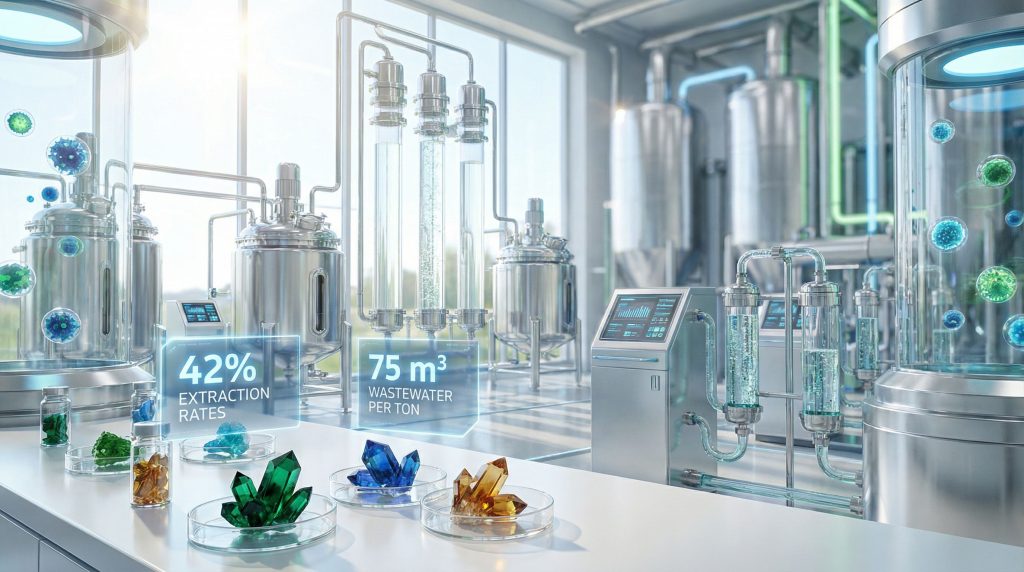
Environmental Impact of Traditional REE Extraction
Traditional rare earth processing generates substantial environmental challenges that drive the urgent need for sustainable alternatives. Conventional acid leaching operations produce toxic waste streams requiring decades of active management, while radioactive byproducts from thorium-bearing minerals create long-term liability concerns for operators and host communities.
Water contamination represents one of the most persistent issues in conventional extraction. Traditional solvent extraction systems typically require 8-12 processing stages, each generating aqueous waste streams containing residual acids, dissolved metals, and organic solvents. The cumulative water impact extends beyond immediate processing, as tailings facilities require ongoing monitoring and treatment to prevent groundwater contamination.
Radioactive byproduct challenges vary significantly based on ore mineralogy. Monazite-bearing deposits contain naturally occurring thorium-232 and uranium-238, creating radioactive waste streams that require specialised handling and long-term storage. In contrast, bastnasite-derived rare earths generate minimal radioactive waste, highlighting how feedstock selection influences environmental compliance costs and operational complexity.
Energy consumption in traditional processing reflects the high-temperature, high-pressure conditions required for efficient acid leaching and solvent extraction. These energy-intensive operations contribute substantial carbon emissions while requiring expensive infrastructure to maintain safety standards and environmental containment.
The cumulative environmental burden of traditional processing has prompted regulatory tightening across Western jurisdictions. Furthermore, environmental compliance costs now represent 15-25% of total operational expenses for new rare earth facilities.
When big ASX news breaks, our subscribers know first
Defining Green Processing Technologies
Green rare earth processing encompasses multiple technological approaches unified by their emphasis on reducing environmental impact while maintaining commercial viability. These methods prioritise benign reagent utilisation, energy efficiency improvements, and circular economy principles to address the systematic challenges of traditional extraction.
Benign reagent utilisation forms the foundation of sustainable processing. For instance, this approach replaces harsh mineral acids with food-grade organic acids, biological agents, and non-toxic solvents. This transition eliminates major waste streams while reducing worker safety hazards and regulatory compliance costs associated with hazardous material handling.
Biological agent integration leverages engineered microorganisms and natural proteins to perform selective rare earth separation at ambient temperature and near-neutral pH conditions. These systems operate through biological chelation and selective binding rather than aggressive chemical dissolution, dramatically reducing energy inputs and chemical waste generation.
Circular economy principles drive the utilisation of secondary feedstock sources, including electronic waste, coal ash, and mining residues. This approach simultaneously addresses waste disposal challenges while creating new revenue streams from materials previously considered industrial byproducts. Additionally, these waste management innovations represent a key component of sustainable processing systems.
Energy efficiency improvements through process optimisation focus on room-temperature operations, closed-loop solvent recovery, and integrated processing systems. These innovations reduce both operational costs and carbon emissions while improving overall process economics through comprehensive renewable mining solutions.
The integration of digital process controls enables real-time monitoring and optimisation of green processing parameters. However, this ensures consistent performance while minimising resource consumption and waste generation.
Supercritical CO2 Technology Applications
Supercritical carbon dioxide extraction represents a promising avenue for sustainable rare earth processing, particularly for secondary feedstock sources like coal ash and phosphate byproducts. This technology leverages the unique properties of supercritical CO2 to achieve selective dissolution without toxic reagents or high-temperature operations.
The process mechanics involve combining water, supercritical CO2, and food-grade citric acid to create a selective extraction medium. Supercritical CO2 (above 31.1°C and 73.8 bar) exhibits both liquid and gas properties, enabling enhanced mass transfer and selective solvation of rare earth complexes formed with citric acid chelation.
Research conducted at national laboratories demonstrates extraction rates around 40-45% from coal ash feedstock. Consequently, these figures represent selective recovery rather than total rare earth extraction. The process shows particular effectiveness for light rare earth elements while facing technical challenges with heavy rare earth recovery.
Economic advantages emerge from the elimination of toxic waste streams and reduced infrastructure requirements for chemical containment and treatment. The food-grade nature of citric acid and the recyclable properties of CO2 significantly reduce regulatory compliance costs compared to traditional acid processing.
Environmental benefits extend beyond reagent replacement to include carbon utilisation opportunities. Moreover, CO2 sourcing from industrial point sources enables circular carbon integration, potentially offsetting emissions from other industrial processes while providing feedstock for rare earth extraction.
Scale-up considerations involve optimising pressure vessels, CO2 recovery systems, and continuous processing capabilities for industrial throughput. Current research focuses on improving extraction kinetics and developing integrated separation systems for multi-element recovery.
Biomining Through Engineered Organisms
Engineered biological systems offer innovative approaches to rare earth extraction from waste streams and low-grade sources through selective microbial processing. These systems leverage genetic engineering to create organisms capable of producing specific chelating compounds or binding proteins for targeted rare earth recovery.
Viral engineering approaches utilise modified bacteriophages displaying rare earth-binding proteins on their surface structures. These engineered viruses selectively bind rare earth cations from solution, enabling separation through simple filtration or centrifugation. Recovery occurs through pH adjustment or temperature manipulation to release bound elements while regenerating the biological agents.
Optimal operating conditions for most biomining systems involve pH ranges of 4-6 for initial binding. Furthermore, elemental release occurs at pH below 2 or elevated temperatures above 60°C. These mild operating conditions dramatically reduce energy inputs compared to traditional high-temperature processing while minimising equipment corrosion and maintenance requirements.
Target feedstock sources include electronic waste processing streams, mining wastewater, and tailings pond leachates where conventional processing proves economically unviable. The ability to extract rare earths from dilute solutions makes biomining particularly suitable for waste stream monetisation and environmental remediation applications.
Regulatory considerations for engineered organism deployment require environmental risk assessment and containment protocols to prevent ecological disruption. Approval timelines typically range from 2-5 years depending on organism type and deployment environment, requiring early engagement with regulatory authorities for commercial implementation.
Protein-Based Separation Technologies
Lanmodulin and related bacterial proteins demonstrate exceptional selectivity for rare earth elements, enabling high-purity separation without traditional solvent extraction systems. These naturally occurring proteins, originally discovered in lanthanide-oxidising bacteria, can be produced through recombinant expression and immobilised for industrial processing applications.
Immobilised bead technology involves attaching lanmodulin or similar proteins to solid support matrices. In addition, this creates reusable separation media for room-temperature processing. This approach eliminates organic solvents while achieving high selectivity between rare earth elements and common metals like iron, aluminium, and calcium.
Selective binding capabilities enable preferential separation of light versus heavy rare earth elements through protein engineering modifications. Different protein variants demonstrate varying affinities for specific rare earth elements, allowing tailored separation systems for particular product specifications.
High-purity output achievement without solvent requirements addresses major environmental and cost concerns in traditional processing. Protein-based systems typically achieve purities exceeding 95% while generating minimal chemical waste and operating at ambient temperature conditions.
Reusable system design enables multiple processing cycles with protein regeneration through controlled pH adjustment or mild chemical treatment. This sustainability advantage reduces operating costs while minimising biological material consumption over extended operational periods.
Commercial scaling progress faces challenges in protein production costs and system throughput limitations. However, advances in biotechnology manufacturing continue to improve economic viability for specialised applications requiring high-purity products.
Coal Waste Recovery Innovations
Coal ash represents an abundant and readily available feedstock for rare earth recovery, with global coal combustion generating over 100 million tons of fly ash annually containing 200-400 parts per million total rare earth elements. This secondary source offers the dual benefit of rare earth recovery while addressing coal ash disposal challenges facing utilities worldwide.
Sandia National Laboratories research has developed methodologies using food-grade organic acids, particularly citric acid, to extract rare earths from coal fly ash without the environmental hazards of traditional strong acid processing. This approach demonstrates superior performance compared to sulfuric or nitric acid alternatives while maintaining food-grade reagent safety profiles.
Feedstock availability varies by coal source and combustion conditions. Furthermore, bituminous coal ash generally contains higher rare earth concentrations than lignite or anthracite derivatives. Geographic variations in coal geology create regional opportunities for specialised rare earth recovery operations near major coal-fired power plants.
Performance comparisons indicate extraction efficiencies of 40-50% for light rare earth elements using organic acid systems. However, heavy rare earth recovery remains more challenging. The selective nature of organic acid extraction may prove advantageous for applications requiring specific rare earth element ratios.
Scalability potential depends on developing continuous processing systems capable of handling large volumes of coal ash while maintaining extraction efficiency. Integration with existing coal plant operations offers opportunities for co-located processing facilities that minimise transportation costs and leverage existing infrastructure.
The next major ASX story will hit our subscribers first
Electronic Waste Processing Solutions
Electronic waste processing through acid-free dissolution techniques addresses the growing challenge of recovering rare earths from end-of-life magnets, batteries, and other electronic components. These methods avoid the high-temperature processing that causes permanent magnet demagnetisation while enabling recovery of multiple valuable elements simultaneously.
Room-temperature operation benefits extend beyond energy savings to include preservation of magnetic properties in recoverable magnet materials. This capability enables direct reuse of magnet materials in addition to rare earth element recovery, significantly improving overall process economics and material utilisation efficiency.
Commercial scaling progress has demonstrated pilot facilities capable of processing 3-5 tons of rare earth oxides annually from electronic waste feedstock. These operations typically achieve 85-90% recovery rates while simultaneously extracting gold, silver, and other precious metals from the same waste streams.
Material recovery expansion opportunities include developing integrated processing systems for complete electronic device disassembly and element recovery. The complexity of modern electronics requires sophisticated separation technologies capable of handling multiple element types while maintaining high purity standards for each recovered material.
Economic viability depends on securing consistent electronic waste supply chains and developing markets for recovered materials. Consequently, these materials command premium pricing over traditionally processed alternatives. ESG-conscious manufacturers increasingly prefer recycled materials, creating market opportunities for sustainably processed rare earths.
Microbial Processing Advances
Engineered microorganisms producing organic acids and bio-chelators represent a frontier approach to rare earth processing that combines biological selectivity with industrial scalability. These systems leverage metabolic engineering to produce specific compounds for rare earth extraction while operating as self-sustaining biological reactors.
Bio-chelator production through engineered microbes enables in situ generation of selective binding compounds without external chemical addition. Organisms can be designed to produce specific organic acids or chelating molecules optimised for particular rare earth elements or operating conditions.
Macropa scaffold integration achieves remarkable selectivity, with recent research demonstrating 59 mol% rare earth purity from complex electronic waste feedstock. This level of selectivity approaches traditional solvent extraction performance while operating under mild biological conditions.
Reusable system design allows continuous operation with periodic organism regeneration rather than complete system replacement. Biological systems demonstrate self-repair capabilities and metabolic flexibility that can adapt to varying feedstock compositions and operating conditions.
Processing applications extend beyond primary rare earth extraction to include battery recycling, catalyst regeneration, and specialty chemical recovery. The versatility of biological systems enables multi-product facilities capable of processing diverse waste streams through organism selection and operational parameter optimisation.
Cost Reduction Opportunities
Green processing technologies offer substantial cost reduction opportunities through elimination of expensive reagents, reduced energy consumption, and simplified infrastructure requirements. Traditional acid processing requires significant capital investment in corrosion-resistant equipment, chemical storage facilities, and waste treatment systems that green alternatives can minimise or eliminate.
Reagent expense elimination represents the most immediate cost advantage. Furthermore, biological and food-grade alternatives typically cost 60-80% less than industrial mineral acids while requiring minimal safety infrastructure. The reduced hazard classification also eliminates specialised transportation, storage, and handling requirements that add significant operational complexity.
Energy consumption decreases through room-temperature operations can reduce processing energy costs by 40-60% compared to traditional high-temperature acid leaching systems. This advantage becomes more significant as carbon pricing and renewable energy integration increase the relative cost of energy-intensive operations.
Waste management savings emerge from reduced toxic byproduct generation and simplified disposal requirements. Green processing systems typically generate biodegradable or recyclable waste streams that avoid the long-term liability costs associated with traditional chemical waste disposal and site remediation.
Infrastructure simplification removes the need for complex chemical containment systems, specialised ventilation, and extensive safety equipment required for acid processing operations. This simplification can reduce facility capital costs by 25-40% while enabling operation in areas with limited industrial infrastructure.
Revenue Enhancement Potential
Secondary source monetisation through green processing enables value extraction from materials previously considered waste or byproducts. Coal ash, electronic waste, and mining residues represent substantial revenue opportunities when processed through sustainable technologies that can operate economically at lower rare earth concentrations.
Value-added recovery of multiple elements simultaneously improves overall process economics by creating diverse revenue streams from single feedstock sources. Electronic waste processing can recover rare earths, precious metals, and base metals through integrated systems that maximise material utilisation and minimise processing costs.
Premium pricing opportunities exist for sustainably produced rare earth materials as ESG-conscious manufacturers increasingly demand verified sustainable sourcing. Industry surveys indicate willingness to pay 10-20% premiums for certified green rare earth products that meet sustainability criteria and supply chain transparency requirements.
Supply chain diversification reduces import dependencies while creating domestic revenue opportunities in countries seeking critical mineral security. Green processing enables economic extraction from domestic waste streams and low-grade resources previously considered unviable using traditional methods. This aligns with broader sustainable mining transformation initiatives.
Market positioning advantages include preferential access to government contracts, sustainability-focused supply chains, and financing opportunities that prioritise environmental compliance and social responsibility. These advantages become more valuable as ESG criteria influence purchasing decisions across industries.
Investment Return Analysis
Capital expenditure comparisons between green and traditional rare earth processing facilities reveal significant differences in infrastructure requirements and regulatory compliance costs. Green processing systems typically require 30-50% lower capital investment due to simplified equipment needs and reduced environmental containment requirements.
Operating cost projections for sustainable processing operations indicate potential advantages in reagent costs, energy consumption, and waste management expenses. However, these savings must be balanced against potentially lower throughput rates and higher labour costs associated with biological system management and optimisation.
Market positioning advantages provide intangible value through preferential access to ESG-focused supply chains, government incentive programmes, and sustainability-linked financing options. These advantages become more quantifiable as carbon pricing and environmental regulations create competitive disadvantages for traditional processing methods.
Risk mitigation benefits include reduced regulatory compliance exposure, lower environmental liability, and decreased dependence on imported chemical reagents. These risk reductions translate to lower insurance costs, improved financing terms, and reduced operational uncertainty over facility lifecycles.
Technology development investments require careful evaluation of intellectual property landscapes, commercialisation timelines, and scalability potential. Early-stage green processing technologies may offer significant returns but require expertise in biotechnology and process engineering beyond traditional mining capabilities. This expertise is essential for advancing mining industry evolution.
Performance Metrics Comparison
| Processing Method | Recovery Efficiency | Purity Achievement | Operating Temperature | Environmental Impact Score |
|---|---|---|---|---|
| Traditional Acid | 60-85% | 95-99% | 80-120°C | High toxicity |
| Supercritical CO2 | 40-50% | 90-95% | 35-50°C | Food-grade reagents |
| Protein Separation | 70-85% | 95-99% | 20-30°C | Biodegradable |
| Biomining | 45-65% | 80-90% | 25-40°C | Minimal chemicals |
| Microbial Processing | 50-70% | 85-95% | 30-45°C | Biological waste only |
Recovery rate analysis across different green technologies reveals varying performance depending on feedstock type and target elements. Light rare earth recovery generally achieves higher efficiency than heavy rare earth extraction across all green processing methods, reflecting fundamental differences in chemical behaviour and binding affinities.
Purity level achievements in sustainable processing methods approach traditional performance for most applications. However, achieving ultra-high purity specifications may require hybrid systems combining multiple green technologies or secondary purification steps.
Processing time requirements vary significantly among green approaches, with biological systems typically requiring longer residence times than chemical methods. However, continuous processing systems can offset longer reaction times through improved overall throughput and reduced batch processing inefficiencies.
Scalability assessments indicate that protein-based and microbial systems face greater challenges in achieving industrial-scale production compared to supercritical fluid or organic acid extraction. Investment in biotechnology infrastructure and expertise becomes critical for biological processing commercialisation.
Technical Limitations
Complete separation difficulties for all 17 rare earth elements remain a significant challenge across green processing technologies. Most sustainable methods demonstrate selectivity advantages for specific element groups but struggle to achieve the comprehensive separation capabilities of traditional multi-stage solvent extraction systems.
Processing speed constraints in biological systems reflect the inherent time requirements for biological reactions and mass transfer limitations in living systems. While these constraints can be managed through continuous processing and system optimisation, they may limit throughput in high-volume applications.
Feedstock quality variations significantly affect extraction efficiency across all green technologies, requiring sophisticated preprocessing and characterisation capabilities. Unlike traditional acid processing that can handle diverse feedstock through brute-force dissolution, green methods require more precise feedstock preparation and quality control.
Scale-up engineering challenges from laboratory to industrial implementation involve complex interactions between biological systems, process engineering, and quality control. Furthermore, many green technologies lack the extensive operational history and engineering knowledge base that supports traditional processing scale-up.
Integration with existing infrastructure poses challenges as green processing systems may require completely new facility designs rather than retrofitting existing operations. This requirement increases implementation costs and extends commercialisation timelines for companies with substantial traditional processing investments.
Economic Barriers
Initial capital investment requirements for new green technologies often exceed traditional processing costs due to specialised equipment needs and limited vendor availability. Biological processing systems require biotechnology infrastructure and expertise that may not exist in traditional mining operations.
Market acceptance timelines for sustainably produced materials depend on customer validation processes and supply chain integration requirements. Conservative industries may require extensive testing and qualification periods before adopting new material sources, extending payback periods for green processing investments.
Competition with established low-cost traditional operations creates pricing pressure that may limit green technology adoption. However, this limitation persists until environmental regulations or supply disruptions alter competitive dynamics. Chinese processing operations, in particular, maintain significant cost advantages through scale and limited environmental compliance costs.
Technology development costs for optimisation and refinement require ongoing research and development investment beyond initial commercialisation. Biological systems especially require continuous innovation to maintain performance and address evolving operational challenges.
Working capital requirements may be higher for green processing due to longer processing cycles, specialised inventory management, and quality assurance procedures. These requirements can strain cash flow during startup and expansion phases.
Regulatory Considerations
Environmental compliance standards vary significantly by jurisdiction, creating complex regulatory landscapes for green processing technology deployment. While sustainable technologies generally face fewer environmental hurdles, novel biological approaches may require extensive safety evaluation and approval processes.
Certification requirements for green processing claims demand rigorous documentation and third-party verification systems. Life cycle assessments, environmental impact studies, and sustainability metrics must meet specific standards to support premium pricing and preferred supplier status.
International trade implications of sustainable sourcing include potential trade preferences, tariff advantages, or regulatory requirements that favour environmentally compliant production. Future carbon border adjustments could create significant advantages for low-carbon rare earth processing.
Intellectual property protection for proprietary green technologies requires careful patent strategy and trade secret management. The interdisciplinary nature of biological processing creates complex IP landscapes spanning biotechnology, mining, and chemical engineering domains.
Regulatory approval timelines for engineered biological systems can extend 2-5 years depending on organism type and deployment environment. Consequently, this requires early engagement and substantial documentation for commercial authorisation.
North American Initiatives
United States research programmes at national laboratories focus on developing domestic green processing capabilities to reduce critical mineral import dependencies. Department of Energy funding supports coal ash processing, electronic waste recovery, and biological extraction research through multi-year collaborative programmes.
Canadian mining companies are increasingly adopting sustainable technologies through government incentive programmes and investor pressure for ESG compliance. Provincial governments provide tax incentives and regulatory fast-tracking for operations demonstrating environmental leadership and innovation.
University partnerships advance green processing research through collaborative programmes linking academic institutions with industry partners and government laboratories. These partnerships provide access to specialised expertise and research infrastructure while training skilled workers for emerging technologies.
Government funding support includes direct research grants, loan guarantees, and tax incentives for domestic supply chain development. Recent legislation provides billions in funding for critical mineral processing infrastructure with preferences for environmentally sustainable technologies. This aligns with national critical minerals strategy initiatives.
Strategic mineral security initiatives prioritise developing domestic processing capabilities using green technologies to reduce foreign dependencies while meeting environmental standards. These programmes coordinate across multiple agencies to accelerate technology development and commercialisation.
Global Implementation Patterns
European Union sustainability mandates drive adoption through regulatory requirements, carbon pricing, and supply chain due diligence regulations. The EU Critical Raw Materials Act specifically encourages sustainable processing technologies through funding programmes and regulatory preferences.
Asian market developments include growing investment in green technology research and pilot programmes, though implementation varies significantly by country. Japan and South Korea lead in electronic waste processing innovations, while China focuses on improving environmental compliance in existing operations.
Australia's critical minerals strategy incorporates sustainable processing requirements through environmental regulations and international partnership agreements. The country's abundant waste streams and strong research infrastructure support green technology development and deployment.
International collaboration projects facilitate technology sharing through multilateral partnerships, research agreements, and joint funding programmes. These collaborations accelerate development while sharing costs and risks across multiple countries and organisations.
Technology transfer mechanisms include licensing agreements, joint ventures, and collaborative research programmes that enable global deployment of proven green processing technologies. In addition, these mechanisms respect intellectual property rights and competitive interests.
Industry Adoption Trends
Mining company pilot programmes increasingly test green technologies through small-scale demonstration projects that validate performance before full commercial deployment. These pilots enable risk management while building operational expertise and stakeholder confidence.
Technology licensing agreements facilitate commercial deployment by providing access to proven technologies while sharing development costs and risks between technology developers and mining operators. These agreements accelerate market penetration while generating revenue for innovation.
Joint venture formations between research institutions and industry partners combine academic expertise with commercial experience and funding. These partnerships bridge the gap between laboratory research and commercial implementation while sharing development risks.
Supply chain integration requires coordination between rare earth processors, manufacturers, and end users to ensure sustainable materials meet quality and delivery requirements. This integration process can take several years but creates stable markets for green processing products.
Investment patterns show increasing private and government funding for green processing technologies. However, commercial deployment still requires demonstration of economic viability compared to traditional alternatives.
Technology Development Roadmap
Artificial intelligence integration enables process optimisation through predictive modelling, automated control systems, and real-time performance monitoring. AI applications include biological system optimisation, predictive maintenance, and quality control automation that improve efficiency and reduce operational complexity.
Hybrid processing approaches combine multiple green methods to address individual technology limitations while maximising overall performance. These integrated systems can achieve comprehensive rare earth separation while maintaining environmental advantages and economic competitiveness.
Automation advancement reduces operational complexity through automated biological system management, robotic material handling, and integrated process control. These advances address labour cost concerns while improving process consistency and reducing human error.
Efficiency improvement targets focus on increasing extraction rates, reducing processing times, and improving purity achievements to match or exceed traditional processing performance. Research priorities include catalyst development, process intensification, and system integration optimisation.
Commercialisation support includes pilot facility development, engineering optimisation, and market development programmes that bridge the gap between research and full commercial deployment. These programmes require substantial investment but are essential for technology market penetration.
Market Transformation Potential
Supply chain reshaping through sustainable processing adoption could fundamentally alter global rare earth trade patterns by enabling economic processing of secondary sources and domestic resources in consuming countries. This transformation reduces import dependencies while creating new economic opportunities.
Pricing dynamics evolution reflects growing premium pricing for sustainably produced materials as ESG requirements become standard procurement criteria. Market surveys indicate willingness to pay 10-20% premiums for verified sustainable sourcing, creating economic incentives for green technology adoption.
Consumer demand influence extends through supply chain requirements as end-product manufacturers face pressure to demonstrate sustainable sourcing. This pressure creates market pull for green processed rare earths even when direct cost advantages may not exist.
Investment flow redirection toward environmentally responsible operations reflects changing investor priorities and regulatory requirements. ESG-focused investment criteria increasingly exclude traditional high-impact processing while providing preferential funding for sustainable alternatives.
Competitive landscape transformation occurs as early adopters of green technologies gain market advantages through preferred supplier status, regulatory compliance, and cost reductions. This competitive pressure accelerates broader industry transformation.
Policy and Regulatory Evolution
Environmental standard tightening continues across developed countries as governments implement stricter regulations on mining waste, water discharge, and air emissions. These standards create competitive advantages for green technologies while increasing costs for traditional processing operations.
Carbon pricing mechanisms increasingly advantage low-emission processing through direct cost impacts on high-energy traditional operations. Carbon border adjustments and emissions trading systems create quantifiable advantages for sustainable processing technologies.
Trade policy implications include potential preferences for sustainably produced critical minerals through government procurement policies, trade agreement provisions, and bilateral cooperation frameworks. These policies could create substantial market advantages for green processing operations.
International cooperation frameworks facilitate technology development through shared research funding, regulatory harmonisation, and best practice sharing. These frameworks accelerate development while ensuring consistent standards and interoperability across international markets.
Regulatory incentive programmes provide financial support, expedited permitting, and other advantages for green technology deployment. These programmes reduce implementation risks while accelerating commercial deployment timelines.
Strategic Importance of Green Processing
The transformation of rare earth processing toward sustainable technologies represents a fundamental shift in how the industry approaches resource extraction, environmental responsibility, and long-term competitiveness. Green rare earth processing has evolved from an aspirational goal to a business necessity as regulatory pressures, investor demands, and supply chain requirements increasingly favour environmentally responsible operations.
Competitive advantage creation through sustainable technology adoption provides multiple benefits including preferred supplier status, regulatory compliance advantages, and access to premium markets. Companies successfully implementing green processing technologies position themselves for long-term success as environmental standards continue tightening and sustainability becomes a core procurement criterion.
Risk mitigation benefits extend beyond environmental compliance to include reduced operational uncertainty, lower long-term liabilities, and decreased dependence on volatile chemical reagent markets. These advantages become more valuable as environmental regulations tighten and traditional processing faces increasing restrictions and costs.
Supply security enhancement through waste stream utilisation creates new revenue opportunities while reducing pressure on primary mineral resources. The ability to economically process electronic waste, coal ash, and other secondary sources provides strategic flexibility and reduces geopolitical supply risks.
Innovation ecosystem development supports technology advancement through collaborative research programmes, government funding initiatives, and private investment in sustainable processing technologies. This ecosystem creates opportunities for technological leadership while addressing critical mineral security concerns.
Technology maturation timelines indicate that several green processing methods are approaching commercial viability, with pilot demonstrations successfully proving technical feasibility and economic potential. However, full market penetration will require continued investment in scale-up engineering, optimisation, and market development.
Market positioning opportunities in sustainable supply chains provide access to ESG-focused customers, government contracts, and premium pricing opportunities that justify investment in green processing technologies. These opportunities become more valuable as sustainability requirements become standard rather than optional.
Long-term competitiveness projections favour sustainable methods as environmental regulations tighten, carbon pricing increases, and supply chain transparency requirements expand. Companies investing in green processing technologies today position themselves for success in tomorrow's regulatory and market environment, while those continuing to rely solely on traditional methods face increasing competitive disadvantages and operational risks.
Ready to Invest in the Next Green Mining Revolution?
Discovery Alert's proprietary Discovery IQ model delivers real-time alerts on significant ASX mineral discoveries, including breakthrough sustainable processing technologies that could transform the rare earth industry. Explore Discovery Alert's discoveries page to understand how major mineral innovations have generated substantial returns for early investors, then begin your 30-day free trial today to position yourself ahead of the market.