
June 21, 2026
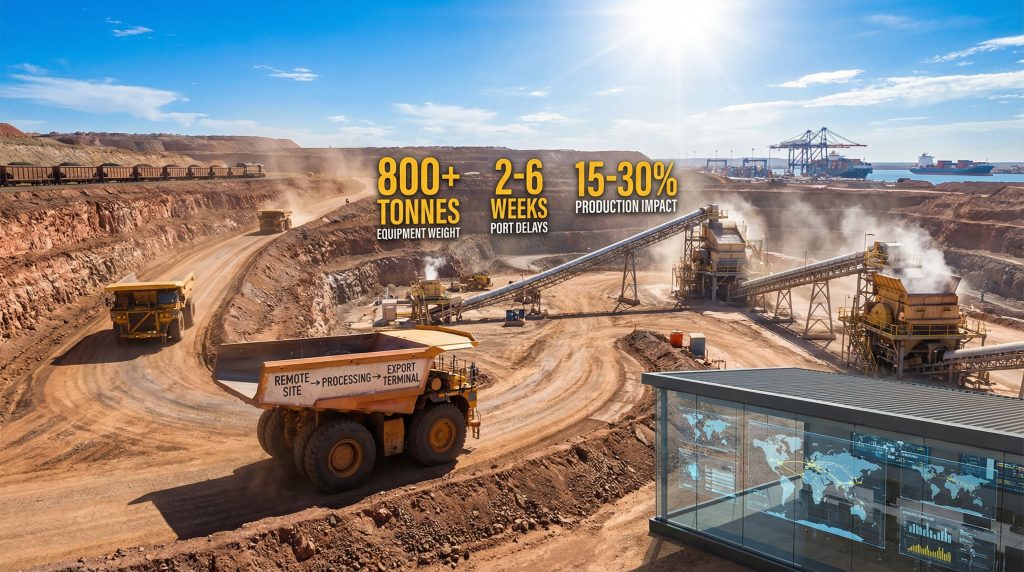
Equipment Reliability Through Strategic Logistics Management
Modern mining operations represent some of the world's most complex industrial systems, where operational success hinges on precise coordination between multiple moving parts. Understanding why logistics bottlenecks disrupt mining operations has become essential for maintaining competitive operations in today's mining landscape. Heavy machinery weighing hundreds of tonnes, specialized processing equipment, and continuous material flows must synchronize perfectly to maintain productivity. When any component in this intricate web experiences delays or failures, the ripple effects can cascade through entire operations.
The logistics networks supporting mining operations face unique challenges that distinguish them from conventional industrial supply chains. Remote locations, extreme weather conditions, and specialized equipment requirements create vulnerability points where traditional backup systems often prove inadequate. Furthermore, the industry evolution trends continue to add complexity to these already intricate systems.
When big ASX news breaks, our subscribers know first
Critical Infrastructure Dependencies in Remote Operations
Mining sites typically operate in locations chosen for geological advantages rather than logistical convenience. This fundamental reality creates inherent supply chain vulnerabilities that operators must navigate daily. Remote locations often depend on single-access transportation corridors, making entire operations vulnerable to weather events, infrastructure failures, or regulatory disruptions.
Transportation Infrastructure Limitations:
• Road capacity constraints: Many mining access roads cannot accommodate standard heavy-haul equipment without significant modifications or seasonal restrictions
• Railway scheduling conflicts: Limited rail infrastructure often serves multiple operations, creating scheduling bottlenecks during peak production periods
• Port facility limitations: Specialized berths for mining exports may have restricted availability during maintenance periods or extreme weather conditions
• Airfield accessibility: Remote site airstrips often have weight and size limitations that restrict emergency equipment delivery options
The infrastructure gap becomes particularly pronounced during equipment mobilisation phases. A single excavator can weigh over 800 tonnes when fully assembled, requiring specialised transport arrangements that may take weeks to coordinate. When critical equipment fails unexpectedly, replacement timelines can extend from days to months, depending on availability of suitable transport corridors.
Regulatory Bottlenecks and Permitting Challenges
Environmental assessments for oversized load transport can extend approval timelines by several weeks, particularly when routes cross sensitive ecological areas or require community consultation processes. Safety certifications for hazardous materials transport have become increasingly stringent, adding layers of documentation and approval requirements that can delay critical shipments.
Mining operations increasingly encounter situations where regulatory compliance requirements conflict with operational urgency. However, recent developments in mining permit regulations may affect how these challenges are managed moving forward. While environmental and safety regulations serve important purposes, their implementation can create significant logistics planning challenges for time-sensitive equipment deliveries.
Processing Equipment Vulnerabilities and Cascade Failures
Mining operations rely heavily on continuous processing chains where each component must function reliably to maintain overall system performance. When primary crushers experience mechanical failures, entire processing sequences can halt within hours, creating stockpile buildups that force production slowdowns across multiple operational areas.
Critical Processing Dependencies:
| Equipment Type | Typical Replacement Timeline | Production Impact During Failure |
|---|---|---|
| Primary crushers | 2-6 weeks | 60-80% capacity reduction |
| Flotation cells | 4-12 weeks | 40-60% capacity reduction |
| Conveyor systems | 1-3 weeks | 30-50% capacity reduction |
| Grinding mills | 6-16 weeks | 70-90% capacity reduction |
Processing equipment failures create particularly challenging scenarios because replacement components often require specialised manufacturing with extended lead times. Unlike standardised industrial equipment, mining processing machinery frequently uses custom-designed components that cannot be sourced from general suppliers.
Maintenance Scheduling Complexities
Planned maintenance windows for processing equipment must coordinate with ore delivery schedules, product shipping commitments, and seasonal accessibility factors. When unplanned failures occur, maintenance crews may face extended delays reaching remote sites, particularly during adverse weather conditions or transport infrastructure disruptions.
Emergency maintenance scenarios often require expedited shipping for replacement parts, creating cost premiums of 300-500% over standard transport rates. These elevated costs compound when multiple equipment failures occur simultaneously or when specialised technical personnel require emergency mobilisation to remote locations.
Export Infrastructure Constraints and Market Access
Mining operations face significant challenges at export points where port congestion, shipping schedule misalignments, and infrastructure capacity limitations can create severe bottlenecks. Even successful mining operations with consistent production rates can experience major disruptions when export infrastructure cannot accommodate planned shipment volumes.
Port Congestion Impact Analysis:
Port facilities serving mining operations often experience seasonal congestion patterns that coincide with harvest periods for agricultural exports or weather-related shipping delays. When multiple mining operations attempt to export simultaneously, berth availability becomes severely constrained, forcing extended waiting periods that can impact production planning weeks in advance.
Export Bottleneck Categories:
• Berth scheduling conflicts: Limited specialised berths for bulk commodity loading create competition between different mining operations
• Storage capacity limitations: Port stockpile areas may lack sufficient capacity during peak export periods, forcing mining operations to reduce production rates
• Loading equipment availability: Specialised loading machinery for different commodity types may experience maintenance downtime during critical shipping windows
• Shipping line scheduling: Container and bulk carrier availability fluctuates seasonally, creating potential gaps in export capacity during peak demand periods
The financial impact of export delays extends beyond immediate shipping costs to include contract penalties, market price exposure, and customer relationship strain. Consequently, understanding why logistics bottlenecks disrupt mining operations becomes crucial when managing these complex export challenges.
Supply Chain Disruption Amplification Mechanisms
Small delays in mining supply chains often escalate into major operational disruptions through interconnected failure modes that compound over time. A seemingly minor 48-hour delay in spare parts delivery can trigger a cascade of adjustments that ultimately affect production schedules, workforce deployment, and customer commitments for several weeks.
Resource Reallocation Pressures
When planned supply deliveries experience delays, operations teams must redirect available resources to maintain production continuity. This reallocation process often creates secondary bottlenecks as equipment operates beyond optimal capacity parameters and maintenance windows become compressed to accommodate extended operational demands.
Operational Adjustment Phases:
Phase 1 – Immediate Response (0-72 hours):
Mining operations activate backup equipment and redistribute maintenance schedules to compensate for missing supplies or delayed equipment. Production rates may decrease by 10-15% as teams implement contingency procedures and assess available alternatives.
Phase 2 – Extended Adaptation (3-14 days):
Continued delays force broader operational changes including overtime scheduling, equipment hire extensions, and expedited procurement for critical supplies. Cost premiums begin accumulating as standard supplier relationships cannot meet urgent delivery requirements.
Phase 3 – System-Wide Impact (2+ weeks):
Prolonged supply disruptions necessitate fundamental operational adjustments including processing plant throughput reductions, workforce schedule modifications, and customer delivery renegotiations. Recovery timelines extend significantly as multiple interconnected systems require realignment.
Cost Escalation Dynamics
Supply chain disruptions create both direct and indirect cost impacts that often exceed initial delay-related expenses. Emergency procurement procedures typically involve significant premium payments, while operational inefficiencies compound over time as systems operate outside optimal parameters.
Direct Cost Categories:
• Expedited shipping premiums: Rush delivery services can cost 300-500% more than standard transport, with air freight options reaching even higher multiples for heavy equipment components
• Equipment rental extensions: Daily rates for specialised mining equipment rentals during extended delays can reach thousands of dollars per day for large machinery
• Overtime labour costs: Extended shift coverage and weekend maintenance work typically involves 150-200% premium rates over standard labour costs
• Contract penalty fees: Late delivery charges and performance bond claims can create significant financial exposure, particularly for large-scale mining operations with strict contractual commitments
Mining operations with superior supply chain management capabilities consistently demonstrate 15-25% lower operating costs compared to operators relying on reactive logistics approaches. This competitive advantage compounds over time as efficient operators can offer more competitive pricing while maintaining higher profit margins.
External Risk Factors and Vulnerability Intensification
Global supply chain complexity has increased mining operations' exposure to external disruption factors beyond traditional operational control. International sourcing dependencies, infrastructure capacity constraints, and evolving regulatory requirements create multiple vulnerability points that can amplify minor delays into major operational challenges.
International Trade and Shipping Route Vulnerabilities
Modern mining operations source specialised components, chemicals, and services from global suppliers, creating exposure to international shipping disruptions and trade policy changes. Major shipping route blockages can delay critical supplies for weeks while alternative routing adds significant transport costs and timeline extensions.
Furthermore, the current supply chain crisis affecting critical minerals has heightened awareness of these vulnerabilities. For instance, supply chain challenges require comprehensive strategic planning across the mining industry to mitigate risks effectively.
Global Supply Dependency Challenges:
• Currency exchange volatility: Mining operations sourcing internationally face cost fluctuations from exchange rate movements, with some commodities experiencing 10-20% cost variations over short periods
• Trade policy modifications: Tariff changes, sanctions, or regulatory modifications can suddenly affect supply costs and availability, particularly for specialised mining chemicals or equipment components
• Shipping capacity constraints: Global shipping capacity limitations during peak seasons or after major disruptions can create extended delays for mining supply deliveries
• Geopolitical tensions: Political instability in key supply regions can disrupt established supplier relationships and force expensive supplier transitions with limited notice
Regulatory Environment Evolution
Environmental, safety, and transport regulations continue expanding across mining jurisdictions, adding complexity layers to logistics planning processes. While these regulatory developments serve important environmental and safety objectives, they create additional timing uncertainties and compliance costs for mining logistics operations.
Regulatory Compliance Categories:
| Compliance Area | Typical Processing Time | Cost Impact | Delay Risk Factors |
|---|---|---|---|
| Environmental transport assessments | 4-12 weeks | 5-15% of transport cost | Seasonal restrictions, stakeholder consultation requirements |
| Hazardous materials certifications | 2-8 weeks | 3-8% of shipment cost | Documentation completeness, regulatory backlog |
| Oversized load permitting | 1-6 weeks | 2-10% of transport cost | Route analysis, infrastructure capacity verification |
| Community consultation processes | 6-20 weeks | Variable | Stakeholder engagement complexity, opposition levels |
Mining operations must increasingly allocate significant resources to regulatory compliance management, with some operations employing dedicated compliance teams to navigate complex approval processes. The unpredictable nature of regulatory approval timelines creates particular challenges for maintenance planning and equipment replacement scheduling.
The next major ASX story will hit our subscribers first
Resilience Building Strategies and Operational Excellence
Mining operations building resilience against supply chain failures must implement comprehensive strategies addressing both immediate operational needs and longer-term vulnerability reduction. Successful approaches combine strategic planning, technology implementation, and diversified supplier networks to create robust logistics capabilities.
Strategic Supply Network Design
Diversification strategies provide essential protection against single-point-of-failure scenarios that can devastate operations dependent on individual suppliers or transport routes. Effective diversification requires careful analysis of supplier capabilities, transport alternatives, and regional risk factors to build truly resilient logistics networks.
Supplier Network Optimisation:
• Regional supplier development: Building relationships with suppliers located closer to mining operations reduces transport distances and associated delay risks while supporting local economic development
• Multiple sourcing strategies: Maintaining qualified alternative suppliers for critical components provides backup options when primary suppliers experience capacity or quality issues
• Strategic inventory management: Optimising stock levels for critical spare parts balances carrying costs against operational disruption risks, particularly for components with extended replacement timelines
• Supplier performance monitoring: Implementing regular supplier evaluation processes identifies potential reliability issues before they create operational disruptions
Technology-enabled supply chain visibility has become essential for proactive disruption management. Real-time tracking systems, predictive analytics platforms, and integrated planning tools provide mining operations with unprecedented insight into supply chain status and potential disruption scenarios.
Predictive Analytics and Digital Monitoring
Advanced analytics platforms enable mining operations to anticipate supply chain disruptions before they occur, providing time for proactive mitigation measures. These data-driven operations systems analyse multiple data sources including weather patterns, supplier performance metrics, transport capacity utilisation, and equipment condition monitoring to identify emerging risk scenarios.
Technology Implementation Framework:
• IoT sensor networks: GPS tracking and condition monitoring for shipments provides real-time visibility into supply chain status and potential delay factors
• Predictive maintenance integration: Linking equipment condition monitoring with supply chain planning enables proactive parts ordering and maintenance scheduling
• Weather monitoring systems: Advanced meteorological data integration supports transport planning and seasonal accessibility forecasting
• Supplier communication platforms: Integrated communication systems enable rapid coordination between mining operations, suppliers, and transport providers during disruption scenarios
Mining operations implementing comprehensive digital supply chain monitoring typically experience 25-40% reduction in disruption frequency and 30-50% faster recovery times when disruptions do occur. These performance improvements translate directly into reduced operational costs and improved customer satisfaction through more reliable delivery performance.
Infrastructure Investment and Redundancy Development
Long-term resilience building requires strategic infrastructure investments that reduce dependency on external logistics networks while providing operational flexibility during disruption scenarios. These investments often involve significant capital expenditure but generate substantial returns through reduced disruption frequency and operational cost savings.
Infrastructure Development Priorities:
| Investment Category | Typical Capital Range | Payback Period | Operational Impact |
|---|---|---|---|
| On-site storage expansion | $2-10 million | 2-4 years | 40-60% reduction in just-in-time delivery dependency |
| Redundant access routes | $5-25 million | 3-6 years | 70-90% reduction in access-related disruptions |
| Power generation facilities | $10-50 million | 4-8 years | Elimination of grid-dependent production constraints |
| Communication system upgrades | $1-5 million | 1-3 years | 50-80% improvement in coordination response times |
Mining operations with comprehensive infrastructure redundancy demonstrate significantly higher operational reliability and lower logistics-related costs compared to operations dependent on external infrastructure systems. This competitive advantage becomes particularly pronounced during regional disruption events that affect multiple operations simultaneously.
Contingency Planning and Response Frameworks:
Effective contingency planning addresses multiple disruption scenarios through pre-approved response procedures, alternative supplier arrangements, and emergency equipment access agreements. Successful contingency frameworks balance response capability with cost efficiency by focusing resources on highest-impact scenarios while maintaining flexibility for unexpected situations.
Competitive Advantage Through Logistics Excellence
Mining operations treating logistics as a strategic capability rather than a support function consistently outperform competitors across multiple performance metrics. Superior logistics management creates sustainable competitive advantages that compound over time through operational efficiency gains, cost reduction achievements, and enhanced market positioning.
Performance Differentiation and Market Position
Logistics excellence enables mining operations to capitalise on market opportunities that competitors with less reliable supply chains cannot pursue effectively. When commodity prices spike or supply shortages create premium market conditions, operations with robust logistics capabilities can rapidly increase production and capture enhanced margins.
Understanding why logistics bottlenecks disrupt mining operations becomes fundamental to maintaining competitive advantage in volatile markets. Additionally, addressing logistical challenges proactively enables operations to maintain consistent performance even when external conditions deteriorate.
Strategic Value Creation Through Logistics:
• Production consistency: Reliable supply chains enable consistent output supporting long-term customer relationships and premium pricing opportunities
• Market responsiveness: Superior logistics flexibility allows rapid production adjustments to capitalise on favourable market conditions
• Capital efficiency maximisation: Consistent supply chain performance maximises returns on infrastructure investments by maintaining optimal equipment utilisation rates
• Risk mitigation capability: Comprehensive logistics planning reduces exposure to external disruption factors that can devastate less prepared competitors
The financial impact of logistics excellence extends beyond operational cost savings to include revenue enhancement through improved market access and customer satisfaction. Mining operations with superior logistics capabilities often command 5-15% premium pricing for their products due to enhanced delivery reliability and customer service levels.
Long-term Sustainability and Growth Enablement
Logistics excellence provides essential foundations for sustainable mining operations growth and expansion. Operations with proven logistics capabilities can more easily attract investment capital, secure long-term customer contracts, and successfully develop new mining projects in challenging locations.
Benchmark Performance Comparison:
| Logistics Capability Level | Production Reliability | Cost Performance | Market Position | Customer Retention |
|---|---|---|---|---|
| Basic reactive management | 70-80% | 15-25% cost premium | Price-taker position | 60-70% retention |
| Proactive planning systems | 85-92% | 5-15% cost premium | Competitive positioning | 80-85% retention |
| Integrated optimisation | 95%+ | Cost advantage position | Market leadership | 90%+ retention |
Mining companies investing comprehensively in logistics optimisation typically achieve return on investment within 18-36 months through operational efficiency gains and reduced disruption costs. These investments create sustainable competitive advantages that strengthen over time as operational experience and system optimisation continue improving performance.
Future-Proofing Strategies:
The mining industry continues evolving toward greater operational sophistication and efficiency requirements. Mining operations building logistics excellence today position themselves advantageously for future market conditions where supply chain reliability becomes increasingly important for competitive success.
Environmental sustainability requirements will likely intensify logistics efficiency pressures as carbon footprint reduction becomes mandatory across mining operations. Companies developing efficient logistics networks today will be better prepared for future regulatory requirements while potentially gaining early-mover advantages in sustainable mining practices.
In addition, why logistics bottlenecks disrupt mining operations will remain a critical consideration as global supply chains become increasingly complex and interdependent. Mining operations seeking sustained competitive advantage must recognise logistics management as a core strategic capability requiring dedicated expertise, technology investment, and continuous improvement focus.
Disclaimer: This analysis is based on general industry observations and publicly available information. Specific operational performance may vary significantly based on individual mining operation characteristics, regional factors, and market conditions. Readers should conduct independent analysis and consult qualified professionals before making investment or operational decisions based on this information.
Looking to Capitalise on Mining Supply Chain Disruptions?
Understanding logistics bottlenecks in mining operations can reveal significant investment opportunities when companies overcome these challenges or competitors struggle with supply chain failures. Discovery Alert's proprietary Discovery IQ model provides instant notifications when ASX mining companies announce breakthrough discoveries or operational improvements, helping investors position themselves ahead of market movements by exploring historic discovery returns and beginning a 14-day free trial today.