
May 18, 2026
Global trade protection mechanisms continue evolving as industries navigate complex supply chain interdependencies and competitive pressures. Understanding how these regulatory frameworks operate requires examining specific cases where policy interventions reshape market dynamics across multiple industrial sectors, particularly how tariffs impact on markets and broader economic relationships.
What Are EU Anti-Dumping Duties on Chinese Aluminium Converter Foil?
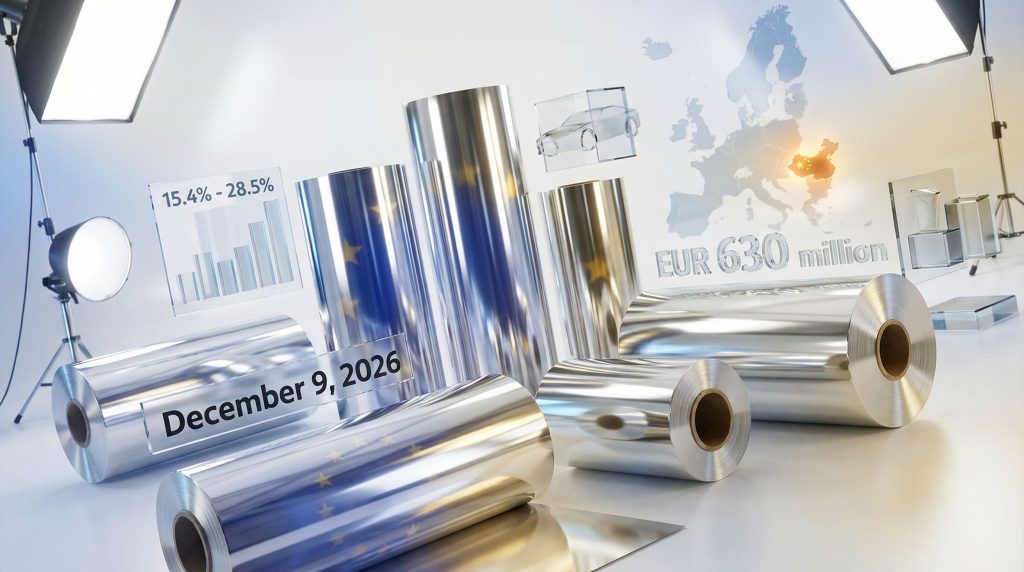
The European Union maintains definitive trade protection measures against Chinese aluminium converter foil imports, implementing combined anti-dumping and countervailing duties ranging from 15.4 percent to 28.5 percent. These measures target products classified under Combined Nomenclature code ex 7607 11 19, representing rolled aluminium materials specifically designed for converter foil applications.
The EUR 630 million European aluminium converter foil market represents substantial commercial significance within the broader aluminium processing industry. This market encompasses applications spanning food and beverage packaging, pharmaceutical blister pack manufacturing, and emerging electric vehicle battery component production.
Table: Current EU Trade Protection Framework
| Measure Type | Rate Range | Implementation Date | Expiry Date | Product Classification |
|---|---|---|---|---|
| Anti-dumping duties | 15.4% – 28.5% | December 2021 | December 9, 2026 | CN ex 7607 11 19 |
| Combined preliminary range | 16.1% – 46.7% | June 2021 | December 2021 | Provisional measures |
The investigation process commenced in October 2020 following formal complaints from European industry participants. Provisional measures became effective in June 2021, establishing temporary protection while the European Commission completed comprehensive dumping and subsidy investigations.
Furthermore, final duty determinations in December 2021 resulted in reduced rates compared to provisional measures, reflecting refined calculation methodologies based on complete investigation findings.
Understanding Trade Defense Investigation Methodology
EU trade defense investigations operate through structured analytical frameworks examining pricing patterns, market share dynamics, and injury causation across affected industry segments. The European Commission evaluates whether imported products are sold at prices below their normal value (dumping) or benefit from prohibited government subsidies (countervailing factors).
Key Investigation Components:
• Normal value determination through domestic market pricing in China or third-country benchmarks
• Export price analysis based on transaction-level import data
• Dumping margin calculations establishing the differential between normal and export values
• Injury assessment examining European industry performance metrics
• Causation analysis linking identified dumping practices to documented industry harm
The investigation timeline demonstrates the procedural requirements under EU Regulation 2016/1036 (Anti-Dumping) and EU Regulation 2016/1037 (Anti-Subsidies), which establish mandatory consultation periods, evidence gathering phases, and stakeholder engagement mechanisms.
When big ASX news breaks, our subscribers know first
How Do Anti-Dumping Investigations Shape Global Aluminium Trade?
Trade protection investigations fundamentally alter competitive dynamics within global aluminium supply chains by establishing price floors and modifying import penetration patterns. The aluminium converter foil case illustrates how targeted measures can influence both upstream raw material flows and downstream manufacturing location decisions.
Market structure analysis reveals that the global aluminium converter foil industry exhibits oligopolistic characteristics, with production capacity concentrated among approximately five major European manufacturers and a similar number of significant Chinese exporters. This concentration creates conditions where trade protection measures can substantially influence competitive positioning and market share distribution.
Investigation Impact Timeline:
1. Pre-investigation period (2018-2020): Rising Chinese import volumes combined with declining European producer market share
2. Investigation launch (October 2020): Formal complaint filing triggers European Commission procedural review
3. Provisional measures (June 2021): Temporary duties implemented pending final determination
4. Final determination (December 2021): Definitive duties established through comprehensive analysis
5. Market adjustment (2022-present): Supply chain adaptation to new competitive framework
Industry Analysis: The EUR 630 million market value represents approximately 2-3 percent of total European rolled aluminium product consumption, yet the strategic importance extends beyond direct market size due to converter foil's role in packaging and emerging battery applications.
Market Share and Capacity Utilization Effects
Trade defense measures create predictable pricing environments that influence corporate investment decisions and capacity utilization strategies. European manufacturers benefit from protection against below-cost pricing, potentially supporting increased capacity utilization rates and operational profitability.
Chinese exporters face modified competitive conditions requiring either margin compression to maintain market access or supply chain diversification to alternative geographic markets. This dynamic can reshape global trade flows as affected suppliers redirect production toward markets without comparable trade restrictions.
Capacity Utilization Considerations:
• European facilities: Enhanced pricing stability supports capacity expansion planning
• Chinese exporters: Reduced EU market access may increase domestic competition
• Third-country suppliers: Potential opportunity to increase EU market penetration
Why Are Aluminium Converter Foil Duties Set to Expire in 2026?
EU trade defense measures operate under automatic sunset provisions mandating termination after five years unless domestic industry demonstrates continued necessity through formal review procedures. This framework reflects WTO Agreement principles that trade protection should remain temporary rather than permanent industrial policy tools.
The December 9, 2026 expiry date creates a critical decision point for European aluminium converter foil manufacturers. Industry participants must evaluate whether market conditions warrant seeking duty continuation through sunset review applications submitted within three months before expiry (approximately September 2026).
Sunset Review Decision Framework:
| Scenario | Probability Assessment | Required Action | Market Outcome |
|---|---|---|---|
| No review request | Moderate likelihood | Industry inaction | Automatic duty expiration |
| Sunset review initiated | High likelihood | Formal application with evidence | Extended protection possible |
| Review with modified terms | Moderate likelihood | Negotiated adjustment | Revised duty structure |
Evidence Requirements for Duty Continuation
Sunset review procedures require European producers to demonstrate two critical elements: likelihood of continued dumping or subsidization and probability of injury recurrence if duties expire. This evidence standard demands forward-looking analysis rather than historical performance review.
Required Evidence Categories:
1. Market analysis: Projected Chinese production capacity and export volume trends
2. Pricing forecasts: Expected price levels absent trade protection
3. Competitive assessment: European industry capacity utilization and profitability projections
4. Injury likelihood: Demonstration that duty removal would likely recreate conditions leading to original investigation
However, the burden of proof allocation places responsibility on European manufacturers to justify continued protection rather than requiring the European Commission to demonstrate that measures should expire.
What Market Dynamics Drive Trade Protection Decisions?
Trade protection decisions reflect complex interactions between industrial policy objectives, competitive dynamics, and broader economic integration considerations. The aluminium converter foil case demonstrates how sector-specific factors influence European Commission assessment of protection necessity, similar to broader us tariffs and economy relationships observed globally.
Primary Market Factors:
• Production cost differentials between EU and Chinese manufacturing
• Technology transfer patterns affecting competitive advantages
• Supply chain integration levels across regional production networks
• End-user demand growth in packaging and battery applications
• Raw material access and pricing for primary aluminium inputs
Economic analysis indicates that converter foil manufacturing requires significant capital investment in specialized rolling equipment and quality control systems. These barriers to entry create market conditions where established producers maintain competitive advantages through operational expertise and customer relationships.
Downstream Industry Considerations
The converter foil market serves critical supply chain functions for packaging manufacturers and electric vehicle battery producers. European automotive industry electrification targets create incremental demand growth that benefits both European and Chinese suppliers, though supply chain proximity preferences may favor regional production.
Table: End-Use Application Analysis
| Application Sector | Market Share | Growth Trajectory | Supply Chain Requirements |
|---|---|---|---|
| Food packaging | 45-50% | Stable growth | Quality certification, logistics proximity |
| Pharmaceutical | 20-25% | Moderate growth | Regulatory compliance, traceability |
| EV batteries | 15-20% | Rapid expansion | Technical specifications, R&D collaboration |
| Industrial applications | 10-15% | Slow growth | Cost optimization, reliability |
Strategic Insight: The convergence of packaging industry stability with electric vehicle battery market expansion creates unique competitive dynamics where European manufacturers can leverage technical expertise while Chinese suppliers emphasise cost competitiveness.
How Do Expiring Duties Affect European Aluminium Manufacturers?
European aluminium converter foil producers face strategic inflection points as 2026 approaches, requiring evaluation of operational capacity, competitive positioning, and investment priorities under various policy scenarios. The potential for duty expiration creates both risks and opportunities across different market segments, particularly considering broader trump tariff implications on global trade patterns.
Strategic Options Analysis:
1. Sunset review advocacy: Coordinate industry-wide application for duty continuation
2. Operational efficiency improvement: Reduce production costs to compete without protection
3. Product differentiation: Focus on high-value applications requiring technical expertise
4. Supply chain integration: Develop closer relationships with downstream customers
5. Geographic expansion: Pursue growth opportunities in markets outside EU jurisdiction
Investment Planning Under Uncertainty
Trade policy uncertainty affects corporate capital allocation decisions, particularly for capacity expansion projects requiring multi-year payback periods. European manufacturers must balance the potential benefits of increased capacity against risks of renewed Chinese competition post-2026.
Investment Consideration Framework:
• Scenario planning: Model financial performance under duty continuation versus expiration
• Technology upgrading: Evaluate process improvements that reduce unit costs
• Market diversification: Assess opportunities in non-EU export markets
• Customer relationship development: Strengthen partnerships with key downstream users
Employment implications represent additional considerations for sunset review decisions. The European converter foil manufacturing sector supports direct employment across multiple member states, with indirect effects throughout aluminium supply chains and downstream processing industries.
What Role Does Aluminium Converter Foil Play in Strategic Industries?
Aluminium converter foil serves essential functions across industries deemed strategically significant for European economic competitiveness and supply chain resilience. The packaging sector relies on converter foil for barrier properties protecting food, pharmaceutical, and consumer products, while emerging battery applications support European automotive industry transformation.
Electric Vehicle Battery Supply Chain Integration
The rapid expansion of European electric vehicle production creates growing demand for specialised aluminium converter foil used in battery component manufacturing. This application requires precise thickness tolerances, surface quality specifications, and chemical purity standards that favour technically sophisticated suppliers.
Battery Application Requirements:
• Thickness precision: Typically 6-20 microns with strict tolerances
• Surface quality: Minimal defects affecting electrochemical performance
• Chemical purity: Low levels of iron, silicon, and other contaminants
• Mechanical properties: Tensile strength and elongation characteristics
• Processability: Compatibility with high-speed battery manufacturing equipment
European automotive manufacturers increasingly prioritise supply chain proximity and technical collaboration capabilities, potentially favouring regional converter foil suppliers over distant competitors regardless of price differentials.
Packaging Industry Stability and Requirements
The food and beverage packaging sector represents the largest single application for aluminium converter foil, providing market stability that supports industry investment planning. Packaging applications demand consistent quality, regulatory compliance, and logistics reliability rather than primarily cost competition.
Table: Packaging Sector Requirements
| Application Type | Key Performance Factors | Supplier Selection Criteria |
|---|---|---|
| Food packaging | Barrier properties, food safety | Certification, quality consistency |
| Pharmaceutical blister packs | Precision, regulatory compliance | Validation capabilities, traceability |
| Industrial packaging | Cost-effectiveness, availability | Supply reliability, technical support |
The next major ASX story will hit our subscribers first
How Do Global Trade Patterns Influence EU Policy Decisions?
European trade defense policy operates within multilateral frameworks established through World Trade Organisation agreements and bilateral relationship considerations. The aluminium converter foil case reflects broader patterns of EU-China trade relations and global metal tariff impact on supply chain competition.
Trade protection measures in aluminium products demonstrate European policy coordination addressing industrial competitiveness concerns across multiple sectors. Similar investigations in steel, chemicals, and renewable energy components indicate systematic approaches to addressing perceived unfair trading practices.
Comparative International Approaches
Regional Trade Defense Comparison:
United States: Section 232 measures on aluminium imports emphasise national security rationales
Canada: Canadian International Trade Tribunal investigations focus on material injury determinations
India: Directorate General of Trade Remedies implements frequent anti-dumping measures
Australia: Anti-Dumping Commission emphasises economic impact assessment
These varying approaches reflect different industrial policy philosophies and legal frameworks, yet demonstrate widespread use of trade protection mechanisms across developed economies facing similar competitive pressures.
WTO Compliance and Dispute Resolution
EU trade defense measures must comply with WTO Agreement provisions limiting the scope, duration, and calculation methodology for anti-dumping and countervailing duties. The five-year sunset review requirement reflects these international legal constraints on trade protection measures.
Legal Framework: WTO Agreement on Implementation of Article VI establishes procedural requirements for dumping investigations, including evidence standards, calculation methodologies, and automatic termination provisions that shape EU policy implementation.
What Economic Factors Shape Future Trade Protection Decisions?
Economic analysis of trade protection decisions encompasses multiple variables including production cost structures, market concentration effects, innovation incentives, and consumer price impacts. The aluminium converter foil case illustrates how these factors interact to influence policy outcomes.
Cost Structure Analysis:
• Raw material costs: Primary aluminium pricing affects both European and Chinese producers
• Energy costs: Electricity pricing differentials influence manufacturing competitiveness
• Labour costs: Wage levels and productivity rates across production locations
• Capital costs: Equipment financing and depreciation considerations
• Regulatory compliance: Environmental and safety standard implementation costs
European manufacturers typically face higher energy and labour costs compared to Chinese competitors, while potentially maintaining advantages in technology access, supply chain proximity, and customer service capabilities.
Market Concentration and Innovation Effects
Trade protection can influence industry structure by supporting domestic producer viability and encouraging continued investment in production capacity and technology development. However, protection may also reduce competitive pressures that drive efficiency improvements and innovation.
Innovation Consideration Framework:
1. R&D investment: Whether protection supports or reduces incentives for technology development
2. Process improvement: Impact on operational efficiency and cost reduction initiatives
3. Product development: Effects on specialised application development and market expansion
4. Supply chain collaboration: Influence on downstream customer relationship development
Consequently, the balance between protection benefits and competition incentives represents a fundamental challenge in trade policy design, requiring careful assessment of industry-specific conditions and broader economic objectives.
How Can Industry Stakeholders Prepare for Policy Changes?
Strategic preparation for potential policy changes requires comprehensive scenario planning addressing both duty continuation and expiration possibilities. European converter foil manufacturers, Chinese exporters, and downstream customers each face distinct preparation requirements, particularly considering broader mining sector trade tariffs implications.
European Producer Preparation Strategy:
1. Evidence compilation: Gather data supporting sunset review applications
2. Industry coordination: Organise collective advocacy efforts with other EU producers
3. Operational efficiency: Implement cost reduction and productivity improvement initiatives
4. Market development: Pursue growth opportunities in protected and unprotected applications
5. Customer relationships: Strengthen partnerships emphasising non-price competitive advantages
Regulatory Engagement and Advocacy
Effective stakeholder engagement with European Commission trade defense proceedings requires understanding procedural requirements, evidence standards, and consultation mechanisms. Industry associations play crucial roles coordinating collective positions and technical expertise.
Table: Stakeholder Preparation Timeline
| Time Period | Required Actions | Responsible Parties | Key Deliverables |
|---|---|---|---|
| 2024-2025 | Market analysis and evidence gathering | EU producers | Sunset review preparation |
| Early 2026 | Formal application submission | Industry associations | Legal documentation |
| Mid-2026 | Commission review process | All stakeholders | Evidence presentation |
| Late 2026 | Final determination | European Commission | Policy implementation |
Supply Chain Risk Management
Downstream customers face potential supply disruption and pricing volatility depending on policy outcomes. Packaging manufacturers and battery producers may benefit from supplier diversification strategies reducing dependence on specific trade policy scenarios.
Risk Mitigation Approaches:
• Supplier diversification: Develop relationships with multiple converter foil suppliers
• Inventory management: Adjust stock levels based on policy change probability
• Contract structuring: Include policy change provisions in long-term supply agreements
• Alternative materials: Evaluate substitute materials for specific applications
What Are the Broader Implications for EU-China Trade Relations?
The aluminium converter foil trade protection case represents one element within broader EU-China economic relationship dynamics encompassing market access reciprocity, technology transfer concerns, and industrial policy coordination. Resolution of this specific case may influence approaches to similar trade disputes across other sectors.
European trade policy increasingly emphasises strategic autonomy concepts emphasising reduced dependence on single-source suppliers for critical materials and components. Aluminium converter foil applications in packaging and battery production align with these strategic considerations despite the product's relatively small market size.
Sectoral Trade Policy Coordination
Trade defense measures across multiple aluminium product categories demonstrate systematic European approaches to addressing competitive challenges from Chinese manufacturers. Similar investigations in wire rod, extrusions, and rolled products indicate coordinated industrial policy responses.
Related EU Trade Measures:
• Aluminium extrusions: Long-standing anti-dumping duties with periodic reviews
• Aluminium wire rod: Recent trade defense investigations and provisional measures
• Primary aluminium: Monitoring of market conditions and potential unfair practices
• Downstream applications: Emerging concerns regarding battery materials and renewable energy components
Future Trade Relationship Framework
Resolution of the converter foil duty expiration will contribute to broader precedents regarding European willingness to maintain trade protection measures and Chinese responses to continued market access restrictions. These dynamics influence business confidence and investment decisions across both regions.
In addition, the Commission's official policy documentation provides detailed frameworks for understanding current implementation approaches.
Strategic Outlook: The intersection of trade policy with European Green Deal objectives creates complex considerations where EU duties on Chinese aluminium converter foil must balance industrial protection with supply chain resilience requirements for clean energy transition applications.
Disclaimer: This analysis is for informational purposes only and does not constitute investment advice. Trade policy decisions involve complex legal and economic considerations that may change based on political developments, economic conditions, and international negotiations. Stakeholders should consult qualified legal and economic advisors regarding specific business implications of EU duties on Chinese aluminium converter foil and related trade protection measures.
Want to capitalise on commodity market shifts driven by trade policy changes?
Discovery Alert's proprietary Discovery IQ model delivers instant notifications on significant ASX mineral discoveries, helping investors identify actionable opportunities as global trade dynamics reshape commodity markets. Stay ahead of market movements by exploring Discovery Alert's dedicated discoveries page to understand how major mineral finds have generated substantial returns, then begin your 14-day free trial to position yourself ahead of the next breakthrough discovery.