July 25, 2026
European Lithium Supply Chain Vulnerability and Strategic Response Mechanisms
Europe's critical mineral dependency has reached unprecedented levels, with lithium supply chains representing perhaps the continent's most acute strategic vulnerability. Current import patterns show European battery manufacturers rely on external suppliers for over 95% of lithium carbonate requirements, creating exposure to price volatility and geopolitical disruption that threatens the region's electric vehicle transition goals.
This dependency stems from decades of underinvestment in domestic extraction capabilities, leaving European nations particularly vulnerable to supply chain disruptions witnessed during recent global crises. The continent's limited lithium processing infrastructure compounds these challenges, as even domestically-extracted spodumene concentrate requires overseas conversion to battery-grade materials.
Against this backdrop, Portugal's government backs Savannah's lithium mine with $128M grant represents a fundamental shift toward strategic resource independence, establishing new precedents for government intervention in critical minerals energy security development across European Union member states.
When big ASX news breaks, our subscribers know first
How Government-Backed Financing Transforms Mining Investment Risk Profiles
The Portuguese grant structure reveals sophisticated risk allocation mechanisms designed to optimise public investment returns while accelerating project development timelines. Secretary of State for the Economy João Ferreira approved the funding on January 7, 2026, qualifying Barroso under incentives for large investments in carbon-neutral and strategic net-zero transition sectors.
Financial Architecture Breakdown:
• Direct capital allocation: €82 million designated for initial construction phases
• Performance-linked disbursements: Remaining funds tied to operational milestone achievement
• Non-reimbursable structure: No government repayment obligations, reducing project debt burden
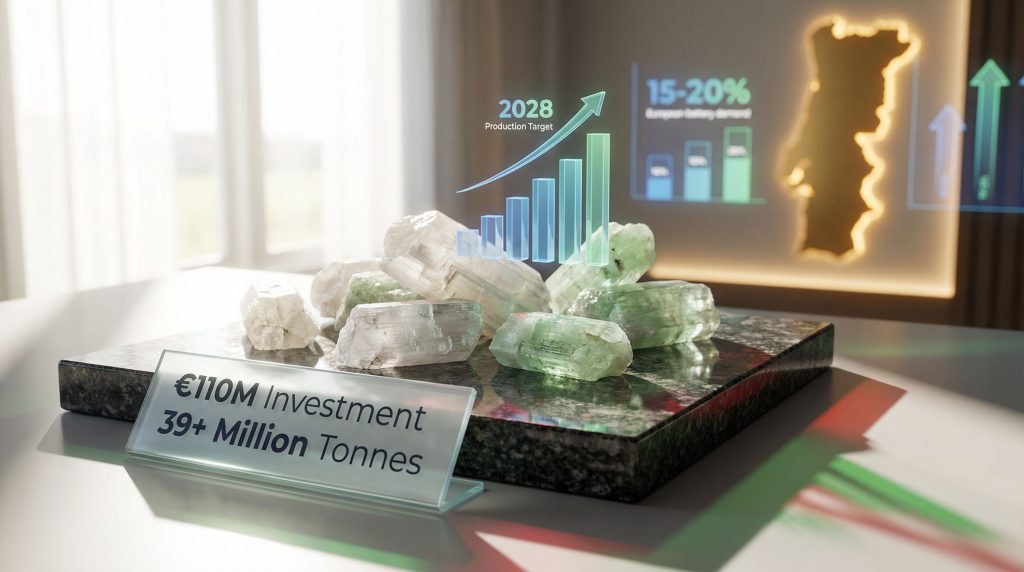
• Timeline acceleration: Government backing enables 2028 production target feasibility
This financing model fundamentally alters traditional mining industry evolution trends by reducing private capital requirements by an estimated 30-40% while mitigating political and regulatory risks through explicit government endorsement. Emanuel Proença, CEO of Savannah Resources, indicated the Portuguese state's financial commitment provides significant contribution toward project capital expenditures as the company targets production from 2028.
European Comparative Financing Approaches:
| Country | Program Type | Scale | Focus Areas |
|---|---|---|---|
| Germany | Critical Materials Fund | €2 billion+ | Diversified supply chains |
| France | Bpifrance Strategic Industries | Variable | Battery ecosystem development |
| Sweden | Industrial Transition Support | €1 billion+ | Northvolt gigafactory backing |
| Portugal | Direct Project Grants | €110 million | Domestic lithium extraction |
The milestone-based funding mechanism represents an evolution in government financing that ties public investment to measurable project outcomes, creating accountability frameworks while reducing taxpayer exposure to development failures.
Barroso Reserve Scale in Global Lithium Market Context
The Barroso deposit's 39+ million tonnes of spodumene ore positions Portugal as Europe's largest lithium resource holder, though global comparative analysis reveals the scale of European supply challenges. Industry classification standards define the deposit as containing proven and probable reserves, with additional inferred resources potentially expanding total resource estimates.
Global Lithium Reserve Hierarchy:
• Chilean brines: Atacama Salar containing 200+ million tonnes lithium carbonate equivalent
• Australian hard rock: Greenbushes and Pilbara regions with 400+ million tonnes combined spodumene resources
• Argentine brines: Hombre Muerto and other salars with 150+ million tonnes equivalent
• European hard rock: Barroso representing approximately 2-3% of global reserves
Furthermore, the spodumene ore grade and lithium content specifications determine extraction economics and processing requirements. Similarly to Argentina lithium market insights, Barroso's spodumene concentrate would require conversion to lithium hydroxide or carbonate for battery applications, adding processing steps that brine operations avoid through direct extraction methods.
Production Capacity Projections:
Based on deposit characteristics and similar operations globally, Barroso could potentially produce:
• Spodumene concentrate: 200,000-300,000 tonnes annually
• Lithium carbonate equivalent: 25,000-35,000 tonnes per year
• European market share: 15-20% of projected regional battery demand by 2030
• Import reduction impact: Decreased dependency on Australian suppliers by estimated 25%
These projections assume standard spodumene-to-lithium conversion rates of approximately 0.6-0.7 tonnes lithium carbonate per tonne of concentrate, though actual yields depend on ore grade and processing efficiency.
UNESCO Heritage Designation and Mining Development Tensions
The Barroso region's designation as a UNESCO World Agricultural Heritage Site in 2018 creates unprecedented regulatory complexity for European lithium extraction projects. This classification recognises traditional farming systems and landscapes, establishing protection frameworks that potentially conflict with industrial mineral extraction activities.
Regulatory Framework Challenges:
• Heritage protection requirements: Preservation of traditional agricultural practices and landscapes
• Environmental licensing demands: Comprehensive impact assessments addressing heritage compatibility
• Community opposition dynamics: Local resistance from agricultural stakeholders
• Legal challenge probabilities: Potential court actions regarding heritage site integrity
Strong opposition from local residents and environmentalists has created implementation hurdles, including previous injunctions requiring suspension of lithium prospecting activities. The project obtained a positive Environmental Impact Statement in 2023, though specific environmental conditions and mitigation requirements remain subject to ongoing regulatory oversight.
Heritage Site Mining Precedent Analysis:
Limited global precedent exists for active mining operations within UNESCO agricultural heritage sites, making Barroso a test case for balancing critical mineral extraction with cultural landscape preservation. European environmental law frameworks require demonstration of overriding public interest for developments affecting protected designations.
Risk Assessment Consideration: Projects combining critical mineral extraction with heritage site development face elevated regulatory uncertainty and extended permitting timelines that traditional mining ventures avoid.
European Critical Minerals Policy Evolution and Strategic Dependencies
Portugal's government backs Savannah's lithium mine with $128M grant reflects broader European recognition of strategic vulnerabilities in critical mineral supply chains, particularly following supply disruptions witnessed during recent geopolitical tensions and trade disputes.
Current European Dependencies:
• Chinese processing dominance: 60%+ of global lithium processing capacity concentrated in China
• Australian supply concentration: 50%+ of global hard rock lithium production from Australian operations
• South American brine resources: Chile and Argentina controlling major lithium reserves
• Transportation vulnerabilities: Extended supply chains subject to shipping and logistical disruption
The European Union's Critical Raw Materials Act establishes strategic autonomy targets, requiring member states to reduce import dependencies for materials essential to green transition objectives. Lithium qualifies as a critical material due to limited European production capacity and high import reliance.
Strategic Response Mechanisms:
• Domestic production incentives: Government funding to reduce import dependency ratios
• Processing capability development: Investment in European lithium refinement infrastructure
• Strategic partnerships: Diversification of supplier relationships beyond traditional sources
• Technology advancement: Research into alternative extraction and recycling technologies
This policy framework positions projects like Barroso as strategic assets rather than purely commercial ventures, justifying elevated government financial participation compared to traditional mining investments.
What Are the Production Timeline Challenges?
The ambitious 2028 production target faces several implementation challenges despite government financial backing and regulatory support. Critical path analysis reveals potential delays in permitting, construction, and commissioning phases that could extend development timelines.
Development Phase Risk Assessment:
| Phase | Duration Estimate | Primary Risk Factors | Mitigation Strategies |
|---|---|---|---|
| Final permitting | 12-18 months | Environmental appeals, heritage compliance | Government fast-tracking, stakeholder engagement |
| Construction mobilisation | 6-12 months | Equipment procurement, contractor availability | Pre-ordering, strategic partnerships |
| Mine development | 24-36 months | Ground conditions, weather impact | Geotechnical studies, contingency planning |
| Processing commissioning | 6-12 months | Technology integration, performance testing | Experienced operators, phased startup |
Acceleration Factors:
Government financial backing provides several timeline advantages:
• Funding certainty: Eliminates capital raising delays that affect private-funded projects
• Regulatory priority: Strategic project designation potentially accelerates permit processing
• Political support: High-level government endorsement reduces bureaucratic obstacles
• Resource allocation: Enhanced ability to secure specialised equipment and expertise
However, the heritage site designation and community opposition create counterbalancing risks that government support alone cannot entirely mitigate. Legal challenges and environmental compliance requirements could extend timelines regardless of financial backing.
Battery Supply Chain Integration and European Manufacturing Impact
Barroso's development could catalyse broader European battery materials ecosystem expansion, creating downstream economic multiplier effects beyond direct mining operations. In addition, the project's proximity to European automotive manufacturing centres provides logistical advantages compared to imports from Australia or South America.
Value Chain Integration Opportunities:
• Automotive sector proximity: Reduced transportation costs to German and French manufacturers
• Processing facility development: Potential for European lithium hydroxide production capabilities
• Technology partnerships: Collaboration opportunities with battery cell manufacturers
• Research and development: European lithium extraction innovation centres
The project's success could learn from Australia lithium industry innovations whilst adapting techniques for European geological conditions. Furthermore, Italian lithium extraction methods demonstrate alternative approaches that could complement Portugal's hard rock mining strategy.
Economic Impact Projections:
Direct and indirect employment effects could support regional economic development:
• Direct operational employment: 200-400 permanent positions
• Indirect regional employment: 800-1,200 support and service jobs
• Government tax revenue: €15-25 million annually in corporate and employment taxes
• Export earnings: €200-300 million annually in foreign exchange generation
These economic benefits provide additional justification for government financial participation beyond strategic supply security considerations.
The next major ASX story will hit our subscribers first
Performance-Linked Grant Mechanisms and Public Investment Optimisation
The milestone-based funding structure represents sophisticated public investment management designed to optimise government returns while minimising taxpayer risk exposure. This approach differs from traditional grant mechanisms by tying disbursements to measurable project achievements.
Performance Metrics Framework:
• Construction milestones: Infrastructure completion and development progress targets
• Production thresholds: Output volume requirements and quality specifications
• Employment commitments: Local job creation and skills development obligations
• Environmental compliance: Sustainability performance indicators and monitoring requirements
Government Risk Management Benefits:
• Staged investment approach: Reduces public exposure to total project failure
• Performance incentive alignment: Links private sector interests with public policy objectives
• Accountability mechanisms: Clear metrics for evaluating investment success and outcomes
• Flexibility provisions: Ability to adjust funding based on development progress and performance
This financing innovation could establish templates for future European critical mineral investments, balancing public strategic objectives with prudent fiscal management.
How Does This Impact Global Market Positioning?
Barroso's entry into global lithium markets occurs during unprecedented demand growth driven by electric vehicle adoption and energy storage deployment. European production capabilities could influence regional pricing dynamics and supply security.
Market Context Analysis:
Global lithium demand projections indicate substantial growth potential:
• 2030 demand estimates: 3-4 million tonnes lithium carbonate equivalent annually
• Current supply capacity: Approximately 1.5 million tonnes, indicating significant supply gap
• European consumption: 400,000-600,000 tonnes projected by 2030
• Barroso contribution: 1-2% of projected global demand, 6-8% of European requirements
Competitive Positioning Factors:
• Transportation advantages: Reduced shipping costs and times to European battery manufacturers
• Supply chain resilience: Domestic production reduces geopolitical and logistical risks
• Quality specifications: Spodumene concentrate quality suitable for battery-grade processing
• Regulatory compliance: European environmental and labour standards potentially premium-valued
The project's success could encourage additional European lithium exploration and development, potentially creating regional mining clusters that enhance collective competitiveness against established producing regions. Consequently, fusion energy initiatives may also benefit from improved critical mineral security in the long term.
Investment Strategy Implications:
For investors analysing European critical mineral opportunities, the Portuguese grant model demonstrates evolving government willingness to provide substantial financial support for strategic projects. This policy trend suggests reduced private investment risks for qualifying developments while potentially improving project economics through subsidised capital costs.
The performance-linked structure indicates governments increasingly sophisticated in structuring public-private partnerships that balance strategic objectives with fiscal responsibility, creating potential templates for future critical mineral investments across European Union member states.
Want to Capitalise on Critical Mineral Discoveries?
Discovery Alert's proprietary Discovery IQ model delivers instant notifications about significant ASX mineral discoveries, including emerging opportunities in lithium and other critical materials that could benefit from Australia's strategic position in global supply chains. Explore how historic mineral discoveries have generated substantial market returns by visiting Discovery Alert's discoveries page and begin your 30-day free trial to stay ahead of the market.