May 9, 2026
European mineral supply chains face unprecedented strategic pressure as geopolitical tensions reshape global resource dependencies. The continent's vulnerability to single-source imports has become a critical economic security concern, particularly for materials essential to defense manufacturing, renewable energy infrastructure, and electric vehicle production. Traditional supply arrangements no longer guarantee stable access to the rare earth elements that power modern technological systems. Furthermore, the LKAB plan for Swedish rare earths mine represents a pivotal development in addressing these pressing challenges.
Sweden's approach to addressing this challenge centres on transforming dormant geological assets into active production capabilities. The Nordic nation's mineral-rich territories contain deposits that could fundamentally alter European resource independence calculations. Understanding how these projects navigate complex regulatory frameworks, community relations, and technical execution challenges provides insight into broader continental supply chain resilience strategies. However, these developments must also contend with significant mining permitting challenges that could affect implementation timelines.
What Makes Sweden's Per Geijer Deposit a Game-Changer for European Resource Security?
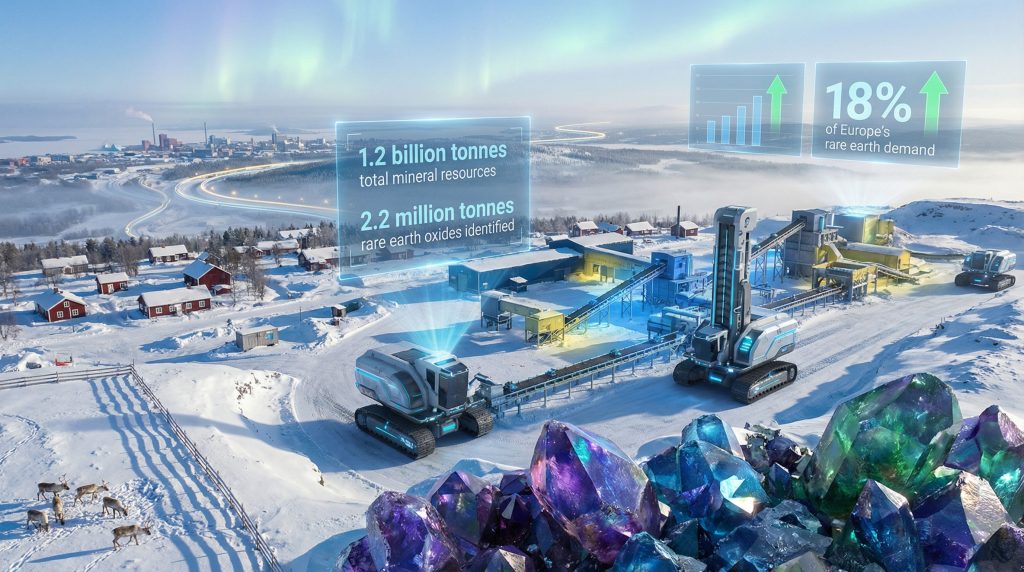
The Per Geijer deposit represents one of Europe's most significant rare earth discoveries, positioned strategically near existing mining infrastructure in Sweden's far north. This geological formation contains 1.2 billion tonnes of total mineral resources, with 2.2 million tonnes identified as rare earth oxides, according to analysis published by Mining.com in April 2026. The scale positions this deposit among the continent's largest known reserves of these critical materials.
LKAB's plan for Swedish rare earths mine incorporates the strategic advantage of proximity to the Kiruna operation, which functions as the world's largest underground iron ore mine. This co-location enables potential infrastructure sharing, workforce utilisation, and operational synergies that could reduce development costs and timeline risks. The existing transportation networks, processing capabilities, and established industrial presence provide a foundation for rare earth extraction that standalone projects typically lack. Consequently, this project could contribute significantly to the broader European raw materials facility strategy.
Europe's Largest Rare Earth Discovery in Numbers
The deposit's resource calculation reveals substantial potential for European supply chain diversification:
- Total mineral resources: 1.2 billion tonnes confirmed through geological assessment
- Rare earth oxide content: 2.2 million tonnes identified within the broader resource base
- European demand coverage: Potential to supply approximately 18% of Europe's rare earth requirements
- Strategic positioning: Co-located with existing Kiruna iron ore infrastructure for operational efficiency
These figures establish Per Geijer as a cornerstone asset in European critical mineral strategy. The 18% demand coverage capability could significantly reduce the continent's dependence on concentrated supply sources, particularly for applications in clean energy transitions, defence systems, and advanced manufacturing sectors.
Critical Infrastructure Integration Benefits
The project's technical advantages stem from integration with LKAB's established operations. Kiruna mine's status as the world's largest underground iron ore operation provides proven extraction methodologies, skilled workforce availability, and developed logistics networks. These factors reduce typical greenfield development risks while enabling accelerated project timelines compared to standalone rare earth ventures.
Regional processing capabilities through the Luleå industrial complex offer additional strategic value. The existing industrial infrastructure can accommodate rare earth processing requirements while generating valuable by-products including phosphorus and gypsum for European markets. This integrated approach maximises resource utilisation efficiency and creates multiple revenue streams from single extraction operations.
When big ASX news breaks, our subscribers know first
How Does LKAB's Integrated Mining Strategy Maximise Resource Efficiency?
LKAB's operational model demonstrates advanced resource optimisation through multi-commodity extraction across integrated facilities. The company's portfolio spans iron ore production at Malmberget and Kiruna, with Per Geijer positioned to add rare earth capabilities alongside continued iron ore output. This diversified approach creates operational resilience while maximising infrastructure utilisation across multiple commodity cycles. Moreover, such approaches align with emerging trends in sustainable mining operations that emphasise efficiency and environmental responsibility.
Multi-Commodity Extraction Model
The integrated resource strategy operates across three primary locations:
| Location | Primary Resource | Secondary Products | Processing Hub |
|---|---|---|---|
| Malmberget | Iron Ore | Apatite, Rare Earth Elements | Luleå |
| Per Geijer | Iron Ore + Rare Earth Elements | Phosphorus | Luleå |
| Kiruna | Iron Ore | Infrastructure Support | Regional Network |
This geographic distribution enables operational flexibility while concentrating processing capabilities at the Luleå industrial park. The hub-and-spoke model reduces transportation costs, enables specialised workforce development, and creates economies of scale across multiple commodity streams.
Circular Economy Approach at Luleå Industrial Park
The processing strategy emphasises waste stream utilisation and by-product recovery. Rare earth extraction generates phosphorus-bearing materials that serve construction and agricultural markets. Gypsum production from processing operations supplies regional construction demand, creating additional revenue while reducing waste disposal requirements.
Timeline projections indicate demonstration plant operations could commence by 2026, with full-scale production capabilities targeting the 2030s. The phased development approach allows process optimisation, community engagement, and market development while maintaining operational flexibility as demand patterns evolve.
By-product phosphorus streams could potentially supply approximately 6% of European demand, according to project assessments. This secondary revenue source improves overall project economics while contributing to European self-sufficiency in multiple critical materials simultaneously.
What Indigenous Rights Challenges Could Derail the Project Timeline?
The Per Geijer development faces significant opposition from Sami reindeer herding communities whose traditional territories overlap with proposed mining areas. The Stockholm Environment Institute published analysis in April 2026 concluding that project implementation could violate international indigenous rights frameworks, creating substantial legal and operational risks for development timelines.
Sami Reindeer Herding Conflicts
Traditional Sami land use patterns involve seasonal reindeer migrations between winter and summer pastures. The proposed mining operations would disrupt these established movement corridors, potentially preventing herders from maintaining cultural practices that have sustained communities for generations. The impact extends beyond immediate mining areas to encompass broader territorial access and traditional resource utilisation.
"Community Impact Assessment: The Gabna Sami community faces existential threats to cultural continuity and economic viability from mining development in traditional territories."
Lars-Marcus Kuhmunen, chairman of the Gabna Sami, characterised the potential impact as community-ending, stating this development could represent the final disruption that makes traditional herding practices impossible to maintain. The severity of expressed concern reflects deep cultural and economic dependencies on unimpeded territorial access.
The affected communities emphasise they do not oppose mining development categorically, but rather object to projects that threaten cultural survival. This position suggests potential negotiation pathways exist if development plans can accommodate traditional land use requirements while maintaining operational viability.
Legal Framework Analysis
The Stockholm Environment Institute's assessment identified potential breaches of two fundamental international agreements:
- UN International Covenant on Civil and Political Rights: Protections for minority cultural practices and territorial access
- UN Declaration on the Rights of Indigenous Peoples: Indigenous consent and consultation requirements for resource development
Rasmus Klocker Larsen, senior research fellow at Stockholm Environment Institute, concluded that LKAB's project carries significant risk of violating indigenous rights of Sami community members. This expert analysis provides legal foundation for potential court challenges that could delay or prevent project implementation.
The report highlights broader tensions between European economic security objectives and international human rights commitments. These competing policy frameworks create regulatory uncertainty that complicates project planning and investment decision-making processes.
LKAB's Engagement and Compensation Strategy
LKAB has acknowledged project impacts and committed to developing comprehensive mitigation measures through direct community dialogue. The company frames its approach as collaborative problem-solving rather than adversarial negotiation, emphasising solution development and compensation mechanisms that address community concerns.
As of April 2026, formal compensation frameworks remained under development, with LKAB indicating willingness to implement far-reaching measures for impact mitigation. The company's position emphasises dialogue and adaptive planning rather than predetermined development parameters that ignore community input.
Negotiation outcomes will significantly influence project timelines and operational parameters. Successful community agreements could enable accelerated development, while unresolved conflicts could trigger extended legal challenges that delay or prevent resource extraction entirely.
How Does This Project Fit Into Europe's China Independence Strategy?
European rare earth dependency represents a critical vulnerability in continental supply chain security. China's historical dominance in rare earth production and processing creates concentration risks that affect defence manufacturing, renewable energy deployment, and advanced technology development across European markets.
Current Rare Earth Supply Chain Vulnerabilities
China maintains substantial control over global rare earth supply chains, encompassing both extraction and processing capabilities. This concentration creates systemic risks for European manufacturers in sectors ranging from wind turbine production to electric vehicle motors and defence electronics systems.
Per Geijer's designation as an EU strategic project reflects recognition of these vulnerabilities and commitment to developing alternative supply sources. The European Union's flagship project status indicates high-level political support for reducing import dependencies through domestic resource development.
Critical applications for rare earth elements span multiple strategic sectors:
- Electric vehicle production: Permanent magnet motors requiring neodymium and dysprosium
- Defence systems: Guidance systems, communications equipment, and advanced materials
- Renewable energy infrastructure: Wind turbine generators and solar panel components
Strategic Timing and Geopolitical Context
Sweden's government actively promotes leadership in European green industrial development, implementing regulatory streamlining measures to accelerate new mining projects. This policy environment creates favourable conditions for critical mineral development while addressing EU strategic autonomy objectives. Additionally, this development reflects broader mining industry evolution patterns across the continent.
The alignment between Swedish national policy and EU strategic priorities enables accelerated permitting processes for designated strategic projects. This regulatory support reduces typical development timelines while maintaining environmental and social safeguards through established frameworks.
Project timing coincides with European Green Deal implementation requirements and increased focus on supply chain resilience following recent geopolitical disruptions. The convergence of policy support, strategic necessity, and resource availability creates optimal conditions for major infrastructure investments in critical mineral production.
What Are the Economic and Technical Feasibility Factors?
The Per Geijer project must navigate complex regulatory approval processes while managing substantial capital requirements and technical execution risks. Understanding these feasibility factors provides insight into realistic development timelines and investment requirements for successful implementation.
Mining Concession and Permitting Timeline
LKAB submitted its exploitation concession application in 2025, initiating formal regulatory review processes. The application must receive approval before environmental permitting can proceed, creating sequential approval requirements that extend overall development timelines.
Key regulatory milestones include:
- Exploitation concession approval: Government assessment of mining rights and economic viability
- Environmental permit approval: Comprehensive impact assessment and mitigation requirements
- Appeals process management: Legal challenges from affected parties or environmental groups
- Construction and commissioning: Physical development following regulatory approvals
Both concession and environmental permits remain subject to appeals processes that could extend timelines significantly. Legal challenges from Sami communities or environmental organisations could delay development by several years while courts resolve competing claims and regulatory requirements.
Infrastructure Advantages
The project benefits from proximity to established mining infrastructure that reduces typical development costs and technical risks. Kiruna mine's operational history provides proven methodologies for underground extraction in similar geological conditions while offering workforce expertise and equipment availability.
Transportation networks connecting to Luleå port facilities enable efficient product distribution to European markets. The existing rail and road infrastructure eliminates major logistics development requirements while providing access to established shipping channels for international sales.
Processing capabilities at Luleå industrial park offer specialised facilities for rare earth separation and purification. The established industrial base reduces capital requirements while enabling faster production ramp-up compared to greenfield processing facility development.
What Alternative Scenarios Could Emerge from This Development?
Multiple development pathways exist for the Per Geijer project, each carrying different implications for European supply chain security, community relations, and investment returns. Scenario analysis reveals potential outcomes ranging from accelerated European self-sufficiency to extended legal gridlock that prevents resource extraction entirely. These potential outcomes must also consider broader mining consolidation dynamics affecting the industry.
Best-Case Scenario: Accelerated European Self-Sufficiency
Successful community negotiations and rapid regulatory approvals could enable production by the early 2030s. This timeline would position Europe for substantial rare earth independence before China consolidates additional market control or geopolitical tensions escalate further.
Potential outcomes include:
- Reduced European import dependency by 2035 through domestic production scaling
- Regional processing hub establishment attracting additional mining investments
- Technology transfer opportunities to other EU critical mineral projects
- Enhanced negotiating position with traditional suppliers through alternative source availability
This scenario requires successful Sami community agreements, streamlined environmental approvals, and sustained political support through multiple election cycles. Achievement would establish Sweden as a European critical mineral leader while demonstrating viable models for indigenous community partnership in resource development.
Worst-Case Scenario: Legal Gridlock and Project Suspension
Extended court battles over indigenous rights could prevent project implementation entirely, forcing continued European reliance on concentrated supply sources. Legal challenges could consume years of development time while creating investment uncertainty that discourages future European critical mineral projects.
Potential negative consequences include:
- Continued vulnerability to supply disruptions and price manipulation
- Loss of European technological leadership in critical mineral processing
- Reduced investor confidence in European resource development
- Strengthened Chinese market position through elimination of competition
This scenario would demonstrate European inability to balance economic security with indigenous rights, potentially affecting similar projects across the continent and reducing overall strategic autonomy in critical mineral supply chains.
Compromise Scenario: Modified Operations with Enhanced Protections
Negotiated agreements could enable mining with substantial operational modifications to protect Sami traditional practices. Seasonal restrictions, enhanced compensation packages, and co-management structures could address community concerns while maintaining project viability.
Compromise elements might include:
- Seasonal mining restrictions during critical reindeer migration periods
- Enhanced compensation packages including long-term community development funding
- Phased development reducing immediate environmental and cultural impacts
- Co-management structures giving communities voice in operational decisions
This pathway requires significant additional investment and operational complexity but could establish precedents for successful indigenous-industry partnerships in European resource development.
The next major ASX story will hit our subscribers first
How Will This Impact Global Rare Earth Market Dynamics?
The Per Geijer project's successful development would introduce substantial new supply into global rare earth markets, potentially altering pricing dynamics and competitive relationships that have remained stable for decades. Understanding these market implications provides insight into broader industry transformation patterns.
Supply Chain Diversification Effects
Additional European rare earth production would create competitive pressure on existing suppliers while providing buyers with alternative sourcing options. This diversification could stabilise pricing through increased competition and reduce geopolitical leverage currently exercised by dominant suppliers.
Market dynamics would shift as European manufacturers gain access to domestic or regional supply sources. Reduced transportation costs, currency exchange risks, and supply security concerns could create competitive advantages for European manufacturing sectors while encouraging reshoring of advanced production capabilities.
Price stability improvements could enable more predictable long-term planning for industries dependent on rare earth elements. Reduced volatility would encourage increased investment in applications requiring these materials while supporting European leadership in clean energy and advanced technology sectors.
Technology and Innovation Spillovers
European rare earth production could drive innovation in extraction and processing technologies optimised for regional geological conditions. Advanced techniques developed for Per Geijer could transfer to other European deposits while improving environmental performance and operational efficiency.
Environmental standards elevation through European regulatory requirements could influence global industry practices. Higher performance expectations for waste management, energy efficiency, and community engagement could raise operational standards worldwide as companies compete for European market access.
Circular economy model replication potential exists through demonstration of by-product recovery and waste stream utilisation. Successful implementation could inspire similar approaches in other mining operations while contributing to broader sustainability objectives across extractive industries.
What Should Investors and Industry Stakeholders Monitor?
Strategic monitoring of key development milestones enables informed decision-making regarding investment opportunities, supply chain planning, and competitive positioning. Understanding critical decision points helps stakeholders anticipate market changes and adjust strategies accordingly.
Key Milestones and Decision Points
Regulatory progression tracking:
- Exploitation concession approval timing and conditions
- Environmental permit application submission and review process
- Appeals process outcomes and timeline implications
- Construction permit approvals and conditions
Community relations developments:
- Sami negotiation progress and agreement frameworks
- Legal challenge filings and court proceeding outcomes
- Compensation mechanism development and implementation
- Co-management structure establishment if applicable
Technical execution indicators:
- Demonstration plant performance metrics and operational data
- Processing technology optimisation results and scalability assessments
- By-product recovery rates and market development progress
- Infrastructure development progress and capacity establishment
Risk Factors and Mitigation Strategies
Primary risk categories include:
- Regulatory compliance costs: Environmental requirements and community compensation expenses
- Community relations management: Indigenous rights negotiations and ongoing partnership maintenance
- Technical execution challenges: Processing optimisation and production scaling difficulties
- Market demand fluctuations: Rare earth price volatility and competitive supply development
Risk mitigation requires diversified monitoring approaches encompassing legal, technical, social, and market dimensions. Successful stakeholders will develop comprehensive assessment frameworks that identify emerging challenges before they affect project viability or investment returns.
Financial Disclaimer: This analysis contains forward-looking statements and projections based on current information and assumptions. Actual results may differ materially from those projected due to various factors including regulatory changes, technical challenges, market conditions, and community relations developments. Investors should conduct their own due diligence and consult with qualified advisors before making investment decisions related to rare earth projects or companies mentioned in this analysis.
Looking for the Next Big Discovery Before It's Announced?
Discovery Alert's proprietary Discovery IQ model delivers instant notifications on significant ASX mineral discoveries, empowering subscribers to identify actionable opportunities ahead of the broader market. Explore how historic discoveries can generate substantial returns by visiting Discovery Alert's discoveries page, then begin your 14-day free trial to position yourself ahead of the market.