August 12, 2026
The metallurgical landscape of rare earth element processing has undergone significant technological evolution in recent decades, driven primarily by environmental concerns and operational efficiency demands. Traditional extraction methods, particularly in-situ leaching techniques, have faced increasing scrutiny due to their environmental impact and long-term sustainability challenges. This technical analysis examines the extraction of rare earth elements in closed-circuit leaching systems as an advanced hydrometallurgical solution that addresses these concerns while maximising extraction efficiency.
Modern closed-circuit systems represent a fundamental shift in process design philosophy, emphasising containment, chemical recovery, and environmental stewardship. These systems integrate sophisticated reactor designs with advanced automation and control systems to achieve superior metallurgical performance while maintaining strict environmental compliance standards. Furthermore, the integration of data-driven mining operations enhances process control and optimisation capabilities.
Understanding Closed-Circuit Hydrometallurgical Systems
Closed-circuit leaching systems operate on the principle of complete chemical containment and recycling, eliminating the discharge of process solutions to the environment. These systems consist of interconnected processing units where leaching solutions are continuously recycled, purified, and reused throughout the extraction process.
The fundamental architecture differs significantly from traditional open-circuit operations through the integration of solution recycling infrastructure, chemical recovery units, and waste minimisation mechanisms. In closed-circuit configurations, rare earth elements are dissolved from feed materials using controlled chemical reactions within sealed reactor systems, with all process solutions retained and processed through multiple treatment stages.
Key technical specifications for modern closed-circuit systems include:
• Integrated leaching reactors with precise pH and temperature control
• Multi-stage solvent extraction circuits for selective REE separation
• Chemical recovery and regeneration systems achieving 85-95% recycling rates
• Automated monitoring and control systems for process optimisation
• Zero-discharge water management systems
The process begins with conventional mining operations followed by ore preparation, which includes screening, disaggregation, and size classification. The prepared material undergoes pulp conditioning with precise adjustment of solids content, pH levels, and reagent concentrations before entering the main leaching circuit.
When big ASX news breaks, our subscribers know first
Process Chemistry and Optimisation Parameters
The extraction of rare earth elements in closed-circuit leaching systems relies on carefully controlled chemical reactions that maximise recovery while minimising environmental impact. The process typically employs ion exchange mechanisms where rare earth ions adsorbed on clay mineral surfaces are dissolved using dilute chemical solutions.
Chemical Selection and Optimisation
Reagent selection plays a critical role in process efficiency and environmental compliance. Ammonium sulfate ((NH₄)₂SO₄) has proven effective for ionic clay deposits, offering advantages in terms of selectivity and environmental compatibility compared to stronger acid systems. The choice of lixiviant depends on several factors:
• Feed material mineralogy and REE distribution
• Required extraction kinetics and residence times
• Environmental regulatory requirements
• Chemical recovery and recycling feasibility
• Economic considerations including reagent costs
Process optimisation involves careful control of multiple parameters including solid-to-liquid ratios, temperature profiles, and reaction kinetics. Modern systems achieve optimal performance through:
-
Multi-stage leaching configurations that maximise mass transfer efficiency
-
Precise pH control systems maintaining optimal conditions for selective dissolution
-
Temperature optimisation balancing extraction rates with energy consumption
-
Residence time management ensuring complete reaction while minimising equipment size
-
Agitation systems providing uniform mixing and enhanced mass transfer
Advanced Reactor Design
Closed-circuit leaching reactors incorporate sophisticated design features to optimise extraction efficiency while maintaining process control. These systems typically employ agitated tank reactors with specialised internals designed for ionic clay processing.
Critical design parameters include impeller configuration, tank geometry, and heat transfer systems. The reactors must handle variable feed characteristics while maintaining consistent process conditions throughout the extraction sequence. Additionally, AI in mining automation is increasingly being implemented to enhance reactor performance and control.
Environmental Advantages and ESG Compliance
Closed-circuit leaching systems offer significant environmental benefits compared to traditional in-situ methods, which have historically caused severe environmental damage in major REE-producing regions. The environmental advantages stem from complete containment of process chemicals and elimination of groundwater contamination risks.
Comparison of Environmental Impact
| Environmental Factor | Closed-Circuit Systems | Traditional In-Situ Methods | Improvement Factor |
|---|---|---|---|
| Chemical Discharge | Zero discharge | Continuous to environment | Complete elimination |
| Water Consumption | 80-90% recycling | Single-pass usage | 5-10x reduction |
| Soil Contamination | Prevented through containment | Direct injection risks | 100% risk elimination |
| Aquifer Protection | Complete isolation | Historical contamination | Total protection |
| Remediation Requirements | Minimal | Extensive and costly | 20x cost reduction |
The environmental challenges associated with in-situ leaching have been extensively documented in Chinese mining regions, where decades of uncontrolled operations resulted in aquifer contamination, soil acidification, and ecosystem degradation. These impacts led to strict regulatory responses and the prohibition of in-situ methods in sensitive areas.
Waste Minimisation Strategies
Modern closed-circuit systems implement comprehensive mining waste management through several mechanisms:
• Chemical Recovery Systems: Advanced regeneration processes recover and recycle up to 95% of process chemicals
• Water Recycling: Closed-loop water systems eliminate fresh water requirements after initial filling
• Solid Waste Reduction: Complete extraction of valuable components minimises tailings volumes
• Energy Recovery: Heat integration systems recover thermal energy from exothermic reactions
These waste minimisation strategies not only reduce environmental impact but also significantly improve process economics through reduced operating costs and improved resource utilisation.
Feed Material Characteristics and Suitability
Closed-circuit leaching systems demonstrate particular effectiveness with lateritic clay deposits containing ionically adsorbed rare earth elements. These deposits, characterised by REE concentrations typically ranging from 300 to 2,000 ppm, are ideally suited for closed-circuit processing due to their favourable leaching characteristics.
Lateritic Clay Deposit Characteristics
Lateritic clay deposits represent one of the most important sources of heavy rare earth elements globally. These deposits form through tropical weathering processes that concentrate REE through adsorption onto clay mineral surfaces. Key characteristics include:
• Mineral Composition: Predominantly kaolinite and halloysite clay minerals
• REE Distribution: Enriched in heavy rare earths (HREE) including dysprosium, terbium, and yttrium
• Physical Properties: Fine-grained, high surface area materials ideal for leaching
• Chemical Behaviour: REE readily released through ion exchange mechanisms
The geographic distribution of suitable lateritic deposits includes regions in Brazil, China, Southeast Asia, and parts of Australia, with each region exhibiting unique mineralogical characteristics that influence processing requirements.
Feed Preparation Requirements
Effective closed-circuit processing requires careful feed preparation to optimise extraction efficiency:
-
Size Classification: Crushing and screening to achieve optimal particle size distribution
-
Moisture Control: Adjustment of water content for optimal slurry properties
-
Quality Control: Continuous monitoring of REE grades and gangue mineral content
-
Blending Operations: Homogenisation to ensure consistent feed characteristics
-
Pre-treatment: Chemical conditioning to enhance leaching kinetics
Integration with Solvent Extraction Systems
The integration of closed-circuit leaching with solvent extraction (SX) systems represents a critical aspect of modern REE processing technology. This combination enables the selective separation and purification of individual rare earth elements from complex pregnant leach solutions.
Solvent Extraction Process Design
Modern SX systems for REE processing typically employ organophosphorus extractants such as D2EHPA (di-2-ethylhexyl phosphoric acid) or PC-88A (2-ethylhexyl phosphonic acid mono-2-ethylhexyl ester). These extractants provide selective extraction capabilities essential for separating chemically similar rare earth elements.
The SX circuit design incorporates multiple stages:
• Extraction Stages: Selective transfer of REE from aqueous to organic phases
• Scrubbing Sections: Removal of co-extracted impurities
• Stripping Circuits: Recovery of purified REE into clean aqueous solutions
• Organic Regeneration: Recycling of organic extractants
Process Integration Strategies
Successful integration of leaching and SX operations requires careful attention to solution chemistry, flow rates, and quality control. Critical integration points include:
-
Solution Transfer Systems: Automated pumping and flow control between process units
-
Quality Control Checkpoints: Continuous analysis of solution composition and purity
-
Temperature Management: Heat integration between exothermic and endothermic processes
-
pH Adjustment Systems: Automated control of solution acidity for optimal extraction
-
Emergency Response Systems: Safety interlocks and containment measures
Economic Analysis and Operational Benefits
Closed-circuit leaching systems demonstrate superior economic performance through reduced operating costs, improved recovery rates, and minimised environmental liabilities. While initial capital investments may exceed those for simpler processing methods, the long-term economic benefits justify the additional expenditure.
Capital Investment Components
Major capital cost elements for closed-circuit systems include:
• Reactor Systems: Specialised agitated tanks with corrosion-resistant materials
• Solution Handling: Pumping, piping, and storage systems for chemical containment
• Separation Equipment: Thickeners, filters, and clarification systems
• Chemical Recovery: Regeneration and purification equipment
• Automation Systems: Advanced control and monitoring infrastructure
• Environmental Controls: Containment, ventilation, and safety systems
Operating Cost Advantages
The operational economics of closed-circuit systems benefit from several cost reduction mechanisms:
Chemical Cost Reduction: Recovery and recycling of process chemicals reduces consumption by 80-90% compared to single-pass operations, resulting in substantial savings in reagent costs.
Water Management: Closed-loop water systems eliminate ongoing water purchase costs and reduce discharge fees, particularly important in water-scarce regions.
Labor Efficiency: Automated systems reduce manual intervention requirements and improve operational consistency, leading to lower labour costs per unit of production.
Maintenance Optimisation: Controlled operating conditions reduce equipment wear and extend component lifespans, lowering maintenance costs and improving availability. Moreover, predictive maintenance benefits further enhance operational efficiency and equipment longevity.
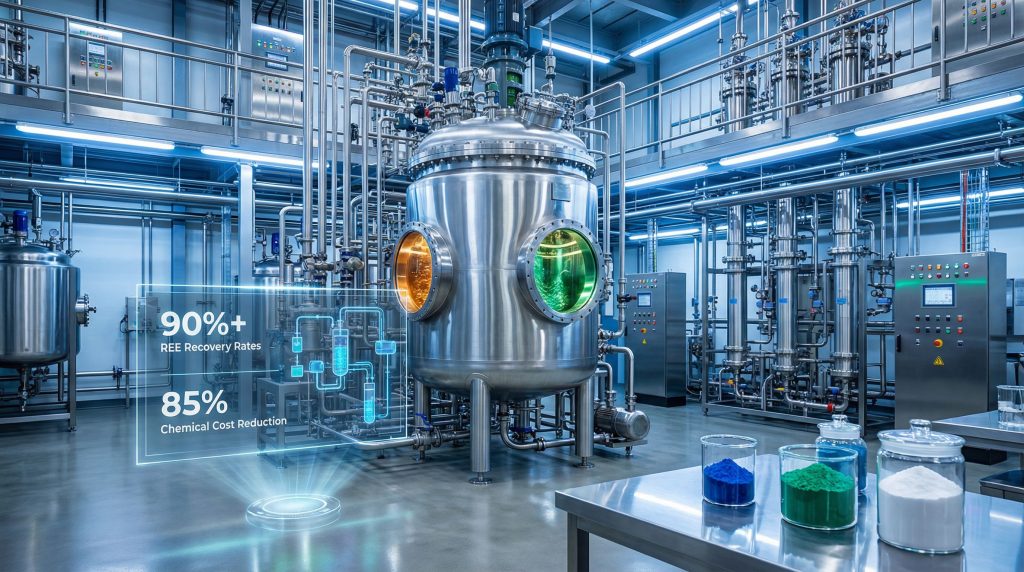
Modern closed-circuit systems achieve chemical recovery rates exceeding 90%, reducing reagent consumption costs by up to 85% while maintaining recovery efficiencies above 95% for target rare earth elements.
The next major ASX story will hit our subscribers first
Automation and Process Control Implementation
Advanced automation systems are essential for optimal performance of closed-circuit leaching operations. These systems provide precise control of process variables while ensuring safe and efficient operation under varying feed conditions.
Control System Architecture
Modern process control systems employ distributed control system (DCS) or programmable logic controller (PLC) architectures with sophisticated human-machine interfaces (HMI). Key control functions include:
• Process Variable Monitoring: Continuous measurement of temperature, pH, flow rates, and concentrations
• Automated Reagent Addition: Precise chemical dosing based on real-time process conditions
• Safety Interlock Systems: Automated shutdown procedures for abnormal operating conditions
• Data Acquisition: Historical trending and analysis for process optimisation
• Remote Monitoring: Off-site access for troubleshooting and performance evaluation
Advanced Process Control Strategies
Implementation of advanced process control (APC) techniques enhances system performance through:
-
Model Predictive Control: Optimisation of multiple process variables simultaneously
-
Fuzzy Logic Control: Management of process uncertainties and non-linear behaviour
-
Neural Network Applications: Pattern recognition for fault detection and diagnosis
-
Statistical Process Control: Quality monitoring and variance reduction
-
Real-time Optimisation: Continuous adjustment of operating conditions for maximum efficiency
Technical Challenges and Solutions
Despite their advantages, closed-circuit leaching systems face several technical challenges that require careful management and innovative solutions.
Operational Challenges
Equipment Fouling: Precipitation of impurities and scale formation can reduce heat transfer efficiency and block flow passages. Solutions include regular cleaning cycles, anti-fouling additives, and improved solution purification.
Feed Variability: Natural variations in ore composition require adaptive control strategies and flexible processing parameters. Advanced analytical techniques and feed blending help manage this challenge.
Process Stability: Maintaining consistent performance under varying conditions requires robust control systems and operator expertise. Training programmes and process simulation tools support stable operations.
Chemical Degradation: Gradual degradation of process chemicals necessitates monitoring and replacement programmes. Regular analytical testing and predictive maintenance help optimise chemical usage.
Solutions and Best Practices
Industry best practices for addressing these challenges include:
• Preventive Maintenance Programmes: Scheduled maintenance activities based on equipment condition monitoring
• Operator Training: Comprehensive education programmes covering process chemistry, equipment operation, and troubleshooting
• Process Simulation: Computer modelling tools for operator training and process optimisation
• Equipment Redundancy: Backup systems for critical process components to ensure continuous operation
• Predictive Analytics: Data-driven approaches for early detection of potential problems
Regulatory Framework and Compliance
The adoption of closed-circuit leaching systems is increasingly driven by stringent environmental regulations and ESG requirements. These systems provide a pathway to compliance with evolving regulatory standards while maintaining operational efficiency. Furthermore, sustainable mining transformation initiatives are driving the adoption of such environmentally responsible technologies.
International Environmental Standards
Global environmental regulations affecting REE processing include:
• Water Discharge Standards: Strict limits on heavy metals, pH, and dissolved solids in effluent streams
• Air Emission Controls: Regulations on particulate matter, acid gases, and volatile compounds
• Waste Management Requirements: Classification and disposal of solid wastes and hazardous materials
• ESG Reporting Standards: Increasing demands for environmental performance disclosure
Regional Regulatory Considerations
Different mining jurisdictions have implemented varying regulatory approaches:
Brazilian Environmental Legislation: Emphasises water resource protection and requires comprehensive environmental impact assessments for new mining projects. Closed-circuit systems align well with these requirements through their zero-discharge design.
Chinese Mining Regulations: Following historical environmental damage from in-situ leaching, Chinese authorities have implemented strict controls on REE processing methods, favouring contained processing approaches.
North American Standards: Focus on groundwater protection and air quality, with increasing emphasis on life-cycle environmental assessment.
Future Technology Trends and Innovation
The future development of closed-circuit leaching technology will likely focus on further improving efficiency, reducing costs, and enhancing environmental performance through technological innovation. Research into advanced hydrometallurgical techniques continues to drive technological improvements in rare earth processing.
Emerging Technologies
Several technological developments show promise for advancing closed-circuit processing:
Artificial Intelligence Integration: Machine learning algorithms for process optimisation, predictive maintenance, and quality control. AI systems can analyse vast amounts of process data to identify optimisation opportunities and predict equipment failures.
Advanced Separation Technologies: Development of new extractants and separation methods for improved selectivity and efficiency. Research focuses on task-specific ionic liquids and novel sustainable rare earth recovery methods for enhanced environmental performance.
Process Intensification: Compact reactor designs and enhanced mass transfer techniques to reduce equipment size and improve efficiency. Microreactor technology and intensified mixing systems show particular promise.
Green Chemistry Applications: Development of environmentally benign reagents and processing methods to further reduce environmental impact while maintaining performance.
Market Growth Projections
The global rare earth elements market continues to expand, driven by increasing demand from renewable energy, electric vehicle, and high-technology applications. This growth creates opportunities for advanced processing technologies that can meet both economic and environmental requirements.
Key market drivers include:
• Supply Chain Diversification: Efforts to reduce dependence on single-source suppliers
• Environmental Regulations: Increasing restrictions on environmentally damaging processing methods
• Technology Advancement: Improved processing efficiency and cost reduction
• ESG Investment Criteria: Investor focus on environmentally responsible mining operations
Technical Performance Metrics and Optimisation
Understanding key performance indicators is essential for optimising closed-circuit leaching operations and demonstrating their advantages over alternative processing methods.
Recovery Efficiency Metrics
Modern closed-circuit systems consistently achieve:
• REE Recovery Rates: 90-98% for target elements depending on feed characteristics
• Chemical Recovery: 85-95% recycling of process reagents
• Water Recycling: 90-95% of process water recycled within the system
• Energy Efficiency: 20-30% lower energy consumption compared to conventional methods
Process Optimisation Strategies
Continuous improvement in closed-circuit operations focuses on several key areas:
-
Kinetic Optimisation: Understanding reaction mechanisms to minimise residence times
-
Heat Integration: Recovery and reuse of process heat to reduce energy consumption
-
Automation Enhancement: Advanced control systems for improved consistency and efficiency
-
Predictive Maintenance: Data-driven approaches to equipment maintenance and replacement
-
Quality Improvement: Enhanced product purity and consistency through better process control
The implementation of closed-circuit leaching systems for rare earth element extraction represents a significant advancement in sustainable mining technology. These systems successfully address the environmental challenges associated with traditional processing methods while maintaining superior technical and economic performance. Consequently, the extraction of rare earth elements in closed-circuit leaching offers a viable pathway towards more sustainable and efficient resource recovery operations.
Disclaimer: This technical analysis is based on available industry information and should not be considered as investment advice. Process performance may vary depending on specific ore characteristics, operating conditions, and equipment design. Readers should consult qualified metallurgical engineers and conduct site-specific studies before implementing any processing technology.
Ready to Invest in Advanced REE Processing Technologies?
Closed-circuit leaching systems represent the future of sustainable rare earth extraction, and companies pioneering these technologies could offer significant investment opportunities. Discovery Alert's proprietary Discovery IQ model delivers real-time alerts on significant ASX mineral discoveries, instantly empowering subscribers to identify actionable opportunities ahead of the broader market in the critical minerals and advanced processing sectors. Begin your 14-day free trial today and secure your market-leading advantage.