July 10, 2026
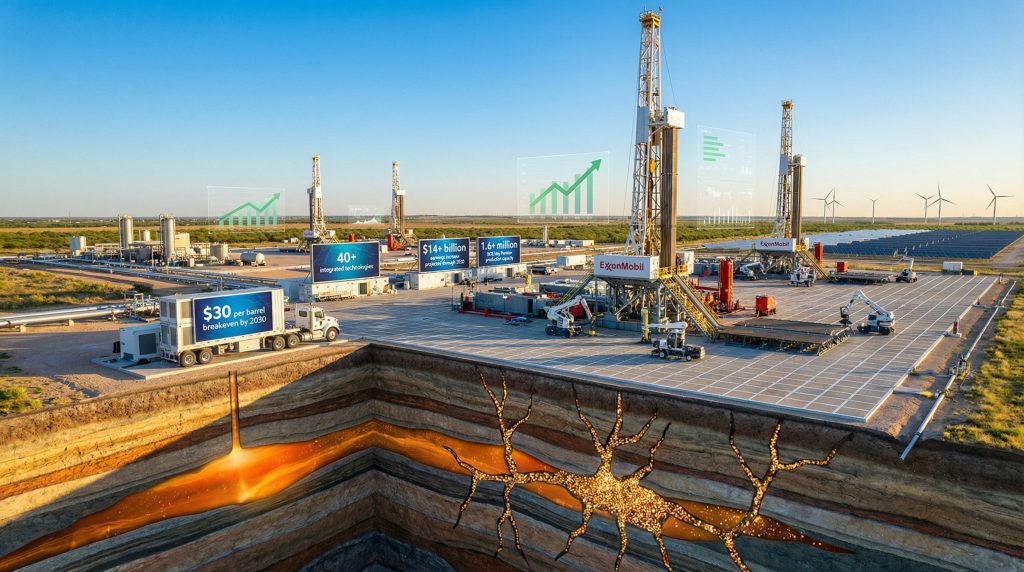
The integration of multiple advanced technologies across unconventional shale operations has revolutionised the energy sector's approach to resource extraction. ExxonMobil layered tech systems in shale demonstrate how comprehensive technology deployment creates synergistic performance improvements that far exceed individual innovation benefits. Furthermore, this systematic methodology transforms traditional drilling and completion activities into sophisticated manufacturing processes that optimise every aspect of the value chain.
Modern operators implementing these integrated value chain strategies achieve remarkable economic performance through coordinated technology deployment. The contemporary approach involves deploying multiple complementary technologies simultaneously to achieve cumulative performance improvements across entire basin developments.
This systematic integration methodology represents a fundamental departure from conventional oil and gas operations, where technology deployment typically focused on isolated improvements. Instead, leading operators now implement comprehensive technology stacks that optimise every aspect from geological characterisation through hydrocarbon marketing.
Revolutionary Proppant Chemistry and Fracture Network Engineering
Advanced proppant engineering represents one of the most significant technological breakthroughs in unconventional completion design. The development of petroleum coke-based proppant systems exemplifies the circular economy approach that integrated energy companies are adopting to optimise operational performance and cost structures.
Petcoke Proppant Technical Advantages:
- 20% oil recovery improvement compared to conventional sand completions
- Enhanced fracture penetration through reduced particle density
- Superior suspension characteristics in fracturing fluids
- Cost-effective utilisation of refinery byproduct streams
The physics underlying petcoke proppant performance centre on density differential advantages over traditional sand proppants. Conventional proppant materials exhibit higher specific gravities that can limit effective placement in complex fracture geometries. However, petcoke proppants maintain suspension longer during the fracturing process, enabling deeper penetration into secondary fracture networks.
Fracture Conductivity Maintenance:
Traditional sand proppants experience significant embedment and crushing under reservoir stress conditions, particularly in softer formations typical of many shale plays. Petcoke proppants demonstrate enhanced resistance to stress-induced degradation while maintaining fracture aperture over extended production periods.
Field validation studies across multiple Permian Basin formations show measurable improvements in both initial production rates and decline curve behaviour. Consequently, wells completed with petcoke proppant systems maintain higher productive capacity at evaluation periods compared to offset wells.
Supply Chain Integration Benefits:
| Proppant Type | Cost per Pound | Transport Distance | Supply Reliability |
|---|---|---|---|
| Wisconsin Sand | $0.08-0.12 | 800-1,200 miles | Weather dependent |
| Ceramic | $0.25-0.40 | 300-600 miles | Limited capacity |
| Petcoke | $0.05-0.08 | 50-200 miles | Refinery-linked |
The integration of petcoke proppant production with existing refinery operations creates significant supply chain advantages. Rather than depending on external proppant suppliers subject to transportation bottlenecks, operators can maintain more predictable completion material supply through internal production systems.
When big ASX news breaks, our subscribers know first
Multi-Formation Development and Vertical Integration Strategies
Cube development methodology transforms traditional sequential zone development into concurrent multi-bench extraction systems that optimise both individual well performance and overall field economics. This approach recognises that Permian Basin geology contains multiple stacked pay intervals accessible from centralised surface locations.
Stacked Pay Geological Framework:
The Permian Basin contains numerous productive formations including the Wolfcamp, Bone Spring, Spraberry, and Dean formations. Each formation exhibits distinct reservoir characteristics but often overlaps across the same geographic footprint. Traditional development approaches targeted single formations sequentially, leading to suboptimal surface facility utilisation.
Cube Development Operational Framework:
- Multi-formation targeting from single pad locations
- Simultaneous completion of multiple zones
- Integrated production facility design
- Manufacturing-style execution protocols
Furthermore, the economics of cube development depend on optimising the trade-off between individual well productivity and aggregate field recovery. Advanced analytics and diagnostic pilot programmes enable operators to determine optimal spacing configurations for specific geological conditions.
Development Approach Comparison:
| Strategy | Recovery Efficiency | Cost per BOE | Surface Impact |
|---|---|---|---|
| Traditional Single-Zone | 65-75% | $45-55 | High |
| Cube Multi-Zone | 80-90% | $30-40 | Moderate |
| Integrated Stackable | 85-95% | $25-35 | Minimal |
Interference Mitigation Techniques
Frac hit prevention has become a critical component of tight spacing development programmes. When hydraulic fractures from one well intersect with existing wellbores, the resulting pressure interference can damage production tubing or create safety hazards. In addition, advanced modelling systems now predict fracture geometry and enable completion timing coordination to minimise these risks.
Diagnostic pilot implementation involves real-time monitoring of fracture development using microseismic arrays and fibre optic sensing. This data collection provides insights into actual fracture dimensions, which are incorporated into spacing optimisation algorithms for subsequent development phases.
Analytics-Driven Spacing Optimisation and Production Forecasting
Data-driven operations represent a fundamental shift from rule-of-thumb spacing decisions toward sophisticated analytical frameworks. This analytical approach addresses the inherent complexity of optimising multiple competing objectives across different time horizons and economic scenarios.
Optimisation Process Architecture:
- Diagnostic Pilot Implementation: Real-time fracture geometry monitoring using microseismic and fibre optic systems
- Production History Analysis: Statistical analysis of historical well performance data across multiple formations
- Interference Modelling: Predictive algorithms for well-to-well interaction effects
- Economic Optimisation: Net Present Value maximisation across various development scenarios
The diagnostic pilot phase involves drilling test wells with extensive monitoring instrumentation to quantify actual fracture dimensions and proppant placement efficiency. This data collection provides ground truth for calibrating predictive models used in full-scale development programmes.
Spacing Decision Matrix:
Wider Spacing Benefits:
- Higher individual well ultimate recovery
- Reduced completion interference
- Lower drilling density requirements
- Simplified logistics coordination
Tighter Spacing Benefits:
- Increased total section recovery
- Better reservoir contact efficiency
- Faster development timeline
- Enhanced infrastructure utilisation
Advanced Analytics Applications
Machine learning algorithms process historical production data to identify correlations between completion parameters, geological characteristics, and long-term well performance. These pattern recognition systems detect relationships that inform optimal completion design and spacing decisions.
Predictive models incorporate multiple data types including geological logs, seismic interpretations, production history, and operational metrics. The integration of these diverse data streams enables more accurate forecasting under various development scenarios.
Factory-Style Execution and Operational Standardisation
Manufacturing principles applied to unconventional drilling operations create standardised, repeatable processes that reduce variability and enhance predictability. This systematic approach treats drilling and completion activities as factory-line operations with consistent quality control protocols.
Manufacturing Elements in Shale Operations:
- Standardised drilling procedures adapted to formation characteristics
- Automated equipment movement protocols between pad locations
- Comprehensive quality control systems for consistent execution
- Real-time performance monitoring and optimisation adjustments
Technology Integration Components:
The implementation of Fast Drill™ licensed technology exemplifies how standardised processes can reduce drilling time whilst maintaining wellbore quality. This technology package includes optimised drilling parameters, bit design specifications, and mud system formulations tailored to specific formations.
Automated systems coordinate equipment movement between wells within multi-well pad developments. Rather than manual rig-moving operations that require several days, standardised processes enable equipment transitions within hours, significantly improving overall drilling efficiency.
Operations Integrity Management System (OIMS)
Safety integration represents a core component of manufacturing-style execution, where standardised procedures reduce operational variability that can lead to incidents. The OIMS framework provides systematic approaches to hazard identification, change management procedures, and incident investigation systems.
Performance data collection enables systematic identification of optimisation opportunities across drilling, completion, and production phases. Key performance indicators track drilling rate of penetration, completion efficiency, initial production rates, and safety metrics.
Regular performance reviews analyse trends across multiple wells and identify best practices for broader implementation. This feedback loop drives continuous refinement of standard procedures and technology applications.
Integrated Value Chain Strategy and Infrastructure Development
Comprehensive value chain integration extends operational optimisation beyond wellhead activities to encompass midstream infrastructure and downstream processing. This holistic approach captures value at multiple points along the production-to-market pathway whilst reducing exposure to external market volatilities.
Value Chain Integration Components:
- Permian Crude Venture pipeline infrastructure development
- Pioneer Natural Resources acquisition synergies worth $60 billion
- Downstream refinery optimisation for Permian crude processing
- Petrochemical plant feedstock integration
Infrastructure Development Strategy:
The Permian Crude Venture represents a strategic infrastructure investment that provides dedicated transportation capacity for Permian production. This pipeline system reduces transportation costs whilst ensuring reliable market access during periods of infrastructure constraints that historically affected Permian differentials.
Value Capture Mechanisms:
| Integration Point | Value Creation | Risk Mitigation |
|---|---|---|
| Pipeline Ownership | Reduced transport costs | Capacity assurance |
| Refinery Processing | Optimised crude slate | Quality control |
| Chemical Integration | Enhanced margins | Feedstock security |
| Marketing Control | Price optimisation | Market access |
Pioneer Natural Resources Synergies
The acquisition integration creates operational synergies through combined acreage positions enabling optimised development planning. Shared infrastructure reduces per-well development costs, whilst technology transfer accelerates performance improvements and enhances economies of scale in service provider negotiations.
Operational synergies extend beyond traditional cost reduction to include improved reservoir management through coordinated development planning. This coordination enables more efficient infrastructure placement and reduces surface impact through shared facilities.
Environmental Technology Integration and Sustainability Systems
Environmental protection and operational safety function as integrated technological components rather than regulatory compliance add-ons within modern unconventional development programmes. This sustainability transformation ensures sustainable operations whilst maintaining economic efficiency through systematic optimisation of environmental performance.
Environmental Technology Portfolio:
- Escaid™ PathFrac™ fluids with reduced environmental impact profiles
- Closed-loop water recycling and management systems
- Low-toxicity fracturing fluid formulations utilising biodegradable additives
- Real-time emissions monitoring and reduction optimisation
Advanced water recycling technologies enable reuse of produced water and flowback fluids in subsequent completion operations. This approach reduces freshwater consumption whilst minimising disposal well requirements and associated seismicity concerns.
Treatment systems remove dissolved solids, hydrocarbons, and other contaminants to produce water suitable for fracturing operations. Mobile treatment units can be deployed to specific development areas, reducing transportation costs and environmental impact.
Technology Implementation Results:
- 30-40% reduction in freshwater consumption through recycling
- 25% reduction in truck traffic through water management optimisation
- 15% reduction in air emissions through operational improvements
- 50% reduction in surface disturbance through pad consolidation
Emissions Reduction Integration
Operational optimisation systems incorporate emissions reduction as a performance metric alongside traditional productivity and cost measures. Real-time monitoring enables identification of emission sources and implementation of mitigation strategies that align with industry evolution trends.
The next major ASX story will hit our subscribers first
Advanced Drilling and Completion Technologies
The integration of AI in drilling optimization represents a significant advancement in unconventional resource development. These intelligent systems analyse real-time drilling parameters to optimise penetration rates whilst maintaining wellbore stability and reducing non-productive time.
AI-Enhanced Drilling Systems:
- Real-time formation evaluation and steering optimisation
- Predictive maintenance algorithms for equipment reliability
- Automated drilling parameter adjustments based on geological conditions
- Enhanced hydraulic fracturing techniques for improved reservoir stimulation
The implementation of artificial intelligence in drilling operations enables continuous optimisation of drilling parameters based on formation characteristics. Machine learning algorithms process vast amounts of drilling data to identify optimal combinations of weight on bit, rotation speed, and mud properties.
Furthermore, predictive analytics systems can anticipate equipment failures before they occur, reducing costly downtime and improving overall operational efficiency. These systems analyse equipment performance patterns and environmental factors to recommend preventive maintenance schedules.
Smart Completion Systems
Intelligent completion technologies incorporate sensors and automated control systems that optimise production from multiple zones simultaneously. These systems enable real-time adjustment of production parameters to maximise recovery whilst maintaining reservoir pressure management.
Multi-zone completion systems utilise advanced packer technologies and flow control devices that allow operators to selectively produce from different reservoir intervals. This selective production capability maximises ultimate recovery whilst preventing premature water breakthrough or gas coning.
Economic Performance Analysis and Financial Projections
The financial impact of ExxonMobil layered tech systems in shale demonstrates measurable returns through operational efficiency improvements and cost structure optimisation. Systematic technology integration has generated quantifiable benefits across multiple operational dimensions, validating the stackable technology investment approach.
Financial Performance Indicators:
- $2.2 billion additional structural savings achieved in 2025
- 50%+ of production from sub-$40 breakeven cost assets
- 7% increase in Permian production guidance for forward periods
- $5 billion above previous earnings forecasts through 2030
Cost Structure Evolution:
| Year | Structural Savings | Breakeven Cost | Production Growth |
|---|---|---|---|
| 2019 | Baseline | $45-50/bbl | Baseline |
| 2022 | $8 billion | $35-40/bbl | +15% |
| 2025 | $14 billion | $30-35/bbl | +25% |
| 2030 | $20 billion | $25-30/bbl | +40% |
The cumulative technology development and deployment investment has generated measurable returns through reduced drilling and completion costs per well. In addition, improved well productivity and ultimate recovery factors contribute to enhanced margins through value chain integration.
Return on Technology Investment
Continued technology development focuses on emerging digital technologies, advanced materials science, and artificial intelligence applications. These next-generation innovations are expected to drive further cost reductions and performance improvements across the operational spectrum.
Technology deployment success depends on continued access to capital for research and development, maintenance of operational expertise, and favourable regulatory environments. However, commodity price volatility can impact investment returns, though lower cost structures provide improved resilience during low-price periods.
Competitive Differentiation and Industry Leadership
ExxonMobil layered tech systems in shale create competitive advantages through proprietary technology portfolios that are difficult for competitors to replicate quickly. This comprehensive approach establishes technological capabilities that protect market position whilst generating superior investment returns.
Competitive Advantage Sources:
- Proprietary technology development spanning multiple disciplines
- Integrated operational capabilities across the full value chain
- Scale advantages in technology deployment and cost amortisation
- Continuous improvement culture supported by systematic data collection
Selected technologies within the integrated platform may present licensing opportunities to other operators, creating additional revenue streams whilst establishing industry standard practices. This approach can accelerate industry-wide technology adoption whilst generating intellectual property returns.
Industry Impact and Future Implications
The systematic technology integration approach influences industry best practices through demonstration of improved operational and environmental performance. Furthermore, it accelerates technology development cycles across the industry whilst enhancing overall basin economics through improved efficiency.
Market Position Sustainability:
Continued technology leadership requires ongoing investment in research and development, talent acquisition and retention, and strategic partnerships with technology providers and academic institutions. The complexity of integrated technology systems creates barriers to rapid competitive replication.
Emerging technology areas include artificial intelligence for real-time optimisation, advanced materials for completion enhancement, digital twin systems for predictive maintenance, and autonomous systems for safety and efficiency improvements.
Investment decisions in the energy sector involve significant risks and uncertainties. This analysis is based on publicly available information and should not be considered investment advice. Readers should conduct independent research and consult qualified financial advisors before making investment decisions.
Looking for the Next Breakthrough in Energy Technology?
Discover Alert's proprietary Discovery IQ model delivers real-time alerts on significant ASX mineral discoveries, instantly empowering subscribers to identify actionable opportunities ahead of the broader market. Begin your 30-day free trial today and secure your market-leading advantage with Discovery Alert.