
June 5, 2026
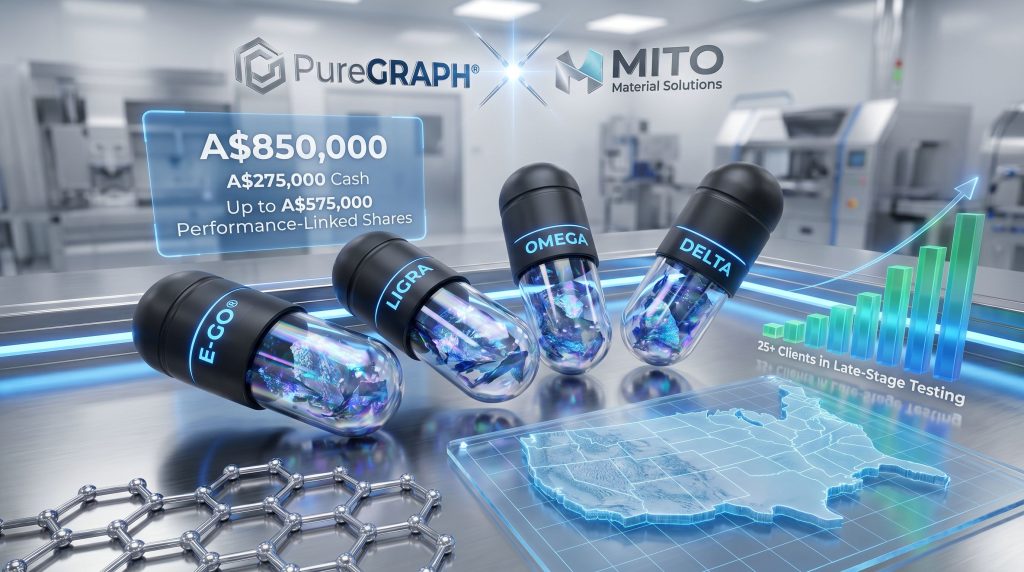
The Commercialisation Crossroads: Why Advanced Materials Companies Are Turning to M&A
For more than a decade, graphene has occupied a peculiar position in the advanced materials landscape: universally acknowledged as transformative, yet persistently difficult to monetise at scale. The fundamental challenge has never been scientific. Graphene's theoretical properties, including extraordinary tensile strength, exceptional electrical conductivity, and remarkable thermal performance, are well established in peer-reviewed literature. The bottleneck has always been commercial architecture: how to translate a material with near-limitless application potential into a diversified, self-sustaining revenue platform.
Single-product graphene companies have repeatedly demonstrated that purity and performance alone are insufficient to drive industrial adoption. End-market customers, particularly in defence, aerospace, and advanced composites, require application-specific formulations, validated testing data, and established supply relationships before committing to material substitution. This is the structural challenge that the First Graphene acquisition of MITO Material Solutions is directly designed to address.
When big ASX news breaks, our subscribers know first
Understanding the Gap Between Graphene's Potential and Its Commercial Reality
The global graphene market remains fragmented, with most producers occupying narrow niches defined by either material type or target application. High-purity graphene platelet producers, graphene oxide specialists, and functionalised nanomaterial developers have largely operated in parallel rather than as integrated platforms. This fragmentation creates a paradox: the more specialised a producer becomes, the deeper its expertise in one chemistry, but the narrower its addressable market.
Functionalisation, in particular, represents a critical but underappreciated distinction within the sector. Standard graphene oxide is produced by oxidising graphite to introduce oxygen-containing functional groups onto the graphene surface. Functionalised graphene takes this further by attaching specific chemical groups tailored to particular matrix compatibility requirements. The practical outcome for end-users is substantial:
- Improved dispersion within polymer matrices, resins, and coating systems
- Enhanced interfacial bonding between the graphene additive and the host material
- Targeted performance outcomes such as improved barrier properties, increased tensile strength, or modified conductivity
- Lower effective loading requirements, meaning smaller quantities of additive are needed to achieve meaningful performance gains
This last point carries significant commercial weight. In defence and aerospace procurement contexts, where material certification is a lengthy and expensive process, the ability to achieve performance thresholds at low loading rates reduces both cost and complexity in the qualification pathway.
What MITO Material Solutions Brings to the Table
MITO Material Solutions represents approximately eight years of focused research and development translated into a commercially deployable product architecture. Unlike early-stage graphene ventures that are still navigating the gap between laboratory demonstration and industrial scalability, MITO's product lines were already generating commercial revenue at the time of the acquisition.
The four core product lines span a meaningful range of application categories:
| Product Line | Primary Application | Material Category |
|---|---|---|
| E-GO® | Thermoset and composite systems | Graphene oxide additive |
| LIGRA | Coating and resin enhancement | Hybrid graphene additive |
| OMEGA | Thermoplastic performance materials | Functionalised nanomaterial |
| DELTA | Advanced composite and structural materials | High-performance additive |
Each product line occupies a distinct application niche, which is strategically significant. E-GO® targets thermoset systems commonly used in structural composites, while LIGRA addresses the coatings and resin segment where graphene's barrier enhancement properties are particularly valued. OMEGA serves thermoplastic processors, a sector with high-volume applications across automotive and consumer goods manufacturing. DELTA targets the high-specification end of the composites market, where performance requirements justify premium additive pricing.
Established Commercial Traction
What makes this portfolio particularly valuable is its existing commercial traction. MITO's technologies are already incorporated into products from recognised premium US brands. Ski manufacturers Parlor Skis and Folsom Custom Skis use graphene-enhanced additives to improve strength-to-weight performance in their composite constructions. Fishing rod producer St. Croix Rods employs the technology to enhance responsiveness and durability in high-end carbon fibre blanks.
These are not pilot programmes or evaluation agreements; they represent genuine commercial relationships that validate the product performance claims independently of the acquiring company's promotional interests. Furthermore, beyond established customers, the acquisition delivers a pipeline exceeding 25 clients engaged in late-stage testing across multiple sectors. In graphene commercialisation terms, late-stage testing is the most commercially proximate stage before purchase order conversion, representing a significantly de-risked growth pathway compared to cold-start market development.
How the First Graphene Acquisition of MITO Material Solutions Reshapes the Company's Strategic Position
Prior to this transaction, First Graphene's commercial identity was defined primarily by its PureGRAPH® product range: high-purity few-layer graphene platelets produced via an electrochemical process from high-quality graphite. PureGRAPH® products have demonstrated strong technical performance in construction, rubber, coatings, and energy applications, but they represent a single chemistry class within the broader graphene taxonomy.
The addition of MITO's product lines creates a fundamentally different capability architecture:
- PureGRAPH®: High-purity few-layer graphene platelets for bulk performance applications
- E-GO®: Graphene oxide optimised for thermoset matrix compatibility
- LIGRA: Hybrid graphene additives for coatings and surface treatment systems
- OMEGA: Functionalised nanomaterials for thermoplastic processing
- DELTA: High-performance additives for structural composite applications
This combined portfolio addresses application specifications that no single graphene chemistry can satisfy. Critically, the different chemistries do not cannibalise each other: a customer formulating a thermoplastic compound requires different graphene chemistry to one engineering an aerospace composite laminate, meaning the expanded portfolio expands the total addressable market rather than redistributing it.
Key Strategic Insight: The combination of high-purity graphene platelets with functionalised graphene oxide derivatives is not a simple product line extension. It represents access to fundamentally different procurement specifications across defence, aerospace, and industrial composites sectors, each of which maintains distinct material qualification standards.
This kind of strategic broadening reflects wider mining industry consolidation trends seen across the advanced materials and resources sector, where companies are increasingly seeking portfolio depth through targeted acquisitions rather than organic growth alone.
The Transaction Structure: Performance Linkage as a Governance Mechanism
The acquisition consideration totals up to A$850,000, structured in a way that deliberately aligns the interests of both parties across the post-completion integration period.
| Consideration Component | Value | Mechanism | Timing |
|---|---|---|---|
| Cash payment | A$275,000 | Upfront at completion | Near-term |
| Tranche 1 shares | Performance-linked | Revenue milestone Year 1 | ~12 months post-completion |
| Tranche 2 shares | Performance-linked | Revenue milestone Year 2 | ~24 months post-completion |
| Total maximum consideration | A$850,000 | Combined cash and equity | Over 24-month earn-out period |
The performance linkage is not merely a financial structuring choice; it functions as a validation mechanism for the acquired revenue base. If MITO's commercial relationships are as robust as the deal rationale implies, milestone achievement should be attainable and equity consideration will be issued accordingly. If execution challenges emerge, the majority of consideration remains unissued, protecting existing shareholders from dilution without corresponding commercial delivery.
Shareholder approval is required for the equity tranches, with cash substitution provisions if approval is not obtained. This introduces an additional governance layer that constrains dilutive issuance to scenarios where the shareholder base has validated the consideration quantum. The consolidation pressures driving such structured deals are increasingly prevalent across the advanced materials sector as companies balance growth ambitions with capital discipline.
From an investor psychology perspective, performance-linked structures of this type tend to receive more favourable market reception than fixed consideration acquisitions because they visibly constrain downside scenarios while preserving full participation in upside outcomes.
Defence and Aerospace: The High-Value Application Horizon
One of the most strategically significant dimensions of the First Graphene acquisition of MITO Material Solutions is the enhanced exposure it creates to US defence and aerospace procurement channels.
The US Department of Defense and agencies including DARPA have demonstrated increasing institutional interest in graphene-enhanced composite structures, particularly for applications involving:
- Mechanical performance enhancement in structural components subject to high-stress loading
- Thermal management systems where graphene's conductivity improves heat dissipation in densely packed electronics
- Advanced energy materials relevant to next-generation power systems and energy storage
- Survivability technologies where material weight reduction without strength penalty is a direct operational advantage
Functionalised graphene and graphene oxide are particularly well-suited to defence procurement requirements because they enable multifunctional performance from a single additive. A composite panel incorporating functionalised graphene might simultaneously achieve improved impact resistance, reduced weight, and enhanced electromagnetic shielding, addressing multiple specification requirements within a single material solution.
Intersection with Emerging Energy Technologies
The acquisition also creates a potentially significant intersection with First Graphene's existing Halocell partnership, which focuses on perovskite solar technologies for drone applications. Drone platforms require simultaneous optimisation of energy generation efficiency, structural weight, and material durability. Furthermore, the energy transition minerals sector is increasingly converging with advanced composites in defence contexts, reinforcing the strategic relevance of this expanded capability stack.
The combined capability across graphene-enhanced composites, conductive materials, and perovskite solar integration positions the combined entity at a technically credible intersection of these requirements.
Sector Watch: The convergence of lightweight structural composites, advanced energy harvesting, and conductive nanomaterial technologies within a single company's portfolio is relatively uncommon at the small-cap level. For defence procurement officers evaluating materials supply chains, integrated multi-chemistry providers present a more compelling proposition than single-material specialists.
The next major ASX story will hit our subscribers first
Scenario Analysis: Three Pathways Over the Next 24 Months
Given the performance-linked structure and the nature of the inherited commercial pipeline, the post-acquisition trajectory can be reasonably modelled across three distinct scenarios:
Scenario 1: Accelerated US Commercial Penetration
Late-stage testing conversions occur at above-average rates, and initial defence procurement interest translates into contract awards within the earn-out window. Revenue milestone tranches are triggered within 18 months, and the US market emerges as the primary near-term growth driver. This scenario is most likely if inherited customer relationships prove as robust as the deal rationale implies and integration complexity is managed effectively.
Scenario 2: Steady Portfolio Expansion with Selective Sector Wins
Commercial traction builds progressively through the sporting goods and composites segments, while defence engagement remains at evaluation stage. Partial milestone achievement occurs, establishing a genuine US commercial presence without the step-change revenue trajectory of Scenario 1. This represents a plausible base case given the typical pace of industrial materials adoption cycles.
Scenario 3: Integration Complexity Delays Commercial Execution
Customer transition friction, manufacturing integration challenges, or unforeseen market dynamics slow conversion rates. Revenue milestones are partially or fully deferred, cash substitution provisions for equity tranches are activated, and near-term dilution is avoided at the cost of delayed growth. The performance-linked deal structure means shareholder impact is containable in this scenario.
Competitive Positioning in a Maturing Graphene Market
The global graphene producer landscape in 2026 remains characterised by a concentration of single-chemistry specialists. Most producers have built deep expertise in one material class, whether that is high-purity graphene platelets, graphene oxide, or reduced graphene oxide, but lack the portfolio breadth to address procurement requirements that cross chemistry boundaries.
This structural characteristic of the sector means that a combined First Graphene and MITO platform, spanning high-purity platelets, graphene oxide, hybrid additives, and functionalised nanomaterials, occupies a genuinely differentiated competitive position. For industrial customers seeking a consolidated supply relationship across multiple graphene chemistry types, a single-supplier solution carries meaningful procurement advantages in terms of qualification efficiency, supply chain management, and technical support continuity.
The transaction may also signal a broader consolidation dynamic within the graphene commercialisation sector. As the market matures beyond pure technology demonstration into commercial scale, companies with narrow product portfolios face increasing pressure to either broaden their chemistry capabilities through acquisition or accept a constrained addressable market. The critical minerals demand surge is additionally amplifying investor attention on advanced material platforms that can demonstrate genuine multi-sector relevance.
The performance-linked deal structure employed in the First Graphene acquisition of MITO Material Solutions may prove to be a replicable template for similar transactions, particularly where technology validation is strong but commercial scale remains early-stage. Notably, mining private equity participants are increasingly applying comparable earn-out frameworks across advanced materials deals to manage early-stage commercial risk.
Frequently Asked Questions: First Graphene's Acquisition of MITO Material Solutions
What assets did First Graphene acquire from MITO Material Solutions?
The acquisition encompasses MITO's full product portfolio including the E-GO®, LIGRA, OMEGA, and DELTA product lines, along with manufacturing equipment, all associated intellectual property, existing client agreements, and the active commercial customer base.
How much did First Graphene pay for MITO Material Solutions?
Total consideration is structured at up to A$850,000, consisting of A$275,000 in upfront cash and up to A$575,000 in performance-linked First Graphene shares issued across two tranches over a 24-month earn-out period tied to revenue targets.
What distinguishes graphene oxide from PureGRAPH® high-purity graphene?
PureGRAPH® products are few-layer graphene platelets characterised by high crystallinity and minimal surface functionalisation, making them well-suited to bulk mechanical and conductive enhancement applications. Graphene oxide introduces oxygen-containing surface groups that alter dispersibility, matrix compatibility, and chemical reactivity, opening different application niches particularly relevant to polymer systems, coatings, and composite resins.
Why does the US market hold such strategic importance for First Graphene?
The United States represents the world's largest single advanced materials market, concentrating the majority of global defence and aerospace procurement, and hosting a deep industrial base across composites, coatings, and high-performance manufacturing. As reported by Proactive Investors, establishing a direct commercial presence with inherited customer relationships eliminates the typical multi-year market entry timeline associated with cold-start US expansion.
What is the significance of MITO's pipeline of more than 25 clients in late-stage testing?
Late-stage testing relationships represent the commercially closest stage before purchase order conversion. Inheriting this pipeline means First Graphene enters the US market with near-term conversion opportunities that carry materially lower customer acquisition costs compared to developing new relationships from scratch. According to PR Newswire, the acquisition is expected to accelerate US expansion meaningfully, with the inherited pipeline representing a compelling near-term commercial catalyst.
Disclaimer: This article is for informational purposes only and does not constitute financial or investment advice. Readers should conduct their own independent research and seek professional advice before making any investment decisions. Forward-looking statements and scenario analyses involve assumptions and uncertainties that may cause actual outcomes to differ materially from those described.
Want To Catch the Next Major ASX Materials Discovery Before the Market Does?
Discovery Alert's proprietary Discovery IQ model scans ASX announcements in real time, instantly identifying significant mineral and advanced materials discoveries across more than 30 commodities — turning complex data into clear, actionable opportunities for both short-term traders and long-term investors. Explore historic discovery returns on the Discovery Alert discoveries page and begin your 14-day free trial to position yourself ahead of the market.