June 27, 2026
How Fiscal Vulnerabilities Shape Emergency Energy Policy Responses
Resource-dependent economies face mounting pressure as global commodity markets create cascading financial stress throughout domestic systems. Zambia fuel tax cuts to counter global oil price increase represent a growing pattern where African governments increasingly confront impossible choices between immediate consumer protection and long-term fiscal stability as external price shocks overwhelm limited policy buffers.
Traditional macroeconomic frameworks prove inadequate when import dependency intersects with volatile energy markets, forcing policymakers into reactive rather than strategic decision-making processes. Furthermore, these decisions often intersect with broader oil price movements that create additional complexity for economic planning.
When big ASX news breaks, our subscribers know first
What Drives Emergency Fuel Subsidy Decisions in Resource-Dependent Economies?
The Fiscal Mathematics of Energy Price Interventions
Emergency subsidy mechanisms represent calculated fiscal sacrifices designed to prevent immediate economic disruption while governments assess broader strategic alternatives. Zambia fuel tax cuts to counter global oil price increase demonstrate this delicate balancing act, with the recent three-month fuel tax suspension eliminating both excise duties and VAT on petroleum imports from April through June 2026.
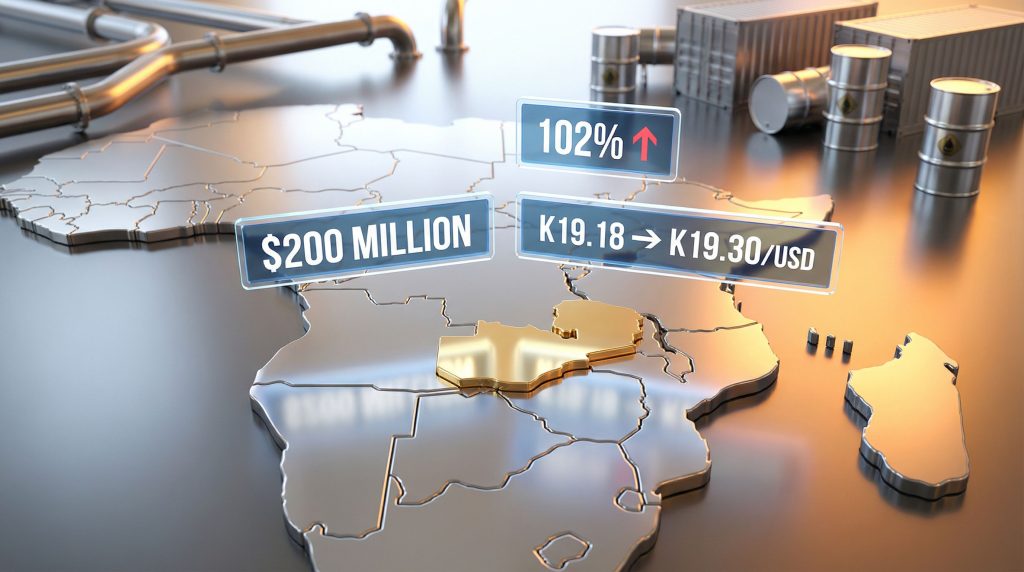
The $200 million revenue sacrifice over this limited timeframe reflects careful policy design intended to provide temporary relief without creating unsustainable fiscal precedents. This translates to approximately $66.7 million monthly in foregone government revenues during a critical budget period.
Finance Minister Situmbeko Musokotwane's announcement at the IMF Spring Meetings emphasised that such interventions address symptoms rather than structural vulnerabilities. His warning that energy crises linked to Middle East instability could represent the biggest risk to African economies over the next year highlights the continental scope of these challenges. Moreover, these pressures contribute to broader inflation and debt pressures affecting regional stability.
- Revenue impact calculation: $200 million over 3 months
- Policy scope: Complete excise duty suspension plus VAT removal
- Duration limits: Fixed 3-month implementation window
- Consumer targets: Household and business fuel cost relief
Geopolitical Risk Assessment in Energy Import Dependencies
Global oil price volatility stemming from Middle East tensions creates immediate transmission effects throughout import-dependent African economies. The ongoing conflict involving Iran has generated supply chain disruptions that force governments into emergency response modes regardless of fiscal preparedness.
Landlocked economies face particularly acute vulnerabilities as transportation costs compound global price pressures. Currency depreciation adds additional layers of complexity, with the Kwacha moving from K19.18 to K19.30 per USD during the March-April 2026 period, creating a 0.6% additional cost burden on petroleum imports.
Strategic petroleum reserves remain largely absent across sub-Saharan Africa, leaving governments without buffer mechanisms to smooth short-term supply disruptions. Consequently, this infrastructure gap forces immediate policy responses rather than allowing measured strategic planning.
Why Do Tax Suspension Strategies Fail to Deliver Comprehensive Relief?
The Excise Duty and VAT Removal Framework
Tax suspension mechanisms address only the domestic policy component of retail fuel pricing while leaving global wholesale costs, refining margins, and transportation expenses unchanged. Additionally, the tariffs' impact on markets creates parallel pressures that compound these challenges across interconnected economies.
South Africa's parallel implementation of fuel levy cuts to address a $350 million fiscal shock demonstrates the regional pattern of emergency responses to similar external pressures. The three-month implementation window in Zambia fuel tax cuts to counter global oil price increase reflects recognition that open-ended subsidies create unsustainable fiscal trajectories.
African governments must undertake domestic reforms that improve resilience and strengthen the quality of public spending rather than relying solely on temporary interventions.
Revenue collection disruption extends beyond immediate fuel tax losses as consumption patterns shift and economic activity adjusts to new relative prices. Multiple African jurisdictions implementing similar policies simultaneously creates regional coordination challenges and potential competitive distortions.
Market Price Transmission Despite Policy Interventions
Global oil price surges bypass domestic policy interventions when wholesale costs increase faster than tax relief can offset. The removal of 15-20% domestic tax components provides only partial consumer protection when crude oil prices double or triple within short timeframes.
Currency depreciation compounds these challenges as import costs rise in local currency terms even when dollar-denominated prices remain stable. However, the Kwacha's movement against the USD during the intervention period illustrates how exchange rate volatility can negate policy effectiveness.
Price transmission mechanisms include:
- Global wholesale price floors that domestic policies cannot influence
- Currency depreciation effects adding import cost pressures
- Supply chain bottlenecks creating regional price premiums
- Demand response patterns potentially accelerating import bill growth
Consumer price outcomes depend heavily on retail market structure and pass-through efficiency. Where retail margins expand to capture tax relief benefits, consumer protection objectives may not materialise despite significant fiscal costs.
How Do Continental Energy Crises Expose Structural Economic Vulnerabilities?
Import Dependency Risk Concentration Analysis
African petroleum import exposure creates systematic vulnerabilities that transcend individual country policy responses. Economies lacking domestic refining capacity face multiple transmission channels when global energy markets experience disruption, as evidenced by the recent trade war impacts strategies affecting global supply chains.
Musokotwane's analysis of Africa's declining role in sectors with historical competitive advantages reflects deeper structural shifts that amplify external shock transmission. Manufacturing capacity moving offshore reduces domestic value addition while increasing import dependency across multiple sectors.
The concentration of African economies in commodity export sectors without corresponding industrial development creates asymmetric vulnerability patterns. For instance, energy price shocks hit hardest where domestic production capacity cannot substitute for imports during supply disruptions.
| Vulnerability Metric | Impact | Timeline |
|---|---|---|
| Revenue Loss (Zambia) | $200 million | 3 months |
| Fiscal Shock (South Africa) | $350 million | Q2 2026 |
| Currency Pressure | 0.6% depreciation | March-April 2026 |
| Regional Scope | Continental | 12-month outlook |
Inflation Transmission Mechanisms Through Energy Costs
Energy cost increases create cascading effects throughout productive sectors as diesel powers manufacturing operations and transportation networks. Production cost escalation follows predictable pathways from direct fuel inputs through logistics and distribution systems.
Central bank policy responses face constraints in import-dependent economies where monetary tightening to combat inflation may worsen currency depreciation and increase import costs. This creates policy dilemmas where traditional inflation targeting frameworks prove inadequate.
Musokotwane's warning about production costs and public finance strain across the continent reflects understanding that energy shocks create systemic rather than isolated disruptions. Furthermore, household purchasing power erosion during extended energy price episodes reduces domestic demand and slows economic growth.
Inflation transmission pathways:
- First-round effects: Direct fuel cost increases in consumer price indices
- Second-round impacts: Production cost pass-through in manufacturing and agriculture
- Third-round consequences: Wage adjustment demands and demand destruction effects
What Alternative Policy Frameworks Could Strengthen Energy Resilience?
Diversification and Domestic Production Strategies
Long-term energy security requires fundamental shifts from consumption protection toward productive capacity development. Musokotwane's emphasis on economies that produce more, diversify more, and trade more competitively reflects understanding that resilience comes through structural transformation rather than reactive policies.
Industrial growth policies targeting sectors with sustainable competitive advantages could reduce external dependency over medium-term horizons. In addition, energy transition strategies in domestic refining capacity, renewable energy infrastructure, and regional cooperation frameworks offer alternatives to emergency intervention cycles.
Regional cooperation mechanisms for petroleum procurement and storage could provide collective bargaining power and buffer capacity currently absent from individual country approaches. Coordinated policy responses might achieve economies of scale in infrastructure development while reducing vulnerability to supply disruptions.
Fiscal Buffer Development for Future Shock Absorption
Revenue diversification strategies beyond commodity taxation could provide stable funding sources during external shock periods. Public spending quality improvements focused on productive investments rather than consumption subsidies might strengthen economic fundamentals over time.
International financing coordination for energy infrastructure development requires balancing external support with domestic capacity building objectives. Musokotwane's caution that external financing alone cannot address underlying vulnerabilities reflects awareness of dependency risks in development financing.
Strategic framework elements:
- Domestic production capacity in energy and manufacturing sectors
- Regional cooperation for procurement and infrastructure sharing
- Fiscal diversification beyond import-dependent revenue sources
- Infrastructure investment in energy security and productive capacity
How Do Regional Energy Policy Responses Compare Across Africa?
Cross-Border Policy Coordination Analysis
Southern African fuel tax adjustment patterns during the 2026 oil crisis reveal both coordination challenges and parallel response frameworks. Zambia fuel tax cuts to counter global oil price increase contrast with South Africa's fuel levy adjustment mechanisms, suggesting different assessment of fiscal sustainability versus consumer protection trade-offs.
Regional economic community response frameworks remain underdeveloped for coordinated crisis management despite shared vulnerability patterns. Competitive policy responses where countries attempt to attract cross-border fuel purchases through lower domestic prices create distortions and potential smuggling incentives.
Comparative government intervention costs across multiple jurisdictions highlight varying fiscal capacity for absorbing external shocks. South Africa's larger absolute intervention ($350 million versus Zambia's $200 million) reflects both larger economy scale and potentially different policy calculation frameworks.
Lessons from Alternative Economic Models
Productivity-focused development strategies offer alternatives to consumption subsidisation approaches during crisis periods. Countries with stronger domestic manufacturing bases demonstrate greater resilience to external energy shocks through substitution possibilities and value-addition capacity.
Energy-efficient industrial policy frameworks could reduce vulnerability to global price volatility while building competitive advantages in less energy-intensive sectors. Trade competitiveness enhancement through structural economic reforms may provide sustainable alternatives to repeated intervention cycles.
Musokotwane's observations about African competitive advantage decline in global production systems reflect broader pattern where policy focus shifted toward consumption protection rather than productive capacity development over recent decades.
The next major ASX story will hit our subscribers first
What Long-Term Economic Restructuring Could Prevent Future Crises?
Industrial Policy Reform for Reduced External Vulnerability
Manufacturing capacity development represents the most sustainable path toward reduced import dependency and enhanced shock absorption capability. Value-added production strategies in sectors with genuine competitive advantages could provide employment while reducing external vulnerability.
Export diversification frameworks beyond traditional commodity exports require coordinated investment in human capital, infrastructure, and institutional capacity. However, the challenge lies in identifying sectors where African economies can compete globally while building energy security simultaneously.
Musokotwane's emphasis on economies that produce more and trade more competitively reflects recognition that consumption-focused policy frameworks create dependency rather than resilience. Structural economic reforms targeting productive capacity may offer the only sustainable alternative to repeated crisis management.
Energy Transition Planning for Economic Stability
Renewable energy investment policies provide dual benefits of reduced petroleum dependency and potential competitive advantages in emerging energy technologies. Grid modernisation strategies could support industrial development while decreasing vulnerability to global fossil fuel price volatility.
Regional energy trading mechanisms and infrastructure requirements offer opportunities for collective investment in energy security while building regional integration. Coordinated planning across Southern African economies might achieve economies of scale impossible for individual countries.
According to government analysis of global oil impacts, the suspension represents a strategic response to unprecedented market pressures. Additionally, regional authorities have highlighted that Zambia expects significant revenue losses while maintaining essential consumer protections.
Long-term restructuring priorities:
- Industrial capacity development in competitive sectors
- Energy transition investment reducing petroleum dependency
- Regional integration for collective energy security
- Institutional strengthening for crisis prevention rather than crisis response
The path forward requires fundamental shifts from reactive policy frameworks toward proactive structural transformation that builds resilience rather than managing repeated crises.
Disclaimer: This analysis contains forward-looking assessments of economic policy and market conditions. Readers should conduct independent research and consult qualified professionals before making investment or policy decisions. Economic outcomes depend on multiple variables and assumptions that may change significantly.
Ready to Invest in the Next Major Resource Discovery?
Discovery Alert's proprietary Discovery IQ model delivers instant notifications on significant ASX mineral discoveries, empowering investors to identify actionable opportunities ahead of the broader market during periods of commodity volatility and economic uncertainty. Begin your 14-day free trial today by visiting Discovery Alert's discoveries page to understand how major mineral discoveries can generate substantial returns whilst global energy markets create new investment challenges.