June 19, 2026
Fortescue's ambitious renewable energy transformation highlights the growing importance of energy independence as mining operations worldwide grapple with volatile fossil fuel costs and supply chain vulnerabilities. The company's Fortescue green energy system represents more than an environmental initiative – it's a comprehensive business strategy addressing operational resilience and cost optimisation in an increasingly unpredictable global energy market.
Revolutionary Engineering: Fortescue's Grid Independence Strategy
Industrial decarbonisation requires more than incremental improvements in energy efficiency. Fortescue's approach represents a comprehensive reimagining of mining infrastructure, centered on what the company terms "Real Zero" emissions. This methodology eliminates reliance on carbon offset mechanisms, instead pursuing absolute emissions reduction through renewable energy integration.
The distinction between Real Zero and traditional carbon neutrality approaches carries significant implications for operational authenticity and long-term cost structures. Furthermore, whilst competitor strategies often incorporate offset purchasing to achieve net-zero targets, Fortescue's green energy system commitment requires direct operational transformation at the source of emissions generation.
Pilbara Energy Connect: Technical Architecture
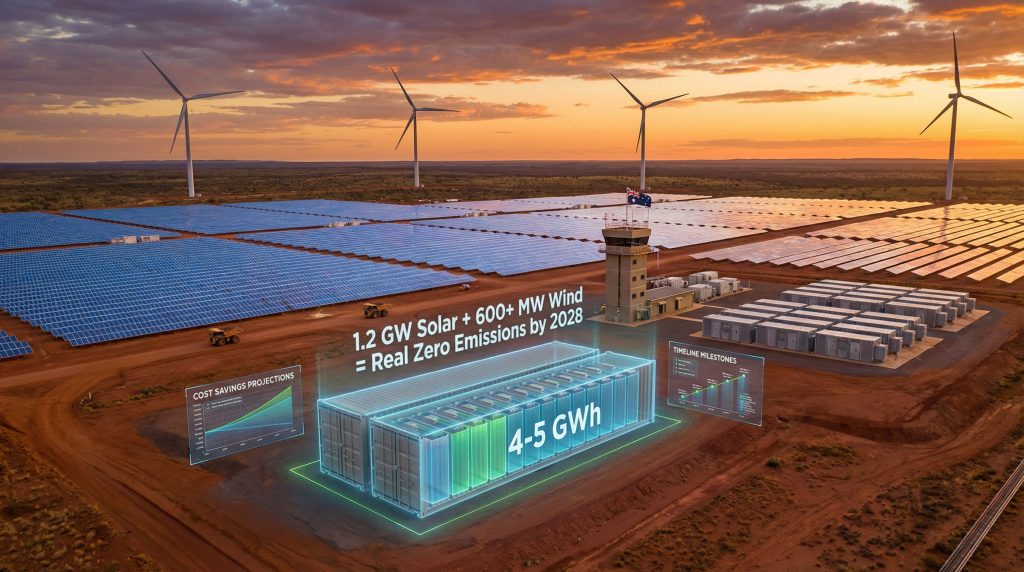
The Pilbara Energy Connect system represents Australia's most ambitious off-grid renewable network, incorporating three primary generation and storage components:
- 1.2 gigawatts of solar capacity distributed across mining sites
- More than 600 megawatts of wind generation optimised for Pilbara wind patterns
- 4-5 gigawatt-hours of battery energy storage for continuous operations
This infrastructure scale positions the system as approximately 1.8 to 2.3 times larger than Australia's current largest battery installation, which operates at 2.2 GWh capacity. The comparative magnitude suggests Fortescue's commitment extends beyond typical corporate sustainability initiatives toward fundamental operational restructuring. In addition, this scale aligns with broader industry evolution trends reshaping mining operations globally.
Dino Otranto, Fortescue's CEO of metals and operations, emphasised the strategic imperative driving this transformation. According to Reuters reporting, he stated that recent supply disruptions have demonstrated how vulnerable mining operations remain to external energy dependencies, particularly during periods of geopolitical instability.
Accelerated Implementation Timeline
| Phase | Capacity | Target Completion | Operational Milestone |
|---|---|---|---|
| Initial Deployment | 290 MW renewable | Early 2027 | Daytime green processing |
| Interim Operations | Battery integration | Late 2025-2026 | 24-hour fossil fuel-free periods |
| Full System | 1.8+ GW total | End of 2028 | Complete grid independence |
The timeline acceleration from the original 2030 target to 2028 completion reflects both operational confidence and external pressure from energy market volatility. This two-year advancement requires exceptional execution capabilities and supply chain coordination. However, this timeline demonstrates how companies can accelerate their sustainability transformation when strategic imperatives align.
When big ASX news breaks, our subscribers know first
Financial Architecture and Cost Optimisation Framework
Fortescue projects $100 million in annual fossil fuel savings by 2027, with more substantial unit cost reductions of $2 to $4 per wet metric ton when the decarbonisation programme reaches completion. These projections represent the primary economic justification for the capital expenditure required for renewable infrastructure deployment.
The company's ability to activate renewable power generation ahead of schedule has provided immediate competitive advantages during recent diesel supply disruptions affecting the broader mining industry. Consequently, this operational flexibility demonstrates the strategic value of energy independence beyond long-term cost projections and highlights decarbonisation benefits for forward-thinking operators.
Investment Risk Assessment
Fortescue's current renewable energy commitments must be evaluated within the context of previous strategic pivots. In 2020, the company launched extensive green hydrogen initiatives across multiple international markets. However, by 2025, Fortescue significantly scaled back these ambitions, cancelling major projects in both the United States and Australia due to high implementation costs and insufficient customer demand.
This historical pattern suggests that while Fortescue demonstrates genuine commitment to renewable energy adoption, the company maintains flexibility to adjust strategic direction based on market realities and financial performance metrics.
Critical Investment Consideration: The shift from green hydrogen production to direct renewable power generation and green iron processing reflects lessons learned from previous overcommitments. Current initiatives focus on technologies with established demand profiles rather than emerging market segments.
Battery Storage Technology and Operational Continuity
The 4-5 gigawatt-hour battery system represents the technical foundation enabling 24-hour fossil fuel-free mining operations. However, achieving continuous operations through battery storage in extreme Pilbara conditions presents significant engineering challenges that extend beyond simple capacity calculations.
Environmental Performance Considerations
The Pilbara region experiences daily temperature variations exceeding 25°C, with peak temperatures reaching 45°C during summer months. These conditions significantly impact lithium-ion battery performance through:
- Accelerated capacity degradation at elevated temperatures
- Reduced charge/discharge efficiency during extreme heat periods
- Increased cooling system energy requirements for thermal management
- Shortened cycle life compared to moderate climate installations
Battery storage duration calculations become critical for operational planning. Mining operations require substantial power loads for:
- Primary extraction equipment (haul trucks, excavators, drilling systems)
- Ore processing facilities (crushers, magnetic separators, flotation systems)
- Infrastructure systems (lighting, ventilation, communications)
- Peak startup currents for heavy machinery activation
Grid Stability and Load Management
Achieving 24-hour renewable operations requires sophisticated load management protocols that balance generation variability with continuous production demands. For instance, the system must accommodate both predictable daily cycles and unpredictable operational requirements without compromising production schedules. These systems represent the type of renewable solutions in mining that are becoming increasingly essential for operational continuity.
Advanced battery management systems integrate weather forecasting data to optimise charging cycles during peak solar generation periods whilst maintaining reserve capacity for extended cloud cover or equipment maintenance scenarios.
Geopolitical Factors and Supply Chain Resilience
Recent geopolitical developments have accelerated the Fortescue green energy system timeline beyond environmental considerations. Fortescue's fast-tracking of the world's first large-scale green grid comes amid concerns about diesel supply volatility that directly impacts mining operations across Australia's remote regions.
Mining executives increasingly recognise that energy independence provides operational insulation during periods of international instability. Traditional diesel supply chains stretch across multiple international boundaries, creating vulnerability to disruption from conflicts, sanctions, or transportation infrastructure damage.
Strategic Resource Security
Australia's position as a critical minerals supplier to global manufacturing chains adds geopolitical significance to mining sector energy independence. Renewable energy adoption reduces reliance on imported petroleum products whilst strengthening Australia's strategic autonomy in resource extraction capabilities. This positioning supports Australia's ambitions for green metals leadership in global markets.
The Pilbara region contains substantial iron ore reserves essential for global steel production. Energy independence for these operations supports continued production during potential supply chain disruptions that could otherwise compromise international steel markets.
Green Iron Production and Market Differentiation
Fortescue's renewable energy system enables production of "green iron" using hydrogen-based direct reduction processes powered by renewable electricity. This creates potential market differentiation through low-carbon steel production inputs.
Emerging Market Premium Potential
Steel manufacturers face increasing pressure to reduce carbon emissions throughout their supply chains. Green iron produced using renewable energy could command premium pricing compared to traditional blast furnace inputs, though current market premiums remain limited and volatile.
The development of carbon border adjustment mechanisms in major steel-importing regions may create regulatory advantages for low-carbon iron ore suppliers by 2030. Early positioning in green iron markets could provide competitive advantages as these regulatory frameworks mature.
Technical Innovation and Execution Speed
Fortescue claims construction speeds approximately "double the speed than anyone else" for renewable energy infrastructure deployment. This execution capability represents a potential competitive advantage beyond the immediate cost savings from renewable energy adoption.
The company suggests that renewable infrastructure development could evolve into an independent business line, providing engineering and construction services to other mining operations seeking similar energy independence.
Scalability Across Mining Operations
Successful demonstration of 24-hour renewable mining operations could establish technological precedents for broader industry adoption. Remote mining operations worldwide face similar diesel dependency challenges, creating potential markets for proven renewable integration technologies.
The combination of engineering expertise, operational experience, and demonstrated performance metrics positions Fortescue to potentially capture revenue streams from technology licensing or infrastructure development services.
The next major ASX story will hit our subscribers first
What Implementation Challenges Could Impact Success?
Despite optimistic projections, several technical and market risks could impact the success of Fortescue's renewable energy transition:
Operational Risk Factors
- Equipment reliability during extreme weather conditions
- Grid stability during peak demand fluctuations
- Maintenance accessibility for remote renewable installations
- Skills availability for specialised renewable energy technicians
Market and Competitive Risks
- Green premium sustainability in volatile steel markets
- Technology cost evolution affecting competitive positioning
- Regulatory changes impacting carbon pricing mechanisms
- Competitor adoption reducing first-mover advantages
Performance Measurement and Validation Framework
Success metrics for the Fortescue green energy system extend beyond simple emissions reduction calculations. Key performance indicators include:
- Operational uptime during renewable-only periods
- Cost reduction achievement versus projected savings
- Grid stability performance during extreme weather events
- Battery degradation rates under actual operating conditions
Third-party verification systems will be essential for validating both environmental claims and financial performance metrics. Independent auditing of emissions reduction, cost savings, and operational reliability provides credibility for both investors and potential customers for green iron products.
Strategic Implications for Mining Industry Transformation
Fortescue's renewable energy implementation represents a potential inflection point for mining industry decarbonisation strategies. Furthermore, successful demonstration of 24-hour fossil fuel-free operations could accelerate adoption across the sector whilst establishing new competitive benchmarks for operational efficiency.
The combination of cost reduction, supply chain resilience, and market differentiation through green product offerings creates multiple value drivers that extend beyond traditional environmental sustainability initiatives.
Investment and industry observers should monitor quarterly progress reports on renewable capacity installation, operational uptime metrics, and actual cost savings achievement versus projections. These data points will determine whether Fortescue's approach becomes an industry template or remains an isolated strategic experiment.
This analysis is for informational purposes only and does not constitute investment advice. Mining operations involve significant operational and financial risks that can impact company performance and stock valuations. Renewable energy projections and cost savings estimates are forward-looking statements subject to technological, market, and operational uncertainties.
Want to Identify the Next Mining Innovation Opportunity?
Discovery Alert's proprietary Discovery IQ model delivers instant notifications on significant ASX mineral discoveries, including breakthrough technologies and operational innovations that could reshape the mining sector. Stay ahead of transformative developments and access actionable insights before the broader market recognises emerging opportunities through Discovery Alert's comprehensive discovery tracking system.