July 14, 2026
The Democratic Republic of Congo's strategic approach to mineral wealth management is rapidly evolving, as Gecamines to buy copper from Tenke Fungurume mine demonstrates a fundamental shift toward direct state participation in commodity marketing. This transaction of 100,000 tonnes represents more than a simple commercial arrangement; it exemplifies how resource-rich African nations are moving beyond passive extraction models. Furthermore, the agreement showcases how state-owned enterprises can leverage equity stakes to secure physical commodities rather than relying solely on traditional revenue mechanisms. However, success depends on sophisticated partnerships with international operators and trading houses that provide essential technical and financial capabilities.
Understanding Congo's Resource Sovereignty Strategy Through State Mining Partnerships
The Democratic Republic of Congo's mining sector transformation reflects broader patterns of resource nationalism across developing economies. State mining companies like Gecamines now exercise direct control over commodity marketing, leveraging equity stakes to secure physical product rather than relying solely on dividend distributions. Consequently, this strategic pivot addresses decades of undervaluation in traditional mining arrangements where host countries captured minimal downstream value.
The evolution toward direct state participation in energy transition metals markets represents a sophisticated response to global supply chain challenges. Moreover, these arrangements enable government-controlled entities to participate in strategic customer selection and market timing decisions.
How State-Owned Mining Companies Assert Control Over National Resources
Modern resource sovereignty strategies operate through sophisticated ownership structures that provide states with operational influence proportional to equity holdings. Gecamines to buy copper from Tenke Fungurume mine directly correlates to its 20% shareholding, establishing a framework where state participation translates into tangible product control. This mechanism differs fundamentally from traditional royalty systems by providing states with direct access to physical commodities.
The arrangement enables government-controlled entities to participate in price discovery, market timing, and strategic customer selection. Such approaches represent institutional learning from previous decades when African mining revenues flowed primarily to foreign operators and international commodity traders. Additionally, this model provides transparency through proportional relationships between equity ownership and product access rights.
The Strategic Importance of Copper in Global Supply Chain Security
Copper price dynamics continue evolving due to electrification initiatives, renewable energy infrastructure, and electric vehicle production requirements. The International Copper Study Group projects annual demand growth of 2-3% through 2030, creating supply security concerns for major consuming nations.
The DRC controls approximately 7% of global copper production, but its strategic significance extends beyond volume metrics. The country's copper deposits contain high-grade ore bodies with significant cobalt co-production. This geological advantage provides Congolese policymakers with enhanced negotiating leverage in bilateral trade arrangements.
Market dynamics increasingly favour producer countries capable of guaranteeing long-term supply security. The transition away from fossil fuels requires massive copper investments for grid infrastructure, charging networks, and renewable generation capacity. These structural demand drivers support resource-owning nations' efforts to capture greater value through direct market participation.
Partnership Models Between State Entities and Foreign Mining Operators
Contemporary mining partnerships blend operational expertise from international companies with strategic control mechanisms for host governments. The China Molybdenum Company's 80% ownership of Tenke Fungurume's operations provides technical management and capital investment. Meanwhile, Gecamines' stake ensures state participation in production decisions and marketing strategies.
This collaborative framework addresses traditional concerns about foreign resource extraction while maintaining access to international capital and technical expertise. Chinese mining companies bring significant operational experience and financing capacity. In contrast, Congolese state entities retain meaningful influence over strategic decisions and product disposition.
Successful partnership structures require clear delineation of responsibilities between operational management and strategic oversight. International operators typically handle day-to-day mining activities, processing operations, and technical optimisation. Meanwhile, state entities focus on policy alignment, community relations, and strategic marketing initiatives.
When big ASX news breaks, our subscribers know first
What Does Gécamines' Strategic Copper Purchase Signal for DRC Mining Policy?
The announcement that Gecamines to buy copper from Tenke Fungurume mine represents a significant evolution in the DRC's approach to mineral wealth management. This transaction demonstrates the state's commitment to direct market participation rather than passive revenue collection through traditional taxation mechanisms. Furthermore, it reflects broader industry evolution trends toward greater state involvement in commodity marketing.
The strategic implications extend beyond immediate financial benefits to encompass long-term supply chain positioning and international relationship development. Moreover, this approach provides the DRC with greater flexibility in responding to changing global market conditions.
Analysing the 20% Shareholding Exercise Model
The proportional relationship between equity ownership and product purchase rights creates a transparent framework for state participation in mining operations. Gecamines' 20% shareholding directly translates to acquisition rights for 20% of annual production. This establishes clear parameters for state involvement without disrupting operational efficiency.
This model provides several strategic advantages for both parties. State entities gain direct access to physical commodities for strategic marketing. Meanwhile, international operators maintain operational control without excessive government interference in daily mining activities. The arrangement also ensures that state participation scales proportionally with production levels and commodity prices.
The purchase structure allows for flexible timing and market optimisation strategies. Rather than receiving fixed dividend payments, Gecamines can time copper sales to maximise revenue based on market conditions. This flexibility represents a significant upgrade from traditional passive investment arrangements.
Financial Mechanisms Behind State Mining Company Acquisitions
Large-scale commodity purchases require sophisticated financing arrangements that balance cash flow requirements with market risk management. The 100,000-tonne copper acquisition, valued at approximately $1.47 billion based on current market prices, necessitates substantial working capital arrangements. Consequently, state mining companies typically employ multiple financing mechanisms for commodity acquisitions.
These mechanisms include advance payment arrangements with end customers or trading partners, commodity-backed credit facilities secured against physical copper inventory, and export credit guarantees from bilateral trade finance institutions. Additionally, strategic partnership financing through international commodity traders provides operational expertise.
Mercuria's selection as financial and logistical partner suggests a sophisticated financing structure that transfers certain market risks while providing operational expertise. Swiss commodity trading houses possess extensive experience in complex financing arrangements, including prepayment facilities and structured commodity finance products.
Impact on Foreign Investment Confidence in Congolese Mining Sector
The successful implementation of shareholding-based purchase arrangements may influence investor perceptions about operational stability and government relations in the DRC mining sector. Clear, transparent frameworks for state participation can actually enhance investment confidence by providing predictable parameters for government involvement. However, investors require assurance that operational control remains with technically qualified management teams.
Foreign mining companies increasingly recognise that meaningful host government participation improves long-term project sustainability. Resource nationalism trends across developing economies make partnership approaches more attractive than traditional concession models. The Tenke Fungurume model's success depends on maintaining clear boundaries between strategic state participation and operational decision-making.
Tenke Fungurume Mine: A Case Study in Joint Venture Resource Extraction
The Tenke Fungurume mining operation represents one of Africa's most significant copper-cobalt projects, demonstrating how international capital and local partnerships can create substantial production capacity. The mine's strategic importance extends beyond production volumes to include its role in global supply chain diversification efforts. Furthermore, it provides a practical example of how copper & uranium investment strategies can succeed in challenging operating environments.
The operation showcases sophisticated partnership arrangements between Chinese technical expertise and Congolese state participation. Additionally, it demonstrates the feasibility of large-scale mining operations in the Democratic Republic of Congo despite infrastructure and logistical challenges.
Production Capacity and Reserve Analysis of TFM Operations
| Metric | Current (2024) | Projected (2028) | Strategic Significance |
|---|---|---|---|
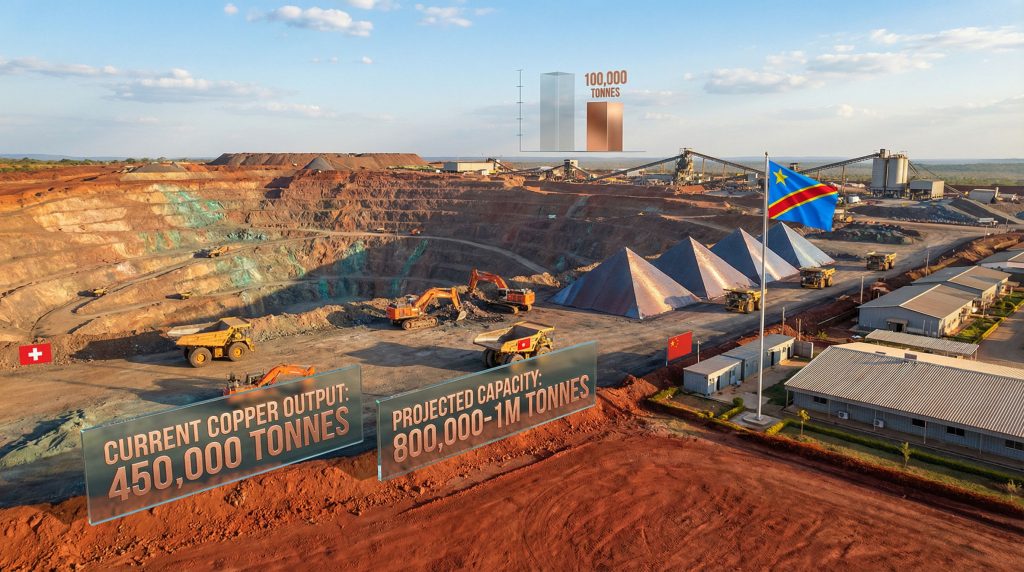
| Copper Output | 450,000 tonnes | 800,000-1M tonnes | Global supply impact |
| Cobalt Production | Major producer | Expanded capacity | Critical mineral security |
| Reserve Base | 7.89M tonnes Cu | Ongoing exploration | Long-term viability |
The mine's expansion trajectory positions it among the world's largest copper operations, with production capacity potentially reaching one million tonnes annually by 2028. This scale provides significant leverage for both operational partners and creates substantial revenue streams. Moreover, it establishes the DRC as a major player in global copper supply chains.
Geological characteristics favour long-term operational sustainability, with high-grade copper deposits averaging 2-3% copper content and significant cobalt mineralisation. The ore body's metallurgical properties support efficient processing through established flotation and hydrometallurgical techniques. This reduces operational complexity compared to more challenging mineral deposits.
CMOC's Investment Strategy and Operational Framework in Africa
China Molybdenum Company's majority ownership of Tenke Fungurume reflects broader Chinese strategic interests in securing critical mineral supplies for domestic manufacturing industries. CMOC brings substantial technical expertise in large-scale mining operations and significant financial resources for expansion initiatives. The company's global expansion strategy demonstrates commitment to long-term African mining investments.
The Chinese approach to African mining investments emphasises long-term operational control combined with substantial infrastructure development. CMOC's investment strategy includes not only mining operations but also associated infrastructure such as power generation and transportation networks. These investments support broader economic development objectives.
Chinese mining companies typically operate with longer investment horizons compared to Western mining corporations, enabling more patient capital deployment. This approach aligns well with host government preferences for sustained economic development rather than short-term resource extraction projects.
Infrastructure and Logistical Challenges in Lualaba Province Mining
Mining operations in the DRC's Lualaba Province confront significant logistical challenges that require substantial infrastructure investment and operational flexibility. Transportation networks, power generation capacity, and processing infrastructure all require continuous investment. These challenges necessitate innovative solutions and sustained capital commitment.
Key infrastructure requirements include transportation corridors connecting mines to export ports through multiple countries, reliable power generation for energy-intensive processing operations, and water management systems for mining requirements. Additionally, skilled workforce development for technical and management positions remains essential.
The successful resolution of these challenges requires long-term commitments from both international operators and host governments. CMOC's willingness to invest in supporting infrastructure demonstrates the financial commitments necessary for sustainable mining operations in remote African locations.
How Do Commodity Trading Partnerships Shape Resource Export Strategies?
International commodity trading partnerships provide critical capabilities for state-owned mining enterprises seeking to optimise market access and financial risk management. These relationships combine technical expertise, global market access, and sophisticated financing arrangements. Such capabilities would be difficult for state entities to develop independently.
Successful partnerships enable state mining companies to participate effectively in global commodity markets while managing operational complexity. Furthermore, they provide access to diverse customer bases and risk mitigation tools that enhance revenue optimisation potential.
Mercuria's Role as Strategic Financial and Logistical Partner
Swiss commodity trading house Mercuria brings extensive experience in African mining projects and sophisticated risk management capabilities to the Gecamines partnership. The selection of Mercuria demonstrates Gecamines' recognition that successful commodity marketing requires specialised expertise beyond mining operational capabilities. Moreover, it reflects strategic thinking about long-term market development.
Mercuria's partnership role encompasses multiple critical functions including market intelligence and price optimisation strategies, logistics coordination for international copper shipments, and financial risk management through hedging products. Additionally, customer relationship management with end-user markets provides essential commercial capabilities.
The trading house's global network provides access to diverse customer bases, reducing dependence on single-market relationships. This diversification capability proves particularly valuable for state-owned enterprises seeking to optimise revenue while maintaining strategic flexibility in trade relationships.
Swiss Trading House Involvement in African Mining Ventures
Switzerland's position as a global commodity trading hub creates significant advantages for African mining ventures seeking international market access. Swiss trading houses possess extensive experience in emerging market operations and sophisticated financing capabilities. These factors support complex international transactions that state enterprises might struggle to manage independently.
The regulatory environment in Switzerland provides stable legal frameworks for commodity trading operations while maintaining banking protections that appeal to state-owned enterprises. These factors make Swiss trading partnerships attractive for African governments seeking to diversify their commodity marketing strategies.
Swiss trading houses also maintain relationships with diverse end-user markets across Europe, Asia, and North America. This provides African producers with multiple export destinations and reduces political risks associated with dependence on single-country trade relationships.
Risk Mitigation Strategies for State-Owned Mining Enterprises
State-owned mining companies face unique risk profiles that require specialised mitigation strategies. Political risks, operational challenges, and market volatility create complex risk environments that benefit from experienced international partnerships. Consequently, effective risk management becomes essential for sustainable operations.
The engagement of international trading partners allows state mining companies to transfer certain operational and market risks while retaining strategic control over production and export policies.
Effective risk mitigation approaches include political risk insurance through international development finance institutions, commodity price hedging to stabilise revenue projections, and operational risk sharing with experienced international partners. Additionally, currency hedging protects against exchange rate fluctuations that could significantly impact revenue streams.
What Are the Geopolitical Implications of Congo-US Copper Trade Agreements?
The Democratic Republic of Congo's strategic alignment with United States critical minerals initiatives represents a significant geopolitical development in global supply chain management. Gecamines to buy copper from Tenke Fungurume mine and direct it to US markets demonstrates how resource-rich nations can leverage commodity exports. This approach advances broader diplomatic and economic objectives while diversifying trade relationships.
The strategic significance extends beyond commercial transactions to encompass supply chain security, technology transfer, and geopolitical positioning. Furthermore, it reflects evolving patterns in international resource diplomacy and strategic partnership development.
Critical Minerals Supply Chain Diversification Strategies
United States national security policy increasingly emphasises supply chain diversification for critical minerals, driven by concerns about over-dependence on Chinese mineral processing capacity. The US strategy seeks to develop alternative supply sources through bilateral partnerships with friendly nations. These partnerships provide greater supply security compared to traditional market-based procurement approaches.
The Congo-US partnership addresses multiple strategic objectives including supply security for US manufacturing and defence industries, economic development opportunities for Congolese mining sector, and geopolitical balancing against Chinese influence. Additionally, it creates potential for technology transfer and mineral processing capability development.
This approach reflects broader trends in critical minerals diplomacy, where consuming nations seek to diversify supplier relationships beyond traditional commodity market mechanisms. Strategic partnerships provide greater supply security compared to spot market purchases that may be disrupted by geopolitical tensions.
US-DRC Bilateral Trade Framework and Mining Sector Development
Recent agreements between the Democratic Republic of Congo and the United States encompass broader development assistance beyond simple commodity trading arrangements. The reported commitment of over $1 billion for critical minerals supply chain development indicates substantial US investment. This investment targets Congolese mining infrastructure and capabilities rather than simple resource extraction.
Bilateral frameworks typically include several complementary elements. These encompass direct commodity purchase agreements with guaranteed volumes and pricing mechanisms, infrastructure development assistance for mining-related transportation facilities, and technical cooperation programmes for workforce development. Additionally, investment protection arrangements encourage private sector participation.
These comprehensive approaches address historical African concerns about extractive relationships by incorporating substantial development assistance and technology transfer components. The framework creates mutual benefits rather than simple resource extraction arrangements.
China's Mining Investments Versus Western Strategic Partnerships
The competitive dynamics between Chinese mining investments and Western strategic partnerships create complex choices for African resource-owning nations. Chinese companies typically offer substantial upfront capital investment and long-term operational commitments. In contrast, Western partnerships often emphasise governance standards and environmental protection requirements.
Chinese mining investments in the DRC exceed $10 billion across multiple projects, creating substantial economic relationships that cannot be easily displaced. However, diversification strategies allow African governments to balance these relationships with alternative partnerships. These provide different types of value and risk mitigation capabilities.
The optimal approach for resource-rich nations involves maintaining productive relationships with multiple international partners while asserting greater domestic control. This balanced approach maximises bargaining power while reducing dependence on single-country relationships.
Market Impact Analysis: 100,000 Tonnes of Copper in Global Context
While 100,000 tonnes of copper represents approximately 0.4% of global annual consumption, the transaction's significance extends beyond volume metrics. It demonstrates evolving patterns in state participation in commodity marketing. The strategic implications of this purchase outweigh its immediate market impact, signalling broader trends in resource nationalism.
Furthermore, the transaction provides insights into how state-owned enterprises can effectively participate in international commodity markets. It also demonstrates the potential for replication across other resource-rich African nations.
Volume Significance Relative to Global Copper Demand
Global copper consumption approaches 25 million tonnes annually, driven by infrastructure development, electrification initiatives, and renewable energy projects. Within this context, Gecamines' copper purchase represents a modest volume that would not significantly impact global supply-demand balances. However, the transaction's importance lies in its demonstration effect for other resource-rich nations.
If multiple African copper producers adopt comparable approaches, the cumulative impact on global supply chains could prove substantial. Market analysts increasingly focus on supply security rather than purely volume-based metrics when evaluating strategic commodity transactions.
The significance of this transaction lies not in its immediate market impact, but in its demonstration of how resource-rich nations can assert greater control over commodity exports while maintaining productive relationships with international operators.
Price Discovery Mechanisms in State-to-Market Copper Sales
The pricing methodology for Gecamines' copper sales will likely influence similar transactions across African mining operations. State-owned enterprises require transparent price discovery mechanisms that demonstrate fair market value while optimising revenue generation. The selected approach affects both revenue optimisation and market perception of state enterprise commercial capabilities.
Common pricing approaches include London Metal Exchange (LME) reference pricing with quality and delivery adjustments, negotiated fixed prices based on forward market conditions, and formula-based pricing incorporating multiple market benchmarks. Additionally, index-linked pricing tied to industry-standard benchmarks provides transparency.
The selected pricing mechanism affects both revenue optimisation and market perception of state enterprise commercial capabilities. Transparent, market-based pricing enhances credibility with international customers and supports long-term relationship development.
Export Destination Strategy and US Market Penetration
The decision to direct copper exports specifically to United States markets reflects strategic trade relationship development rather than purely commercial optimisation. US copper imports exceed 1.5 million tonnes annually, providing substantial market absorption capacity for additional African supplies. This creates opportunities for sustained trade relationship development.
Market penetration strategies must consider quality specifications required by US industrial customers, logistical arrangements for transatlantic copper shipments, and competitive positioning against established suppliers. Additionally, long-term relationship development with US manufacturing customers requires consistent delivery and quality standards.
Successful market penetration requires sustained quality delivery and competitive pricing compared to established suppliers from Chile and Peru. The strategic nature of the US-DRC relationship may provide certain advantages, but commercial success ultimately depends on operational reliability.
The next major ASX story will hit our subscribers first
Mining Sector Reforms and State Control Trends Across Africa
African resource-owning nations increasingly implement mining sector reforms designed to capture greater domestic value from natural resource extraction. These reforms reflect lessons learned from previous decades of resource extraction that generated limited local economic development. Moreover, they demonstrate institutional learning and improved governance capabilities across the continent.
The trend toward greater state participation reflects broader patterns of resource nationalism and economic sovereignty initiatives. Furthermore, it showcases how African governments can balance foreign investment attraction with domestic value capture objectives.
Comparative Analysis of State Mining Company Strategies
Multiple African nations have restructured their approaches to mining sector participation, moving beyond traditional royalty and taxation mechanisms toward direct operational involvement. Botswana's diamond marketing arrangements, Ghana's gold sector reforms, and Tanzania's natural gas participation demonstrate diverse approaches. These examples provide valuable lessons for other resource-rich nations.
Successful state participation models typically include clear legal frameworks defining state entity rights and responsibilities, professional management of state-owned mining enterprises, and strategic partnerships with experienced international operators. Additionally, transparent revenue management systems for commodity sales proceeds ensure accountability and effectiveness.
The Democratic Republic of Congo's approach through Gecamines builds upon these established precedents while addressing the specific challenges of operating in a complex environment. It demonstrates adaptation of successful models to local circumstances.
Revenue Optimisation Through Direct Marketing Arrangements
Direct commodity marketing by state-owned enterprises offers several potential advantages over traditional passive investment approaches. State entities can time sales to optimise revenue, develop strategic customer relationships, and capture additional value. However, successful implementation requires substantial technical expertise and risk management capabilities.
Revenue optimisation benefits include market timing flexibility to maximise sales prices during favourable market conditions, customer relationship development with strategic trade partners, and value-added services such as financing coordination. Additionally, strategic trade policy alignment supports broader government objectives.
These advantages must be balanced against the complexity and risks associated with direct commodity marketing. State enterprises must develop or acquire through international partnerships the necessary capabilities for successful market participation.
Regulatory Evolution in Resource-Rich African Nations
Mining codes across African nations continue evolving to balance foreign investment attraction with domestic value capture objectives. Modern regulatory frameworks emphasise local content requirements, environmental protection standards, and community benefit provisions alongside traditional fiscal terms. These developments reflect improved governance and technical capacity within African institutions.
Regulatory trends include local content requirements for procurement and employment, environmental bonding requirements for mine closure and rehabilitation, and community development levies supporting local economic development. Additionally, state participation options in major mining projects provide flexibility for government involvement.
These regulatory evolution patterns reflect broader governance improvements and increased technical capacity within African mining ministries. They demonstrate the continent's growing sophistication in managing natural resource relationships.
Investment Implications for Mining Companies Operating in the DRC
Foreign mining companies operating in the Democratic Republic of Congo must adapt to evolving government policies that emphasise greater state participation in mining operations and commodity marketing. Understanding these policy trends proves essential for long-term investment success and operational sustainability. Companies must develop strategies that align with government objectives while maintaining commercial viability.
The evolution toward partnership-based approaches creates both challenges and opportunities for international mining companies. Successful adaptation requires sophisticated understanding of political economy factors and stakeholder management capabilities.
Risk Assessment Framework for Foreign Mining Investments
Contemporary risk assessment for DRC mining investments must incorporate both traditional operational risks and evolving political economy factors related to resource nationalism. Investment decision frameworks require sophisticated analysis of multiple risk categories that could significantly impact project outcomes.
Primary risk categories include regulatory risk from changing mining codes and fiscal terms, political risk from governance instability and policy uncertainty, and operational risk from security challenges. Additionally, market risk from commodity price volatility and demand fluctuations affects project economics.
Successful risk management requires continuous monitoring of political developments, regulatory changes, and community relations issues. These factors could affect operational sustainability and investment returns significantly.
Partnership Structure Optimisation with State-Owned Entities
The evolution toward greater state participation in mining operations creates opportunities for innovative partnership structures that align government objectives with private sector capabilities. Optimal partnership arrangements balance operational efficiency with political sustainability requirements. Furthermore, they provide frameworks for mutual benefit creation and risk sharing.
Effective partnership elements include clear operational control mechanisms for technical management decisions, transparent financial arrangements for revenue sharing, and defined strategic oversight roles for state enterprise partners. Additionally, professional dispute resolution mechanisms for partnership conflicts ensure relationship sustainability.
The Tenke Fungurume model's success demonstrates that well-structured partnerships can satisfy both operational requirements and political objectives. It maintains commercial viability for international investors while meeting government participation expectations.
Operational Flexibility Requirements in Evolving Regulatory Environments
Mining operations in the DRC require substantial operational flexibility to adapt to changing regulatory requirements, security conditions, and market opportunities. Companies must design operational frameworks capable of responding to multiple types of external changes. This flexibility becomes essential for long-term operational sustainability.
Flexibility requirements encompass regulatory compliance systems adaptable to changing legal requirements, security protocols responsive to evolving threat environments, and community engagement programmes addressing local development expectations. Additionally, supply chain diversification reduces dependence on single-source suppliers.
Investment in operational flexibility may increase short-term costs but provides essential risk mitigation for long-term operational sustainability. Companies operating in challenging environments must balance efficiency with adaptability requirements.
Future Scenarios for Congo's Mining Sector Development
The Democratic Republic of Congo's mining sector stands at a critical juncture where policy decisions and international partnerships will shape long-term development trajectories. Multiple scenarios remain possible depending on governance improvements, international relationships, and global commodity market evolution. The successful implementation of current initiatives could catalyse broader sectoral transformation.
Furthermore, the demonstration effects from successful state participation models may influence policy development across other African resource-rich nations. This could reshape continental approaches to natural resource management and international partnership frameworks.
Projected Growth in State-Controlled Resource Marketing
Gecamines' successful implementation of direct copper marketing may encourage expansion of state-controlled commodity marketing across other minerals and mining operations. This trend could fundamentally alter the structure of Congolese mineral exports and revenue generation patterns. Moreover, it could provide templates for other African mining operations.
Potential expansion areas include cobalt marketing for electric vehicle battery supply chains, gold exports through state-controlled trading arrangements, and rare earth minerals for technology manufacturing applications. Additionally, diamond sales through existing Congolese diamond marketing institutions could benefit from enhanced capabilities.
Successful expansion requires building institutional capacity within Gecamines and potentially establishing specialised commodity trading capabilities for different mineral products. This represents a significant institutional development challenge but offers substantial potential benefits.
Technology Transfer and Capacity Building Initiatives
Long-term mining sector development depends on successful technology transfer and human capacity building programmes that reduce dependence on foreign technical expertise. International partnerships provide opportunities for systematic knowledge transfer and skills development. These investments create sustainable foundations for sector growth.
Priority capacity building areas include mining engineering and geological exploration capabilities, environmental management and mine rehabilitation expertise, and financial management and commodity trading skills. Additionally, regulatory oversight and mining sector governance capabilities require continued development.
These investments in human capital development create sustainable foundations for long-term mining sector growth. They reduce dependence on foreign technical assistance while building domestic capabilities for sector management and development.
Long-term Strategic Positioning in Global Commodity Markets
The Democratic Republic of Congo possesses geological advantages that support long-term strategic positioning in global critical minerals markets. Successful exploitation of these advantages requires sustained investment in mining infrastructure, governance improvements, and international relationship development. Codelco's production targets demonstrate the scale of operations possible with proper development.
Strategic positioning opportunities include becoming a critical minerals hub for battery supply chains and renewable energy technologies, establishing regional processing centres for value-added mineral products, and serving as strategic supplier for diversified global supply chains. Additionally, developing technology innovation centres for mining in challenging environments could provide competitive advantages.
Realising these opportunities requires coordinated investment in infrastructure, education, governance systems, and international partnerships over multiple decades. The foundations established through current initiatives provide essential building blocks for future development.
Frequently Asked Questions About State Mining Company Operations
How Do Shareholding Rights Translate to Product Purchase Rights?
Shareholding rights in mining operations typically include pro-rata participation in production output based on equity ownership percentages. Gecamines' 20% stake in Tenke Fungurume directly corresponds to rights to purchase 20% of annual production at market-based pricing mechanisms. These arrangements require specific contractual provisions that convert equity ownership into commodity purchase options rather than traditional dividend distributions.
The legal framework governing these arrangements must address pricing mechanisms, delivery schedules, quality specifications, and dispute resolution procedures. Successful implementation requires clear documentation of rights and obligations for all parties involved in mining operations and commodity marketing.
What Role Do International Trading Partners Play in State Mining Ventures?
International trading partners provide essential capabilities that state-owned mining enterprises typically lack internally, including market access, risk management expertise, financing arrangements, and logistics coordination. These partnerships enable state entities to participate effectively in global commodity markets without developing complete trading operations independently.
Trading partners typically handle customer relationship management, price risk hedging, transportation arrangements, and trade financing requirements. These services require specialised expertise and established international networks that would be costly for state enterprises to develop independently.
How Does This Model Compare to Other Resource-Rich Nations' Strategies?
The Democratic Republic of Congo's approach parallels similar strategies employed by other resource-rich developing nations seeking greater domestic value capture from natural resource extraction. Countries such as Botswana, Chile, and Norway have implemented various models for state participation in extractive industries with different degrees of direct operational involvement.
Comparative approaches include Botswana's diamond marketing through De Beers partnership arrangements, Chile's copper marketing through CODELCO state enterprise operations, and Norway's petroleum fund model for resource revenue management. Additionally, Saudi Arabia's oil marketing through Saudi Aramco integrated operations provides another reference model.
Each model reflects specific geological, political, and economic circumstances that shape optimal state participation strategies. The DRC's approach builds upon these precedents while addressing unique challenges related to governance capacity, security conditions, and international relationship management.
This analysis is provided for educational purposes and should not be considered as investment advice. Commodity markets involve substantial risks, and potential investors should conduct thorough due diligence and consult qualified financial advisors before making investment decisions. Political and operational risks in developing country mining operations can significantly impact investment outcomes.
Ready to capitalise on mineral discoveries before the market catches up?
Discovery Alert instantly alerts investors to significant ASX mineral discoveries using its proprietary Discovery IQ model, turning complex mineral data into actionable insights just like the strategic opportunities emerging in Congo's copper sector. Begin your 30-day free trial today and position yourself ahead of the market with real-time discovery notifications.