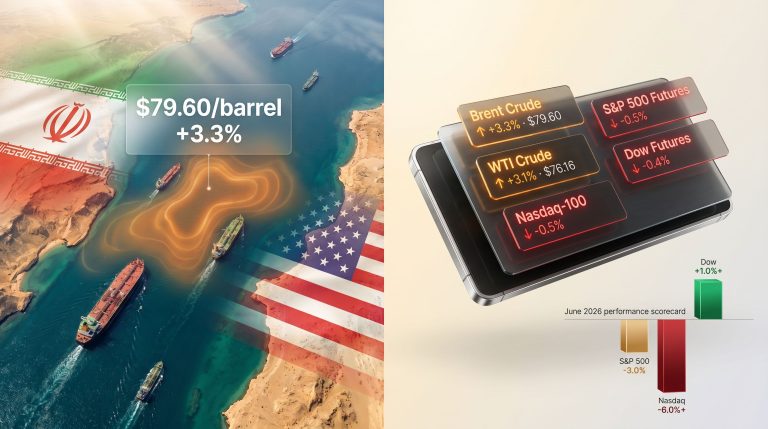
June 29, 2026
How Does Geopolitical Conflict Reshape Global Energy Markets?
Energy markets operate within a delicate equilibrium where supply disruptions can trigger cascading effects across the global economy. The Iran war impact on oil markets demonstrates how complex interdependencies between oil production, transportation corridors, and international trade create vulnerabilities that become magnified during periods of regional instability. Understanding these dynamics requires analysing both immediate market responses and longer-term structural adaptations that emerge from sustained geopolitical tensions.
The Anatomy of Oil Market Volatility During Regional Wars
Market volatility during conflicts follows predictable patterns that have been observed across multiple decades of geopolitical disruptions. Price movements typically occur in three distinct phases: initial shock responses, sustained elevated pricing during active conflict periods, and gradual normalisation as alternative supply arrangements stabilise.
Historical analysis reveals that oil markets demonstrate heightened sensitivity to Middle Eastern conflicts due to the region's concentrated production capacity. Furthermore, the Iran war impact on oil markets represents a particularly complex scenario given the country's strategic position and influence over regional shipping lanes. Market participants consistently price in risk premiums that can range from $10 to $30 per barrel during active conflict periods.
Critical Infrastructure Vulnerabilities in the Persian Gulf
The Persian Gulf region contains approximately 40% of global crude oil reserves and accounts for nearly 20% of worldwide petroleum liquids production. This concentration creates systemic vulnerabilities where localised disruptions can affect global supply chains within days.
Key infrastructure components include:
• Refineries and processing facilities with combined capacity exceeding 8 million barrels per day
• Port terminals handling over 17 million barrels daily in normal operations
• Pipeline networks connecting inland production facilities to export terminals
• Storage facilities containing strategic reserves and commercial inventories
In addition, renewable energy transitions are becoming increasingly important as nations seek alternatives to traditional petroleum-based systems.
Supply Chain Disruption Cascading Effects Across Industries
Energy supply disruptions create ripple effects that extend far beyond petroleum markets. Transportation costs increase immediately, affecting logistics networks that depend on predictable fuel pricing. Manufacturing sectors experience dual pressures from both higher energy costs and supply chain delays as shipping routes adapt to avoid conflict zones.
The automotive industry faces particular challenges as fuel price volatility affects consumer purchasing decisions, while airlines must adjust operational strategies to manage jet fuel cost fluctuations that can represent 25-30% of total operating expenses. However, energy transition challenges present additional complications for industries adapting to new energy paradigms.
When big ASX news breaks, our subscribers know first
What Are the Immediate Economic Consequences of Middle East Oil Disruptions?
Price Shock Transmission Mechanisms in Global Markets
Oil price shocks transmit through global markets via multiple channels that operate simultaneously. Futures markets respond within hours of conflict escalation, while physical crude prices adjust based on actual supply disruptions and alternative sourcing requirements.
Crude Oil Price Movements During Major Geopolitical Events (2000-2024)
| Event | Pre-Crisis Price | Peak Price | Duration | Recovery Period |
|---|---|---|---|---|
| Iraq War (2003) | $28/barrel | $42/barrel | 8 weeks | 16 weeks |
| Arab Spring (2011) | $85/barrel | $128/barrel | 12 weeks | 20 weeks |
| Iran Sanctions Peak (2012) | $95/barrel | $125/barrel | 6 weeks | 14 weeks |
| ISIS Expansion (2014) | $98/barrel | $115/barrel | 4 weeks | 10 weeks |
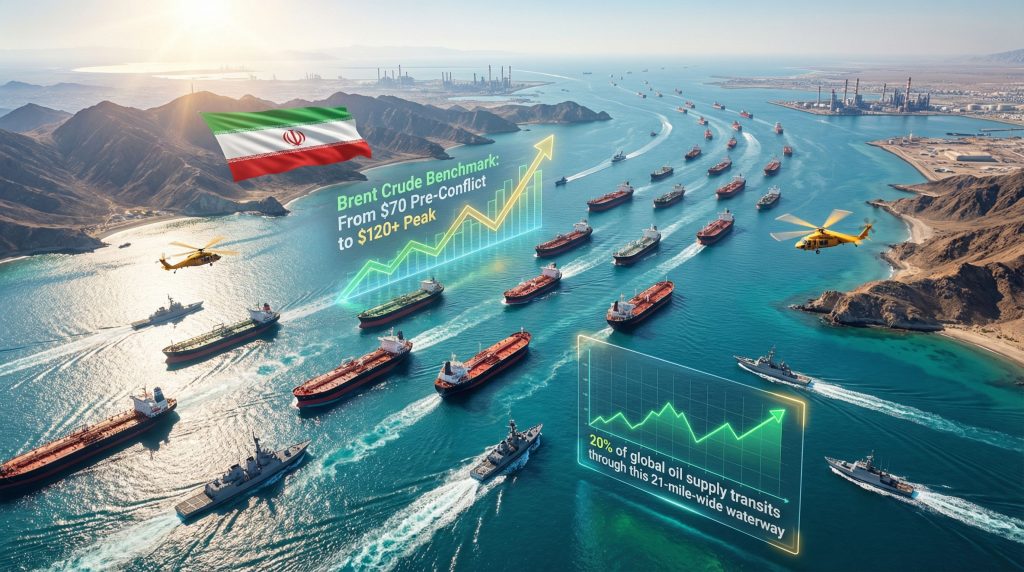
Current market conditions suggest that sustained conflict could drive Brent crude from pre-crisis levels of approximately $75 per barrel to peaks exceeding $120 per barrel, based on historical precedents and current global inventory levels. For instance, detailed oil price crash analysis reveals how multiple factors influence petroleum market dynamics.
Market analysts indicate that prolonged regional instability creates price floors significantly above long-term averages, with sustained premiums often persisting months after active conflicts conclude.
Consumer Impact Analysis: Fuel Costs and Regional Variations
Consumer fuel costs demonstrate regional variations based on refining capacity, strategic reserve policies, and transportation infrastructure. The United States typically experiences more moderate price increases due to domestic production capabilities and strategic petroleum reserve utilisation.
Regional Gasoline Price Increases During Crisis Periods
| Region | Baseline Price | Crisis Peak | Percentage Increase |
|---|---|---|---|
| U.S. Gulf Coast | $2.85/gallon | $3.65/gallon | 28% |
| U.S. West Coast | $3.45/gallon | $4.55/gallon | 32% |
| European Union | €1.35/litre | €1.75/litre | 30% |
| Asia-Pacific | $1.20/litre | $1.65/litre | 38% |
Industries most significantly affected beyond transportation include:
• Chemical manufacturing facing feedstock cost increases of 15-25%
• Plastics production with raw material cost escalations
• Agricultural operations experiencing fertiliser and fuel cost pressures
• Power generation in regions dependent on oil-fired electricity production
Strategic Petroleum Reserve Utilisation and Limitations
Strategic petroleum reserves serve as critical buffers during supply disruptions, though their effectiveness depends on release timing, volume, and coordination among major consuming nations. The United States maintains approximately 714 million barrels in strategic reserves, while International Energy Agency member countries collectively hold over 1.5 billion barrels.
Reserve release mechanisms face several constraints including maximum daily release rates of 4.4 million barrels per day from U.S. facilities and logistical challenges in distributing crude to appropriate refining centres. Historical releases have provided temporary price relief but cannot substitute for sustained supply disruptions exceeding 90 days.
Which Critical Chokepoints Determine Global Oil Security?
Strait of Hormuz: The World's Most Vital Energy Corridor
The Strait of Hormuz represents the world's most critical energy chokepoint, with approximately 21% of global petroleum liquids transiting through this narrow waterway annually. The strait's narrowest point measures just 21 miles wide, creating inherent vulnerabilities to disruption from military action, accidents, or deliberate interference.
Daily shipping volume through the strait averages 21 million barrels of crude oil and petroleum products, representing roughly $1.2 billion in energy trade value. Any sustained closure would immediately affect global energy supplies, with alternative routing capabilities limited to approximately 3-4 million barrels per day through existing pipeline infrastructure.
According to global energy security experts, complete Strait of Hormuz closure would create immediate global supply shortfalls exceeding 15 million barrels per day, surpassing all available strategic reserve release capabilities.
Alternative Supply Routes and Infrastructure Capacity
Regional producers have invested in alternative transportation infrastructure to reduce dependence on the Strait of Hormuz, though capacity remains insufficient to fully replace maritime shipments. Key alternative routes include:
• East-West Pipeline (Saudi Arabia): 5 million barrels per day capacity to Red Sea terminals
• Abu Dhabi Crude Oil Pipeline: 1.5 million barrels per day to Fujairah terminal
• Iraq-Turkey Pipeline: 1.65 million barrels per day capacity when operational
• Kirkuk-Ceyhan Pipeline: Additional 1.6 million barrels per day potential capacity
Combined alternative routing capacity totals approximately 9.75 million barrels per day, leaving a potential shortfall of over 11 million barrels daily if Strait of Hormuz access becomes completely restricted.
Maritime Security Challenges and Insurance Market Responses
Maritime insurance markets serve as early indicators of perceived risk levels, with war risk premiums escalating rapidly during conflict periods. Standard tanker insurance rates can increase from 0.02% of cargo value to 0.5% or higher when vessels transit active conflict zones.
Shipping companies implement various risk mitigation strategies including route diversification, increased security measures, and convoy operations coordinated with naval forces. These adaptations typically add $2-5 per barrel to transportation costs depending on route length and security requirements.
How Do Major Oil Producers Adapt to Wartime Disruptions?
Saudi Arabia's Strategic Response and Production Flexibility
Saudi Arabia's position as the world's largest oil exporter provides unique capabilities to respond to regional supply disruptions. The kingdom maintains approximately 2 million barrels per day of spare production capacity that can be activated within 90 days, representing the largest single source of emergency supply globally.
Aramco's infrastructure investments include redundant pipeline systems designed to bypass the Strait of Hormuz entirely. The company's CEO has confirmed the existence of alternative routing capabilities, though specific capacity details remain commercially sensitive. During the current crisis, Aramco has indicated they are temporarily withholding certain heavier crude oil grades from production, suggesting strategic inventory management during volatile market conditions.
Moreover, catastrophic global market consequences could emerge if disruptions persist, according to industry executives who characterise the current regional disruption as the most significant crisis facing Middle Eastern oil and gas operations in recent decades.
Regional Producer Coordination and OPEC+ Dynamics
OPEC+ coordination becomes particularly complex during regional conflicts as member countries balance individual production strategies with collective market management objectives. The alliance's 23 member countries control approximately 40% of global crude production and 60% of international petroleum trade.
Emergency production protocols allow for rapid capacity adjustments, though implementation depends on spare capacity availability and infrastructure accessibility. Current spare capacity among OPEC+ members totals approximately 3.2 million barrels per day, with Saudi Arabia accounting for nearly two-thirds of this buffer. Consequently, OPEC production impact decisions become increasingly critical during periods of regional instability.
Emergency Production Protocols and Spare Capacity Utilisation
Global spare production capacity operates as the primary mechanism for addressing supply shortfalls, though activation timelines vary significantly by producer and field characteristics. Key capacity holders include:
• Saudi Arabia: 2.0 million barrels per day (90-day activation)
• United Arab Emirates: 0.4 million barrels per day (60-day activation)
• Kuwait: 0.3 million barrels per day (45-day activation)
• Iraq: 0.5 million barrels per day (120-day activation, infrastructure dependent)
Total accessible spare capacity of 3.2 million barrels per day provides limited buffer against major supply disruptions, particularly those affecting multiple producing regions simultaneously.
What Long-Term Structural Changes Could Emerge?
Energy Security Reassessment by Major Importing Nations
Extended supply disruptions typically catalyse comprehensive energy security policy reviews among major importing nations. These assessments often result in diversified supply strategies, increased strategic reserve requirements, and accelerated domestic production development where feasible.
Import Dependency Ratios for Major Global Economies
| Country/Region | Current Import Dependency | Primary Suppliers | Strategic Reserve Days |
|---|---|---|---|
| Japan | 99.6% | Saudi Arabia, UAE, Kuwait | 194 days |
| South Korea | 95.8% | Saudi Arabia, Kuwait, Iraq | 106 days |
| India | 87.2% | Iraq, Saudi Arabia, UAE | 74 days |
| China | 72.4% | Saudi Arabia, Russia, Iraq | 80 days |
| European Union | 90.7% | Russia, Saudi Arabia, Iraq | 90 days |
Nations with high import dependency often pursue multiple strategies simultaneously, including renewable energy acceleration, strategic partnership diversification, and enhanced storage capacity development.
Accelerated Transition to Alternative Energy Sources
Sustained oil price volatility typically accelerates investment in alternative energy technologies and infrastructure. Historical patterns indicate that price spikes exceeding $100 per barrel for periods longer than six months trigger significant policy adjustments toward energy diversification.
Investment flows toward renewable energy projects, electric vehicle infrastructure, and energy efficiency technologies often increase by 20-40% during prolonged oil market disruptions. These investments create lasting structural changes that persist beyond immediate crisis resolution.
Strategic Reserve Expansion and Policy Implications
Major consuming nations frequently expand strategic petroleum reserve capacity following significant supply disruptions. Current global strategic reserves total approximately 1.5 billion barrels across International Energy Agency member countries, representing roughly 90 days of import coverage.
Planned expansions could increase total strategic capacity to 2.0 billion barrels by 2030, providing enhanced buffer capacity against future supply disruptions. However, reserve effectiveness depends critically on release coordination mechanisms and distribution infrastructure capabilities.
How Do Financial Markets Price Geopolitical Risk?
Oil Futures Market Behaviour During Crisis Periods
Futures markets demonstrate distinct behavioural patterns during geopolitical crises, with volatility levels often doubling within the first week of conflict escalation. Trading volumes typically increase by 150-300% as market participants adjust hedging strategies and speculative positions.
Key indicators that traders monitor during regional conflicts include:
• Volatility Index (VIX) levels exceeding 30 indicating heightened uncertainty
• Backwardation spreads between near-term and longer-term contracts
• Options skew reflecting asymmetric risk perceptions
• Cross-commodity correlations between energy and precious metals
Market microstructure changes during crisis periods, with bid-ask spreads widening and market depth decreasing as liquidity providers adjust risk parameters.
Currency Impact and Petrodollar Circulation Effects
Oil price volatility creates significant currency market effects, particularly for petroleum-exporting nations whose currencies often correlate closely with crude prices. The U.S. dollar typically strengthens during geopolitical crises as investors seek safe-haven assets, while commodity-linked currencies experience heightened volatility.
Petrodollar recycling patterns shift during extended price periods, affecting global capital flows and emerging market financing costs. Higher oil revenues for producing nations can increase sovereign wealth fund activity and infrastructure investment, while importing nations face current account pressures requiring financing adjustments. Furthermore, tariffs and global trade policies can amplify these currency effects during periods of economic uncertainty.
Energy Sector Equity Performance and Investment Flows
Energy sector equity performance during geopolitical crises reflects complex dynamics between higher commodity prices and operational risk factors. Integrated oil companies typically outperform during crisis periods, benefiting from inventory gains and increased refining margins.
Investment flows toward energy infrastructure projects often accelerate during sustained price periods, though geopolitical risk can simultaneously constrain international project financing. This creates divergent regional investment patterns with domestic projects receiving preferential capital allocation.
The next major ASX story will hit our subscribers first
What Are the Broader Economic Ripple Effects?
Manufacturing and Transportation Cost Escalation
Manufacturing sectors face immediate cost pressures from higher energy inputs, with energy-intensive industries experiencing the most significant impacts. Steel production, chemical manufacturing, and aluminium processing typically see profit margin compression of 3-8 percentage points during sustained oil price increases.
Transportation costs adjust across all modes, with trucking, shipping, and aviation facing direct fuel cost impacts. Long-haul trucking operations often implement fuel surcharges within days of price increases, while airlines adjust route profitability calculations and capacity deployment strategies.
Agricultural Sector Vulnerabilities and Food Security
Agricultural production faces dual pressures from higher fuel costs and increased fertiliser prices, as natural gas-based fertiliser production becomes more expensive during energy price spikes. Farming operations typically experience cost increases of 10-20% during extended energy price elevation periods.
Food supply chain impacts extend beyond production costs to include transportation and processing expenses, often resulting in consumer food price increases of 2-5% within 3-6 months of energy price spikes.
Inflation Pressure Points Across Global Economies
Energy price increases create both direct and indirect inflationary pressures across global economies. Central banks face complex policy trade-offs between accommodating supply-driven price increases and preventing broad-based inflation expectations from becoming entrenched.
Historical analysis indicates that oil price increases of 30%+ sustained for six months typically contribute 0.5-1.5 percentage points to headline inflation rates, with core inflation effects emerging over 12-18 month periods as energy costs propagate through supply chains.
Frequently Asked Questions About Oil Market War Impact
How quickly do oil prices respond to Middle East conflicts?
Oil markets typically respond within hours of conflict escalation, with futures prices adjusting immediately during trading sessions. Physical crude prices follow within 24-48 hours as traders assess actual supply disruption risks. Price increases of 10-25% within the first week are common for conflicts involving major producing regions.
Can strategic reserves offset major supply disruptions?
Strategic petroleum reserves can provide temporary market relief but cannot fully offset major supply disruptions exceeding 4-5 million barrels per day. Global strategic reserves total approximately 1.5 billion barrels, sufficient for roughly 90 days of emergency releases at maximum rates, though coordination challenges limit effectiveness.
Which countries are most vulnerable to Persian Gulf supply cuts?
Asian economies demonstrate highest vulnerability due to geographic proximity and supply chain concentration. Japan imports 99.6% of crude requirements, while South Korea and India depend on imports for 95.8% and 87.2% respectively. These nations maintain strategic reserves but face limited alternative supply options during extended disruptions.
How long do geopolitical oil price spikes typically last?
Historical patterns indicate that geopolitical price spikes typically persist for 8-16 weeks depending on conflict duration and alternative supply activation. Prices often remain elevated 20-40% above pre-crisis levels for 4-6 months as markets price ongoing risk premiums and supply chain adjustments stabilise.
Strategic Outlook: Preparing for Future Energy Security Challenges
Policy Framework Development for Crisis Management
Effective crisis management requires coordinated policy frameworks that address both immediate supply disruptions and longer-term structural vulnerabilities. Key policy components include emergency reserve utilisation protocols, international coordination mechanisms, and market stabilisation tools.
Regulatory frameworks must balance market mechanisms with strategic intervention capabilities, ensuring that private sector responses complement government emergency measures. This requires ongoing coordination between energy regulators, national security agencies, and international partners.
Technology Solutions for Supply Chain Resilience
Technological advances offer multiple pathways for enhancing energy supply chain resilience. Real-time monitoring systems enable rapid identification of disruption risks, while alternative production technologies can provide backup supply capabilities during crisis periods.
Digital infrastructure improvements including blockchain-based supply chain tracking and artificial intelligence-powered risk assessment tools enhance situational awareness and response coordination capabilities across global energy networks.
International Cooperation Mechanisms and Diplomatic Solutions
Sustained energy security requires robust international cooperation mechanisms that extend beyond emergency response protocols. Multilateral frameworks including the International Energy Agency, regional energy partnerships, and bilateral strategic relationships provide essential coordination infrastructure.
Diplomatic engagement focused on regional stability and conflict prevention offers the most effective long-term approach to reducing energy security risks. Investment in regional development, economic integration, and multilateral security frameworks creates incentives for peaceful resolution of disputes that threaten critical energy infrastructure.
This analysis is based on publicly available market data and should not be considered investment advice. Energy markets involve significant risks and past performance does not guarantee future results. Readers should consult qualified financial advisers before making investment decisions.
Want to Capitalise on Energy Market Volatility?
Discovery Alert's proprietary Discovery IQ model delivers instant notifications on significant ASX mineral discoveries, including energy transition metals crucial for renewable infrastructure development. Subscribers gain actionable insights into opportunities that emerge during market disruptions, positioning themselves ahead of broader market awareness through real-time discovery alerts powered by advanced AI analysis.