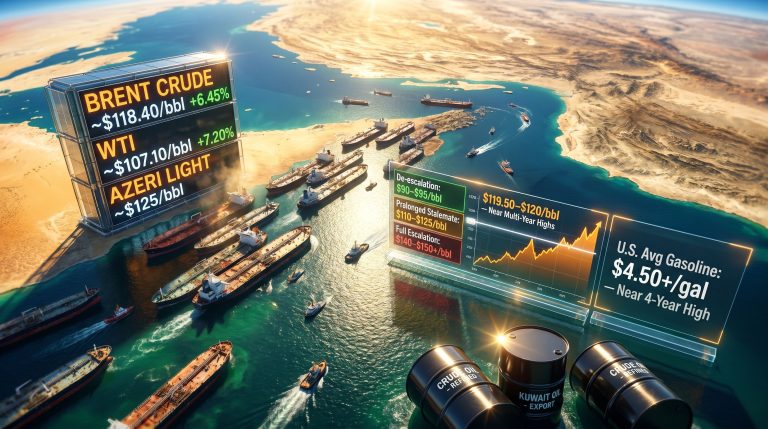
May 9, 2026
What Makes Geopolitical Risk Premium So Critical in Energy Markets?
The intricate relationship between political uncertainty and commodity pricing creates amplified volatility that extends well beyond actual production disruptions. When tensions escalate between major oil-producing nations and global superpowers, financial markets embed risk premiums into crude prices that reflect both tangible supply concerns and psychological factors driving trader behavior.
Risk premium mechanisms operate through multiple technical channels that demonstrate how geopolitical uncertainty translates into measurable price impacts. Forward curve distortion occurs when traders demand higher compensation for future delivery contracts, widening the contango structure where longer-dated futures trade at premiums to spot prices. This phenomenon becomes particularly pronounced during periods of elevated Iran-US tensions impact on oil prices, as market participants price in potential supply disruptions months in advance.
Critical Risk Premium Components:
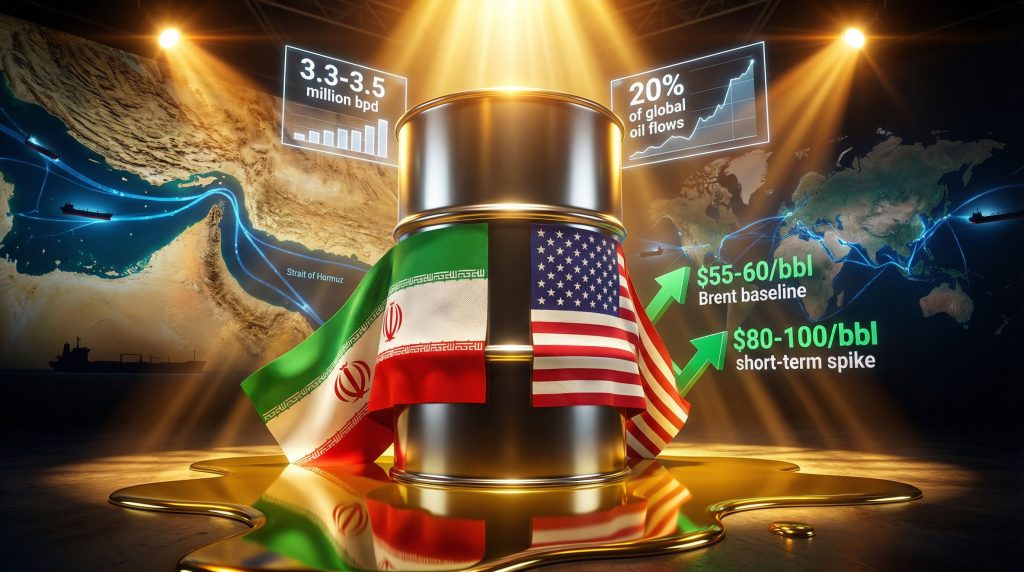
• Supply vulnerability calculations – Iran's production capacity of approximately 3.5-4.0 million barrels per day represents significant global supply exposure
• Strategic chokepoint control – The Strait of Hormuz facilitates roughly 20-21% of globally traded oil according to U.S. Energy Information Administration assessments
• Insurance cost escalation mechanisms – Maritime security concerns drive operational expense increases for tanker operations
• Options market asymmetry – Call option premiums become expensive relative to puts, creating pricing structures that embed conflict probability
The psychological dimension of risk premium formation often creates price volatility disconnected from actual supply availability. As noted in petroleum industry analysis, during periods of crisis or uncertainty, market sentiment frequently overshadows fundamental supply-demand calculations. This dynamic becomes particularly relevant when analyzing oil price stagnation factors alongside geopolitical tensions.
Recent historical examples demonstrate how non-geopolitical supply shocks create similar risk premium effects. January 2026 witnessed global production declining by more than 1 million barrels per day due to cold weather disruptions across the United States and Canada, combined with fire-related outages at Kazakhstan oilfield operations. These temporary disruptions provided technical templates for understanding how geopolitical tensions would impact pricing mechanisms.
When big ASX news breaks, our subscribers know first
Why Do Current Oil Fundamentals Create Such Market Uncertainty?
Global oil markets face unprecedented structural contradictions where oversupply conditions collide with geopolitical risk factors, creating environments where traditional analytical frameworks become secondary to sentiment-driven trading patterns. The magnitude of this supply-demand imbalance reveals itself through concrete inventory data that challenges conventional market wisdom.
International Energy Agency data confirms that global stocks increased by approximately 477 million barrels during 2025, representing daily accumulation equivalent to 1.3 million barrels per day of net inventory build. This substantial stockpiling occurred despite healthy demand growth patterns approaching 1.0 million barrels per day annually, indicating that production increases significantly outpaced consumption patterns.
Supply-Demand Imbalance Analysis:
| Market Component | 2025 Performance | Market Impact Assessment |
|---|---|---|
| Global inventory build | 477 million barrels total | Bearish pressure on pricing |
| Daily accumulation rate | 1.3 million bpd surplus | Structural oversupply indication |
| Annual demand growth | 1.0 million bpd increase | Healthy consumption patterns |
| Production outpacing | 0.3 million bpd excess | Supply growth exceeding demand |
The fundamental challenge stems not from demand weakness but from excessive output across multiple production sources. United States shale operations, Brazilian pre-salt developments, and OPEC production impact collectively generated supply growth that substantially exceeded global consumption increases throughout 2025.
However, inventory accumulation patterns reveal critical distinctions between accessible and inaccessible stockpiles that complicate traditional market analysis. China's Strategic Petroleum Reserve additions exceeded 100 million barrels during 2025, accounting for roughly 25% of total global inventory increases. This government-directed purchasing creates demand support mechanisms while simultaneously removing barrels from market-accessible storage.
The uncertainty regarding China's continued strategic reserve building represents a crucial variable in current market dynamics. Norwegian oil trading executives have observed that if China discontinued strategic purchases immediately, global markets would face acute oversupply conditions. This dependency on opaque government purchasing decisions introduces analytical blind spots that challenge conventional supply-demand forecasting methodologies.
Trading community sentiment reflects these fundamental uncertainties, with bearish positions outnumbering bullish positions by approximately three-to-one ratios during recent industry gatherings. This consensus around oversupply concerns, while substantial, lacks absolute conviction due to geopolitical risk factors and strategic reserve uncertainties.
How Do Shadow Markets Complicate Traditional Oil Analysis?
Parallel oil trading systems operating outside transparent price discovery mechanisms create analytical complexities that challenge conventional market assessment approaches. These shadow markets, particularly involving sanctioned barrels from major producers, represent substantial volumes that traditional supply-demand models struggle to incorporate effectively.
Floating storage accumulation has reached significant proportions, with approximately 40 million barrels of unsold Russian crude loaded onto tankers during the final two months of 2025 and early 2026. Major oil trading executives describe these volumes as remaining on the high seas while seeking eventual market entry, creating uncertainty about timing and pricing mechanisms for eventual barrel absorption.
Shadow Market Characteristics:
• Floating storage dynamics – Stranded barrels incur daily storage fees, insurance costs, and financing expenses
• Discount pricing mechanisms – Sanctioned barrels require significant price concessions to compensate buyers for legal and political risks
• Limited benchmark influence – Barrels in floating storage or strategic reserves don't participate in active price discovery
• Absorption capacity uncertainty – China's willingness and ability to continue purchasing discounted barrels remains unclear
Strategic reserve opacity compounds analytical challenges, as China's purchasing patterns lack transparent disclosure regarding timing, volumes, or underlying rationale. Furthermore, this creates forecasting difficulties when approximately one-quarter of global inventory accumulation depends on opaque government decisions rather than market-driven demand.
The accessibility question represents fundamental disagreement within trading communities about whether shadow market volumes constitute genuine surplus supply. Bulls argue that barrels unable to reach transparent markets shouldn't be counted as available surplus, while bears contend that these volumes will eventually find homes through significant discounting mechanisms.
Black market operations utilise ship-to-ship transfers, off-the-books trading entities, and pricing below official benchmarks to facilitate transactions outside regulatory oversight. These parallel systems operate independently of transparent price discovery mechanisms, creating supply that exists but doesn't influence benchmark crude pricing directly.
The divergence between physical barrel availability and market-accessible supply creates unprecedented analytical complexity for understanding true supply-demand balances.
Russian sanctions have created physical supply stranding rather than demand destruction, as evidenced by substantial volumes awaiting market entry. This distinction becomes critical when assessing whether current oversupply conditions represent temporary disruptions or structural imbalances requiring different analytical approaches.
What Economic Scenarios Could Reshape Oil Price Trajectories?
Multiple pathway scenarios exist for Iran-US tensions, each carrying distinct implications for global energy markets and broader economic stability. Understanding these potential trajectories requires analysing both immediate price impacts and longer-term structural adjustments across different escalation levels.
Diplomatic Resolution Pathway:
This scenario envisions successful negotiation processes leading to reduced tensions and normalised trade relationships. Price impacts would likely establish Brent crude baselines in the $55-60 per barrel range, representing bear market resumption with inventory normalisation processes. Timeline expectations suggest 6-12 month negotiation periods before full implementation of agreements.
Economic implications include reduced risk premiums across energy markets, increased supply availability from previously sanctioned sources, and market dynamics returning to fundamental supply-demand pricing mechanisms. Strategic reserve building might normalise as geopolitical uncertainty diminishes.
Limited Military Action Scenario:
Targeted strikes or regional infrastructure impacts could generate short-term price spikes reaching $80-100 per barrel Brent, with volatility periods lasting 2-6 weeks. This scenario assumes contained conflict without broader supply network disruption.
Economic consequences include options market volatility surges, insurance cost escalation for maritime operations, and temporary supply chain disruptions affecting regional energy infrastructure. Recovery depends on conflict containment and infrastructure repair timelines.
Full Supply Disruption Framework:
Complete disruption of Iranian production capacity and Strait of Hormuz closures could potentially double crude prices to $125+ per barrel, with sustained impacts lasting 3-12 months. This represents the most severe scenario with global recession probability increases.
Scenario Impact Comparison:
| Scenario Type | Price Range (Brent) | Duration | Economic Implications |
|---|---|---|---|
| Diplomatic Resolution | $55-60/bbl | 6-12 months | Reduced premiums, supply normalisation |
| Limited Military Action | $80-100/bbl | 2-6 weeks | Volatility surge, insurance increases |
| Full Supply Disruption | $125+/bbl | 3-12 months | Recession risk, strategic reserve releases |
Policy responses would include strategic petroleum reserve releases from major consuming nations, demand destruction mechanisms activating at extreme price levels, and coordinated central bank interventions to manage economic stability impacts. Analysis from Columbia University's Center on Global Energy Policy suggests that such disruptions could fundamentally reshape regional energy security frameworks.
How Do Central Bank Policies Intersect with Energy Geopolitics?
Monetary policy frameworks increasingly incorporate energy security considerations, creating feedback loops between geopolitical tensions and macroeconomic stability measures. Central bank decision-making processes must balance traditional inflation targeting with energy price volatility implications.
Policy Integration Mechanisms:
• Inflation targeting complications – Energy price spikes challenge central bank mandates for price stability
• Currency stability frameworks – Oil-importing nations face exchange rate pressures during supply disruptions
• Financial system resilience – Energy sector stress testing becomes critical for banking system stability
• Coordination protocols – International central bank cooperation mechanisms for energy crisis response
Interest rate policy decisions must consider energy price pass-through effects into broader inflation measures. When Iran-US tensions impact on oil prices creates sustained price increases, central banks face difficult choices between containing inflation and supporting economic growth during energy cost escalation.
Strategic reserve coordination represents direct intersection between monetary policy and energy security objectives. Government stockpile releases can provide temporary price relief while central banks implement monetary policy adjustments to address economic disruptions. Additionally, tariff market impacts compound these challenges by creating additional inflationary pressures.
What Role Does Market Sentiment Play in Price Discovery?
Beyond fundamental supply-demand analysis, psychological factors and narrative control significantly influence how geopolitical tensions translate into measurable price movements. Understanding sentiment dynamics becomes crucial for analysing Iran-US tensions impact on oil prices.
Current market sentiment reflects substantial bearish consensus, with trader positioning showing approximately three-to-one ratios favouring oversupply scenarios. However, this consensus lacks absolute conviction due to geopolitical uncertainty factors and potential supply disruption risks.
Sentiment-Driven Mechanisms:
• Narrative competition – Bulls and bears compete to control market storytelling about supply accessibility
• Positioning asymmetry – Trader positioning creates price floor and ceiling effects through collective behaviour
• Media cycle amplification – News flow intensity affects volatility patterns independent of fundamental changes
• Risk management protocols – Institutional hedging strategies create systematic price responses to uncertainty
Options market behaviour reveals upside risk expectations embedded in current pricing structures. Call option premiums relative to put options indicate trader willingness to pay substantial premiums for upside protection, reflecting potential conflict scenarios rather than current supply conditions.
The psychological dimension often creates price movements that exceed actual supply disruption impacts. Trader psychology during uncertainty periods can generate volatility patterns disconnected from physical market fundamentals, particularly when geopolitical tensions involve critical energy infrastructure.
The next major ASX story will hit our subscribers first
How Do Regional Economic Impacts Cascade Globally?
Iran-US tensions create economic ripple effects extending beyond energy markets into regional stability and global trade patterns. Understanding these cascading impacts requires analysing vulnerability levels across different geographic regions and economic structures.
Regional Vulnerability Assessment:
| Region | Economic Exposure | Vulnerability Level | Primary Risks |
|---|---|---|---|
| Gulf Cooperation Council | Export infrastructure dependency | High – 60% GDP oil-related | Production facility targeting |
| European Union | Import dependency | Medium – 25% energy imports | Supply chain disruption |
| East Asia | Manufacturing supply chains | Medium – Industrial base impacts | Cost structure increases |
| United States | Refinery operations | Low – Domestic production capacity | Limited direct exposure |
Gulf region economies face disproportionate vulnerability due to hydrocarbon export dependency and geographic proximity to potential conflict zones. Infrastructure targeting could disrupt production facilities, export terminals, and transportation networks critical for global supply chains.
European manufacturing sectors would experience cost structure impacts through energy price increases, affecting industrial competitiveness and economic growth patterns. Supply chain diversification strategies become priority considerations for maintaining operational resilience.
Asian economic impacts centre on manufacturing cost increases and supply chain reliability concerns. Countries with substantial energy import requirements face exchange rate pressures and current account balance deterioration during sustained price elevation periods.
What Investment Implications Emerge from Current Dynamics?
Energy market volatility creates complex risk-return profiles across multiple asset classes, requiring sophisticated portfolio positioning strategies to navigate current uncertainties effectively. Moreover, understanding oil price trade dynamics becomes essential for comprehensive investment planning.
Asset Class Implications:
• Energy equity positioning – Upstream oil companies benefit from higher price environments through improved margins
• Currency hedging requirements – Oil-importing nations' currencies face depreciation pressures during supply disruptions
• Alternative energy acceleration – Geopolitical instability drives renewable energy investment as hedge against fossil fuel volatility
• Infrastructure resilience investments – Supply chain diversification becomes strategic investment theme
Equity market impacts extend beyond direct energy sector exposure, affecting transportation costs, manufacturing margins, and consumer discretionary spending patterns. Portfolio construction requires consideration of energy price pass-through effects across sector allocations.
Fixed income markets face duration risk from potential central bank policy responses to energy-driven inflation pressures. Real assets and inflation-protected securities become portfolio considerations during sustained energy price elevation periods.
Commodity exposure strategies require balancing direct energy price benefits against broader economic slowdown risks from sustained high energy costs. Timing considerations become crucial for capturing upside price movements while managing recession probability increases.
How Might Technology Reshape Geopolitical Energy Dynamics?
Technological developments in energy production, storage, and distribution could fundamentally alter how geopolitical tensions impact global markets over medium to long-term horizons.
Technology Disruption Factors:
• Shale production flexibility – Rapid deployment capabilities reduce supply vulnerability to geopolitical disruptions
• Renewable energy scaling – Declining costs and improved storage technologies reduce oil dependency gradually
• Strategic storage innovation – Enhanced capacity and rapid release mechanisms improve crisis response capabilities
• Digital trading platforms – Improved price discovery and risk management tools reduce information asymmetries
United States shale production demonstrates technological solutions to geopolitical supply risks through rapid deployment capabilities and flexible production adjustment mechanisms. These technologies provide supply response options during crisis periods that weren't available during previous geopolitical tensions.
Energy storage technology improvements enable strategic reserve systems to provide more effective market intervention capabilities. Advanced storage solutions could reduce the impact duration of supply disruptions through enhanced release mechanisms and capacity expansion.
Renewable energy cost trajectories suggest reduced oil dependency over 5-10 year investment horizons, potentially diminishing the economic impact of geopolitical energy disruptions. However, current renewable penetration rates remain insufficient to eliminate oil market vulnerability to geopolitical tensions.
What Long-Term Structural Changes Could Result?
Sustained Iran-US tensions may catalyse permanent shifts in global energy architecture and economic relationships that extend beyond immediate price impacts and market volatility. Consequently, understanding oil price rally factors becomes crucial for long-term strategic planning.
Structural Evolution Pathways:
• Supply chain regionalisation – Reduced dependence on geopolitically volatile regions through alternative supplier development
• Energy security prioritisation – Government policy emphasis shifts toward strategic autonomy and resilience building
• Financial system adaptation – New risk management frameworks emerge for handling geopolitical energy disruptions
• International cooperation enhancement – Improved coordination protocols for crisis response and market stabilisation
Strategic petroleum reserve systems may expand capacity and develop more sophisticated release mechanisms to provide enhanced market intervention capabilities during future crises. This represents structural investment in energy security infrastructure.
Trade relationship diversification could accelerate as consuming nations seek to reduce dependency on geopolitically unstable supply sources. These adjustments require substantial infrastructure investment and long-term supply agreement modifications.
Financial market architecture might develop enhanced risk management tools and coordination mechanisms specifically designed for energy geopolitical risks. This could include improved early warning systems and automated response protocols.
Future Market Structure Considerations:
The evolution toward more resilient global energy systems requires balancing efficiency with security objectives. While geographic diversification and technological solutions provide risk reduction benefits, they may increase overall system costs compared to optimised supply chains based purely on economic efficiency.
International cooperation frameworks for energy crisis response could emerge from current tensions, creating institutional mechanisms for coordinated strategic reserve releases, emergency sharing arrangements, and market stabilisation protocols.
Understanding these longer-term structural implications becomes crucial for investment strategy development and policy planning processes that must account for evolving energy security dynamics beyond immediate crisis management considerations. Furthermore, as tensions continue to evolve, monitoring Iran-US tensions impact on oil prices remains essential for navigating these complex market dynamics effectively.
Ready to Capitalise on Commodity Market Volatility?
Discovery Alert's proprietary Discovery IQ model delivers real-time alerts on significant mineral discoveries across the ASX, transforming complex market dynamics into actionable investment opportunities for both short-term traders and long-term investors. Whether navigating geopolitical uncertainties or identifying the next major resource discovery, begin your 14-day free trial today to position yourself ahead of market-moving announcements.