
June 21, 2026
When Maintenance Becomes the Hazard: The Hidden Danger Inside Zinc Smelting Plants
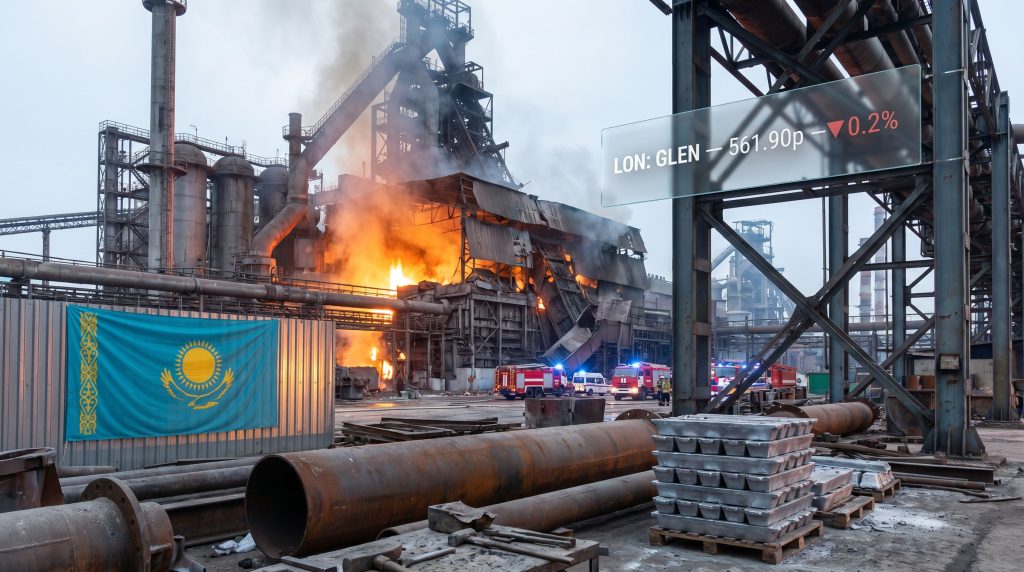
In metallurgical processing, the greatest operational risks do not always emerge during peak production hours. They surface during the quieter moments, when scheduled maintenance work disturbs accumulated particulate layers, disrupts pressure balances, and creates the precise atmospheric conditions that transform a routine cleaning task into a catastrophic ignition event. This industrial paradox defines combustible dust incidents across the global smelting sector, and it is precisely this paradox that appears to have played out during the Glencore plant explosion in Kazakhstan at the Kazzinc zinc-gold facility in Ust-Kamenogorsk, eastern Kazakhstan, on May 5, 2026.
Understanding what happened at this facility requires more than a summary of events. It demands a technical appreciation of how zinc smelting environments behave, why dust-collection systems carry outsized explosion risk, and what the incident reveals about the intersection of industrial safety governance, corporate accountability, and the operational realities of large-scale polymetallic processing in Central Asia.
When big ASX news breaks, our subscribers know first
The Technical Anatomy of a Dust-Collection Explosion
How Zinc Smelting Plants Generate Explosive Conditions
Zinc electrolysis and smelting operations produce enormous quantities of fine metallic particulates as a byproduct of high-temperature processing. Zinc oxide dust, lead compounds, and cadmium residues accumulate continuously across equipment surfaces, ventilation ducting, and inside the very systems designed to capture them. These particulates are not merely a housekeeping concern. Under the right conditions, they are extraordinarily explosive.
Industrial safety science defines what is known as the dust explosion pentagon, which describes the five simultaneous conditions required for a catastrophic dust explosion to occur:
- A combustible dust is present
- The dust is suspended in air at an explosive concentration
- Sufficient oxygen exists within the environment
- An ignition source is introduced
- The space is enclosed enough to allow pressure to build
Zinc smelting facilities satisfy all five conditions with alarming efficiency. Dust-collection systems, specifically baghouse filters, cyclone separators, and smoke extractor units, are the front line of particulate management. However, the act of cleaning these systems during scheduled maintenance inherently mobilises accumulated dust, suspends it in air, and removes the engineered controls that otherwise prevent ignition. It is a procedural necessity that temporarily recreates precisely the conditions the system was designed to prevent.
The Sequence of Events at Kazzinc
According to reporting by Mining Magazine, the explosion occurred during maintenance work on a smoke extractor within the dust-collection infrastructure at the Kazzinc facility. The detonation of the dust-collection unit triggered a fire across an area of 120 square metres within the smelting section of the electrolysis unit, causing a partial building collapse within the affected zone before emergency response teams contained the blaze.
Combustible dust incidents in metallurgical processing represent one of the most well-documented yet persistently underestimated hazard categories in industrial safety. The U.S. Chemical Safety and Hazard Investigation Board has documented numerous smelting and processing facility incidents in which maintenance cleaning operations were the direct precursor to ignition events, noting that dust mobilisation during cleaning creates suspension concentrations that can reach explosive thresholds within seconds.
Internationally recognised safety frameworks such as OSHA 29 CFR 1910.272 in the United States and the European ATEX Directives for explosive atmosphere equipment specifically identify maintenance windows, including cleaning operations of dust-collection infrastructure, as peak-risk periods requiring enhanced procedural controls. Best practice frameworks mandate lock-out/tag-out (LOTO) protocols and confined space entry procedures precisely because of the unique ignition risk profile these activities create.
Human Cost and Emergency Response
Confirmed Casualties and Immediate Medical Response
The human toll of the Glencore plant explosion in Kazakhstan is significant. According to Mining Magazine's reporting on the incident, seven workers were directly affected in total.
| Category | Confirmed Detail |
|---|---|
| Fatalities | 2 workers confirmed killed |
| Critical injuries | 1 person in critical condition |
| Light injuries | 4 additional personnel |
| Total affected | 7 workers |
| Emergency response | Kazakhstan Emergency Situations Ministry deployed |
Kazakhstan's Emergency Situations Ministry deployed personnel to the scene, with rescue operations confirming no additional victims remained within the affected structure. All injured workers received medical treatment following the incident. Glencore publicly described the situation as contained in the immediate aftermath.
Environmental Impact Assessment
Air quality monitoring was conducted across the surrounding area following the blast. Initial post-incident environmental testing detected no contamination in the Ust-Kamenogorsk region. This finding carries significance beyond the immediate incident, particularly given that zinc smelting facilities handle materials including zinc oxide, lead compounds, and cadmium residues, all of which represent serious environmental hazards if dispersed into surrounding soil or water systems.
Furthermore, considerations around mining environmental risk are increasingly central to how regulators and investors assess incidents of this nature. Environmental monitoring protocols for smelting facility incidents typically assess:
- Particulate matter (PM10 and PM2.5): Metallic dust ejected by the blast and carried atmospherically
- Heavy metal concentrations: Zinc, lead, and cadmium in ambient air, soil, and nearby water sources
- Fire suppression runoff: Contamination pathways created by water used in extinguishment
- Structural debris dispersal: Particulate release from collapsed building materials
Ongoing environmental surveillance is expected as the formal investigation progresses.
Kazzinc: A Facility That Defines Kazakhstan's Metals Sector
Ownership, Scale, and Strategic Importance
The Kazzinc facility in Ust-Kamenogorsk is not a peripheral asset within Glencore's global portfolio. It represents one of the largest integrated polymetallic production complexes in Central Asia, producing zinc, lead, copper, gold, and silver across an integrated chain of mining, concentration, and smelting operations.
The ownership structure reflects the facility's strategic significance to the Kazakhstani state:
- 70% ownership: Glencore PLC (London Stock Exchange: GLEN)
- 30% ownership: Samruk-Kazyna, Kazakhstan's sovereign wealth fund
This co-ownership model is common across Kazakhstan's major industrial assets, reflecting the government's approach to maintaining national participation in critical production sectors while attracting international operational expertise and capital.
Zinc's Role in Global Industry
Understanding why the Kazzinc facility matters beyond Kazakhstan requires appreciating zinc's structural importance to modern industrial supply chains. According to the International Zinc Association, galvanisation, the process of coating steel and iron with zinc to prevent corrosion, accounts for approximately 50% of global zinc consumption. Brass and bronze manufacturing accounts for a further 20%, with chemicals, pharmaceuticals, agricultural products, and emerging battery technologies collectively representing the remainder.
Zinc's role in battery technology is particularly relevant in the context of current global zinc production trends and energy transition dynamics. Zinc-air batteries and zinc-manganese dioxide chemistries represent an increasingly researched pathway for grid-scale energy storage, meaning Central Asian zinc production carries long-term strategic relevance beyond its immediate industrial applications.
Any supply disruption at a facility of Kazzinc's scale has the potential to register across international commodity markets, particularly given zinc's sensitivity to concentrated production risk. The U.S. Geological Survey's Mineral Commodity Summaries consistently highlight the geographic concentration of zinc production as a structural supply chain vulnerability for import-dependent economies.
Glencore's Response and Market Reaction
Corporate Communication Following the Incident
Glencore confirmed the incident publicly and characterised the situation as contained. No immediate update on production status at the Kazzinc facility was provided at the time of initial reporting. Kazakhstani authorities indicated that conditions for resuming operations would be assessed following the incident, with regulatory oversight expected to be strengthened as part of the formal response.
The absence of an immediate production suspension announcement does not necessarily indicate operations continued uninterrupted. In incidents of this nature, regulatory authorities typically require facility operators to demonstrate safety compliance before resuming work in affected areas, a process that can take days to weeks depending on investigation scope.
How Glencore's Share Price Responded
Glencore shares declined 0.2% to 561.90 pence on the London Stock Exchange on the day of the incident. The measured nature of this market response is analytically instructive.
- A 0.2% decline on news of a fatal industrial incident suggests markets interpreted the event as operationally localised rather than structurally damaging to Glencore's production outlook
- Glencore's diversified global asset base across copper, coal, nickel, cobalt, and zinc operations provides significant insulation against single-facility disruption
- However, sustained production downtime, escalating regulatory penalties, or a broader investigation into safety practices across Kazzinc's operations could alter investor sentiment materially
Modest share price movements following industrial fatalities at major mining operations are a consistent pattern in equity markets, reflecting diversified revenue streams rather than any diminishment of the human significance of such events. What markets tend to reprice more substantially is prolonged operational disruption or systemic regulatory risk, neither of which had crystallised at the time of initial reporting.
Disclaimer: Share price movements referenced in this article reflect data reported on the date of the incident. This article does not constitute financial advice. Investors should conduct independent due diligence before making investment decisions.
Sector-Wide Safety Lessons: Why Smelters Remain High-Risk Environments
Maintenance Periods as the Industry's Most Dangerous Operational Window
The pattern observable in dust explosion incidents across global metallurgical processing is consistent and instructive. A disproportionate share of serious industrial incidents occur not during standard production runs but during scheduled maintenance activities. The reasons are structural rather than procedural:
- Maintenance activities disturb accumulated dust layers that have settled into stable, non-explosive configurations during normal operations
- Cleaning operations specifically mobilise particulates into suspended airborne states
- Isolation and lock-out procedures may be inconsistently applied across contractor and direct employee workforces
- Enclosed spaces within dust-collection systems create confined area hazards that amplify blast pressure dramatically
- Reduced staffing during maintenance periods can slow emergency response times
The U.S. Chemical Safety and Hazard Investigation Board has documented that in processing industry combustible dust incidents, a significant proportion involve maintenance, repair, and cleaning activities rather than standard production operations. This pattern reflects a universal industrial dynamic that applies with equal force to zinc smelting facilities in Kazakhstan, Canada, Europe, and beyond. For instance, Glencore smelting challenges in other jurisdictions have similarly highlighted the complexities of ageing metallurgical infrastructure.
Regulatory Frameworks and Their Applicability
Several international frameworks govern combustible dust management in metallurgical processing environments:
| Framework | Jurisdiction | Key Focus |
|---|---|---|
| OSHA 29 CFR 1910.272 | United States | Combustible dust management in grain, tobacco, and processing industries |
| ATEX Directives (2014/34/EU) | European Union | Equipment and protective systems in explosive atmospheres |
| DSEAR (Dangerous Substances and Explosive Atmospheres Regulations) | United Kingdom | Risk assessment and controls for explosive atmospheres |
| IEC 60079 Series | International | Electrical equipment standards for explosive atmospheres |
Kazakhstan's industrial safety regulatory environment operates under its own national legislative framework. The degree to which international best practice standards have been adopted across Kazakhstani metallurgical operations is a question that the formal investigation into this incident is likely to probe in depth. In contrast, facilities such as the Boliden zinc smelter in Norway demonstrate how modern metallurgical infrastructure can be engineered with significantly enhanced safety and environmental performance built into core design.
ESG Scrutiny and Corporate Safety Governance
Fatal industrial incidents at major mining operations consistently accelerate ESG scrutiny of the operator involved. For large diversified miners like Glencore, safety performance is increasingly embedded in investor assessment frameworks, institutional shareholder voting decisions, and lending covenant structures for project financing. The International Council on Mining and Metals (ICMM), of which Glencore is a member, maintains member commitment standards around safety performance that include fatality elimination targets and transparent incident reporting protocols.
The broader implication extends beyond Glencore specifically. Consequently, any incident of this severity at a Tier 1 mining facility raises questions about whether mining sustainability transformation efforts have kept pace with the operational complexity of ageing metallurgical infrastructure in resource-rich jurisdictions where regulatory capacity may differ from Western industrial norms.
The next major ASX story will hit our subscribers first
What Comes Next: Investigation, Oversight, and Operational Resumption
Kazakhstan's Formal Investigation Process
Kazakhstan's Ministry of Emergency Situations holds investigative authority over industrial incidents of this nature. The formal investigation is expected to determine:
- The precise technical cause of the dust-collection unit failure
- Whether applicable safety protocols were followed during the maintenance activity
- Whether equipment met required safety standards
- The adequacy of existing dust management procedures across the facility
- Liability determinations for regulatory and civil purposes
Investigation timelines in Kazakhstan's industrial incident framework can vary significantly. Complex cases involving structural damage, multiple casualties, and questions of regulatory compliance often extend over several months before final findings are published.
Conditions Likely to Govern Operational Resumption
Before affected sections of the Kazzinc facility resume normal operations, regulators are likely to require:
- Independent safety audits of the electrolysis unit and associated dust-collection infrastructure
- Enhanced dust management protocols across the broader facility
- Review of maintenance scheduling practices and contractor safety oversight
- Verification that lock-out/tag-out and confined space entry procedures meet applicable standards
- Possible infrastructure upgrades to dust-collection and smoke extraction systems
Supply Chain Implications
The short-term impact on zinc and gold output from Ust-Kamenogorsk will depend on whether the incident caused damage beyond the immediately affected smelting section. Kazzinc's contribution to Glencore's global zinc production portfolio means any prolonged disruption carries materiality for the company's production guidance. Global zinc market participants will monitor the situation, particularly given the incident's broader context and zinc's sensitivity to supply concentration risk in Central Asian production hubs.
Disclaimer: Production impact assessments represent analytical observations based on publicly available information at the time of writing. Actual supply chain effects will depend on investigation outcomes and operational decisions that had not been fully disclosed at the time of publication.
Frequently Asked Questions
What exploded at the Glencore plant in Kazakhstan?
A dust-collection unit within the smelting section of the electrolysis unit at the Kazzinc zinc-gold facility in Ust-Kamenogorsk failed during maintenance cleaning of a smoke extractor on May 5, 2026, triggering a fire across approximately 120 square metres of the facility.
How many people were killed in the Kazzinc explosion?
Two workers lost their lives in the incident. A third person sustained critical injuries, and four others received treatment for light injuries, bringing the total number of directly affected workers to seven.
Who owns the Kazzinc facility in Kazakhstan?
Kazzinc is 70% owned by Glencore PLC, listed on the London Stock Exchange under the ticker GLEN, and 30% owned by Samruk-Kazyna, Kazakhstan's sovereign state fund.
Was there environmental damage from the Kazzinc explosion?
Initial air quality testing conducted following the blast detected no environmental contamination in the surrounding area. Ongoing environmental monitoring is expected as part of the formal investigation.
Has Glencore suspended production at the Kazzinc plant?
No formal production suspension was announced at the time of initial reporting. Kazakhstani authorities stated they would assess conditions for resuming operations and indicated that safety oversight at the facility would be strengthened.
Why are zinc smelting plants particularly vulnerable to dust explosions?
Zinc oxide and lead particulates generated during smelting operations are highly combustible when suspended in air at sufficient concentrations. Dust-collection systems accumulate these materials continuously, and maintenance cleaning activities can mobilise settled particulates into explosive suspension, creating ignition risk if adequate procedural controls are not in place.
Core Takeaways
- The Glencore plant explosion in Kazakhstan at the Kazzinc facility on May 5, 2026, killed two workers, critically injured one, and affected seven in total
- The blast originated in a dust-collection unit during maintenance cleaning of a smoke extractor within the electrolysis unit's smelting section
- The fire covered 120 square metres and caused partial structural collapse before being extinguished
- No environmental contamination was detected in initial testing of the surrounding area
- Kazzinc is 70% Glencore-owned and represents Kazakhstan's largest integrated zinc-gold production complex
- Glencore shares declined 0.2% on the day, reflecting market confidence in the company's diversified asset base
- Combustible dust incidents during maintenance windows represent a recognised, sector-wide risk category requiring enhanced procedural controls
- The formal investigation by Kazakhstan's Ministry of Emergency Situations will determine technical causation, regulatory compliance, and conditions for operational resumption
For additional context on industrial safety standards applicable to global mining and metallurgical operations, the International Council on Mining and Metals (ICMM) and the International Labour Organization (ILO) publish publicly accessible safety frameworks and guidance. Original reporting on this incident was published by Mining Magazine at miningmagazine.com.
Want to Stay Ahead of Significant ASX Mineral Discoveries Before the Broader Market?
Discovery Alert's proprietary Discovery IQ model delivers real-time alerts on high-potential ASX mineral discoveries — turning complex data across more than 30 commodities into clear, actionable insights for both short-term traders and long-term investors. Explore how historic discoveries have generated substantial returns on the Discovery Alert discoveries page, and begin your 14-day free trial today to secure a market-leading edge.