June 21, 2026
Understanding Global Energy Market Interconnectedness
Modern energy markets operate through intricate webs of price transmission mechanisms that transcend geographic boundaries. When supply disruptions occur in critical petroleum transit routes, the effects ripple through commodity exchanges worldwide within hours, creating immediate valuation adjustments across energy-producing regions regardless of their operational proximity to conflict zones. The Iran ceasefire impact on ASX energy stocks exemplifies this global connectivity through rapid price transmission mechanisms.
The Australian Securities Exchange energy sector demonstrates this global connectivity through its correlation with Brent crude pricing structures and international LNG contract frameworks. Despite Australia's geographic isolation from Middle Eastern production facilities, ASX-listed energy companies experience significant price volatility during geopolitical events affecting major oil transit chokepoints.
Strategic Petroleum Transit Vulnerabilities
The Strait of Hormuz represents one of the world's most critical energy infrastructure bottlenecks, facilitating approximately 20-21% of globally traded crude oil according to the U.S. Energy Information Administration's 2024 transit analysis. This narrow waterway also handles substantial volumes of liquefied petroleum gas shipments, with seasonal variations affecting total throughput capacity.
Key Transit Statistics:
• Daily crude oil flow: 18-20 million barrels during normal operations
• LNG vessel traffic: 15-18% of global seaborne trade
• Alternative route capacity: Limited pipeline options through Turkey and Iraq
• Strategic reserve implications: 90-day emergency stockpiles maintained by importing nations
When transit disruptions threaten this corridor, energy commodity prices adjust rapidly to reflect potential supply constraints, regardless of whether actual flow interruptions occur. This phenomenon demonstrates how geopolitical risk premiums influence global energy valuations through anticipatory market mechanisms rather than realised supply shortages.
Furthermore, the oil price rally during recent geopolitical tensions highlighted the vulnerability of Australian energy exports to international supply chain disruptions.
Australian LNG Export Portfolio Dynamics
Australia's position as the world's largest LNG exporter alongside Qatar creates direct exposure to international energy pricing volatility. The nation's three primary export facilities process approximately 80-85 million tonnes annually, representing roughly 15% of global LNG trade according to the International Gas Union's 2024 World LNG Report.
Contract Structure Analysis:
| Contract Type | Revenue Share | Price Mechanism | Duration |
|---|---|---|---|
| Long-term indexed | 60-75% | Brent + premium | 10-20 years |
| Medium-term flexible | 15-25% | Higher Brent correlation | 3-7 years |
| Spot market sales | 5-15% | Real-time pricing | Immediate |
This diversified contract portfolio provides Australian LNG exporters with both revenue stability through long-term agreements and upside capture during supply disruption events when spot prices exceed contract baselines by 35-40%, as demonstrated during the 2022 Russia-Ukraine supply crisis.
When big ASX news breaks, our subscribers know first
Analyzing Recent ASX Energy Sector Volatility Patterns
The Iranian ceasefire announcement triggered substantial sector-specific selling pressure that diverged markedly from broader market performance, indicating targeted portfolio adjustments rather than systematic risk aversion. This pattern suggests institutional investors were reducing energy sector concentrations accumulated during preceding weeks of conflict-driven gains.
The ceasefire development created significant volatility as markets adjusted to reduced geopolitical risk premiums. As news reports indicated, energy stocks including Woodside and Santos experienced substantial pressure following the ceasefire announcement.
Market Performance Divergence Analysis
April 8-9, 2026 Trading Session Results:
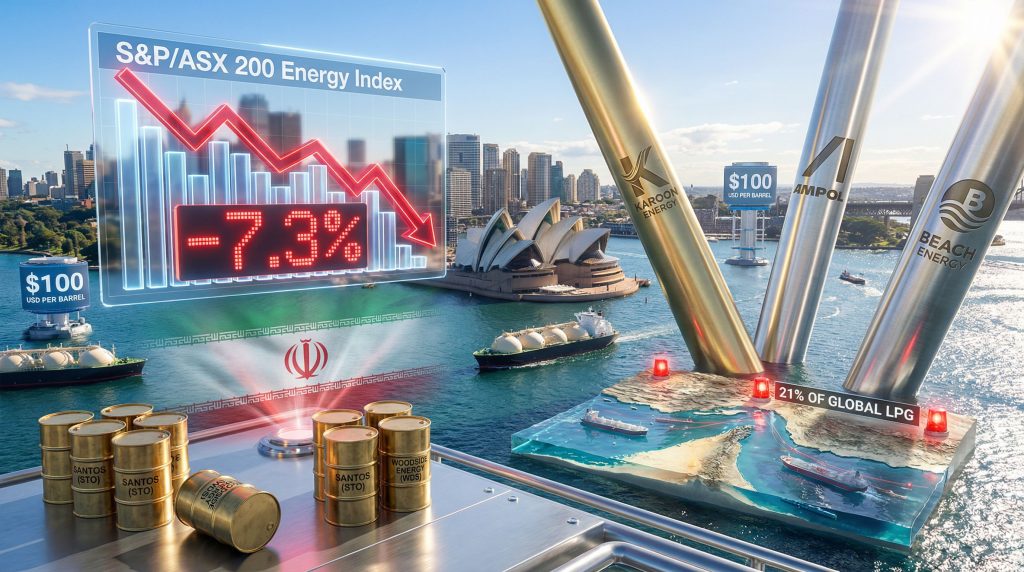
• S&P/ASX 200 Energy Index: -7.3% decline
• Broader ASX 200 Index: +2.8% advance
• Relative underperformance: 10.1 percentage points
• Sector rotation magnitude: Largest single-day divergence in 2026
This performance gap indicates Iran ceasefire impact on ASX energy stocks represented a sector-specific adjustment rather than market-wide risk reassessment. The simultaneous strength in broader equities suggests investor capital moved from energy positions into other sectors benefiting from reduced geopolitical uncertainty.
However, the oil price stagnation following the initial ceasefire announcement raised questions about longer-term market stability, particularly given ongoing OPEC market influence considerations.
Individual Stock Reactions:
| Company | Opening Drop | Intraday Recovery | Net Impact |
|---|---|---|---|
| Woodside (WDS) | >10% | Limited | High volatility |
| Santos (STO) | 6% | Partial rebound | Moderate impact |
| Beach Energy (BPT) | 7% | Minimal | Substantial pressure |
| Karoon Energy | 13.4% | 4.3% recovery | Mixed signals |
Oil Price Transmission Mechanisms
Brent crude futures declined approximately 15% following ceasefire announcements, falling from conflict peaks near $118 per barrel to levels below $100. This price movement removed accumulated risk premiums that had supported ASX energy valuations during six weeks of escalating tensions.
Price Support Level Analysis:
• Peak conflict pricing: $118/barrel Brent crude
• Post-ceasefire levels: Sub-$100/barrel
• Historical support: $75-80/barrel range for Australian LNG profitability
• Technical resistance: $110-115/barrel representing prior cycle highs
The speed of this adjustment reflects algorithmic trading systems responding to geopolitical news flow, creating immediate valuation pressure on energy equities before fundamental analysis could assess ceasefire durability or supply chain restoration timelines. In addition, broader market commentary highlighted how Australian shares remained relatively flat amid these developments.
Evaluating Investment Opportunities Across ASX Energy Subsectors
Different segments within the Australian energy sector exhibit varying sensitivity to geopolitical developments based on operational characteristics, contract structures, and production profiles. Understanding these distinctions enables more precise risk-adjusted positioning during periods of elevated uncertainty.
Large-Cap Integrated Producers Assessment
Woodside Energy Strategic Position:
Woodside's resilience during market volatility stems from structural competitive advantages that differentiate it from peers. The company maintains diversified LNG production assets across multiple basins, reducing single-project dependency while generating substantial cash flows through long-term contract commitments.
Fundamental Strengths:
• Revenue predictability through 10-20 year LNG agreements
• Dividend yield sustainability above 5% at current oil price levels
• Year-to-date gains exceeding 50% provide valuation cushion
• Geographic asset diversification across Australia and international projects
The company's contract portfolio structure provides revenue floors during commodity price downturns while capturing upside during supply disruption events. This dual protection mechanism makes Woodside particularly suitable for income-focused investors seeking energy sector exposure with reduced volatility.
Santos Operational Complexities:
Santos faces dual challenges that complicate near-term investment decisions despite long-term growth potential through the Barossa project development. Current operational issues at the Darwin LNG facility create uncertainty around production restart timelines and commissioning progress.
"The Darwin LNG facility remains temporarily offline due to compressor seal issues on processing equipment, with Santos providing limited guidance on restart scheduling as of April 2026."
Risk-Reward Assessment:
• Upside Scenario: Darwin facility restart enables Barossa project commissioning validation
• Downside Risk: Extended outages delay new project cash flow generation
• Timeline Uncertainty: Limited visibility on technical resolution progress
• Contract Protection: Existing agreements provide some revenue stability during delays
Mid-Cap Producer Evaluation Framework
Beach Energy Volatility Characteristics:
Beach Energy demonstrates higher sensitivity to short-term commodity price movements due to operational structure differences from large-cap peers. The company's smaller production base and limited hedging capabilities create direct exposure to oil price fluctuations.
Moomba Central Optimisation Project Details:
• Total investment commitment: A$607 million partnership with Santos
• Projected cost savings: A$600+ million over full project lifecycle
• Environmental benefits: 40,000 tonnes annual CO2 emissions reduction
• Strategic importance: Optimises lowest-cost Australian LNG feedstock source
This infrastructure investment represents significant long-term value creation potential, but near-term returns remain dependent on commodity price stability and successful project execution across multiple operational phases.
Assessing Geopolitical Stability and Market Implications
The provisional nature of current ceasefire arrangements creates ongoing uncertainty that energy investors must incorporate into positioning decisions. Historical analysis of Middle Eastern diplomatic agreements suggests moderate durability rates, with 60-70% of temporary ceasefires experiencing renewal challenges within initial timeframes.
Moreover, the influence of Saudi exploration licenses on global supply dynamics adds another layer of complexity to long-term energy market forecasting.
Ceasefire Durability Indicators
Structural Stability Factors:
• Two-week timeframe suggests preliminary rather than comprehensive agreement
• Multiple stakeholder involvement complicates enforcement mechanisms
• Ongoing regional military activities indicate incomplete conflict resolution
• Strait of Hormuz shipping patterns remain disrupted despite diplomatic progress
Monitoring Framework for Investors:
- Shipping Volume Recovery: Tanker traffic through Strait of Hormuz
- Diplomatic Progress: VP JD Vance negotiations in Islamabad
- Regional Escalation: Israeli-Lebanon border situation development
- Iranian Policy Signals: Official statements regarding agreement permanence
Oil Market Technical Analysis
Current Brent crude pricing below $100 per barrel creates potential entry opportunities for energy sector investors, particularly if geopolitical tensions resurface and drive prices back toward conflict peaks.
Technical Support Levels:
| Price Level | Significance | Probability |
|---|---|---|
| $95-100 | Current resistance | Active trading range |
| $85-90 | Technical support | Strong buying interest |
| $75-80 | LNG profitability threshold | Critical support zone |
| $110-115 | Conflict premium return | Upside target |
Strategic Portfolio Positioning During Uncertainty
Energy sector volatility creates both risks and opportunities that require differentiated approaches based on individual investment objectives and risk tolerance levels. The current environment favours selective positioning rather than broad sector allocation adjustments.
Consequently, the Iran ceasefire impact on ASX energy stocks necessitates careful consideration of timing and position sizing across different energy subsectors.
Risk-Adjusted Investment Strategies
Conservative Income-Focused Approach:
• Maintain core Woodside positions for dividend stability
• Avoid new energy additions during peak uncertainty periods
• Consider energy infrastructure REITs for steady income streams
• Limit total energy allocation to 5-10% of portfolio maximum
Growth-Oriented Opportunity Strategy:
• Monitor Santos for technical breakdown entry points
• Evaluate Beach Energy oversold bounce potential
• Consider energy technology companies over traditional producers
• Assess renewable energy beneficiaries from transition trends
What Are the Key Sector Rotation Opportunities?
Beneficiaries of Lower Energy Costs:
• Airlines experiencing fuel cost relief (Qantas reported 9% gains during oil decline)
• Transport companies reducing operational expenses
• Consumer discretionary sectors gaining from energy cost savings
• Industrial manufacturers benefiting from lower input costs
Positioning Considerations:
• Timing sector rotation requires monitoring commodity price stability
• Transportation stocks offer leverage to sustained energy cost reductions
• Consumer spending patterns may shift with petrol price changes
• Industrial margins expand when energy represents significant cost component
Long-Term Australian Energy Security Implications
Australia's strategic energy vulnerabilities became apparent during recent geopolitical tensions, highlighting dependencies on regional refining capacity and supply chain resilience. These structural challenges create investment opportunities in domestic energy infrastructure and strategic reserve capacity.
Infrastructure Investment Priorities
Critical Capacity Gaps:
• Domestic refining capacity restoration following facility closures
• Strategic petroleum reserve expansion beyond current 90-day minimums
• LNG export terminal optimisation for increased throughput
• Renewable energy grid integration supporting baseload requirements
Policy Support Mechanisms:
While specific project-level support varies, broader policy frameworks encourage energy security investments through various mechanisms. The government has established strategic classification systems for critical infrastructure projects, though individual company benefits depend on specific project characteristics and application processes.
Investment Theme Development
Energy Transition Integration:
• Carbon capture and storage technology deployment
• Hydrogen production facility development
• Critical minerals processing for battery supply chains
• Grid-scale energy storage system installation
These infrastructure themes represent long-term investment opportunities that benefit from both energy security imperatives and transition toward lower-carbon energy systems, providing portfolio diversification across multiple growth drivers.
The next major ASX story will hit our subscribers first
Market Psychology and Timing Considerations
Current energy sector sentiment reflects the complex interaction between geopolitical risk assessment and fundamental valuation analysis. Understanding these psychological factors helps investors navigate volatility patterns and identify optimal positioning opportunities.
The Iran ceasefire impact on ASX energy stocks demonstrates how rapidly sentiment can shift when geopolitical risk premiums dissipate, creating both challenges and opportunities for active investors.
Behavioral Finance Dynamics
Fear Premium Removal Process:
When geopolitical tensions escalate, energy stocks typically trade above fundamental valuations due to supply disruption fears. Ceasefire announcements trigger rapid premium removal as investors reassess actual supply risk levels, often creating temporary overselling before markets stabilise.
Institutional Positioning Patterns:
• Energy overweighting during conflict peaks creates selling pressure during resolution
• Algorithmic trading amplifies news-driven price movements in both directions
• Value investors often accumulate positions during panic selling episodes
• Technical traders focus on momentum shifts rather than fundamental analysis
What Constitutes Optimal Entry Point Identification?
Key Metrics for Investment Timing:
| Indicator | Current Level | Investment Signal |
|---|---|---|
| Brent crude stability | Sub-$100/barrel | Potential entry zone |
| Energy sector relative strength | -10.1% vs market | Oversold conditions |
| Volatility index | Elevated levels | Wait for stabilisation |
| Shipping volumes | Partial recovery | Monitor normalisation |
Risk Management Framework:
• Implement position sizing based on volatility expectations
• Use stop-loss strategies during high uncertainty periods
• Consider options strategies for asymmetric risk-reward profiles
• Maintain diversification across energy subsectors and geographic regions
This analytical framework provides investors with tools to navigate the complex intersection of geopolitical developments and energy market dynamics while maintaining focus on long-term value creation opportunities within the Australian energy sector.
This analysis is for educational purposes only and does not constitute investment advice. Energy sector investments carry significant risks including commodity price volatility, operational challenges, and regulatory changes. Investors should conduct thorough due diligence and consider their risk tolerance before making investment decisions. Past performance does not guarantee future results, and geopolitical developments may materially impact investment outcomes.
Want to Stay Ahead of ASX Energy Market Volatility?
Discovery Alert's proprietary Discovery IQ model provides real-time notifications on significant ASX mineral and energy discoveries, helping investors navigate volatile sectors with actionable insights powered by advanced AI analysis. Begin your 14-day free trial today to gain a market-leading advantage during uncertain geopolitical periods and position yourself ahead of major sector movements.