June 6, 2026
Understanding the Magnitude of Global Energy Market Transformation
The petroleum industry faces unprecedented structural upheaval as geopolitical tensions reshape fundamental supply-demand equilibrium across global energy markets. Recent market analysis reveals a dramatic reversal from projected surplus conditions to acute deficit scenarios, marking what many consider the most significant energy security challenge since the 1970s oil crises.
This transformation extends far beyond temporary price volatility, representing a fundamental shift in how energy markets price risk, security, and long-term supply reliability. The oil market deficit due to Iran war has catalyzed changes that will define energy economics through 2027 and beyond. Furthermore, these disruptions highlight the critical importance of developing comprehensive energy transition strategies.
Strategic Chokepoint Analysis
Critical maritime transit routes have emerged as primary vulnerability points in global energy security frameworks. The Strait of Hormuz, through which approximately 21 million barrels per day transit according to the U.S. Energy Information Administration, represents the world's most strategic petroleum chokepoint.
This volume accounts for roughly 21% of global oil consumption, making any disruption to these transit routes immediately consequential for worldwide energy availability. Recent supply disruptions have eliminated an estimated 9 to 11 million barrels per day from global markets, according to International Energy Agency assessments and ANZ Bank analysis conducted in April 2026.
This massive reduction from a baseline global supply of 106.6 million barrels per day in January 2026 represents approximately 8-10% of total world production capacity offline. The magnitude of this supply shock creates cascading effects throughout global energy systems:
- Immediate transit disruption: Complete closure of primary shipping lanes
- Infrastructure damage: Extensive damage to export terminals and processing facilities
- Insurance complications: Maritime coverage unavailable for high-risk transit zones
- Logistics bottlenecks: Alternative routing through longer, more expensive pathways
When big ASX news breaks, our subscribers know first
What Economic Indicators Signal a Fundamental Market Shift?
Economic modeling demonstrates a complete reversal of market fundamentals within an unprecedented six-month timeframe. Analyst consensus compiled by Reuters reveals that projected market surplus of 1.63 million barrels per day for 2026, forecasted in September 2025, has transformed into an expected deficit of 750,000 barrels per day on average throughout 2026.
This 2.38 million barrel per day swing in supply-demand projections represents the largest forecast revision in Reuters polling records, reflecting fundamental reassessment of global energy security rather than cyclical market adjustment. Consequently, understanding these oil price trade shifts becomes crucial for market participants.
Supply-Demand Rebalancing Metrics
| Quarter | Projected Balance (million bpd) | Price Impact Range |
|---|---|---|
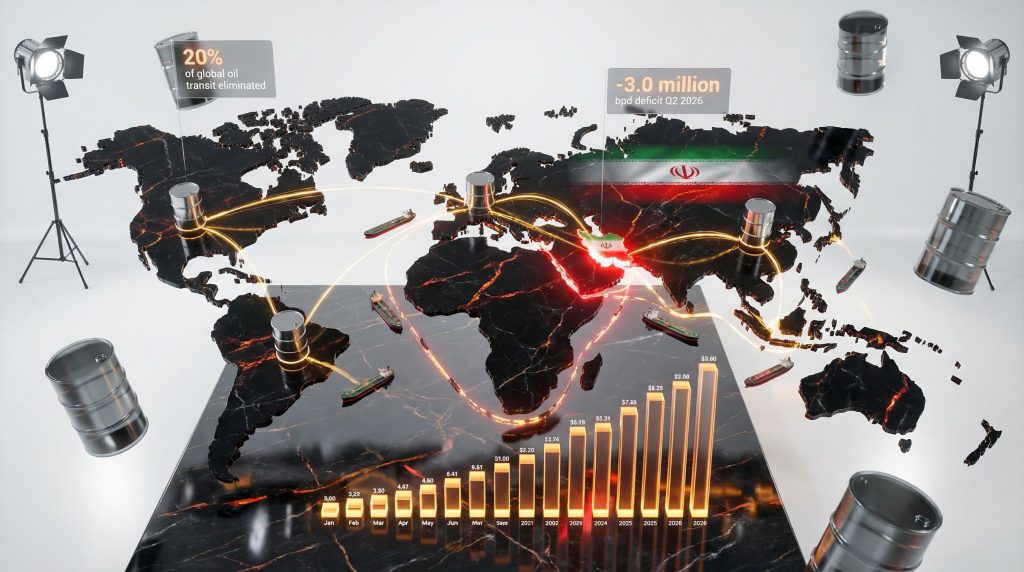
| Q2 2026 | -3.0 million bpd deficit | $100-130/barrel |
| Q3 2026 | -1.8 million bpd deficit | $95-120/barrel |
| Q4 2026 | +1.4 million bpd surplus | $80-100/barrel |
| Q1 2027 | Balanced to slight deficit | $75-95/barrel |
The transformation through these phases reflects distinct recovery patterns:
Phase 1: Maximum Disruption (Q2 2026)
- Peak deficit conditions as damaged infrastructure requires assessment
- Limited alternative routing capacity activated
- Strategic reserve deployments provide partial offset
Phase 2: Gradual Recovery (Q3 2026)
- Infrastructure repair enabling partial production restoration
- Insurance and logistics constraints limiting full capacity utilization
- Alternative supply sources ramping production
Phase 3: Market Rebalancing (Q4 2026-Q1 2027)
- Restored production capacity approaching pre-conflict levels
- Strategic reserve refilling creating additional demand pressure
- New supply-demand equilibrium incorporating permanent risk premiums
Analyst forecasts indicate average annual production losses of 2.13 million barrels per day across 2026. Market prices have already increased roughly 50% from pre-conflict levels, suggesting traders are pricing in sustained supply constraints rather than temporary disruption. Additionally, these developments underscore the broader trade war impact analysis that continues to reshape global markets.
How Are Global Energy Security Frameworks Adapting?
Strategic petroleum reserve policies are undergoing fundamental transformation from cyclical price management tools toward comprehensive energy security mechanisms. The coordination required to address systematic supply chain disruption has demonstrated that individual national reserves cannot effectively respond to global chokepoint closure without multilateral cooperation.
Strategic Reserve Deployment Patterns
Emergency response mechanisms have activated across multiple jurisdictions simultaneously, marking unprecedented coordination in reserve deployment. Historical precedents provide context for current response magnitude:
- 1990-1991 Gulf War: IEA coordinated release of approximately 88 million barrels over 42 days
- 2011 Libya Disruption: 60 million barrels released over 30-day period
- Current Crisis: Enhanced coordination reflecting lessons learned from previous disruptions
Immediate Recovery Measures:
- Basic export terminal functionality restoration
- Primary pipeline damage assessment and repair
- Limited tanker loading capacity activation
- Security protocol implementation
Medium-term Recovery Strategy:
- Full processing facility restoration requiring 6-18 months
- Secondary infrastructure repair and enhancement
- Enhanced security system implementation
- Supply chain redundancy development
Long-term Reconstruction Framework:
- Capacity expansion beyond pre-conflict levels
- Technology upgrades incorporating enhanced security features
- Redundancy system development for critical infrastructure
- Alternative routing capacity enhancement
The evolution toward multilateral coordination reflects recognition that energy security requires collective response capabilities rather than individual national stockpiling strategies alone. Moreover, these changes highlight the increasing OPEC market influence on global oil pricing decisions.
What Infrastructure Damage Will Create Long-Term Constraints?
Physical damage assessment reveals asymmetric recovery patterns across different infrastructure categories. ANZ Bank analysis indicates that even under constructive security scenarios, output recovery will be limited and uneven, with operational friction and damaged infrastructure creating sustained bottlenecks.
Recovery projections suggest 2 to 3 million barrels per day potentially returning within the first month as export flows resume. However, additional 2 to 3.5 million barrels per day potentially restored throughout the second quarter of 2026 depends on extensive reconstruction efforts.
Infrastructure Recovery Timeline Analysis
Primary Export Terminals (1-3 months initial recovery)
- Specialised offshore engineering requirements
- Critical component lead times extending 6-12 months
- VLCC weathering systems requiring specialised repair
- Loading buoy and mooring equipment replacement
Refinery Processing Units (6-18 months full recovery)
- Damage assessment requiring 2-4 weeks minimum
- Distillation unit repairs potentially extending 3-6 months
- Specialised equipment procurement challenges
- Post-repair testing and certification requirements
Pipeline Infrastructure (Variable timeline)
- Comprehensive integrity assessment before reactivation
- Pressure testing and cleaning adding 4-8 weeks per major line
- Spare parts availability constraining repair schedules
- Alternative route development requiring years of investment
ANZ Bank warns that 1 to 2 million barrels per day capacity may face permanent limitations or extended offline periods even after conflict resolution. This permanent capacity reduction would establish structural market tightness and elevated price volatility as baseline conditions rather than temporary disruptions.
Which Regional Markets Face the Greatest Vulnerability?
Geographic proximity to disrupted supply routes creates non-linear exposure patterns, with Northeast Asian economies experiencing compounded vulnerability due to infrastructure limitations and supply chain configurations optimised for Middle Eastern crude grades.
Regional Exposure Assessment
High Vulnerability Markets:
South Korea
- Approximately 85% dependency on Middle Eastern crude supplies
- Limited strategic reserve capacity relative to consumption levels
- Refinery configurations optimised for specific crude grades
- Lack of alternative pipeline infrastructure options
Japan
- Nearly 90% import reliance with concentrated Middle Eastern sourcing
- Just-in-time supply chain models providing minimal buffer capacity
- Limited alternative crude processing capabilities
- Geographic isolation constraining alternative supply routes
India
- Strategic reserve limitations relative to growing consumption
- Refinery configuration constraints limiting crude source flexibility
- Dependency on Strait of Hormuz transit routes
- Limited pipeline alternatives to maritime shipping
Moderate Vulnerability Markets:
China
- Diversified supply portfolio reducing concentrated exposure
- Substantial strategic reserve capacity providing buffer
- Alternative pipeline infrastructure from Russia and Central Asia
- Enhanced bilateral energy cooperation agreements
Southeast Asia
- Mixed supply sources reducing dependency concentration
- Regional cooperation mechanisms enabling emergency sharing
- Alternative supply route development in progress
- Growing domestic production offsetting import requirements
Regional vulnerability reflects not just import dependency percentages but also infrastructure flexibility, strategic reserve adequacy, and alternative supply route availability. Countries with optimised refinery configurations for specific crude grades face additional constraints when traditional supply sources become unavailable.
How Will Pricing Mechanisms Evolve Under New Market Conditions?
Traditional oil pricing benchmarks face structural challenges as physical delivery constraints create basis differentials between regional markets. This evolution represents potential permanent alteration of global pricing architecture rather than temporary market dislocation.
Emerging Price Discovery Mechanisms
Regional Premium Development
- Asia-Pacific crude trading at $15-25 premiums to traditional benchmarks
- European markets developing alternative pricing mechanisms
- African crude gaining premium pricing due to alternative route availability
- American crude exports commanding elevated international premiums
Product Crack Spread Volatility
- Refined product spreads showing 200-300% of normal historical ranges
- Gasoline and distillate prices reflecting transportation cost increases
- Regional refining capacity constraints amplifying product premiums
- Alternative refining source development creating new pricing relationships
Forward Curve Contango
- Long-term contracts incorporating sustained geopolitical risk premiums
- Backwardation in near-term contracts reflecting immediate scarcity
- Extended duration contracts pricing in infrastructure reconstruction timelines
- Insurance and logistics costs becoming permanent pricing components
Market structure evolution reflects recognition that traditional pricing mechanisms assume unrestricted global commodity flow, an assumption challenged by sustained chokepoint disruption. These developments also contribute to significant oil price rally insights affecting market projections.
The next major ASX story will hit our subscribers first
What Investment Flows Will Reshape Energy Infrastructure?
Capital allocation patterns are shifting dramatically toward supply chain resilience and alternative routing capacity development. This investment cycle will define energy security frameworks for the next decade, with financing directed toward infrastructure projects that enhance system redundancy rather than pure capacity expansion.
Strategic Investment Priorities
Pipeline Infrastructure Development
- Trans-Arabian pipeline capacity expansion projects
- Alternative routing through Red Sea terminal development
- Enhanced storage capacity at key transit points
- Interconnection projects enabling supply source diversification
Shipping and Logistics Enhancement
- Very Large Crude Carrier (VLCC) fleet expansion programmes
- Alternative port facility development in secure locations
- Enhanced maritime security system implementation
- Floating storage capacity addition for emergency supply management
Processing Facility Modernisation
- Refinery flexibility enhancement for multiple crude grade processing
- Strategic location facility development outside traditional chokepoint zones
- Technology upgrades incorporating enhanced security features
- Redundant processing capacity development
Investment flows now prioritise supply chain resilience over pure cost optimisation, representing fundamental shift in energy infrastructure development philosophy. Furthermore, these changes align with broader understanding of how Gulf economies are being disrupted by the current crisis.
How Will Geopolitical Risk Premiums Permanently Alter Market Structure?
The integration of sustained geopolitical risk into energy pricing represents departure from previous temporary shock models. This permanent premium reflects structural uncertainty recognition in global energy security rather than cyclical political tension.
Risk Premium Quantification
| Risk Factor | Estimated Premium ($/barrel) | Duration |
|---|---|---|
| Transit route vulnerability | $8-12 | Permanent |
| Infrastructure security | $5-8 | 3-5 years |
| Regional conflict spillover | $3-7 | Variable |
| Supply chain redundancy | $2-5 | Long-term |
Permanent Transit Route Premium
- Recognition that chokepoint closure remains ongoing possibility
- Insurance market permanently repricing maritime transit risk
- Alternative route development requiring sustained investment
- Strategic reserve maintenance becoming permanent cost component
Infrastructure Security Premium
- Enhanced facility protection requirements increasing operational costs
- Technology upgrades incorporating security features as standard
- Personnel security training and equipment becoming routine expenses
- Redundant system development as risk mitigation strategy
Regional Spillover Premium
- Recognition that localised conflicts create global supply impacts
- Political risk assessment becoming routine investment consideration
- Diplomatic relationship stability affecting long-term supply agreements
- Regional cooperation agreements gaining strategic importance
Market structure evolution incorporates these risk premiums as baseline assumptions rather than temporary adjustments, fundamentally altering energy investment and consumption patterns.
What Demand Destruction Patterns Will Emerge?
Elevated energy prices trigger demand reduction across multiple sectors, creating feedback loops that contribute to market rebalancing over extended timeframes. Understanding these patterns helps predict recovery timelines and permanent consumption changes.
Sector-Specific Demand Response
Transportation Fuels
- 5-8% reduction in discretionary travel and transport
- Accelerated adoption of fuel-efficient vehicle technologies
- Public transportation utilisation increasing
- Commercial transport route optimisation
Industrial Consumption
- Production shifting toward lower-cost energy regions
- Energy-intensive manufacturing scaling back output
- Process optimisation reducing per-unit energy requirements
- Alternative energy source adoption accelerating
Petrochemical Feedstock
- Margin compression forcing operational efficiency gains
- Alternative feedstock source development
- Production location shifting toward energy-secure regions
- Technology investment reducing feedstock requirements
Demand destruction creates permanent efficiency improvements and technology adoption that may not reverse even when energy prices moderate, contributing to long-term demand pattern changes. In addition, these patterns reflect the broader oil market deficit due to Iran war creating structural market adjustments.
Which Alternative Energy Transitions Will Accelerate?
Energy security concerns accelerate renewable energy deployment and efficiency investments beyond previous climate-driven timelines. This acceleration may permanently reduce long-term oil demand growth projections, creating structural changes in energy consumption patterns.
Accelerated Transition Metrics
Renewable Capacity Additions
- 25% increase above pre-conflict deployment projections
- Emergency renewable energy installation programmes
- Grid modernisation accelerating to accommodate renewable integration
- Energy storage development receiving enhanced investment priority
Electric Vehicle Adoption
- 18-month acceleration in deployment schedules
- Emergency EV infrastructure development programmes
- Corporate fleet conversion accelerating due to fuel cost concerns
- Battery technology investment increasing due to energy security priorities
Industrial Electrification
- Manufacturing process conversion from fossil fuel dependence
- Heat pump adoption accelerating in industrial applications
- Electric heating system deployment in commercial buildings
- Energy efficiency retrofits receiving emergency funding
The convergence of energy security concerns with existing decarbonisation goals creates synergistic acceleration effects that may permanently alter energy transition timelines.
How Will Strategic Petroleum Reserve Policies Transform?
Government reserve policies evolve from price stabilisation tools toward comprehensive energy security frameworks. This transformation creates sustained demand for strategic stockpiling that permanently affects global supply-demand balance.
Reserve Policy Evolution
Capacity Expansion
- Target reserve levels increasing 40-60% above previous standards
- New facility construction in strategically secure locations
- Enhanced fill rate capabilities for rapid stock building
- Regional reserve sharing agreements development
Product Diversification
- Strategic refined product reserves addition
- Natural gas storage capacity enhancement
- Critical mineral stockpiling for energy infrastructure
- Biofuel reserve development as security enhancement
International Coordination
- Enhanced multilateral release coordination mechanisms
- Shared funding for emergency reserve maintenance
- Joint procurement strategies reducing market impact
- Standardised trigger mechanisms for coordinated releases
Reserve policy transformation creates permanent incremental demand that affects baseline supply-demand calculations and supports sustained higher price levels even during normal market conditions.
What Long-Term Market Structure Changes Should Investors Expect?
The current crisis catalyses permanent changes in energy market structure affecting everything from supply chain design to pricing mechanisms. These changes define investment opportunities and risks for the next decade.
Structural Transformation Indicators
Supply Chain Regionalisation
- Reduced reliance on single-source regions or transit routes
- Regional energy cooperation agreements gaining strategic importance
- Local refining capacity development receiving priority investment
- Alternative transportation infrastructure as competitive advantage
Price Volatility Normalisation
- Higher baseline volatility expectations becoming market standard
- Enhanced hedging instrument development for risk management
- Long-term contract premiums incorporating volatility assumptions
- Financial market products adapting to new volatility regimes
Investment Risk Premium Enhancement
- Geopolitical risk assessment becoming routine investment requirement
- Due diligence incorporating supply chain vulnerability analysis
- Country risk premiums permanently elevated for energy investments
- Infrastructure hardening becoming standard development requirement
Disclaimer: This analysis involves market forecasts and investment scenarios that contain inherent uncertainty. Energy markets remain subject to geopolitical, technological, and economic factors that may differ materially from current projections. Readers should conduct independent research and consult qualified advisors before making investment decisions based on this information.
Market structure evolution reflects recognition that energy security requires fundamental redesign of global supply systems rather than incremental optimisation of existing frameworks. However, the oil market deficit due to Iran war also demonstrates how quickly fundamental market assumptions can change. This transformation creates both investment opportunities in resilience infrastructure and risks for assets dependent on traditional supply chain assumptions.
Want to Stay Ahead of Commodity Market Disruptions?
Discovery Alert's proprietary Discovery IQ model delivers real-time alerts on significant ASX mineral discoveries, empowering subscribers to identify actionable opportunities whilst global energy markets undergo unprecedented transformation. With oil markets demonstrating how quickly fundamental supply assumptions can change, savvy investors are diversifying into alternative commodity opportunities where historic discoveries have generated substantial returns for early investors.