
May 16, 2026
Global Infrastructure Investment Dynamics: Examining African Mineral Transportation Corridors
Cross-continental infrastructure projects frequently reshape global supply chains in ways that extend far beyond their immediate geographical boundaries. The dynamics of mineral transportation corridors across developing economies create cascading effects through international commodity markets, geopolitical relationships, and investment flows. Understanding these infrastructure developments requires examining not just the engineering specifications or financial commitments, but the broader strategic positioning they represent within evolving global resource competition.
When examining Africa's mineral export infrastructure, transportation bottlenecks consistently emerge as primary constraints limiting resource extraction potential. The continent's landlocked mining regions face particularly acute challenges in accessing international markets efficiently, creating opportunities for transformative infrastructure investments that can fundamentally alter regional economic dynamics.
When big ASX news breaks, our subscribers know first
Strategic Infrastructure Investment Framework: The Zambia Copper Rail Link Analysis
Project Architecture and Capital Requirements
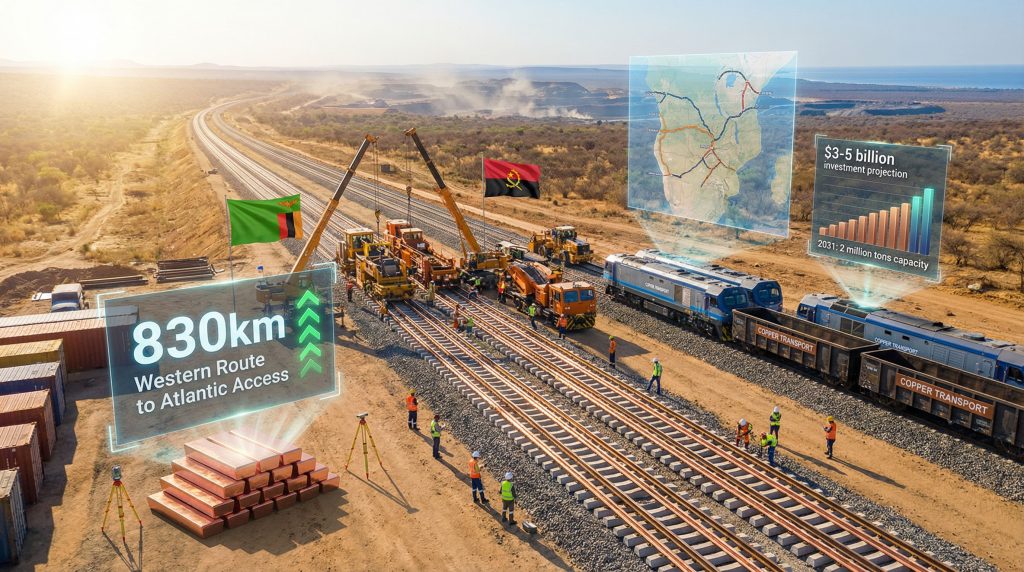
The proposed Zambia copper rail link represents a comprehensive transportation infrastructure initiative spanning 830 kilometers from Zambia's copper-producing regions to Angola's Atlantic coastline. Financial projections for this dedicated freight corridor range between $3 billion and $5 billion, encompassing both rail infrastructure development and rolling stock acquisition.
This investment scale positions the project as the most significant rail construction undertaking in Zambia since the Chinese-funded Tazara railway development during the 1970s. Construction planning indicates a 2026 commencement date with operational targets set for 2030, establishing a four-year development timeline for this cross-border infrastructure initiative.
Furthermore, the comprehensive cost structure integrates multiple infrastructure components:
- Track infrastructure: Rail lines, signaling systems, and maintenance facilities
- Rolling stock: Locomotives and specialised freight cars for copper transport
- Border coordination: Cross-jurisdictional operational systems between Zambia and Angola
- Port integration: Connection infrastructure with Angola's Lobito port facilities
Freight Volume Projections and Economic Modelling
Operational capacity modelling projects initial freight volumes reaching 2 million tons annually by 2031, representing the baseline operational scenario following the anticipated 2030 completion. Medium-term growth trajectories indicate expansion to approximately 2.7 million tons by the early 2040s, suggesting a 35% capacity increase over the initial operational decade.
Primary cargo composition focuses on copper concentrate and refined copper products, reflecting the strategic purpose of connecting Zambia's copper belt to Atlantic export markets. The transportation corridor design accommodates both concentrate shipments from mining operations and value-added copper products from regional processing facilities.
Projected Freight Evolution:
| Timeframe | Annual Capacity | Growth Rate | Primary Commodities |
|---|---|---|---|
| 2031 | 2.0 million tons | Baseline | Copper concentrate, refined copper |
| Mid-2030s | 2.3 million tons | 15% increase | Expanded mineral portfolio |
| Early 2040s | 2.7 million tons | 35% total growth | Diversified cargo base |
Secondary revenue opportunities include import facilitation for petroleum products and manufactured goods, creating bidirectional traffic patterns that improve overall corridor utilisation rates and financial sustainability. However, this approach requires careful consideration of copper system analysis to ensure optimal operational efficiency.
Transportation Route Competition: Comparative Infrastructure Analysis
Existing Export Corridor Limitations
Central African copper exports currently rely on three primary transportation routes, each presenting distinct operational characteristics and cost structures. The eastern corridor through Tanzania's Tazara railway extends approximately 1,860 kilometers to Dar es Salaam port, whilst southern routes through South Africa exceed 2,400 kilometers to reach Cape Town or Durban facilities.
The proposed western route via the Zambia copper rail link spans 830 kilometers to Angola's Lobito port, representing a significant distance reduction compared to existing alternatives. This distance advantage translates directly into reduced transportation costs, shorter transit times, and improved cash flow cycles for mining operations.
Current eastern corridor constraints include infrastructure deterioration affecting the Tazara system, which has experienced significant maintenance challenges since its original 1970s construction. Chinese investment of approximately $1.2 billion in Tazara rehabilitation demonstrates the scale of modernisation required for aging rail infrastructure across the region.
Atlantic Access Strategic Advantages
The western corridor's Atlantic port access provides several operational benefits compared to traditional export routes. In addition to distance advantages, this approach supports improved haulage operations through dedicated infrastructure design.
Operational Efficiency Factors:
- Reduced transit times: Shorter distance to port facilities
- Lower transportation costs: Decreased fuel and maintenance expenses
- Improved reliability: Dedicated freight infrastructure design
- Enhanced capacity: Modern rolling stock and signalling systems
Market Access Benefits:
- Direct Atlantic shipping: Reduced transshipment requirements
- European market proximity: Shorter ocean transit to European refineries
- American market access: Direct Atlantic shipping lanes to North American ports
- Supply chain diversification: Alternative route reducing single-corridor dependency
The Lobito port's expansion capacity supports the projected freight volumes, though specific facility upgrades remain under development as part of the broader corridor modernisation initiative.
Financial Institution Participation and Funding Architecture
Lead Development Structure
Africa Finance Corporation (AFC) serves as the primary project developer and sponsor for the 830-kilometer corridor development. The project employs special-purpose vehicle structures in both Zambia and Angola, creating separate legal entities to manage cross-border operational and financial requirements.
Stakeholder participation includes:
- Government equity stakes: Both Zambian and Angolan sovereign participation
- Mining company investment: Direct industry participation in infrastructure development
- Railway operators: Operational expertise and service delivery partnerships
- Multilateral institutions: Development finance and risk mitigation support
This multi-stakeholder approach distributes project risks across governmental, commercial, and institutional participants whilst ensuring alignment between infrastructure development and end-user requirements.
International Funding Commitments and Financing Gaps
Confirmed financial commitments include African Development Bank participation, though specific funding amounts remain undisclosed. European Union strategic interest has been expressed, indicating preliminary engagement without firm financial commitments at this stage.
United States government commitment of $553 million targets the existing Lobito corridor in Angola, specifically covering infrastructure upgrades from the port to the Democratic Republic of Congo border. This funding addresses the Angolan corridor component but does not extend to the Zambian rail extension, creating uncertainty regarding comprehensive corridor development.
Current Funding Landscape:
| Funding Source | Status | Amount | Coverage Area |
|---|---|---|---|
| African Development Bank | Committed | Undisclosed | Project-wide |
| European Union | Strategic Interest | TBD | Project-wide |
| United States | Committed | $553 million | Angola corridor only |
| Private Sector | Required | TBD | Gap financing |
The substantial funding gap between confirmed commitments and total project costs necessitates additional private sector participation, particularly from mining companies that would directly benefit from improved transportation infrastructure. Furthermore, understanding tariffs and market impact remains crucial for comprehensive project evaluation.
Western Strategic Mineral Access and Geopolitical Dynamics
Supply Chain Competition and Resource Security
Global competition for critical mineral access has intensified supply chain diversification strategies among developed economies. China's $1.2 billion investment in Tazara railway rehabilitation demonstrates the strategic importance of transportation infrastructure in securing mineral resource access from central African producers.
The proposed western corridor provides alternative export route options that reduce dependency on eastern infrastructure systems, creating strategic flexibility for both Zambian mining operations and international buyers seeking supply chain diversification.
Critical mineral supply security considerations include:
- Route diversification: Multiple export options reducing single-corridor risks
- Geopolitical balance: Western infrastructure investment countering eastern corridor dominance
- Transportation cost optimisation: Competitive routing options improving economic efficiency
- Market access flexibility: Enhanced ability to serve different regional markets
Mining Industry Production Optimisation Impact
Improved transportation infrastructure enables mining operations to optimise production planning and investment decisions. Reduced transportation costs can make marginal copper deposits economically viable, potentially increasing regional mining industry innovation and exploration activities.
The corridor's design accommodates both concentrate and refined copper transportation, supporting value-addition strategies within Zambian processing facilities. This flexibility encourages downstream processing investment, creating additional economic benefits beyond basic mineral extraction.
Production Impact Framework:
- Cost structure improvement: Lower per-ton transportation expenses
- Cash flow optimisation: Faster export cycles improving working capital
- Investment facilitation: Infrastructure certainty supporting expansion decisions
- Regional development: Industrial growth along the transportation corridor
Implementation Challenges and Technical Considerations
Cross-Border Coordination Requirements
The project's success depends on effective coordination between Zambian and Angolan regulatory frameworks, operational standards, and maintenance protocols. Cross-border infrastructure projects require harmonised technical specifications, customs procedures, and operational agreements.
Key coordination areas include:
- Technical standardisation: Rail gauge, signalling systems, and safety protocols
- Customs integration: Streamlined border crossing procedures for freight
- Maintenance agreements: Joint responsibility frameworks for infrastructure upkeep
- Operational protocols: Coordinated scheduling and capacity management
Environmental and Regulatory Compliance
Environmental Management Agency assessment completion provides regulatory foundation for project advancement, though ongoing environmental monitoring and compliance requirements extend throughout construction and operational phases.
Social impact considerations include community displacement compensation, local employment opportunities, and regional economic development benefits. The 830-kilometre corridor traverses multiple communities and ecological zones, requiring comprehensive impact management strategies.
Environmental Considerations:
- Wildlife corridor preservation: Maintaining natural migration patterns
- Water resource management: Protecting local watershed systems
- Community integration: Minimising displacement and maximising local benefits
- Long-term sustainability: Environmental monitoring and mitigation protocols
The next major ASX story will hit our subscribers first
Economic Transformation Implications for Regional Development
Mining Industry Cost Structure Evolution
The Zambia copper rail link fundamentally alters transportation economics for regional mining operations. Current road transport systems impose high fuel costs, vehicle maintenance expenses, and time delays that reduce overall operational efficiency.
Projected transportation improvements include:
- Reduced per-ton costs: Rail transport efficiency advantages over road systems
- Improved reliability: Dedicated infrastructure reducing weather and traffic delays
- Enhanced capacity: Higher volume transportation enabling increased production
- Operational flexibility: Multiple export route options optimising market access
Consequently, mining companies operating in western Zambian regions gain particular advantages from corridor access, potentially shifting regional exploration and development priorities toward areas with convenient rail connectivity.
Regional Development Multiplier Effects
Infrastructure investment creates economic multiplier effects extending beyond direct mining applications. Construction activities generate employment opportunities, whilst operational phases support ongoing maintenance, logistics, and service sector employment.
Development Impact Categories:
- Direct employment: Construction, operations, and maintenance positions
- Indirect economic activity: Supporting service industries and suppliers
- Infrastructure spillover: Improved connectivity benefiting other industries
- Investment attraction: Enhanced infrastructure encouraging additional development projects
The corridor's completion by 2030 establishes a foundation for broader regional integration initiatives between Zambia and Angola, potentially supporting additional trade and investment flows beyond mineral exports.
Investment Timeline and Strategic Positioning Analysis
Implementation Phases and Milestone Framework
The project's 2026-2030 development timeline encompasses multiple construction and commissioning phases, each requiring specific technical achievements and regulatory approvals. This approach aligns with established investment strategy insights for large-scale infrastructure projects.
Implementation Sequence:
- 2026-2027: Initial construction commencement and land acquisition
- 2028-2029: Major infrastructure installation and systems integration
- 2030: Operational commissioning and commercial service launch
- 2031+: Capacity optimisation and volume growth phases
This timeline requires sustained financial commitment and technical execution across a four-year period, demanding consistent stakeholder coordination and resource allocation throughout the construction process.
Long-Term Strategic Infrastructure Positioning
The Zambia copper rail link represents foundational infrastructure that positions both countries for enhanced economic integration and global market participation. Successful completion establishes precedents for additional cross-border infrastructure initiatives throughout the region.
Strategic positioning benefits include:
- Enhanced export capabilities: Improved market access and transportation options
- Regional connectivity: Strengthened economic ties between Zambia and Angola
- Investment attraction: Infrastructure quality supporting additional development projects
- Geopolitical influence: Balanced international engagement through diversified partnerships
The corridor's success could catalyse additional transportation and industrial infrastructure development, creating a comprehensive economic corridor serving multiple industries and trade relationships.
Risk Assessment and Investment Considerations
Financial and Political Risk Factors
Cross-border infrastructure projects face inherent political and regulatory risks that can affect project completion timelines and operational efficiency. Currency fluctuations, regulatory changes, and shifts in governmental priorities represent ongoing risk factors requiring careful management.
Key risk categories include:
"Political Risks: Changes in government policy, regulatory frameworks, or bilateral relationships between Zambia and Angola could affect project support and operational parameters."
"Financial Risks: Currency volatility, funding availability, and cost overruns present ongoing challenges requiring comprehensive risk management strategies."
"Operational Risks: Technical implementation challenges, environmental compliance requirements, and operational coordination difficulties could affect timeline and cost projections."
Market Demand and Commodity Price Considerations
Copper market dynamics significantly influence project viability and return expectations. Global copper demand growth, driven by renewable energy transition and electrification trends, supports long-term transportation infrastructure investment rationale.
However, commodity price volatility creates uncertainty regarding freight volume projections and revenue sustainability. The corridor's design accommodates multiple commodity types, providing some diversification benefits beyond exclusive copper dependency.
Market Considerations:
- Copper demand growth: Electrification trends supporting long-term consumption
- Price volatility management: Diversified cargo base reducing single-commodity exposure
- Alternative commodity opportunities: Potential for mineral portfolio expansion
- Market access flexibility: Multiple routing options optimising revenue potential
Conclusion: Strategic Infrastructure Investment in Global Mineral Supply Chains
The proposed Zambia copper rail link exemplifies the strategic importance of transportation infrastructure in reshaping global mineral supply chains and regional economic development. With investment projections ranging from $3 billion to $5 billion, this 830-kilometre corridor addresses critical transportation bottlenecks whilst providing enhanced export optionality for central African mineral producers.
Project success requires resolution of substantial funding gaps and execution of complex cross-border coordination agreements. However, the fundamental economics of reduced transportation costs, improved reliability, and strategic supply chain diversification create compelling investment rationale for multiple stakeholder categories.
For mining companies, governments, and institutional investors, the corridor represents transformative infrastructure that could influence regional mineral export dynamics for decades. The targeted 2030 completion date provides clear timeline parameters for strategic positioning within this emerging transportation network.
The project's broader implications extend beyond immediate transportation benefits to encompass regional economic integration, geopolitical supply chain competition, and foundational infrastructure development supporting additional industrial initiatives. Success would establish precedents for similar cross-border infrastructure cooperation throughout Africa's mineral-producing regions.
Investment Considerations:
This analysis provides educational information about infrastructure development trends and should not be considered investment advice. Potential investors should conduct independent due diligence and consult qualified financial advisors before making investment decisions related to African infrastructure projects or mining sector investments. Infrastructure projects involve substantial risks including political, regulatory, environmental, and market factors that can affect project outcomes and investment returns.
Looking to Capitalise on African Mining Infrastructure Developments?
Discovery Alert's proprietary Discovery IQ model delivers real-time notifications on significant ASX mineral discoveries, instantly empowering subscribers to identify actionable opportunities ahead of the broader market. Explore how major mineral discoveries can generate substantial returns by visiting Discovery Alert's dedicated discoveries page and begin your 14-day free trial today to secure your market-leading advantage.