May 14, 2026
Global Mining Investment Climate Drives Strategic Mineral Development
The global mining sector faces unprecedented transformation as resource-dependent economies seek sustainable diversification pathways beyond traditional fossil fuel revenues. Desert environments, once considered challenging exploration frontiers, have emerged as focal points for critical minerals strategy development programs worldwide. This shift reflects broader macroeconomic pressures, technological advancement in extraction methods, and evolving geopolitical considerations surrounding mineral security.
Investment psychology in mining ventures has fundamentally changed since 2020, with institutional capital increasingly prioritizing projects that offer government-backed risk mitigation alongside strategic mineral access. Traditional exploration funding models, historically dominated by private equity structures, now compete with innovative public-private partnership frameworks that distribute early-stage risks across multiple stakeholders.
When big ASX news breaks, our subscribers know first
Saudi Arabia's Exploration Enablement Programme Architecture
The Kingdom's latest Saudi Arabia mineral exploration program represents a sophisticated financial engineering approach to resource development. Beginning with application acceptance from January 14, 2026, through March 31, 2026, the program establishes compressed timelines that challenge conventional exploration phases. Evaluation and agreement processes span just two months, with qualified project announcements scheduled between June and July 2026.
Financial Incentive Structure and Risk Distribution
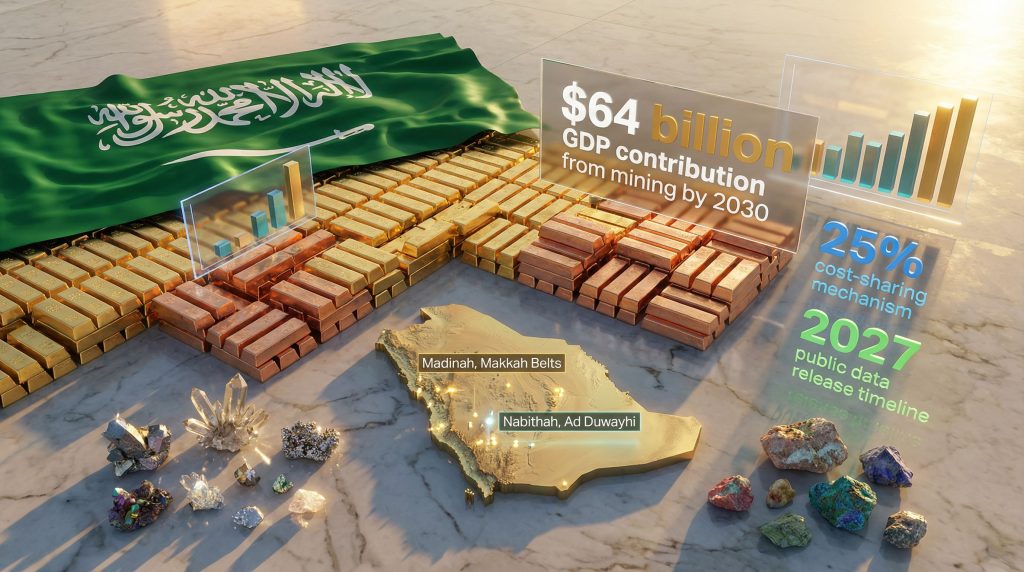
Cost-sharing mechanisms within the Saudi Arabia mineral exploration program provide substantial risk mitigation for participating organisations. Eligible projects receive cash incentives covering up to 25 percent of exploration costs, including drilling, laboratory testing, and geological studies. This percentage represents a significant departure from traditional government exploration support, which typically involves permit fee reductions rather than direct cost participation.
Workforce development integration creates dual value propositions for international mining operators. The program covers 70 percent of Saudi employee salary costs during initial two-year periods, escalating to 100 percent coverage thereafter. International and resident employees receive 15 percent wage subsidies, establishing competitive compensation frameworks while supporting knowledge transfer objectives.
The timeline compression from traditional multi-year exploration cycles to 12-month data submission periods fundamentally alters project economics. Furthermore, exploration data submission occurs between September and November 2026, with enablement fund disbursement planned for January 2027. This acceleration requires sophisticated project management capabilities and advanced geological assessment technologies.
Public Data Transparency and Competitive Intelligence
A transformative element of the Saudi Arabia mineral exploration program involves mandatory geological data publication through the National Geological Database in April 2027. This transparency requirement creates unprecedented information availability while potentially generating secondary exploration opportunities from publicly accessible geological intelligence.
Traditional mining exploration operates under strict confidentiality protocols, making the Kingdom's data-sharing approach revolutionary within industry standards. Companies participating in the program contribute to collective geological knowledge while receiving direct financial benefits for their exploration investments.
International Mining Company Strategic Positioning
Vision 2030 Economic Transformation Metrics
The Saudi Arabia mineral exploration program aligns with ambitious economic diversification targets established under Vision 2030. Mining sector contributions to GDP target expansion from current baseline levels to projected significant increases by 2030, though specific financial projections require verification from official government sources.
Investment attraction goals focus on high-quality local and international mining investors, indicating selective rather than open-access participation criteria. The dual-ministry approach, involving both the Ministry of Industry and Mineral Resources and the Ministry of Investment Saudi Arabia, suggests institutional coordination between resource management and capital attraction functions.
Geological Assessment and Resource Valuation
The Kingdom's mineral potential spans multiple geological formations across various provinces. Gold deposits concentrate primarily within the Madinah and Makkah belts, representing historically significant mining regions with established infrastructure foundations. Copper resources located in Nabithah and Ad Duwayhi areas offer strategic positioning for battery metal supply chains.
Phosphate reserves in northern regions have reached production readiness, providing immediate commercialisation opportunities for qualified operators. In addition, rare earth element potential across multiple provinces remains in early assessment phases, requiring advanced exploration technologies and significant capital investment.
| Mineral Category | Primary Locations | Development Status | Infrastructure Access |
|---|---|---|---|
| Gold Deposits | Madinah, Makkah Belts | Active Exploration | Established Roads |
| Copper Resources | Nabithah, Ad Duwayhi | Licensing Phase | Limited Infrastructure |
| Phosphate Reserves | Northern Regions | Production Ready | Port Access Available |
| Rare Earth Elements | Multiple Provinces | Early Assessment | Variable Access |
Investment Scenario Analysis and Market Positioning
Small-Scale Operator Opportunities
Greenfield exploration in secondary geological belts offers entry points for operators with limited capital resources. Joint venture structures with Saudi technical partners provide local expertise while sharing exploration risks and operational costs. Junior mining strategies including silver, zinc, and industrial minerals present lower barrier-to-entry opportunities compared to large-scale copper or gold developments.
Timeline expectations from application submission to production feasibility studies typically span 18-24 months under accelerated program structures. However, actual project development from exploration to commercial production requires 3-5 years depending on mineral type, geological complexity, and infrastructure requirements.
Major International Mining Conglomerate Strategies
Large-scale copper and gold development projects require substantial infrastructure investment and technological capabilities beyond exploration phases. Technology transfer obligations create additional complexity for international operators, requiring knowledge-sharing commitments as program participation conditions.
Local content requirements influence operational planning and supply chain development, though specific percentage targets remain unspecified in available program documentation. Competitive positioning against established mining jurisdictions like Australia and Canada requires comprehensive value proposition development incorporating government incentives, geological potential, and operational cost structures.
Regulatory Environment and Global Competitiveness
Licensing and Permit Processing
The Saudi Arabia mineral exploration program claims 30-day permit processing capabilities, though verification of this timeline against actual implementation requires monitoring through initial program phases. Traditional mining permit processes in established jurisdictions typically require 3-6 months for comprehensive environmental and technical assessments.
Streamlined environmental assessment procedures represent significant operational advantages, particularly for time-sensitive exploration programs. However, specific environmental standards and compliance requirements need clarification through official regulatory documentation via the exploration enablement program.
Tax incentive frameworks within the Saudi mining sector provide competitive advantages, though comparative analysis against regional competitors requires comprehensive fiscal policy examination. Corporate tax rates, royalty structures, and profit repatriation policies significantly influence international investment decision-making.
Intellectual Property Protection
Exploration data and methodologies receive intellectual property protection under program guidelines, though enforcement mechanisms and dispute resolution procedures require detailed examination. International mining companies typically prioritise jurisdictions with established IP protection records and transparent legal frameworks.
Integration with existing Ma'aden geological surveys offers potential competitive advantages through access to historical geological data and established exploration methodologies. Ma'aden's experience in Saudi mineral development provides valuable baseline information for new exploration programs.
Long-Term Economic Integration and Supply Chain Development
Domestic Processing and Infrastructure Requirements
Supply chain integration scenarios extend beyond exploration phases to encompass processing facility development and export infrastructure. Red Sea and Arabian Gulf port access provides strategic advantages for mineral export markets, particularly for Asian battery metal demand.
Regional manufacturing hub potential for battery metals aligns with global energy transition trends and electric vehicle market expansion. Consequently, integration with mega-projects like NEOM creates domestic demand sources for extracted minerals while supporting broader economic diversification objectives.
Processing facility capital requirements typically range from hundreds of millions to several billion dollars depending on mineral type and production capacity targets. Desert environment operational considerations include water resource availability, power supply infrastructure, and transportation logistics.
Workforce Development and Knowledge Transfer
Technical skills development in geological surveying and mining engineering requires comprehensive educational partnerships and practical training programs. University collaboration frameworks support research facility establishment while building domestic technical capabilities.
Local contractor development creates supporting service industry growth opportunities extending beyond direct mining operations. Furthermore, mining industry innovation initiatives in technical mining roles address workforce diversification while expanding available talent pools.
International expertise retention in competitive global markets requires attractive compensation packages, quality living conditions, and professional development opportunities. The Kingdom's major urban development projects provide lifestyle amenities supporting international talent attraction.
The next major ASX story will hit our subscribers first
Risk Assessment and Operational Challenges
Technical and Environmental Considerations
Desert environment exploration complexities significantly impact project costs and operational timelines. Extreme temperature variations, sand infiltration, and limited water access require specialised equipment and operational procedures. Historical cost overruns in similar environments typically range from 15-30 percent above initial project budgets.
Water resource requirements for processing operations present significant constraints in arid environments. Desalination integration, water recycling systems, and regulatory coordination with domestic water supply authorities require careful planning and substantial capital investment.
Transportation infrastructure gaps in remote mineral-rich areas affect project economics through increased logistics costs. Road construction, power line extension, and telecommunications infrastructure development often represent substantial preliminary investments before mineral extraction begins.
Market and Economic Risk Factors
Global commodity price volatility directly impacts project viability and investment returns. Copper, gold, and rare earth element markets experience significant price fluctuations based on global economic conditions, supply chain disruptions, and geopolitical tensions.
Competition from established mining jurisdictions including Australia, Canada, and Chile requires comprehensive competitive advantage development. These jurisdictions offer established regulatory frameworks, experienced workforces, and proven infrastructure supporting mining operations.
Geopolitical considerations affecting international investment flows include regional stability, diplomatic relationships, and sanctions risk. Currency stability and profit repatriation policies influence long-term investment commitment decisions for international mining companies.
Technology Innovation and Future Development Pathways
What Role Does Digital Mining Integration Play?
Artificial intelligence and machine learning applications in geological analysis offer significant efficiency improvements for exploration programs. AI in mining technology enables automated core sample analysis, predictive geological modelling, and optimised drilling patterns that reduce exploration timeframes while improving discovery success rates.
Drone and satellite-based exploration methodologies provide cost-effective initial assessment capabilities particularly valuable in desert environments. Remote sensing technologies identify potential mineral zones while reducing preliminary exploration costs and environmental impact.
Blockchain applications for mineral traceability and certification address growing market demands for responsible sourcing and supply chain transparency. These technologies support premium pricing for ethically sourced minerals while meeting international certification requirements.
Phase 4 and Beyond Strategic Planning
Future program expansion based on Phase 3 results will likely influence long-term Kingdom mineral development strategies. Success metrics, investor satisfaction, and geological discoveries from current programs inform subsequent phase design and scope.
Critical minerals focus including lithium, cobalt, and rare earth elements aligns with global energy transition trends and strategic mineral security concerns. These minerals command premium market positioning while supporting domestic manufacturing development.
Regional cooperation opportunities with GCC mining initiatives create potential synergies for infrastructure sharing, technical expertise exchange, and coordinated market positioning. Collaborative approaches reduce individual country investment burdens while improving regional competitiveness.
Investment Decision Framework and Strategic Considerations
The Saudi Arabia mineral exploration program represents a fundamental shift toward innovative public-private risk-sharing models in resource development. Successful participation requires comprehensive due diligence covering geological potential, regulatory compliance, operational capabilities, and long-term market positioning.
Risk-adjusted return calculations must incorporate program incentives, infrastructure development costs, and market access advantages alongside traditional mining investment metrics. Partnership structure optimisation with local Saudi entities provides operational advantages while meeting program participation requirements.
Exit strategy planning should address various scenarios including successful project development, partial stake sales, and early program withdrawal options. Long-term value creation pathways extend beyond immediate mineral extraction to encompass infrastructure development, technology transfer, and regional market positioning.
Saudi exploration licenses represent an unprecedented opportunity that requires careful strategic evaluation. According to recent industry analysis, the program offers government-backed risk mitigation for international mining investment, though success requires careful evaluation of operational capabilities, market positioning, and long-term strategic alignment with Kingdom development objectives.
The program's compressed timelines, substantial financial incentives, and mandatory data transparency create unique opportunities while demanding sophisticated project management and rapid decision-making capabilities. International mining companies evaluating participation should prioritise comprehensive geological assessment, regulatory compliance planning, and strategic partnership development to maximise program benefits while managing operational complexities inherent in desert environment mineral exploration.
Want to Capitalise on the Next Major Mineral Discovery?
Discovery Alert instantly identifies significant ASX mineral discoveries using its proprietary Discovery IQ model, delivering real-time alerts that turn complex geological announcements into actionable investment opportunities. Start your 14-day free trial today to gain immediate access to morning AI trade alerts and position yourself ahead of the broader market in this rapidly evolving mining landscape.