July 14, 2026
Global Mining Transformation: Strategic Forces Reshaping North American Investment Flows
The global mining landscape undergoes constant evolution driven by technological disruption, regulatory modernisation, and shifting commodity demand patterns. Investment capital increasingly flows toward jurisdictions that demonstrate regulatory efficiency, infrastructure readiness, and policy stability rather than relying solely on geological endowment. This transformation reflects sophisticated investor frameworks that evaluate risk-adjusted returns across multiple variables, creating competitive advantages for regions that optimise their investment climate through systematic policy reforms and strategic positioning.
Understanding these macro trends becomes essential for evaluating emerging investment opportunities, particularly as critical minerals transition accelerates and supply chain security concerns reshape global commodity markets. The intersection of policy innovation, infrastructure development, and market positioning creates unique value propositions that extend far beyond traditional mining economics.
When big ASX news breaks, our subscribers know first
Why Is Ontario Positioned as North America's Premier Mining Investment Hub in 2026?
Critical Minerals Demand Driving Investment Fundamentals
The electric vehicle revolution and renewable energy transition are fundamentally restructuring global mineral demand patterns. Lithium, nickel, cobalt, and rare earth elements have emerged as strategic commodities essential for battery manufacturing, wind turbines, and solar panels. This shift creates unprecedented opportunities for jurisdictions with the right combination of geological endowment and processing capabilities.
Ontario mining investment 2026 benefits from this global transition through its positioning in critical minerals value chains. The province contains significant nickel deposits in the Sudbury Basin, lithium potential in northwestern regions, and established mining infrastructure that can adapt to new commodity demands. Investment flows increasingly target projects that can integrate into North American supply chains, reducing geopolitical risk and transportation costs.
Key demand drivers include:
• Battery manufacturing capacity expansion across North America
• Automotive industry electrification timelines accelerating beyond original projections
• Government mandates for domestic critical minerals processing
• Supply chain diversification strategies reducing Asian dependency
Policy Reform Impact on Capital Allocation Decisions
Regulatory efficiency has become a primary differentiator in global mining investment decisions. Furthermore, the Fraser Institute's 2026 Annual Survey of Mining Companies evaluated 68 jurisdictions worldwide, with Ontario securing second place globally for mining investment attractiveness. This ranking reflects substantial policy reforms that have streamlined permitting processes and created predictable regulatory environments.
According to Elmira Aliakbari, Director of the Fraser Institute's Centre for Natural Resource Studies, "A sound and predictable regulatory regime coupled with competitive fiscal policies help make a jurisdiction attractive in the eyes of mining investors. Policymakers in every province and territory should understand that mineral deposits alone are not enough to attract investment."
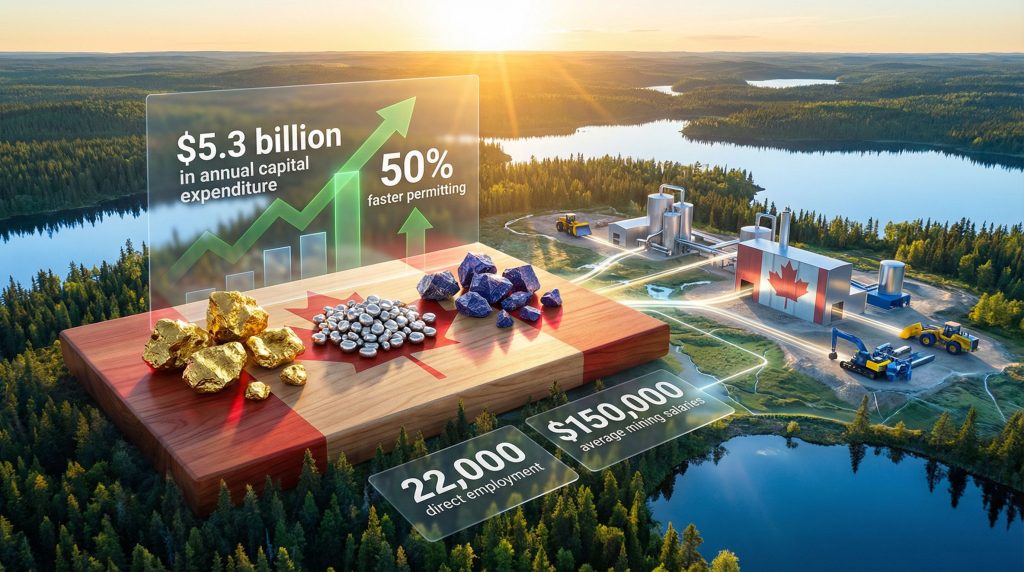
Ontario's regulatory modernisation initiatives have reduced permit timelines by 50%, as confirmed by Stephen Lecce, Ontario's Minister of Energy and Mines, who stated that "Ontario's surge to the second most attractive mining investment destination on earth is a direct result of significant reforms that cut permit timelines by half."
Infrastructure Development as Investment Catalyst
Infrastructure availability directly impacts mining project economics through operational costs, transportation efficiency, and market access. Ontario's strategic infrastructure investments create multiplicative effects on mining investment attractiveness by reducing capital requirements and operational risks for individual projects.
The province's established transportation networks, power grid capacity, and proximity to major industrial centres provide competitive advantages over remote mining regions. These infrastructure foundations enable faster project development timelines and lower capital intensity compared to jurisdictions requiring extensive infrastructure development from baseline.
Infrastructure advantages include:
• Existing rail and highway connections to major markets
• Established power generation and transmission capacity
• Skilled workforce proximity and housing availability
• Financial services and technical expertise concentration
What Makes Ontario's Mining Investment Climate Superior to Competing Jurisdictions?
Comparative Analysis: Ontario vs. Saskatchewan vs. Nevada
The Fraser Institute's comprehensive evaluation methodology separates geological potential from policy effectiveness, revealing significant performance gaps across competing jurisdictions. This analysis framework enables investors to distinguish between mineral-rich regions with poor regulatory environments and jurisdictions that optimise both geological and policy factors.
Global rankings for policy factors alone in 2026:
| Jurisdiction | Policy Ranking | Overall Ranking | Performance Gap |
|---|---|---|---|
| Alberta | Top 3 globally | Strong | Aligned performance |
| Ontario | 5th globally | 2nd globally | Superior integration |
| Newfoundland & Labrador | 7th globally | Competitive | Policy strength |
| Saskatchewan | 8th globally | 3rd globally | Mineral potential advantage |
Nevada achieved first place globally through optimal combination of mineral potential and regulatory efficiency, establishing the benchmark for integrated jurisdiction performance. Ontario's second-place ranking demonstrates that systematic policy reforms can elevate investment attractiveness even in competitive global markets.
Regulatory Efficiency Metrics and Investor Confidence Indicators
The dramatic underperformance of certain Canadian jurisdictions illustrates how policy deficiencies can neutralise geological advantages. In addition, Yukon exemplifies this disconnect, ranking 11th globally for mineral potential but dropping to 47th when policy factors are considered. This 36-point performance gap represents a quantifiable measurement of regulatory inefficiency impact on investment attractiveness.
Canadian jurisdiction performance gaps:
• Yukon: 36-point gap between mineral potential (11th) and policy ranking (47th)
• Manitoba: 26-point gap between mineral potential (13th) and policy ranking (39th)
• Nunavut: 26-point gap between mineral potential (17th) and policy ranking (43rd)
• Northwest Territories: 35-point gap between mineral potential (19th) and policy ranking (54th)
These performance gaps quantify how regulatory uncertainty, land claims disputes, environmental approval delays, and regulatory duplication directly reduce investment competitiveness. British Columbia continues to underperform on policy factors due to investor concerns over disputed land claims and protected areas, despite strong mineral potential.
Geopolitical Stability Premium in Global Mining Rankings
Geopolitical stability has emerged as a critical investment criterion as global supply chain vulnerabilities become apparent. North American mining jurisdictions benefit from stable democratic institutions, established legal frameworks, and predictable regulatory environments that reduce sovereign risk premiums in investment calculations.
However, how tariffs impact markets becomes increasingly relevant for Ontario mining investment 2026, particularly as trade policy shifts affect supply chain economics. These factors become particularly valuable during periods of global uncertainty when investors prioritise jurisdictions with minimal political risk exposure.
Stability factors include:
• Established property rights protection
• Transparent taxation and royalty frameworks
• Predictable environmental regulation implementation
• Stable currency and financial system access
How Are Government Policies Reshaping Ontario's Mining Investment Landscape?
Permit Timeline Optimisation and Investor Confidence
Ontario's regulatory modernisation has achieved measurable improvements in permit processing efficiency, with government officials confirming 50% reductions in approval timelines. This improvement directly translates to reduced carrying costs, faster revenue generation, and improved project economics for mining investments.
Stephen Lecce emphasised that Ontario is "open for business and moving with unprecedented speed to build mines faster. Ontario is emerging as the world's reliable partner, from nuclear power to ethical minerals, we have what the world needs."
The permit timeline optimisation reflects systematic process improvements rather than simply fast-tracking specific projects. This approach ensures sustainable regulatory efficiency whilst maintaining environmental and safety standards that protect long-term operational viability.
Strategic Capital Deployment Through Policy Innovation
Government policy frameworks increasingly focus on strategic capital deployment that creates multiplicative investment effects. Rather than direct subsidies to individual projects, policy innovations aim to address systemic barriers that limit investment across multiple projects and sectors.
Policy innovation areas include:
• Consolidated approval processes reducing regulatory complexity
• Indigenous consultation framework standardisation
• Environmental assessment timeline predictability
• Financial assurance and bonding process streamlining
Infrastructure Investment Unlocking Stranded Assets
Large-scale infrastructure investments serve dual purposes: enabling access to previously stranded mineral assets while creating competitive advantages for accessible deposits. For instance, the Ring of Fire development represents a significant example of infrastructure investment potentially unlocking substantial mineral resources in northwestern Ontario.
Infrastructure-enabled development creates investment opportunities across multiple projects simultaneously, generating economies of scale and shared infrastructure costs that improve individual project economics. This approach attracts capital to regional development rather than isolated project investments.
Which Sectors Present the Highest ROI Potential for Ontario Mining Investments?
Electric Vehicle Supply Chain Integration Opportunities
The North American automotive industry's electrification creates unprecedented demand for domestic mineral processing capabilities. Furthermore, Ontario's proximity to major automotive manufacturing centres in southern Ontario, Michigan, and surrounding regions positions the province advantageously for supply chain integration investments.
Critical minerals processing facilities that serve automotive supply chains benefit from long-term contract structures, predictable demand patterns, and premium pricing for certified domestic supply. These advantages translate to more stable cash flows and reduced commodity price volatility compared to traditional mining operations dependent on global spot markets.
Integration opportunities include:
• Nickel sulfate production for battery cathodes
• Lithium hydroxide processing for battery electrolytes
• Cobalt refining for battery manufacturing
• Rare earth element processing for electric motors
Critical Minerals Processing: Value-Add Investment Strategies
Value-added processing represents higher-margin opportunities compared to raw material extraction and export. Processing facilities capture additional value through refining, purification, and specification production that commands premium pricing in specialised markets.
Consequently, Ontario mining investment 2026 increasingly targets processing capabilities that integrate vertically within supply chains rather than competing solely on raw material costs. This strategy reduces exposure to commodity price volatility whilst capturing higher-margin processing revenues.
Processing advantages:
• Higher profit margins compared to raw material sales
• Long-term contract opportunities with end-users
• Reduced transportation costs for finished products
• Employment creation in higher-skilled positions
Traditional Mining Sectors: Gold and Base Metals Outlook
Established mining sectors continue providing stable investment opportunities through proven resource bases, developed infrastructure, and established market relationships. Gold mining particularly benefits from Ontario's geological advantages in the Canadian Shield, including high-grade deposits and accessible mining conditions.
Base metals mining (copper, zinc, lead) serves industrial demand that remains steady despite economic cycles. These sectors offer portfolio diversification benefits when combined with critical minerals investments, creating balanced exposure across commodity cycles.
| Sector | Investment Characteristics | Market Outlook |
|---|---|---|
| Gold | Stable demand, hedge properties | Consistent investor interest |
| Base metals | Industrial demand correlation | Economic cycle sensitivity |
| Critical minerals | Strategic supply chain positioning | Accelerating demand growth |
What Infrastructure Developments Will Drive Mining Investment Returns?
Transportation Infrastructure: Economic Impact Modelling
Transportation access directly determines mining project viability through operational cost structures and market accessibility. Northern Ontario's mining potential requires transportation infrastructure development to enable economic extraction and processing of mineral resources.
Road and rail development creates access to previously stranded deposits whilst reducing operational costs for existing operations. The economic impact extends beyond individual mining projects to enable regional development and support service industries.
Transportation benefits include:
• Reduced equipment and supply transportation costs
• Improved workforce access and retention
• Market access for processed materials
• Enhanced emergency response and safety capabilities
Power Grid Expansion: Energy Security for Mining Operations
Reliable power supply at competitive rates is essential for energy-intensive mining and processing operations. Ontario's established electrical grid provides advantages over jurisdictions requiring independent power generation, but northern expansion remains necessary for remote deposit development.
Grid expansion enables larger-scale processing operations that require consistent power supply for continuous operations. This infrastructure investment creates opportunities for processing facilities that would be uneconomical using diesel generation or other alternative power sources.
Digital Infrastructure: Technology Integration in Remote Mining
Modern mining operations increasingly depend on digital connectivity for operational efficiency, safety monitoring, and remote management capabilities. Digital infrastructure enables advanced mining technologies including autonomous equipment, predictive maintenance systems, and integrated supply chain management.
Consequently, data-driven operations have become essential for competitive mining operations. Digital infrastructure applications:
• Remote equipment monitoring and control systems
• Real-time safety and environmental monitoring
• Supply chain optimisation and logistics management
• Advanced geological modelling and resource optimisation
The next major ASX story will hit our subscribers first
How Do Workforce Dynamics Affect Investment Viability in Ontario Mining?
Labour Market Dynamics and Competitive Positioning
Ontario's mining sector offers attractive employment opportunities with competitive compensation packages that support worker retention and productivity. The skilled workforce availability reduces training costs and operational risks for mining investment projects.
Mining employment typically provides higher wages compared to other industries in northern regions, creating economic multiplier effects through increased local spending and tax revenue generation. This economic impact strengthens community support for mining development and reduces social licence risks.
Skills Development and Human Capital Investment
Investment in workforce development creates long-term competitive advantages through enhanced productivity, safety performance, and operational efficiency. Ontario's educational institutions and training programmes provide pathways for career development in mining and related technical fields.
Workforce development benefits:
• Reduced recruitment and training costs for employers
• Enhanced safety performance through professional development
• Technology adoption facilitation through skilled workforce
• Career advancement opportunities supporting retention
Indigenous Partnership Models: Social Licence and Operational Benefits
Indigenous community partnerships have become essential for mining project success, providing social licence whilst creating economic opportunities for Indigenous communities. These partnerships typically involve revenue sharing, employment opportunities, and business development initiatives.
Effective Indigenous partnerships reduce project risks whilst creating sustainable economic development in remote regions. Investment success increasingly depends on community engagement and partnership development rather than traditional approaches focused solely on regulatory approval.
What Are the Key Risk Factors for Ontario Mining Investments in 2026?
Commodity Price Volatility and Market Risk Management
Mining investments remain exposed to commodity price fluctuations that can significantly impact project economics and investment returns. Effective risk management requires diversification strategies, hedging mechanisms, and operational flexibility to adapt to market conditions.
Critical minerals markets exhibit different volatility patterns compared to traditional commodities, with supply chain security concerns creating price premiums but also potential demand volatility as technologies evolve. Understanding these market dynamics becomes essential for investment planning.
Risk mitigation strategies:
• Portfolio diversification across multiple commodities
• Long-term contract structures reducing spot price exposure
• Operational flexibility enabling production optimisation
• Financial hedging instruments for price risk management
Environmental Regulation Evolution and Compliance Costs
Environmental regulations continue evolving to address climate change concerns, biodiversity protection, and community impact management. These regulatory changes can impact operational costs and project timelines, requiring proactive compliance planning.
Successful mining investments anticipate regulatory evolution rather than reacting to changes after implementation. This approach reduces compliance costs whilst positioning projects advantageously for evolving environmental standards. Furthermore, mine reclamation innovations are becoming increasingly important for project approval and social licence.
Indigenous Relations and Social Licence Sustainability
Social licence maintenance requires ongoing relationship building with Indigenous communities and other stakeholders. Changes in community leadership, economic conditions, or project impacts can affect these relationships and operational sustainability.
Investment planning must incorporate community engagement costs and partnership commitments as integral components of project economics rather than discretionary expenses. This approach ensures sustainable operations and reduces long-term risks.
How Should Investors Evaluate Ontario Mining Opportunities?
Due Diligence Framework for Mining Investment Assessment
Comprehensive due diligence requires evaluation of geological, technical, regulatory, environmental, and social factors that influence project viability. This multifaceted assessment helps investors identify opportunities whilst avoiding projects with hidden risks or unrealistic assumptions.
Due diligence components:
• Geological resource verification through independent assessment
• Technical feasibility analysis including processing and infrastructure requirements
• Regulatory approval pathway evaluation and timeline assessment
• Environmental impact assessment and mitigation planning
• Social licence evaluation including community engagement status
ESG Integration and Sustainable Investment Criteria
Environmental, social, and governance (ESG) considerations have become integral to mining investment evaluation rather than supplementary factors. Institutional investors increasingly require ESG compliance as a prerequisite for capital allocation.
ESG integration affects project financing availability, operational costs, and market access for produced materials. Projects demonstrating strong ESG performance typically access capital at lower costs and achieve premium pricing for certified sustainable materials.
Exit Strategy Planning and Value Realisation
Investment planning requires clear exit strategies that align with market conditions and investor objectives. Mining investments often involve longer development timelines than other sectors, requiring patient capital and strategic planning for value realisation.
Exit strategy considerations:
• Market timing for asset sales or public offerings
• Strategic buyer identification for operational assets
• Portfolio optimisation through asset trading or partnerships
• Dividend strategies for cash-generating operations
What Long-Term Trends Will Shape Ontario Mining Investment Beyond 2026?
Decarbonisation Impact on Commodity Demand Evolution
The global transition to renewable energy and electrified transportation will continue reshaping commodity demand patterns for decades. This transformation creates long-term investment opportunities in critical minerals whilst potentially reducing demand for fossil fuel-related commodities.
Understanding decarbonisation timelines and technology evolution helps investors position portfolios for long-term demand growth rather than short-term market fluctuations. This strategic approach enables participation in structural market changes rather than cyclical opportunities.
Technology Disruption and Operational Efficiency
Advanced technologies including artificial intelligence, automation, and remote sensing continue transforming mining operations through improved efficiency, safety, and environmental performance. These technological advances create competitive advantages for early adopters whilst potentially obsoleting traditional operational approaches.
Emerging technologies:
• Autonomous mining equipment reducing labour costs and safety risks
• Predictive maintenance systems optimising equipment performance
• Advanced geological modelling improving resource extraction efficiency
• Real-time environmental monitoring enabling proactive management
Supply Chain Reshoring and Strategic Positioning
Geopolitical tensions and supply chain vulnerabilities are driving efforts to establish domestic mineral processing capabilities in North America. This trend creates opportunities for processing facilities and vertical integration investments that serve strategic supply chain objectives.
Ontario mining investment 2026 benefits from these reshoring trends through proximity to major industrial centres and established trade relationships. Long-term investment success will increasingly depend on strategic positioning within North American supply chains rather than global market competition.
According to recent analysis from the Financial Post, Ontario has established itself as the premier Canadian jurisdiction for mining investment appeal. Moreover, RBC's research indicates significant capital requirements for bridging Canada's critical minerals development gap.
Investment Outlook: Ontario's combination of geological endowment, regulatory efficiency, infrastructure development, and strategic positioning creates compelling investment opportunities across multiple mining sectors, with policy reforms and critical minerals demand driving sustained capital attraction through 2026 and beyond.
Disclaimer: This analysis is for informational purposes only and does not constitute investment advice. Mining investments involve significant risks including commodity price volatility, regulatory changes, environmental liabilities, and operational challenges. Investors should conduct thorough due diligence and consult with qualified professionals before making investment decisions. Past performance does not guarantee future results, and all forward-looking statements are subject to uncertainty and risk.
Ready to Capitalise on Ontario's Mining Investment Surge?
Discovery Alert's proprietary Discovery IQ model delivers instant notifications on significant ASX mineral discoveries, helping subscribers identify actionable opportunities as global mining investment flows reshape markets. With Ontario leading North American mining investment attractiveness and critical minerals demand accelerating, staying ahead of major discoveries becomes essential for capturing emerging market opportunities.