August 22, 2026
The Finite Buffer: Understanding Why Energy Markets Are Running Out of Time
Most energy crises in modern history have been defined by price shocks. The crisis unfolding across global oil markets in the first half of 2026 is something qualitatively different: it is a volume crisis. When the fundamental question shifts from how much oil costs to whether sufficient physical supply exists to keep infrastructure operational, the analytical framework that investors, governments, and logistics operators have relied upon for decades needs to be rebuilt from the ground up.
Understanding that distinction is the starting point for grasping why the global oil reserves drop at record pace now documented by the International Energy Agency represents more than a temporary market disruption. It represents a structural challenge to the assumptions underpinning modern energy security. Furthermore, the current crude oil market overview reveals how rapidly baseline conditions can deteriorate when multiple disruption mechanisms operate simultaneously.
When big ASX news breaks, our subscribers know first
What the Numbers Actually Reveal About the 2026 Reserve Drawdown
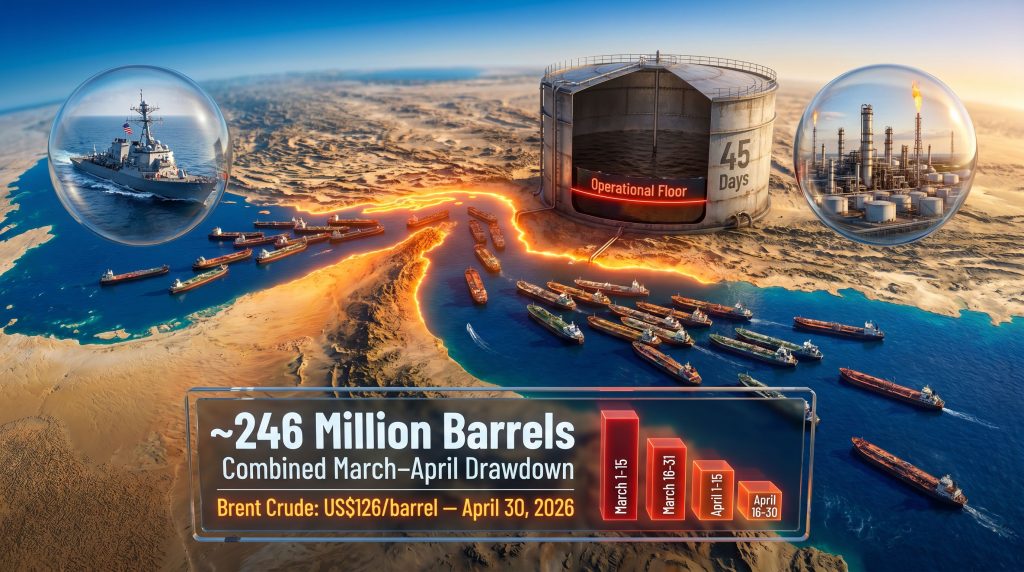
The IEA's monthly oil market report confirmed that global crude inventories declined by 129 million barrels in March 2026, followed by a further 117 million barrel contraction in April 2026. The combined two-month drawdown of approximately 246 million barrels has no comparable peacetime precedent in modern energy records.
To contextualise the severity, consider that global oil supply fell by 1.8 million barrels per day (mbd) in April alone, bringing total worldwide output to 95.1 mbd. Cumulative supply losses since the conflict escalated in February 2026 have reached 12.8 mbd in total output reduction.
| Metric | Figure | Significance |
|---|---|---|
| April 2026 inventory decline | ~117 million barrels | Sharpest single-month drop in modern records |
| March 2026 inventory decline | ~129 million barrels | Preceded April's acceleration |
| Combined March-April drawdown | ~246 million barrels | No peacetime equivalent |
| Global output, April 2026 | 95.1 mbd | Down 1.8 mbd month-on-month |
| Cumulative supply loss since February | 12.8 mbd total reduction | Structural, not cyclical |
| Estimated global reserves | ~4 billion barrels | Majority locked in operational minimums |
| Usable strategic buffer (Goldman Sachs estimate) | ~45 days of petroleum products | True discretionary buffer is far smaller than headline figures |
| U.S. fuel stockpile deficit | 11% below five-year seasonal average | EIA data |
The Operational Floor Concept Most Analysts Overlook
One of the most consequential and least publicly understood elements of this crisis is the distinction between total reported reserves and operationally available reserves. Of the estimated 4 billion barrels held in global storage systems, the overwhelming majority is not discretionary. It exists to maintain the physical integrity of pipelines, sustain refinery throughput, and preserve terminal logistics functionality.
This minimum threshold is known in energy systems analysis as the operational floor. Once inventories approach this level, the consequences are not linear price increases but structural infrastructure failures: refineries that cannot maintain throughput ratios, pipelines that lose pressure integrity, and port terminals that cannot sequence tanker unloading efficiently.
Goldman Sachs estimates that only approximately 45 days of usable petroleum product reserves remain globally once operational minimums are excluded from headline storage figures. This is the true discretionary buffer available to energy markets, and it is being drawn down at an accelerating rate.
Analysts tracking the IEA data project that commercial inventories could reach operational stress thresholds as early as June 2026, with reserves potentially approaching the operational floor itself by September 2026. Indeed, world oil inventories are falling at a record pace, with data visualisations confirming the unprecedented steepness of the current drawdown trajectory.
The Dual-Blockade Architecture Driving the Supply Collapse
Previous oil supply crises were typically driven by a single disruption mechanism: a political embargo, a revolution disrupting production, or a conflict damaging export infrastructure. The 2026 crisis is architecturally distinct because two independent blockade mechanisms are operating simultaneously, each reinforcing the other's impact.
Blockade One: The Strait of Hormuz
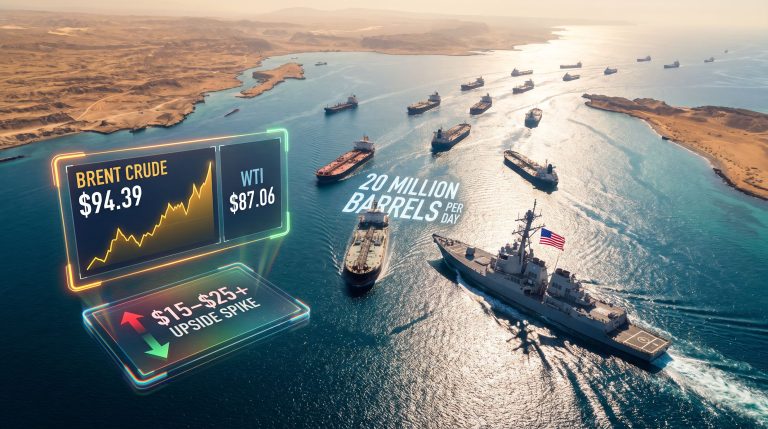
Iran's near-complete closure of the Strait of Hormuz, enacted in response to a military offensive that commenced on February 28, 2026, effectively severed the world's most critical maritime energy corridor. Under normal operating conditions, approximately 20% of global oil and LNG flows transit this chokepoint. Its disruption does not merely affect Iranian exports; it constrains the export capacity of multiple Persian Gulf producers simultaneously.
Blockade Two: U.S. Naval Interdiction of Iranian Ports
In mid-April 2026, the United States implemented a naval blockade specifically targeting Iranian crude export terminals. This secondary enforcement layer closed off alternative routing options that Iran might otherwise have used to bypass the Hormuz closure, eliminating residual export pathways and compounding the supply impact already generated by the maritime closure.
The convergence of these two mechanisms has effectively removed approximately 15 million barrels per day from accessible global markets. Regional impact is concentrated most severely in Asian and African import-dependent economies, where strategic reserve buffers are thinnest and fiscal capacity to absorb price shocks is most limited. Demand destruction driven by elevated prices has provided partial relief, suppressing consumption by an estimated 5 million barrels per day, but this does not address the underlying structural supply deficit.
Brent Crude Price Dynamics and Volatility Patterns
Brent crude surpassed US$120 per barrel during the peak reserve drawdown period, reaching a four-year high above US$126 per barrel on April 30, 2026, according to market data. Prices subsequently retreated to two-week lows following diplomatic signals from U.S.-Iran negotiating channels, demonstrating the extreme sensitivity of current market pricing to geopolitical headline risk. Monitoring crude oil price trends provides essential context for understanding how today's volatility compares to longer-term patterns.
This pattern of sharp rallies followed by partial retreats on diplomatic noise is characteristic of markets pricing in a wide range of outcomes simultaneously. It reflects not rational consensus but deep uncertainty about resolution timelines.
The IEA has projected that elevated price conditions will persist through at least Q3 2026, consistent with the agency's assessment that strategic reserve releases cannot substitute for sustained supply restoration.
Forward Price Scenarios
| Scenario | Trigger Condition | Projected Brent Range |
|---|---|---|
| Diplomatic resolution | Ceasefire; partial Hormuz reopening within 60-90 days | US$80-90/barrel |
| Prolonged stalemate | Conflict persists through Q3 2026 | US$120-140/barrel |
| Escalation | Additional regional actors drawn in; further chokepoints threatened | US$150+/barrel |
The IEA Emergency Response and Its Structural Limitations
The IEA, which coordinates energy policy across its 32 member nations, activated one of the largest emergency strategic reserve releases in its operational history in response to the supply collapse. The agency authorised a total release of 400 million barrels from collective member Strategic Petroleum Reserves (SPRs), with approximately 164 million barrels already mobilised as of mid-May 2026.
The release pace is expected to accelerate through Q2 and Q3 2026. However, the structural limitations of SPR mechanisms as crisis management tools deserve careful examination. In addition, the geopolitical oil market pressures driving this crisis extend well beyond what emergency reserve releases were designed to address.
S&P Global Energy's Vice President and Global Head of Crude Oil Research, Jim Burkhard, has stated that cumulative supply losses now approach 1 billion barrels, a volume that existing inventory levels cannot absorb indefinitely, making a structural market reckoning effectively inevitable without a geopolitical resolution.
Strategic reserves were designed as short-duration shock absorbers intended to bridge temporary supply gaps, not as substitutes for sustained production. At current drawdown rates of approximately 4.8 to 6.6 million barrels per day, even a full deployment of the authorised 400-million-barrel release provides only 60 to 83 days of partial offset before the buffer is exhausted.
The U.S. SPR specifically carries reduced buffer capacity relative to historical norms, having been drawn upon during previous crises. This means the effective discretionary volume available to the world's largest consuming nation is smaller than headline figures imply.
Sectoral Exposure: Which Industries Face the Greatest Risk?
The downstream consequences of sustained reserve depletion are not distributed evenly across the economy. Three sectors face disproportionate near-term exposure:
-
Aviation: Airlines have issued formal warnings regarding potential jet fuel shortages if the supply crisis extends through the Northern Hemisphere summer travel peak. Jet fuel is particularly vulnerable because it cannot be substituted with alternative fuel streams and requires specialised refinery processing pathways that cannot be rapidly redirected.
-
Cross-Border Logistics and Freight: Diesel dependency makes freight networks acutely sensitive to supply disruptions. Price escalation in diesel transmits directly and rapidly into food distribution costs, pharmaceutical supply chains, and manufactured goods logistics across global markets.
-
Emerging Market Economies: Nations without meaningful strategic reserve infrastructure or domestic refining capacity face the most severe systemic exposure. Asian and African economies, consistently identified in IEA analysis as the hardest-hit regions, lack both the fiscal tools and the physical buffers available to advanced economies.
The next major ASX story will hit our subscribers first
Mexico's Fiscal Architecture Under Pressure: A Detailed Case Study
Mexico's response to the global supply shock provides one of the most instructive case studies available for understanding how energy-dependent nations manage the intersection of consumer protection, fiscal sustainability, and infrastructure investment during an extended crisis.
How the IEPS Mechanism Functions as a Price Shock Absorber
Mexico deployed its IEPS (Special Tax on Production and Services) framework as the primary domestic price-containment instrument. Under normal market conditions, IEPS functions as a tax applied to fuel consumption. During periods of elevated international prices, the mechanism operates in reverse: rather than collecting revenue, the government provides a subsidy that absorbs the difference between international import costs and a capped domestic retail price.
During the April 2026 price surge, the IEPS was absorbing between MX$3 and MX$6 per litre in additional cost per litre at the pump. Without this intervention, domestic gasoline prices in Mexico were projected to exceed MX$30 per litre. Diesel received priority protection given its direct transmission into food price inflation, where political and social sensitivities are most acute.
The Mexican government reported spending approximately US$280 million per week on IEPS fuel subsidies during the peak of the April price surge, as reported by Mexico Business News.
The Escalating Fiscal Cost
According to analysis by the Mexican Institute of Finance Executives (IMEF), if the Hormuz crisis persists through 2026, Mexico faces a potential revenue loss exceeding MX$220 billion (approximately US$12.7 billion). IMEF National President Gabriela Gutiérrez confirmed during an April 2026 press conference that federal fuel subsidies were averaging MX$5 billion (US$289.6 million) per week, based on an imported gasoline price of US$3.50 per gallon.
Gutiérrez indicated that if oil prices were to stabilise at US$100 per barrel, imported gasoline would likely reach US$4 per gallon, pushing the weekly IEPS subsidy cost to MX$6 billion (US$347.6 million) per week. The analysis further noted that no clear timeline for stabilisation of crude oil or fertilizer flows through the Strait of Hormuz had emerged at that point.
| Crisis Duration | Projected IEPS Revenue Loss | Fiscal Deficit Implication |
|---|---|---|
| 6 months | MX$156 billion | Approaching SHCP's 4.1% GDP deficit target |
| 12 months | MX$220 billion (US$12.7 billion) | Fiscal deficit approximately 5% of GDP |
| As share of 2025 IEPS revenue | ~50% of total annual collection | ~0.6% of GDP |
Mexico's Domestic Refining Buffer and Its Strategic Role
Mexico's relative insulation from the worst price transmission effects compared to peer emerging market economies stems from deliberate investment in domestic refining capacity. Data from the Mexican Institute for Competitiveness (IMCO) confirm that diesel production rose 69.9% year-over-year in Q1 2026, reaching 285.7 thousand barrels per day. Total refined petroleum product output increased 21.9% to 1.11 million barrels per day during the same period, supported by expanding operations at the Olmeca Refinery.
These gains reduced Mexico's dependence on imported refined products at precisely the moment when import costs surged most sharply. Mexico's Energy Minister Luz Elena González Escobar characterised the supply disruption as representing a fundamental transformation of the global energy order, comparable in historical significance to the major dislocations of the 1970s, according to Mexico Business News reporting.
Comparing 2026 to Historical Oil Supply Disruptions
| Crisis | Primary Trigger | Peak Supply Loss | Price Peak |
|---|---|---|---|
| 1973 Arab Oil Embargo | OPEC political embargo | ~5 mbd | ~US$12/barrel |
| 1979 Iranian Revolution | Production collapse | ~5.6 mbd | ~US$35/barrel |
| 1990 Gulf War | Iraq-Kuwait conflict | ~4.3 mbd | ~US$40/barrel |
| 2022 Russia-Ukraine War | Sanctions and conflict | ~3 mbd | ~US$130/barrel peak |
| 2026 Hormuz Crisis | Dual blockade architecture | ~15 mbd | US$126+ per barrel |
The 2026 disruption differs from all historical predecessors in one structurally critical dimension. Every prior crisis involved a single primary disruption mechanism. The 2026 event involves the simultaneous closure of the world's most critical maritime energy chokepoint and direct military interdiction of the primary producing nation's export infrastructure.
Neither mechanism alone would have produced this scale of supply removal; operating concurrently, they create a supply disruption architecture that no single diplomatic or OPEC's influence on oil markets intervention can rapidly reverse. Furthermore, the trade war impact on oil markets has added an additional layer of complexity to an already stressed global supply system.
Key Risk Thresholds to Monitor Through Q3 2026
Near-Term (June 2026)
-
Commercial inventory stress levels reached in key consuming regions
-
Aviation fuel allocation protocols potentially activated ahead of Northern Hemisphere summer travel peak
-
Accelerating demand destruction as prices hold above US$120 per barrel
Medium-Term (September 2026)
-
Potential approach of operational floor thresholds in global storage infrastructure
-
IEA strategic reserve releases approaching exhaustion of authorised volumes
-
Fiscal deficit deterioration accelerating in subsidy-dependent emerging economies
The global oil reserves drop at record pace documented throughout this analysis underscores that the 2026 crisis is not a temporary pricing event but a structural supply emergency requiring systemic responses across governments, industries, and international energy institutions alike.
Disclaimer: The scenario projections and forward-looking assessments contained in this article are based on information available as of May 2026 and involve significant uncertainty. Energy market outcomes are contingent on geopolitical developments, diplomatic processes, and production decisions that cannot be reliably predicted. Nothing in this article constitutes financial advice or a recommendation to buy or sell any security or commodity instrument.
Frequently Asked Questions: Global Oil Reserves and the 2026 Crisis
What caused global oil reserves to drop at a record pace in 2026?
The primary drivers are Iran's near-complete closure of the Strait of Hormuz following a February 28, 2026 military offensive, combined with a U.S. naval blockade on Iranian crude export terminals implemented in mid-April. Together, these actions removed approximately 15 million barrels per day from accessible global supply.
How severe is the current global oil reserves drop at record pace?
The combined March-April 2026 drawdown of approximately 246 million barrels represents the most severe two-month peacetime reserve depletion in modern energy history, with no comparable precedent outside the COVID-19 demand collapse.
How long can strategic reserves sustain current drawdown rates?
At current depletion rates of 4.8 to 6.6 million barrels per day, the IEA's authorised 400-million-barrel release provides only 60 to 83 days of partial offset. Goldman Sachs estimates approximately 45 days of usable petroleum product reserves remain once operational minimums are excluded.
What Brent crude price has the crisis produced?
Brent crude surpassed US$120 per barrel during the peak drawdown period, reaching a four-year high above US$126 per barrel on April 30, 2026, per market data reported by Mexico Business News.
Which sectors face the greatest near-term risk?
Aviation faces the most acute near-term exposure through jet fuel supply constraints. Logistics and freight networks are exposed through diesel price escalation, which transmits directly into food and consumer goods prices. Emerging market economies in Asia and Africa face the most severe systemic vulnerability.
Want to Stay Ahead of the Commodity Disruptions Reshaping Global Markets?
When energy supply chains fracture and commodity markets reprice at historic speed, Discovery Alert's proprietary Discovery IQ model delivers real-time alerts on significant ASX mineral discoveries — instantly translating complex market signals into actionable investment opportunities for both short-term traders and long-term investors. Explore how major resource discoveries have generated exceptional returns throughout history, and begin your 14-day free trial today to position yourself ahead of the next significant market movement.