
August 5, 2026
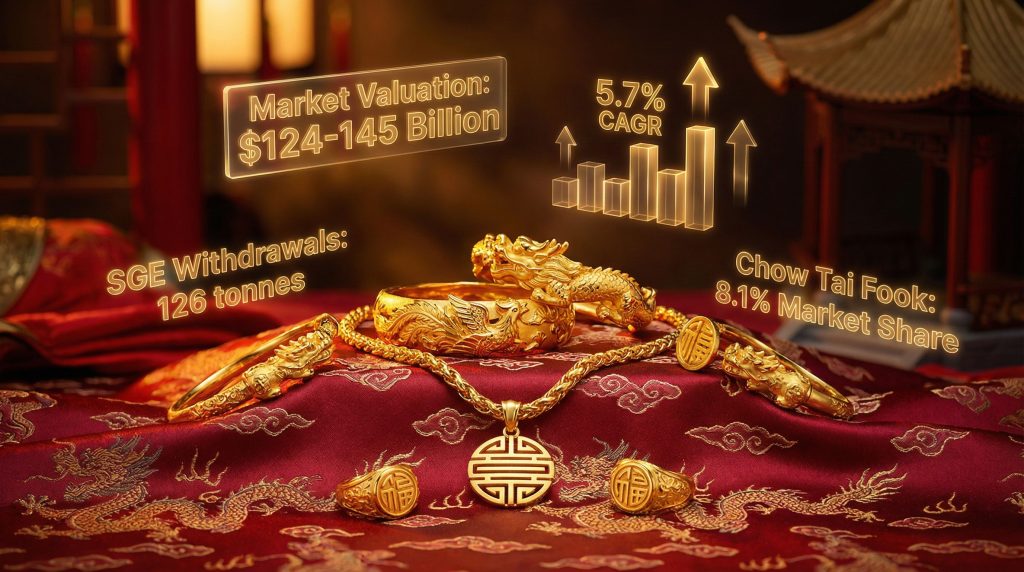
The gold price surge explanation behind 2025's extraordinary market performance has created ripple effects throughout global precious metals sectors, particularly within China's gold jewellery market. This fascinating intersection of traditional cultural values and modern economic forces demonstrates how sustained demand patterns often defy conventional market logic. The sector's resilience stems from its unique position at the crossroads of luxury consumption, wealth preservation, and cultural expression.
The gold jewellery market in China operates under fundamentally different dynamics compared to Western precious metals markets, where investment demand typically drives price movements. Chinese consumers view gold jewellery through a multifaceted lens that encompasses aesthetic appreciation, social status signalling, and intergenerational wealth transfer mechanisms that have persisted for centuries.
What Makes China's Gold Jewellery Market a Global Economic Powerhouse?
Market Scale and Economic Significance
The gold jewellery market in China has evolved into a formidable economic force, with current valuations estimated between $124-145 billion across varying analytical methodologies. This massive scale represents approximately 85% of China's fine jewellery segment, demonstrating gold's overwhelming dominance in consumer preferences compared to other precious metals.
When contextualised within global precious metals markets, China's gold jewellery consumption accounts for roughly 30-35% of worldwide demand, making it the single largest driver of international pricing dynamics. This market concentration creates significant ripple effects throughout the global supply chain, from mining operations in Australia and South Africa to refining facilities across Asia.
The sector's economic significance extends beyond simple transaction volumes. Chow Tai Fook Jewellery Group, identified as China's largest retailer by store count, exemplifies the market's scale through its nationwide distribution network and sophisticated pricing strategies. During recent promotional periods, the company offered 80 yuan (approximately $12) discounts per gram on gold items, representing substantial volume commitments that demonstrate the sector's financial depth.
| Market Metric | Value | Global Context |
|---|---|---|
| Market Valuation | $124-145 billion | Largest national gold jewellery market |
| Fine Jewellery Share | 85% | Gold dominance unprecedented globally |
| Global Demand Share | 30-35% | Single largest consumption driver |
Structural Growth Patterns and Forecasting Models
Analytical frameworks for projecting the gold jewellery market in China reveal fascinating disparities between conservative and optimistic growth scenarios. Conservative institutional forecasts project a modest 1.14% compound annual growth rate (CAGR) through 2032, primarily driven by market maturation and slower economic expansion rates.
However, optimistic scenarios supported by demographic transition analysis suggest potential 5.7% CAGR driven by fundamental shifts in consumer behaviour patterns. These higher projections incorporate factors including urbanisation trends, rising disposable income among younger demographics, and the increasing integration of digital commerce platforms into traditional retail frameworks.
The distinction between volume growth and value growth becomes particularly important amid gold price volatility. While physical demand measured in tonnes may exhibit different patterns than revenue growth measured in yuan or dollars, the underlying structural drivers remain consistent. Furthermore, investment banks have maintained bullish outlooks on the sector despite acknowledging short-term price fluctuation challenges.
According to financial sector analysis, consumers have demonstrated strong rigid demand and rising investment sentiment, with a notable demographic shift toward younger buyers who approach gold jewellery purchases through different decision-making frameworks than previous generations.
When big ASX news breaks, our subscribers know first
How Do Cultural Traditions Drive Modern Investment Behaviours?
Lunar New Year as Economic Catalyst
The convergence of traditional festivals with modern consumer patterns creates extraordinary demand dynamics within the gold jewellery market in China. Lunar New Year demand represents the most significant seasonal catalyst, generating purchasing volumes that can exceed baseline monthly averages by 200-300% during peak periods.
The 2026 calendar presented a unique scenario where Valentine's Day coincided with Spring Festival celebrations, creating an unprecedented dual-holiday demand surge. Retail associates reported exceptional activity levels, with one Beijing-based Chow Tai Fook representative noting the rarity of such convergence and the resulting operational intensity required to serve elevated customer volumes.
This seasonal concentration demonstrates how cultural traditions translate directly into measurable economic impact. The gifting customs associated with Lunar New Year extend beyond simple consumption, encompassing complex social signalling mechanisms where gold jewellery represents prosperity wishes, family bonds, and auspicious beginnings.
Festival-driven demand patterns include:
• Pre-holiday inventory accumulation by retailers
• Price promotion strategies to capture market share
• Post-holiday pricing adjustments reflecting supply costs
• Cross-generational purchasing where older family members buy for younger recipients
Intergenerational Wealth Transfer Mechanisms
The gold jewellery market in China operates as a sophisticated wealth preservation system that transcends Western investment frameworks. Unlike financial instruments that require market knowledge or institutional trust, gold jewellery provides tangible, culturally acceptable methods for transferring value between generations.
Modern millennials are reshaping traditional purchasing channels through e-commerce adoption, with digital platforms experiencing significant growth in precious metals retail. This demographic transition creates interesting dynamics where younger consumers maintain cultural appreciation for gold whilst demanding contemporary shopping experiences and customisation options.
The customisation trend reflects evolving consumer sophistication, where buyers seek unique pieces that combine traditional gold value with personalised aesthetic elements. In addition, this shift has prompted established retailers to invest heavily in design capabilities and manufacturing flexibility to meet increasingly diverse consumer preferences.
Key behavioural shifts include:
• Digital-first research and comparison shopping
• Preference for customisable premium pieces
• Integration of social media influence in selection processes
• Emphasis on craftsmanship storytelling and brand heritage
What Economic Indicators Signal Market Health and Volatility?
Shanghai Gold Exchange Withdrawal Data Analysis
The Shanghai Gold Exchange (SGE) provides crucial insights into the gold jewellery market in China through wholesale withdrawal data that indicates physical gold movement from exchange inventories to distribution networks. This metric offers more immediate market sentiment readings than traditional retail sales reports, which often lag by several weeks.
China Gold Market Performance Indicators (2025-2026)
| Metric | January 2026 | December 2025 | Year-over-Year Change |
|---|---|---|---|
| SGE Wholesale Withdrawals | 126 tonnes | N/A | Pre-festival surge |
| Net Gold Imports | N/A | 29 tonnes | -41% decline |
| Annual Import Volume | N/A | 675 tonnes | Significant contraction |
These withdrawal patterns reflect sophisticated supply chain management by major retailers who anticipate seasonal demand fluctuations and adjust inventory levels accordingly. The 126-tonne January 2026 withdrawal volume represents substantial pre-festival positioning, suggesting retailer confidence in sustained consumer demand despite broader economic uncertainties.
The 41% decline in December 2025 net imports indicates interesting supply-demand dynamics that may reflect either inventory normalisation after earlier stockpiling or shifting consumer preferences toward domestic production sources. However, this import contraction could signal either demand weakness or supply chain optimisation strategies by major market participants.
Price Elasticity and Consumer Response Patterns
Consumer responses to price fluctuations within the gold jewellery market in China demonstrate fascinating elasticity patterns that differ significantly from pure commodity markets. Market sentiment often overshadows sharp price fluctuations, suggesting that cultural and emotional purchase drivers can temporarily override economic considerations.
The discount strategies employed by major retailers during peak seasons reveal sophisticated understanding of consumer psychology. Chow Tai Fook's 80 yuan per gram discount represents approximately 8-10% reduction from standard pricing, calculated to stimulate volume without undermining long-term brand positioning or margin structures.
Post-holiday pricing adjustments reflect raw material cost pressures and international market factors. Retailer communications indicate planned price increases for fixed-price gold and gold-inlaid diamond products, demonstrating the sector's ability to pass through input cost inflation to consumers during non-peak periods.
Price sensitivity factors include:
• Cultural significance overriding short-term cost considerations
• Seasonal promotional acceptance creating purchase urgency
• Investment sentiment supporting higher price tolerance
• Brand loyalty reducing price comparison behaviours
How Does Retail Market Concentration Impact Pricing Power?
Dominant Player Market Share Analysis
The gold jewellery market in China exhibits moderate concentration among leading retailers, creating interesting competitive dynamics that influence pricing strategies and market development patterns. Understanding this market structure provides insight into how pricing power is distributed across the sector.
Leading Gold Jewellery Retailers Market Position
| Company | Market Share | Strategic Focus |
|---|---|---|
| Chow Tai Fook | 8.1% | Nationwide discount campaigns |
| Lao Feng Xiang | 6.6% | Traditional craftsmanship |
| Combined Top 5 | ~30% | Mid-to-high-end positioning |
This market structure reveals that despite having clear leaders, the gold jewellery market in China remains relatively fragmented, with the top five companies controlling approximately 30% of total market share. The remaining 70% distribution among smaller regional and specialised retailers creates opportunities for differentiation and niche positioning.
Chow Tai Fook's position as the largest retailer by store count provides significant advantages in terms of geographic coverage and supply chain economies of scale. Nevertheless, the company's 8.1% market share indicates that even the largest player operates in a competitive environment where consumer loyalty must be continuously earned through pricing strategies and service quality.
Competitive Dynamics and Pricing Strategies
The fragmented nature of the gold jewellery market in China with over 20 active participants creates complex competitive dynamics that benefit consumers through pricing competition and product innovation. This structure prevents any single company from exercising dominant pricing power across the entire market.
Hong Kong-based brands have historically maintained leadership positions in premium market segments, leveraging international sourcing relationships and sophisticated design capabilities. However, domestic Chinese brands are increasingly challenging this positioning through improved manufacturing quality and cultural authenticity appeals.
Regional expansion patterns reveal different strategic approaches among major players. While some companies focus on tier-one city penetration with flagship locations, others pursue broader geographic coverage through franchise networks and smaller format stores that can serve secondary markets effectively.
Competitive advantages include:
• Store network density and geographic coverage
• Supply chain integration and sourcing efficiency
• Brand heritage and cultural authenticity
• Digital commerce platform development
What Macroeconomic Forces Shape Future Market Trajectories?
Investment Demand Versus Consumption Balance
The gold jewellery market in China operates at the intersection of luxury consumption and investment demand, creating unique market dynamics that distinguish it from pure commodity or fashion markets. This dual nature provides stability during economic uncertainty whilst maintaining growth potential during prosperity periods.
Gold's role as gold as inflation hedge becomes particularly relevant in the Chinese context, where consumers have experienced significant currency volatility and property market fluctuations in recent years. Wealthy consumers increasingly view premium customisable pieces as portfolio diversification tools that provide both aesthetic enjoyment and value preservation.
The investment sentiment component of demand has strengthened considerably, with consumers demonstrating rigid demand patterns that persist despite short-term price volatility. This behavioural shift suggests that the market has evolved beyond traditional gifting and ornamentation purposes to incorporate serious wealth management considerations.
Investment drivers include:
• Currency devaluation hedging strategies
• Real estate market uncertainty creating alternative assets demand
• Inflation protection for middle-class wealth preservation
• Inheritance planning through tangible asset accumulation
Supply Chain and Production Capacity Constraints
Raw material cost pressures significantly impact the gold jewellery market in China, with international gold prices, domestic refining capacity, and import regulations creating complex supply dynamics. Recent increases in gold and raw material prices due to international and domestic market factors have prompted retailers to adjust pricing strategies accordingly.
Domestic production capabilities continue expanding, but the market remains dependent on international gold imports to meet demand volumes. The 675-tonne annual import volume for 2025 represents substantial foreign exchange outflows and sensitivity to international trade relationships.
Manufacturing capacity constraints affect different market segments differently, with mass-produced items facing fewer bottlenecks than customised premium pieces requiring specialised craftsmanship. Consequently, this dynamic creates pricing differentials between standardised and bespoke products that may widen during supply chain stress periods.
Supply chain factors include:
• International gold price transmission mechanisms
• Import duty and regulatory compliance costs
• Domestic refining and processing capacity utilisation
• Transportation and logistics efficiency improvements
How Do Demographic Shifts Reshape Market Dynamics?
Younger Consumer Adoption Patterns
The gold jewellery market in China is experiencing fundamental transformation as younger demographics bring different purchasing behaviours and preferences to traditional retail environments. Millennials and Generation Z consumers approach gold jewellery with distinct decision-making frameworks that prioritise customisation, digital research, and social media validation.
Digital-first purchasing behaviours have accelerated rapidly, with e-commerce platforms experiencing growth in precious metals retail during recent periods, establishing new baseline expectations for online shopping convenience and pricing transparency. These platforms now provide sophisticated comparison tools, design customisation interfaces, and authentication services that appeal to tech-savvy consumers.
Social media influence on jewellery selection criteria has become a significant factor, with platforms like WeChat, Douyin, and Xiaohongshu serving as primary research and inspiration sources. This shift requires retailers to invest in digital marketing capabilities and influencer partnerships to maintain relevance among younger demographics.
Generational preferences include:
• Online research with offline purchase completion
• Customisation and personalisation options
• Sustainability and ethical sourcing transparency
• Brand storytelling and heritage narratives
Wealth Distribution and Purchasing Power Evolution
High-net-worth individuals within the gold jewellery market in China demonstrate distinct preferences for bespoke designs that combine traditional gold craftsmanship with contemporary aesthetic elements. This segment drives disproportionate value creation for retailers capable of providing specialised services and unique products.
Middle-class expansion creates significant volume growth potential, as rising disposable incomes enable broader population segments to participate in gold jewellery purchasing beyond traditional gifting occasions. This demographic broadening supports optimistic growth projections that anticipate sustained market expansion.
Regional economic development affects market penetration rates differently across China's diverse geographic landscape. Tier-one cities exhibit mature market characteristics with sophisticated consumer preferences, whilst tier-two and tier-three cities represent significant growth opportunities for companies willing to adapt their strategies to local preferences and purchasing power levels.
Wealth segment characteristics:
• Ultra-high-net-worth focus on investment-grade pieces
• Upper-middle-class emphasis on brand prestige and social signalling
• Emerging middle-class value-conscious purchasing with quality expectations
• Regional variation in spending patterns and cultural preferences
The next major ASX story will hit our subscribers first
What Investment Banking Perspectives Reveal About Sector Outlook?
Bullish Institutional Forecasts and Rationale
Investment banking assessments of the gold jewellery market in China remain optimistic despite acknowledging short-term volatility challenges and international economic uncertainties. These bullish outlooks reflect structural demand factors that transcend cyclical economic fluctuations.
Institutional analysts emphasise the market's resilience during previous economic downturns, when gold jewellery provided both emotional comfort and practical value preservation for consumers facing uncertainty. This defensive characteristic makes the sector attractive to investors seeking exposure to Chinese consumer spending with downside protection.
The dual nature of gold jewellery as both luxury consumption and investment alternative creates unique positioning within institutional portfolios. For instance, unlike pure luxury goods that suffer during economic stress, or pure commodities that lack consumer appeal, gold jewellery maintains demand from both consumption and investment motivations.
Institutional bullish factors:
• Structural demographic trends supporting long-term growth
• Cultural significance providing demand stability
• Investment characteristics offering portfolio diversification
• Digital transformation expanding addressable market reach
Portfolio Allocation Considerations for Investors
The gold jewellery market in China offers distinctive correlation characteristics with broader commodities markets, providing potential portfolio diversification benefits for institutional and individual investors. Unlike direct gold commodity exposure, jewellery market investments incorporate retail margin expansion opportunities and brand value creation.
Currency hedging benefits become relevant for international investors, as yuan-denominated investments in Chinese gold jewellery companies provide natural hedging against dollar weakness whilst maintaining exposure to gold price appreciation. This dual currency/commodity exposure creates complex but potentially attractive risk-return profiles.
Seasonal trading patterns create tactical opportunities for sophisticated investors who can time entry and exit decisions around predictable demand cycles. Understanding Lunar New Year, Valentine's Day, and other cultural calendar events enables strategic positioning that capitalises on seasonal volume fluctuations.
Investment considerations include:
• Correlation benefits versus traditional gold exposure
• Currency hedging characteristics for international investors
• Seasonal volatility patterns creating tactical opportunities
• Retail margin expansion potential during economic growth periods
Strategic Implications for Global Precious Metals Markets
China's Influence on International Gold Pricing
The gold jewellery market in China exerts substantial influence on international gold pricing through its massive scale and concentrated seasonal demand patterns. When Chinese consumers increase purchasing activity, the resulting demand surge can impact global supply-demand equilibrium and drive price movements that affect markets worldwide.
Furthermore, the gold-stock market guide demonstrates how these dynamics interact with broader financial markets. Import policy changes by Chinese authorities create immediate ripple effects throughout international gold trade flows. The 41% decline in December 2025 net imports demonstrates how policy adjustments or economic conditions in China can significantly impact global gold distribution patterns and regional market dynamics.
Currency fluctuations between the yuan and major international currencies amplify price transmission effects, creating complex feedback loops where Chinese demand influences international prices, which then affect local purchasing power and demand levels. This interconnectedness makes the Chinese market a crucial factor in global precious metals analysis.
Global market impacts include:
• Demand-side influence on London and New York gold pricing
• Import volume changes affecting international supply availability
• Seasonal patterns from China creating predictable global price cycles
• Currency correlation effects amplifying price volatility transmission
Future Market Evolution Scenarios
Technology integration within the gold jewellery market in China promises to transform traditional retail formats through augmented reality try-on experiences, blockchain authentication systems, and artificial intelligence-driven customisation platforms. These innovations may accelerate market growth by improving consumer confidence and expanding addressable demographics.
Sustainability concerns increasingly influence mining and production practices, with consumers demanding greater transparency regarding environmental impact and labour conditions. This trend may create premium pricing opportunities for companies that can demonstrate responsible sourcing and manufacturing practices.
Geopolitical factors affecting cross-border trade dynamics could reshape supply chain strategies and sourcing patterns within the industry. Companies with diversified international relationships and domestic production capabilities may gain competitive advantages if trade restrictions or diplomatic tensions affect traditional sourcing arrangements.
The gold market outlook suggests continued strength driven by these evolving dynamics, while the market performance surge indicates sustained momentum despite periodic volatility.
Evolution scenarios include:
• Technology-enabled retail transformation accelerating growth
• Sustainability requirements creating differentiation opportunities
• Geopolitical factors influencing supply chain strategies
• Digital currency adoption potentially affecting traditional store-of-value perceptions
Important Disclaimer: Market forecasts and investment analysis contained herein represent opinions based on available information and should not be considered as investment advice. Gold markets exhibit significant volatility, and past performance does not guarantee future results. Investors should conduct independent research and consult qualified financial advisors before making investment decisions. Currency exchange rates, international trade policies, and economic conditions can substantially impact market outcomes in ways that may differ from analytical projections.
Ready to Capitalise on the Next Gold Discovery?
Discovery Alert's proprietary Discovery IQ model delivers real-time alerts on significant ASX mineral discoveries, instantly empowering subscribers to identify actionable opportunities ahead of the broader market. Understand why historic discoveries can generate substantial returns by exploring examples of exceptional outcomes, then begin your 14-day free trial today to position yourself ahead of the market.