July 21, 2026
When Gold and Oil Stop Moving Together
Commodity markets are often treated as a monolithic bloc, moving in lockstep with global risk sentiment. But the trading session of 21 July 2026 offered a striking counterexample: gold rising while oil softened, not despite the same geopolitical catalyst, but directly because of it. Understanding why gold rises as hopes for U.S.-Iran diplomacy pause the oil rally requires a deeper look at the transmission mechanisms connecting geopolitical events, inflation expectations, central bank policy, and safe-haven asset demand.
This divergence is not an anomaly. It is a window into how sophisticated market participants now process geopolitical information, disaggregating its components rather than treating all risk as directionally equivalent.
When big ASX news breaks, our subscribers know first
The Gold Price Signal: What $4,000 Per Ounce Actually Means
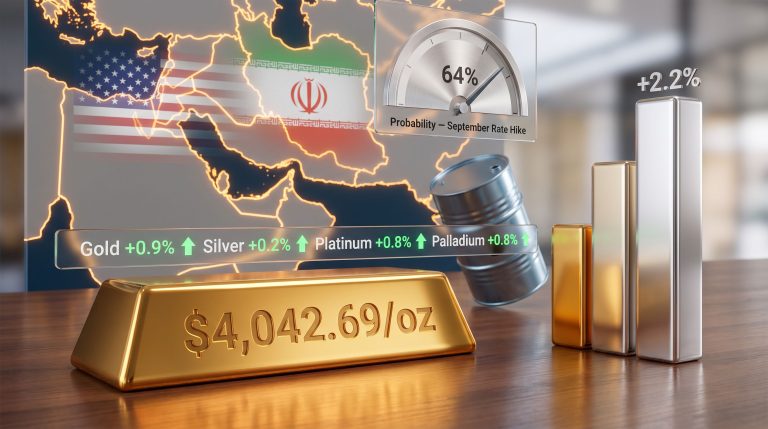
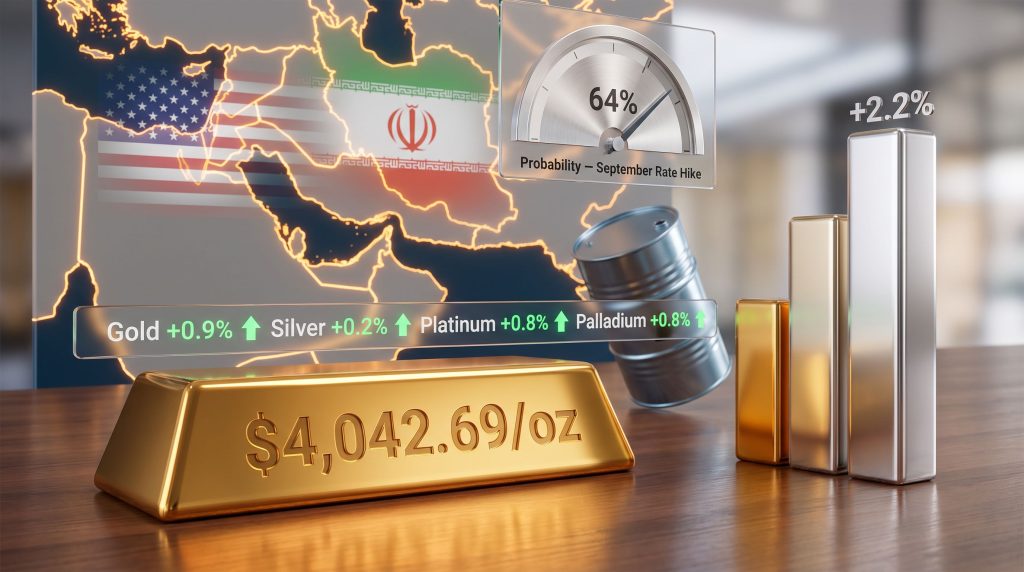
Spot gold advanced 0.9% to $4,042.69 per ounce during the session, while U.S. gold futures for August delivery climbed 0.8% to $4,047.40. These figures, reported by CNBC on 21 July 2026, tell only part of the story. The more significant detail is the price level around which gold is consolidating.
The $4,000 per ounce threshold carries substantial psychological weight in financial markets. Round-number levels tend to attract clustering of both buy-side interest and algorithmic order triggers, creating what traders refer to as a technical congestion zone. A sustained hold above this level is typically interpreted as structural demand confirmation rather than a momentum-driven spike.
Macro analysts have noted that gold appears to be using the $4,000 mark as a launching pad for renewed upside attempts, rather than as a ceiling. This is a meaningful distinction. It suggests that the market's base case is not resolution of Middle East tensions, but rather a prolonged period of managed uncertainty, which historically sustains gold safe-haven demand more durably than outright crisis does.
The counterintuitive reality of gold market dynamics is that incomplete diplomacy often supports prices more effectively than either escalation or full resolution. Escalation can force central banks toward rate hikes, which are bearish for non-yielding assets. Full resolution removes the risk premium entirely. Diplomatic ambiguity, by contrast, keeps the risk premium alive while reducing inflationary pressure from energy markets.
U.S.-Iran Diplomacy and the Oil Market's Conflicting Signals
Oil prices softened on 21 July as markets processed a tangle of contradictory information emerging from the Gulf. On one side, there were renewed reports of mediation efforts between Washington and Tehran. On the other, fresh exchanges of attacks and threats of a Houthi naval blockade of Saudi Arabia continued to inject supply-disruption risk into energy pricing.
According to Reuters, a senior Iranian official confirmed that Tehran had received a proposal from mediators for a 10-day ceasefire, aimed at salvaging an interim agreement that had been signed the previous month. That interim deal, which was already fragile, was described as intended to pave the way toward a more durable end to hostilities.
The Houthis complicated this picture by announcing blockade intentions even as signals of renewed diplomacy emerged from Tehran and Washington. This created a market environment defined not by clarity, but by competing probabilities. Furthermore, oil price volatility during such periods has historically been amplified by the presence of multiple non-state actors with divergent incentives.
| Factor | Bullish for Oil | Bearish for Oil |
|---|---|---|
| Houthi blockade threat | ✓ | |
| U.S.-Iran ceasefire proposal | ✓ | |
| Fresh exchange of attacks | ✓ | |
| Diplomatic mediation reports | ✓ | |
| Fragile interim deal at risk | ✓ |
The net result of these competing forces was a modest pullback in oil prices, having already reached a one-month high in the prior session. The incremental weight of diplomatic progress, however tentative, was enough to relieve some of the supply-risk premium that had built up.
The Inflation Transmission Chain: How Oil Feeds Into Gold's Investment Case
The relationship between oil prices and gold is not direct. It operates through a multi-step transmission mechanism that passes through inflation expectations and central bank policy before reaching gold's demand dynamics. Understanding this chain is essential to interpreting why gold rises as hopes for U.S.-Iran diplomacy pause the oil rally.
The sequence works as follows:
- Oil prices decline as geopolitical risk premiums ease on diplomatic progress.
- Headline inflation expectations soften, since energy is a major component of consumer price indices.
- Central bank hawkishness moderates, as the urgency for rate hikes diminishes with lower inflation pressure.
- Real interest rates fall or stabilise, reducing the opportunity cost of holding non-yielding assets like gold.
- Gold demand strengthens, particularly from capital preservation-oriented investors seeking inflation hedging without interest rate headwinds.
Lower energy prices reduce headline inflation pressure, which in turn diminishes the urgency for central banks to maintain or extend restrictive monetary policy. This dynamic historically reduces the opportunity cost of holding gold, a non-interest-bearing asset, making it more attractive in relative yield terms.
This chain is well-established in macroeconomic literature, but it carries important caveats. The transmission is not instantaneous, and it can be disrupted at any point. If a ceasefire collapses and oil surges back, the inflationary pressure can flip the dynamic quickly. Consequently, gold and bond dynamics tend to shift in tandem as these inflationary signals evolve.
Federal Reserve Policy: The 64% Probability That Creates a Ceiling
The Federal Reserve is widely expected to hold interest rates unchanged at its next scheduled meeting. However, according to CME FedWatch Tool data, traders were pricing a 64% probability of a rate hike in September 2026 at the time of this session.
This is a critical nuance. It means gold is currently operating under a partial headwind from rate expectations, even as diplomatic developments provide a partial tailwind. The net result is consolidation rather than breakout, which aligns with what the price action around $4,000 is showing.
The table below maps out the interaction between potential geopolitical and monetary policy scenarios and their likely implications for gold's directional trajectory:
| Scenario | Fed Action | Oil Trend | Likely Gold Direction |
|---|---|---|---|
| Diplomacy succeeds, oil falls | Hold or cut | Declining | Bullish |
| Conflict escalates, oil surges | Hike to fight inflation | Rising | Bearish |
| Stagflation risk emerges | Hike despite slowdown | Volatile | Mixed |
| Ceasefire collapses, uncertainty spikes | Hold with hawkish tone | Volatile | Safe-haven bid |
A majority-probability rate hike expectation introduces a genuine headwind for gold. Higher rates increase the relative attractiveness of yield-bearing instruments, particularly short-duration government bonds that currently offer competitive real yields. However, if the diplomatic trajectory in the Gulf materially reduces inflation risks before September, that 64% probability could shift meaningfully, and with it, the ceiling on gold's near-term upside.
The Opportunity Cost Equation in Practice
Gold's non-yielding nature means its attractiveness is always relative, not absolute. When real yields on alternatives like U.S. Treasury inflation-protected securities (TIPS) are high, the implicit cost of holding gold increases. When real yields compress, that cost falls.
Diplomatic progress that reduces oil prices, softens inflation, and shifts the Fed toward patience effectively compresses real yields at the margin, even before any formal policy change occurs. In addition, central bank influence on gold pricing amplifies these dynamics considerably. This is why sophisticated institutional investors sometimes position in gold ahead of actual Fed pivots rather than after them. By the time a rate cut is announced, much of the gold repricing has already occurred.
Silver, Platinum, and Palladium: The Broader Precious Metals Picture
While gold's 0.9% advance attracted the headline attention, silver's performance during the same session was arguably more instructive. Spot silver surged 2.2% to $57.67 per ounce, more than doubling gold's percentage gain and reflecting a dynamic that sophisticated metals investors understand well.
Silver occupies a unique position in the precious metals complex because it functions simultaneously as a monetary metal and an industrial input. Demand from green energy manufacturing, including photovoltaic solar panels and battery technologies, means silver's price behaviour during periods of macro uncertainty incorporates both safe-haven buying and expectations about future industrial consumption.
Silver's 2.2% gain significantly outpaced gold's 0.9% advance in this session, reflecting its dual role as both a safe-haven asset and an industrial metal. This characteristic leverage effect means silver often amplifies directional moves in gold, particularly when industrial demand signals are also constructive.
The gold-silver ratio tightened during this session, suggesting that silver was leading rather than following. Historically, a narrowing of this ratio during geopolitical events can indicate that markets are pricing in an economic recovery scenario alongside the safe-haven dynamic.
Platinum advanced 0.8% to $1,607.20, while palladium rose 0.8% to $1,263.73. Both metals benefit from the intersection of safe-haven demand and industrial exposure, particularly in automotive catalytic converter applications and hydrogen fuel cell technology development.
| Metal | Price (Spot) | Session Change |
|---|---|---|
| Gold | $4,042.69/oz | +0.9% |
| Silver | $57.67/oz | +2.2% |
| Platinum | $1,607.20/oz | +0.8% |
| Palladium | $1,263.73/oz | +0.8% |
| U.S. Gold Futures (Aug) | $4,047.40 | +0.8% |
The next major ASX story will hit our subscribers first
Three Macro Forces Competing for Gold's Direction in H2 2026
Looking beyond the immediate session, gold's trajectory through the second half of 2026 will likely be determined by three competing macro forces, each pulling in different directions and with different timelines.
Force 1: Geopolitical Risk Premium
The Middle East conflict creates a persistent floor for gold prices. Even during periods of diplomatic progress, the structural uncertainty associated with fragile interim agreements and multiple non-state actors keeps a baseline risk premium embedded in gold's price. The Houthi dimension is particularly important here because it introduces an actor whose behaviour is only partially correlated with U.S.-Iran bilateral diplomacy.
Force 2: Monetary Policy Trajectory
The Federal Reserve's September decision will be the pivotal monetary policy event for gold markets in the near term. If the 64% implied probability of a rate hike materialises, it will create a genuine headwind. If diplomatic developments reduce inflation sufficiently to shift the Fed toward a hold-with-dovish-tone posture, the ceiling on gold lifts materially.
Force 3: Dollar Dynamics
Gold is priced in U.S. dollars globally, meaning dollar strength exerts an inverse influence on gold's accessibility and attractiveness to international buyers. A geopolitical environment that drives safe-haven flows into U.S. Treasuries, thereby strengthening the dollar, can paradoxically create a short-term headwind for gold. This tension between dollar strength and gold demand is a less-discussed but important nuance for investors tracking this divergence.
Frequently Asked Questions: Gold, Oil, and Geopolitical Risk
Why does gold rise when oil prices fall due to diplomacy?
When diplomatic progress reduces oil supply disruption fears, energy prices soften, which lowers inflation expectations. Lower expected inflation reduces pressure on central banks to raise interest rates aggressively. Since gold does not generate yield, lower interest rate expectations reduce the opportunity cost of holding it, making gold relatively more attractive to investors focused on capital preservation.
What is the relationship between U.S.-Iran tensions and commodity markets?
The U.S.-Iran conflict sits at a strategic chokepoint for global oil supply. Escalation raises fears of supply disruption, pushing oil higher and inflation expectations up, which can be bearish for gold if it forces rate hikes. Conversely, diplomatic progress softens oil, reduces inflation risk, and can support gold as a store of value in an environment of lower real yields.
Why is the $4,000 gold price level considered significant?
Round-number price levels carry psychological weight in financial markets. The $4,000 per ounce threshold represents a concentration point for both buy and sell orders, making it a technical reference level that traders and algorithmic systems monitor closely. A sustained hold above this level is often interpreted as a signal of structural demand strength.
What does a 64% probability of a September Fed rate hike mean for gold investors?
A majority-probability rate hike expectation introduces a headwind for gold, as higher rates increase the relative attractiveness of yield-bearing assets. However, if diplomatic developments materially reduce inflation risks before September, this probability could shift, potentially removing a key ceiling on gold's upside trajectory.
How does silver's performance differ from gold during geopolitical events?
Silver tends to exhibit amplified price movements relative to gold during periods of market volatility, due to its smaller market size and its dual role as both a monetary metal and an industrial input. Silver's 2.2% gain versus gold's 0.9% advance in this session reflects this characteristic leverage effect.
What to Watch in the Weeks Ahead
For investors and market observers tracking this theme, several variables will be particularly informative in determining whether the current gold-oil divergence deepens or reverses:
- Whether the proposed 10-day ceasefire in the U.S.-Iran conflict holds or collapses in its opening days.
- The evolution of CME FedWatch probabilities for the September meeting as inflation data evolves.
- Whether the gold-to-silver ratio continues to narrow, which would signal broader precious metals strength rather than gold-specific safe-haven buying.
- Dollar index movements, particularly if Treasury yields shift in response to changing Fed expectations.
- Houthi activity in the Red Sea and Arabian Sea shipping lanes, which remains a partially independent variable from U.S.-Iran bilateral diplomacy.
The scenario that would most significantly disrupt the current framework would be a simultaneous oil price surge and Fed hawkishness, driven by a ceasefire collapse. In that environment, the inflation transmission mechanism would reverse, gold's opportunity cost would rise sharply, and the $4,000 support level would face its first genuine structural test. Indeed, gold topping $4,800 during peak ceasefire uncertainty illustrates just how dramatically the calculus can shift when diplomatic frameworks are stress-tested.
This article is provided for informational and educational purposes only and does not constitute financial or investment advice. Commodity prices, interest rate expectations, and geopolitical developments can change rapidly. Readers should conduct their own research and consult a licensed financial adviser before making any investment decisions.
Want to Capitalise on the Next Major Mineral Discovery Before the Broader Market Reacts?
While macro forces like gold's consolidation above $4,000 and shifting Fed rate expectations shape the investment landscape, Discovery Alert's proprietary Discovery IQ model scans ASX announcements in real time, instantly identifying significant mineral discoveries and translating complex data into actionable opportunities — explore historic discovery returns on Discovery Alert's discoveries page to see what's possible, and begin your 14-day free trial at Discovery Alert to position yourself ahead of the market.