
August 21, 2026
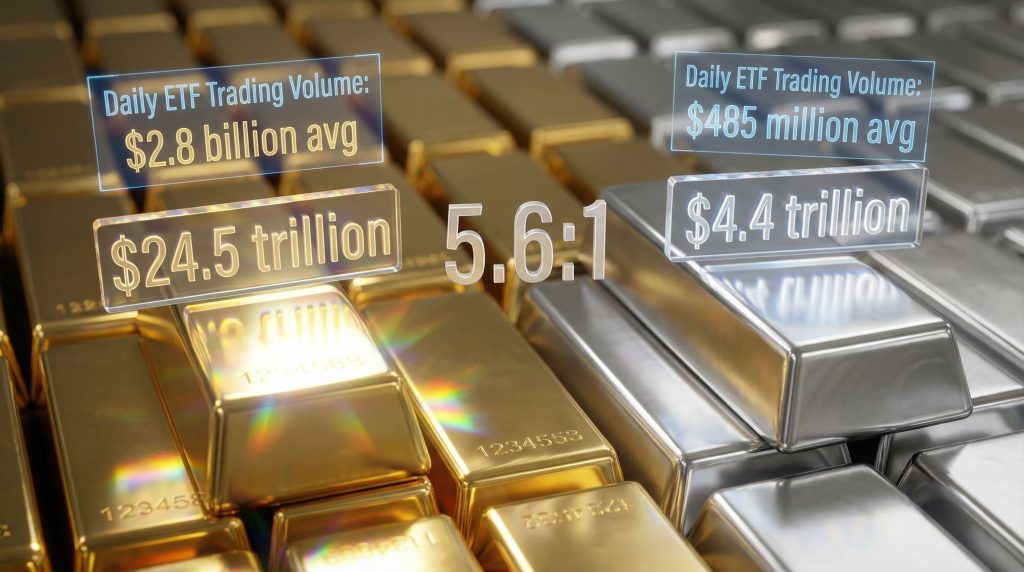
Understanding Market Dynamics Through Physical Properties
The precious metals market operates on principles that extend far beyond conventional asset trading. Unlike stocks or bonds that exist primarily as digital entries, precious metals carry inherent physical characteristics that fundamentally shape their liquidity profiles. These physical realities create operational constraints and opportunities that become particularly pronounced during periods of market stress or when rapid portfolio adjustments become necessary.
Market participants often discover that theoretical liquidity concepts fail to capture the practical execution challenges that emerge when converting physical metals to cash under real-world conditions. Understanding gold vs silver liquidity differences becomes crucial when investors need quick access to capital, as the gap between academic market theory and operational reality becomes most apparent precisely when investors need liquidity most—during volatile periods, unexpected expenses, or time-sensitive opportunities.
The Core Elements of Precious Metal Liquidity
Effective precious metals liquidity encompasses three fundamental operational dimensions that determine an asset's practical utility:
- Execution velocity: The actual time required to complete metal-to-cash conversions across different market conditions
- Market consistency: The reliability of buyer presence during both routine and stressed market environments
- Value retention: The degree to which original investment value remains intact throughout the liquidation process
These operational elements function independently from traditional volume-based liquidity measurements that focus primarily on daily trading activity without accounting for the physical logistics of precious metals ownership and disposal.
Why Traditional Liquidity Metrics Prove Inadequate
Standard financial liquidity assessments typically emphasise theoretical market access and daily volume statistics while overlooking the friction costs that emerge during actual transactions. Physical precious metals introduce logistical complexities that paper assets avoid entirely—transportation requirements, storage considerations, verification processes, and handling procedures that directly impact both timing and costs.
These practical considerations become amplified when transaction values increase, creating a liquidity spectrum where small purchases and sales behave differently from large portfolio adjustments. Furthermore, the physical weight-to-value ratios of different metals create divergent operational challenges that standard liquidity analysis fails to capture.
When big ASX news breaks, our subscribers know first
Structural Market Architecture Differences
The fundamental framework supporting gold versus silver trading creates distinctly different operational environments with implications that extend well beyond daily price fluctuations. These structural differences manifest most clearly in market depth, participant diversity, and institutional support systems.
Market Scale and Institutional Participation Analysis
Gold benefits from significantly broader institutional engagement, including central banks that maintain substantial reserves as monetary assets. According to the World Gold Council, central banks globally hold approximately 36,000 tonnes of gold as official reserves, creating a foundational demand layer that remains active across different economic cycles.
Silver's institutional framework concentrates primarily within industrial applications and exchange-traded fund structures, creating more concentrated demand patterns that can shift rapidly based on economic conditions. This concentration creates vulnerability during periods when either industrial demand or investment sentiment changes direction simultaneously.
Trading Infrastructure and Settlement Systems
Gold trading infrastructure has evolved to handle high-value, relatively low-volume transactions efficiently. The London Bullion Market Association operates continuous 24-hour markets with established trading centers across multiple time zones, providing consistent price discovery and transaction capability regardless of local market hours.
Silver settlement systems must accommodate high-volume, lower-value transactions, creating different operational challenges and cost structures. Regional market dependencies are more pronounced for silver, with price variations and availability differences more common across geographic markets.
Central Banking and Monetary Reserve Considerations
Gold's role as a monetary reserve asset creates structural demand from 177+ central banks worldwide that maintain gold holdings for monetary policy and reserve diversification purposes. This institutional support provides a demand foundation that operates independently from commercial trading patterns.
Silver lacks comparable monetary reserve demand, with most official sector holdings being negligible compared to gold. This absence of monetary demand creates greater dependence on commercial and investment flows, contributing to higher volatility and less predictable liquidity patterns. In addition, the current historic gold surge reflects these underlying structural advantages.
Transaction Size Impact on Practical Liquidity
The relationship between transaction size and liquidity efficiency varies dramatically between gold and silver due to fundamental physical characteristics. These differences create practical ownership and disposal considerations that become more pronounced as investment values increase.
Small Transaction Liquidity Characteristics
For investments under $10,000, both metals demonstrate excellent retail market liquidity:
- Both metals show active retail buyer networks
- Silver often displays competitive spreads due to strong retail demand
- Transaction completion times remain comparable between metals
- Physical handling requirements are manageable for both options
Large Transaction Liquidity Divergence
As transaction values exceed $100,000, fundamental differences emerge:
- Gold maintains consistent liquidity characteristics across size ranges
- Silver faces increasing logistical complexity and wider spreads
- Multiple transactions may become necessary for large silver positions
- Storage and transportation considerations become significant cost factors
Physical Weight and Storage Implications
The density differential between gold and silver creates profound practical implications for larger holdings. At current precious metals pricing, $500,000 in gold weighs approximately 12 pounds and can be stored in a modest space. The equivalent value in silver weighs roughly 950 pounds, requiring substantial storage infrastructure and creating transportation challenges.
This physical reality directly impacts gold vs silver liquidity through several channels:
- Transportation logistics become complex and expensive for silver
- Insurance requirements increase substantially with weight and storage needs
- Storage accessibility affects transaction timing and flexibility
- Transaction processing involves significantly more handling time and verification
Spread Behaviour During Market Volatility
Bid-ask spread behaviour during stressed market conditions reveals the true liquidity characteristics of precious metals, often contradicting assumptions based on normal market observations. Understanding these patterns helps investors anticipate real-world liquidation costs.
Normal Market Spread Patterns
Under routine market conditions, gold vs silver liquidity differences are evident but manageable:
| Transaction Range | Gold Typical Spread | Silver Typical Spread |
|---|---|---|
| $1,000 – $5,000 | 2-4% | 3-6% |
| $25,000 – $50,000 | 1-3% | 4-8% |
| $100,000+ | 0.5-2% | 6-12% |
Stressed Market Dynamics
During periods of high volatility or economic uncertainty, spread behaviour diverges significantly. According to market analysis from GoldSilver.com, gold spreads typically widen by 50-100% from normal levels during stress periods, while silver spreads can expand by 200-400% from baseline measurements.
This disparity creates unpredictable liquidation costs for silver holders, particularly when timing becomes critical. Recovery to normal spread levels consistently occurs faster in gold markets, reflecting the deeper institutional buyer base that remains active during turbulent periods. Consequently, understanding the gold record highs phenomenon provides insight into these stress dynamics.
Market Depth and Buyer Consistency
Gold's superior performance during market stress stems from its diversified buyer network. As GoldSilver.com's analysis notes, "gold maintains liquidity advantages because buyers across institutional, wholesale, and retail markets remain active even during volatile conditions."
Silver's dependence on retail sentiment creates vulnerability when economic conditions deteriorate and individual investor confidence declines. Industrial buyers provide some stability, but their purchasing patterns follow different cycles that may not align with investor liquidation needs. The recent silver market squeeze illustrates these dynamics.
Global Infrastructure and Market Access
The worldwide infrastructure supporting precious metals trading creates significant practical differences in liquidity execution between gold and silver markets. These infrastructure differences become particularly important during cross-border transactions or when accessing international buyer networks.
Trading Platform Development
Gold trading platforms have evolved to emphasise efficiency for high-value transactions, with institutional-grade settlement systems and established clearing mechanisms. The London Bullion Market Association's Good Delivery standards provide internationally recognised quality benchmarks that facilitate rapid verification and acceptance.
Silver trading infrastructure focuses more heavily on retail accessibility and smaller transaction processing. While this serves the retail market effectively, it creates bottlenecks when large institutional-size transactions require processing through retail-oriented systems.
Settlement and Verification Systems
Gold benefits from mature settlement systems designed specifically for high-value, low-volume transactions. International wire transfers, established vault networks, and standardised verification procedures enable rapid completion of large gold transactions across borders.
Silver settlement systems must handle high-volume, lower-value transactions efficiently, creating different operational priorities. Regional variations in silver products, purity standards, and verification requirements can create delays and additional costs when transactions cross geographic boundaries. However, established investment decision guides provide frameworks for navigating these complexities.
Technology Integration and Digital Trading
Digital trading platforms increasingly influence precious metals liquidity, but with different impacts on gold versus silver markets. Blockchain-based trading systems and tokenisation projects currently focus primarily on gold applications, where high unit values justify the technology infrastructure costs.
Silver's lower unit values make digital tokenisation more challenging from an economic perspective, though fractional ownership concepts may eventually improve silver liquidity for large positions. Mobile trading applications show higher engagement rates for silver due to its accessibility, but transaction sizes remain smaller on average.
Investment Strategy Alignment with Liquidity Needs
Understanding gold vs silver liquidity differences helps investors align metal selection with their specific portfolio circumstances and strategic objectives. The optimal choice depends on factors beyond price appreciation potential.
Portfolio Size Optimisation Framework
| Portfolio Value Range | Recommended Metal Focus | Liquidity Rationale |
|---|---|---|
| Under $25,000 | Silver-emphasised allocation | Retail liquidity excellent, divisibility advantages |
| $25,000 – $100,000 | Balanced metal approach | Both metals provide adequate liquidity |
| $100,000 – $500,000 | Gold-emphasised allocation | Liquidity advantages emerge clearly |
| Over $500,000 | Gold-dominant strategy | Institutional liquidity becomes critical |
Investment Timeline Considerations
Short-term holding strategies (under 2 years) require careful attention to liquidity differences. Gold's transaction efficiency provides advantages when timing flexibility becomes limited. Silver's higher volatility can create challenges when specific liquidation timing becomes necessary.
Long-term holding strategies (over 5 years) can accommodate silver's liquidity limitations more easily, as storage costs and handling considerations become more significant factors than short-term liquidity efficiency. Furthermore, the gold-stock market guide demonstrates how these relationships evolve over longer periods.
Risk Tolerance and Liquidity Trade-offs
Conservative investors typically prioritise liquidity certainty over potential returns, making gold's consistent liquidity characteristics attractive. Moderate risk tolerance allows for balanced allocations that capture silver's growth potential while maintaining gold's liquidity foundation.
Aggressive investment strategies may accept silver's liquidity trade-offs in exchange for its leverage characteristics and industrial demand growth potential, particularly when long holding periods are planned.
The next major ASX story will hit our subscribers first
Emergency Liquidation Scenarios
Real-world liquidity testing occurs during unexpected circumstances requiring rapid asset conversion. These scenarios reveal practical differences between theoretical and actual liquidity that investors should understand before purchase decisions.
Common Emergency Triggers
Emergency liquidation needs typically arise from:
- Sudden major expenses requiring immediate capital access
- Time-sensitive investment opportunities with funding deadlines
- Economic crisis situations requiring rapid portfolio rebalancing
- Geographic relocation necessitating asset liquidation
Performance Under Pressure
Gold's emergency liquidation characteristics include maintained buyer diversity during stress periods, ability to complete large transactions as single deals, and international buyer access providing additional options. Price integrity typically remains better preserved under pressure due to institutional support.
Silver's emergency performance shows greater dependence on retail buyer sentiment, which can contract during economic stress. Large positions may require subdivision for optimal pricing, and regional market dependencies can create transaction bottlenecks when rapid execution becomes necessary. In addition, current gold price forecast trends suggest continued institutional support during uncertain periods.
Technology's Role in Evolving Liquidity
Technological developments are reshaping precious metals liquidity dynamics with different implications for gold versus silver markets. Understanding these trends helps investors anticipate future liquidity evolution.
Digital Platform Integration
Online precious metals platforms have democratised market access but with varying effects across metals. Gold-focused platforms emphasise transaction efficiency and high-value processing capabilities. Silver platforms typically emphasise accessibility and accommodate smaller transaction preferences.
Mobile trading applications demonstrate higher silver engagement rates due to accessibility factors, though average transaction sizes remain smaller. Institutional trading platforms continue focusing primarily on gold due to transaction value efficiency.
Blockchain and Tokenisation Development
Emerging blockchain applications in precious metals trading could fundamentally alter liquidity characteristics. Gold tokenisation projects target institutional efficiency improvements and international settlement enhancement. Silver tokenisation focuses more heavily on retail accessibility and fractional ownership solutions.
Smart contract implementation may reduce settlement times for both metals, though economic benefits are likely to favour gold initially due to transaction value considerations.
Liquidity Assessment Framework for Investors
Systematic evaluation of personal liquidity requirements enables informed decisions about metal allocation and storage strategies. This assessment should occur before purchase rather than when liquidity becomes necessary.
Comprehensive Timeline Analysis
Effective liquidity assessment begins with realistic timeline evaluation:
- Expected holding period under normal circumstances
- Potential early liquidation scenarios and probability assessment
- Cash flow requirements during the intended holding period
- Flexibility needs for portfolio rebalancing opportunities
Transaction Planning Considerations
Realistic transaction size planning includes:
- Likely liquidation amounts under various scenarios
- Preference for single transactions versus multiple smaller sales
- Storage and handling capabilities affecting transaction logistics
- Geographic accessibility to buyers and markets
Market Access Evaluation
Practical market access assessment covers:
- Available local dealers and their reliability
- Online platform access and transaction capabilities
- International shipping capabilities if cross-border sales become necessary
- Legal and regulatory requirements in relevant jurisdictions
Hidden Costs of Liquidity Limitations
Beyond obvious transaction costs, liquidity constraints create secondary expenses that significantly impact investment returns over time. Understanding these hidden costs helps investors make more informed allocation decisions.
Direct Cost Implications
Immediate liquidity costs include wider bid-ask spreads during forced sales, premium erosion when rushed timing is required, multiple transaction fees for large silver positions that require subdivision, and extended storage costs during prolonged sale processes.
Opportunity Cost Considerations
Indirect costs from reduced liquidity include missed investment opportunities due to slow liquidation processes, suboptimal timing due to market access limitations, geographic constraints limiting buyer access, and seasonal demand variations affecting achievable pricing.
Insurance and Security Requirements
Less liquid positions often require enhanced insurance coverage due to valuation complexity, increased security measures for extended holding periods, professional storage solutions for large silver positions, and additional legal documentation for complex transactions.
Practical Questions About Metal Selection
When Does Silver Demonstrate Superior Liquidity?
Silver can exhibit better liquidity characteristics in specific circumstances, including small retail transactions under $5,000, regional markets with established silver collecting traditions, periods of intense retail precious metals demand, and markets where gold faces regulatory restrictions or taxation disadvantages.
How Economic Cycles Affect Relative Liquidity
Economic conditions significantly influence the gold vs silver liquidity gap. During recessions, gold liquidity typically improves while silver's may deteriorate due to reduced industrial demand. Inflationary periods often enhance both metals' liquidity as monetary concerns increase.
Industrial demand cycles can temporarily boost silver liquidity when manufacturing activity increases. Currency crises generally favour gold's liquidity advantages due to its monetary reserve status and central bank acceptance.
Storage Decisions Impacting Future Liquidity
Storage location and method directly affect liquidation options. Home storage provides immediate access but limits transaction sizes and restricts buyer types. Professional storage enhances liquidity for large positions by providing established verification and transfer procedures.
Geographic storage location affects accessible markets and shipping options. Proper storage documentation impacts transaction speed and pricing by reducing verification requirements during sales processes.
Strategic Implications for Modern Investors
The analysis of gold vs silver liquidity reveals that both metals serve legitimate portfolio functions, but their optimal applications differ significantly based on investor circumstances and strategic objectives.
Gold's liquidity advantages make it particularly suitable for larger portfolios, retirement account allocations, and situations where timing flexibility is important. Its consistent performance under stress and efficient transaction characteristics align well with wealth preservation strategies.
Silver's accessibility and divisibility advantages serve smaller portfolios and incremental investment strategies effectively. Its industrial demand component provides different portfolio diversification benefits, though investors must accommodate the liquidity trade-offs that accompany larger positions.
Understanding these practical realities before purchase enables strategic allocation decisions based on operational requirements rather than price speculation alone. This approach transforms precious metals from speculative positions into strategic portfolio components aligned with individual investor needs and circumstances.
Are You Ready to Capitalise on the Next Major Mineral Discovery?
Discovery Alert instantly alerts investors to significant ASX mineral discoveries using its proprietary Discovery IQ model, turning complex mineral data into actionable insights that could complement your precious metals portfolio. Understand why historic discoveries can generate substantial returns by exploring examples of exceptional outcomes, then begin your 14-day free trial today to position yourself ahead of the market.