Great Northern Minerals Ltd
- ASX Code: GNM
- Market Cap: $17,482,093
- Shares On Issue (SOI): 485,613,693
Great Northern Minerals Extends Antimony Discovery to 1.25km with Major Gold Targets Identified
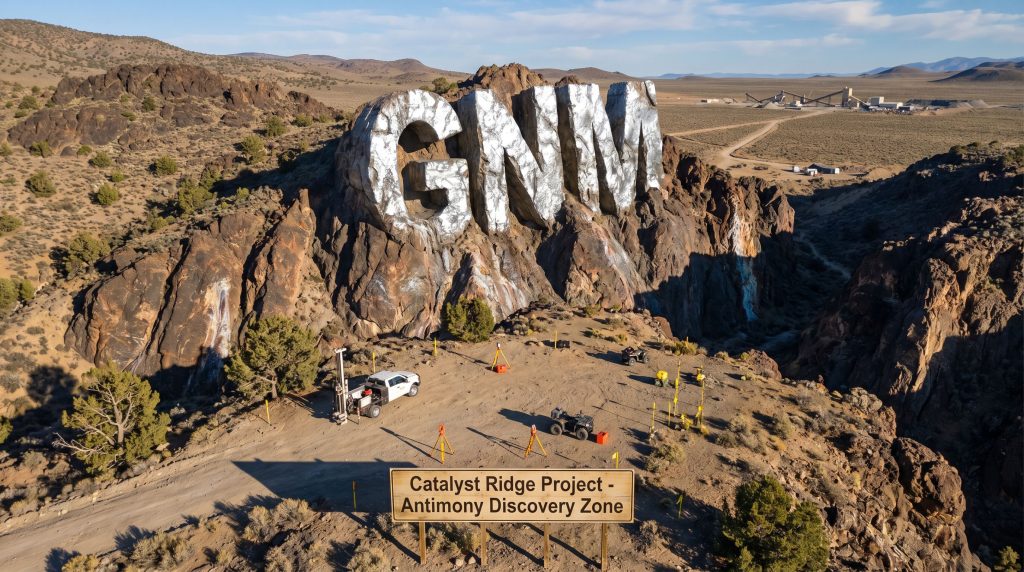
Great Northern Minerals (ASX: GNM) has delivered a significant exploration update that validates and substantially extends its antimony discovery at the Catalyst Ridge Project in California. The detailed geological mapping programme has confirmed the Antimony Gulch vein system now spans 1.25 kilometres in length, with surface silicification zones reaching over 40 metres in width.
The mapping results support an exciting dual-commodity opportunity, with high-grade antimony, tungsten, and silver mineralisation confirmed at surface levels. Furthermore, geological modelling suggests significant gold-silver potential at depth. Previous assays from the system have returned impressive results of up to 7.1% antimony, 0.4% tungsten, and 23.3 g/t silver.
When big ASX news breaks, our subscribers know first
Key Discovery: A Vertically Zoned Epithermal System
The geological mapping has revealed that Great Northern Minerals' Catalyst Ridge discovery operates as a classic epithermal-style mineral system with distinct vertical zones. This discovery demonstrates the exceptional potential for both surface critical minerals and deeper precious metals exploration.
The system exhibits the following characteristics:
Surface Expression: Quartz vein system with stibnite (antimony), tungsten and silver in topographic low areas
Upper Level: Stibnite (antimony), tungsten and silver zone
Lower Level: Conceptual gold and silver zone at depth
This zoning pattern is particularly encouraging as it mirrors successful precious metal districts across the western United States. For instance, the Mogollon District showcases similar characteristics, where gold-silver mineralisation is exposed in topographic lows and preserved beneath barren quartz veins in topographic highs.
The three fault-separated segments – South Ridge, Middle Ridge, and North Ridge – each offer distinct exploration opportunities:
| Segment | Length | Key Features | Mineralisation Status |
|---|---|---|---|
| South Ridge | 300m | Deepest exposure, 1.5m vein within 40m+ silicified zone | High-grade antimony confirmed |
| Middle Ridge | Segmented | 20m+ width, strong silicification | Conceptual antimony at depth |
| North Ridge | Highest level | Widespread silicification | Conceptual antimony at depth |
Strategic Location in Premier Mining District
The Catalyst Ridge Project sits within the Walker Lane Mineral Belt, one of the most highly endowed gold-silver mining districts in the United States. Moreover, the antimony vein appears positioned along the same structural zone as the nearby Colosseum Gold Mine, located just 6 kilometres to the north.
The Colosseum Mine's credentials are impressive:
- 344,000 ounces of gold produced over five years (1988-1993)
- Current resource of 1.1 million ounces of gold
- Recent drilling results including 149.65m @ 1.39 g/t Au from surface
This structural similarity significantly enhances the gold prospectivity of Great Northern Minerals' Catalyst Ridge discovery. In addition, the positioning suggests particularly strong potential at depth where epithermal gold-silver systems typically develop.
Non-Executive Chairman Eddie King commented: "Catalyst Ridge is emerging as a strategically significant asset for GNM at a time when secure, domestic antimony supply has become a priority. The confirmation of a 1.25 km stibnite vein system gives us a rare opportunity to advance a critical mineral discovery in a stable jurisdiction, with clear pathways to add value through drilling."
Understanding Epithermal Systems: Why Depth Matters
What is an epithermal system?
These are mineral deposits formed by hot, metal-rich fluids at relatively shallow depths in the Earth's crust. As these fluids cool and rise toward the surface, different metals precipitate at different temperature ranges, creating distinct zones.
In antimony-bearing epithermal systems:
- Shallow/cool zones: Antimony (stibnite) dominates
- Deeper/hotter zones: Gold and silver become prominent
This explains why GNM's surface sampling shows excellent antimony grades. However, the geological modelling suggests gold-silver potential at depth. The 1.25km strike length and substantial width of the system indicate significant depth potential for this lower-temperature to higher-temperature transition zone.
The Role of Stibnite
Stibnite is the primary mineral form of antimony, typically appearing as silvery-grey crystals that form when antimony-rich fluids cool in fractures and fault zones. When these same fluids penetrate deeper into hotter zones, they tend to deposit gold and silver instead.
The Walker Lane Mineral Belt has produced this exact geological scenario at multiple locations. Consequently, this makes Great Northern Minerals' Catalyst Ridge discovery a compelling exploration target for both confirmed surface antimony and conceptual deeper precious metals.
Advancing Toward Drill Testing
GNM is progressing on multiple fronts to advance the discovery:
Immediate Steps:
- Applied for Dipole-Dipole Induced Polarisation (DDIP) survey permit to detect sulphide mineralisation depth
- Continued work with California State Lands Commission on mineral prospecting permit
- Selection of preferred drilling contractor for rapid mobilisation
Strategic Targets:
- Near-surface antimony-tungsten-silver zones (confirmed)
- Deeper epithermal gold-silver zones (conceptual but geologically supported)
- Additional REE prospectivity across remaining claims area
The planned drilling programme is designed to test both the confirmed near-surface critical mineral potential and the conceptual deeper precious metal zones. Therefore, this approach offers shareholders exposure to a multi-commodity system.
Investment Thesis: Critical Minerals Meet Precious Metal Upside
Great Northern Minerals' Catalyst Ridge discovery offers investors several compelling value drivers:
Critical Mineral Exposure: With antimony classified as a critical mineral and supply chains under geopolitical pressure, the 7.1% antimony grades represent significant strategic value in a stable jurisdiction.
Precious Metal Leverage: The geological setting and proximity to the Colosseum Gold Mine suggest substantial gold-silver potential at depth. As a result, this provides additional upside beyond the confirmed antimony resource.
Scale Potential: The 1.25km strike length and 40+ metre surface widths indicate a system of considerable scale. Furthermore, drilling targets extend along the entire trend.
Strategic Location: Positioning within the Walker Lane Mineral Belt provides access to established mining infrastructure and expertise.
Technical Analysis: South Ridge Shows Highest Grade Potential
The South Ridge segment represents the most advanced target within the discovery. At this location, the prospect workings expose a 1.5-metre-wide vein within a broader silicified zone exceeding 40 metres in width.
Previous rock chip sampling from this area has returned the highest grades, including:
- 7.1% antimony with associated 23.3 g/t silver
- 6.2% antimony in separate samples
- 0.4% tungsten as a valuable by-product
These grades compare favourably to global antimony operations. Additionally, the tungsten and silver credits enhance project economics. The fault-controlled emplacement suggests continuity at depth, supporting the case for systematic drill testing.
Why Should Investors Follow This Discovery?
The Dual-Commodity Advantage
GNM has positioned itself at the intersection of critical mineral security and precious metal exploration within one of America's premier mining districts. The combination of confirmed high-grade antimony mineralisation and conceptual gold-silver potential at depth creates a unique dual-commodity opportunity.
Timing and Market Context
With drilling permits advancing and the geological model strongly supported by regional analogues, the company is approaching a catalyst-rich period. During this phase, both near-surface critical minerals and deeper precious metal zones can be systematically tested.
The strategic significance of domestic antimony supply, combined with the proven gold endowment of the Walker Lane Belt, positions the discovery favourably. Consequently, it represents both an immediate critical mineral play and a longer-term precious metal exploration story.
The next major ASX story will hit our subscribers first
Investment Tracking Points
| Key Tracking Points for Investors |
|---|
| Mineral prospecting permit approval and drilling commencement |
| DDIP survey results defining drill targets |
| Initial drill results from both antimony and gold zones |
| Resource estimation across the 1.25km strike length |
| REE potential assessment across broader claims area |
The 1.25km strike length confirmed through detailed mapping provides substantial drilling inventory. Meanwhile, the proximity to established gold resources validates the geological model for deeper precious metal potential.
As permitting advances and drilling targets are refined, Great Northern Minerals' Catalyst Ridge discovery represents a compelling opportunity in the critical minerals and precious metals space. The combination of confirmed surface mineralisation and conceptual depth potential offers investors exposure to multiple value creation pathways in a proven geological environment.
Want to Identify the Next Catalyst Ridge Before It's Mainstream?
Discovery Alert instantly alerts investors to significant ASX mineral discoveries using its proprietary Discovery IQ model, turning complex mineral data into actionable insights. Understand why historic discoveries can generate substantial returns by visiting Discovery Alert's dedicated discoveries page and begin your 14-day free trial today to position yourself ahead of the market.