Great Western Exploration Ltd
- ASX Code: GTE
- Market Cap: $10,219,643
Great Western Exploration Set to Drill Core of Potentially Massive Copper-Gold System
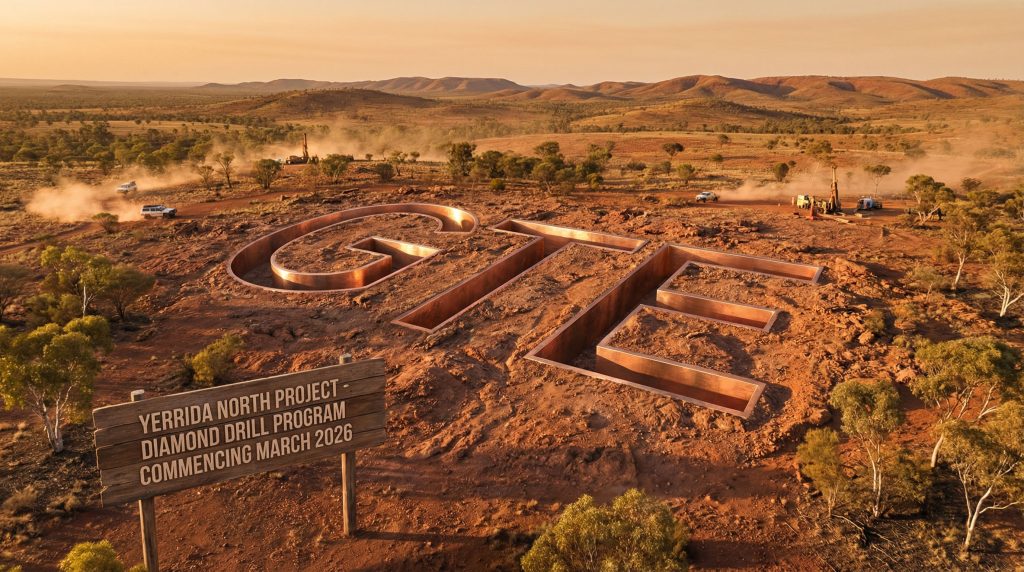
Great Western Exploration (ASX: GTE) has secured all necessary permits and is now positioned to drill what could be the centre of a potentially large volcanic hosted massive sulphide copper-gold mineralisation system at its Great Western Exploration copper-gold targets in March 2026. The company's latest geophysical work has identified what appears to be the core of a system similar to the nearby DeGrussa Copper-Gold Deposit, setting the stage for what could be a pivotal drilling campaign.
The announcement represents a significant milestone for Great Western, which has been systematically building the case for a major copper-gold discovery at its Yerrida North Project in Western Australia. With a 750-metre diamond drill hole designed to test an extensive gravity anomaly and preferred contractors already engaged, the company is moving from exploration theory to high-impact drilling.
When big ASX news breaks, our subscribers know first
Key Developments Drive Drilling Decision
Great Western's decision to proceed with deep drilling stems from several compelling geological indicators that have aligned to suggest a major mineralisation system. Furthermore, these developments represent the culmination of extensive geological work conducted over the past several years.
The following factors support the drilling programme:
• Gravity anomaly coincident with prospective volcanic hosted massive sulphide horizon – Ground gravity surveys have identified a gravitational high that precisely aligns with the most promising volcanic hosted massive sulphide horizon identified through previous drilling
• Strategic fault intersection positioning – The target sits at the intersection of the Ida Fault and the Yerrida Basin Growth Fault, creating potential fluid pathways for copper-gold mineralisation
• Strong volcanic hosted massive sulphide pathfinder signatures – Previous drilling has returned pathfinder element enrichment patterns (Cu-Au-Bi-S-Zn-As-Pb-Ag-Te-Sb-In) consistent with proximity to volcanic hosted massive sulphide "black smoker" zones
• Geological similarity to DeGrussa Formation – The intersected rocks are interpreted as part of the Killara Formation, considered stratigraphically equivalent to the DeGrussa Formation that hosts Sandfire Resources' major copper-gold deposit
Understanding Volcanic Hosted Massive Sulphide Systems: The DeGrussa Connection
What are Volcanic Hosted Massive Sulphide deposits?
Volcanic Hosted Massive Sulphide deposits form on ancient seafloors where volcanic activity creates underwater "black smoker" vents that discharge metal-rich fluids. These deposits can contain substantial copper and gold mineralisation, with the metals precipitating as massive sulphide bodies around the vent systems. The key to major discoveries is identifying the central "feeder" zones where the highest-grade mineralisation typically occurs.
These systems develop when heated seawater interacts with volcanic rocks beneath the ocean floor. The heated water dissolves metals from surrounding rocks and carries them upward through fractures. When this metal-rich fluid meets cold seawater at the seafloor, the metals rapidly precipitate to form concentrated sulphide deposits.
Why this matters for investors
The nearby DeGrussa Copper-Gold Deposit operated by Sandfire Resources is a world-class volcanic hosted massive sulphide system that has produced over 1 million tonnes of copper and significant gold credits. Great Western's systematic exploration suggests it may have identified similar geological conditions that could host a comparable deposit.
The company's interpretation that both the Oval and Oval South targets belong to one large mineralisation system significantly increases the scale potential. This interpretation fundamentally alters the project's economic prospects and discovery potential.
The convergence of geological, geophysical, and structural evidence at Great Western Exploration copper-gold targets provides compelling support for discovery potential in a proven copper-gold province. The March 2026 drilling campaign represents a pivotal moment that could transform the company from explorer to discovery story.
Drilling Programme Details and Timeline
Great Western has designed a comprehensive approach to test what it believes could be the heart of the mineralisation system. However, the programme extends beyond a single drill hole to encompass multiple follow-up targets.
Drilling Specifications
The primary drilling programme includes:
- Single diamond drill hole to 750 metres depth
- Designed to test coincident gravity anomaly and volcanic hosted massive sulphide horizon
- March 2026 commencement with preferred contractor engaged
- Focus on highest-density rocks that potentially represent massive sulphides
Follow-up Programs
In addition to the primary target, the company has planned extensive follow-up activities:
- Six Juggernaut Copper-Gold Targets to be drilled after Oval completion
- Access approvals for Juggernaut targets expected during March 2026 Quarter
- Systematic testing of multiple prospects across the broader tenement package
The drilling programme represents the culmination of 16 previous ASX announcements since mid-2023, where the company has progressively refined its geological model. Consequently, this has built increasing confidence in the scale potential of the system.
Technical Evidence Supporting Major System Potential
The convergence of multiple geological indicators provides compelling evidence for a significant mineralisation system. Moreover, these indicators collectively suggest the presence of a world-class deposit similar to DeGrussa.
| Indicator | Significance | DeGrussa Comparison |
|---|---|---|
| Gravity Anomaly | High-density rocks suggesting massive sulphides | Similar density contrasts at DeGrussa |
| Fault Intersection | Ida Fault × Growth Fault = fluid focusing | Major faults control DeGrussa |
| Rock Package | Killara Formation = DeGrussa equivalent | Same host rock sequence |
| Pathfinder Elements | Cu-Au-Bi-S enrichment signatures | Identical pathfinder suite |
| Alteration Patterns | Volcanic hosted massive sulphide-style alteration textures | Consistent with DeGrussa model |
The company's interpretation that previous drilling tested only the "fringes" of the system, while the upcoming hole will target the central "black smoker" zone, suggests significantly higher mineralisation potential than earlier intersections.
Ground gravity surveys have proven particularly effective at defining the target. The 3D inversion modelling of gravity data identified a density anomaly that coincides precisely with the modelled position of the most prospective volcanic hosted massive sulphide horizon. This coincident positioning strongly suggests the presence of higher-density massive sulphide mineralisation at depth.
Strategic Positioning in Proven Copper-Gold Province
Great Western's Yerrida North Project benefits from its position within a highly prospective geological province that has already demonstrated world-class potential. Furthermore, the project's strategic location provides multiple competitive advantages for exploration success.
Regional Context
The project benefits from several regional advantages:
- Adjacent to DeGrussa and Monty Copper-Gold deposits
- Yerrida Basin geology similar to productive Bryah Basin
- 100% ownership of extensive tenement package following recent acquisition
- Western Australian Government funding secured for drilling programmes
The geological setting provides multiple advantages for exploration success. The crustal scale fertile Ida Fault intersected by a basin-defining growth fault creates favourable conditions for volcanic hosted massive sulphide mineralisation. This structural intersection is regarded as optimal positioning for producing large-scale copper-gold systems.
Trace element analysis of volcanic rocks indicates a subduction-related formation setting that is highly prospective for volcanic hosted massive sulphide mineralisation. The presence of pathfinder element co-enrichment on discrete sedimentary horizons indicates multiple possible fallout zones from adjacent volcanic hosted massive sulphide "black smokers".
Investment Considerations for Great Western Exploration
Great Western Exploration represents a compelling copper-gold exploration opportunity with several key advantages positioning it for potential discovery success. However, investors must carefully consider both opportunities and risks associated with exploration activities.
Near-term Catalysts
Several factors support the investment case:
- March 2026 drilling commencement of highest-priority target
- Deep 750m hole designed to test interpreted system core
- Multiple follow-up targets provide additional discovery opportunities
- Systematic exploration approach based on proven geological model
Competitive Advantages
The company benefits from multiple strategic advantages:
- Proximity to proven deposits reduces geological risk
- 100% project ownership ensures full upside capture
- Government funding support validates project merit
- Experienced management team with track record in WA exploration
The company's methodical approach to building the geological case through 16 progressive ASX announcements demonstrates disciplined exploration methodology. Each announcement has added supporting evidence for the presence of a major volcanic hosted massive sulphide system.
Market Positioning
Great Western Exploration copper-gold targets offer exposure to genuine discovery potential in Western Australia's proven copper-gold province. The systematic exploration approach, combined with proximity to world-class deposits, positions the company as a compelling exploration investment ahead of high-impact drilling.
Risk Considerations
Exploration activities carry inherent geological risk, and drilling results may not meet expectations. The interpretation of gravity anomalies and geological modelling, while scientifically sound, cannot guarantee the presence of economic mineralisation. Investors should consider these exploration risks alongside the potential rewards of discovery in a proven mineral province.
Managing Director Shane Pike commented: "All permits have now been received to allow drill testing of a coincident gravity anomaly and modelled prospective volcanic hosted massive sulphide horizon, interpreted to be the core of a potentially large volcanic hosted massive sulphide copper-gold mineralisation system at the Oval Copper-Gold Target."
The next major ASX story will hit our subscribers first
Technical Foundation and Geological Model
The geological evidence supporting the Great Western Exploration copper-gold targets extends beyond surface indicators to fundamental rock characteristics. Multiple geological attributes support the potential for a significant DeGrussa-style volcanic hosted massive sulphide copper-gold mineralisation system.
Rock Package Analysis
The drilled geological units and associated textures and alteration patterns support a volcanic hosted massive sulphide mineralisation environment. Geochemical analysis has confirmed that the volcanic and sedimentary rocks intersected are interpreted as part of the Killara Formation.
Previous work indicates this package is the stratigraphic equivalent of the DeGrussa Formation. This correlation significantly enhances the project's prospectivity and provides geological confidence in the exploration model.
Structural Controls
The position of targets on the crustal scale fertile Ida Fault, intersected by a basin-defining growth fault, is regarded as favourable positioning for producing a volcanic hosted massive sulphide mineralisation system. These major structural features likely provided the pathways for metal-bearing fluids during the formation of the deposit.
The upcoming drilling programme represents a pivotal moment for Great Western, with the potential to validate years of systematic geological work. Given the scale of the interpreted system and the quality of the geological targeting, the March 2026 drilling campaign deserves close attention from copper-gold focused investors seeking exposure to genuine discovery potential in Western Australia.
Could This Be Western Australia's Next Major Copper-Gold Discovery?
Great Western Exploration's systematic geological work has identified compelling indicators for a potentially significant volcanic hosted massive sulphide system, similar to the nearby DeGrussa deposit. With March 2026 drilling of the interpreted system core approaching, investors seeking exposure to genuine discovery potential in proven copper-gold provinces should explore Discovery Alert's proprietary Discovery IQ model, which delivers instant notifications on significant ASX mineral discoveries like this. Begin your 30-day free trial today to stay ahead of the market when major copper-gold discoveries are announced on the ASX.