June 8, 2026
Green Metal Production Technology Transforming Australian Mining Operations
The Fortescue Christmas Creek Green Metal Project represents Australia’s mining sector at a technological inflection point as hydrogen-based metallurgy progresses from research laboratories into commercial demonstration. The convergence of renewable energy abundance, advanced direct reduction chemistry, and electric smelting furnace systems is creating new pathways for low-emission metal production in regions historically constrained by traditional steelmaking economics.
This transformation extends beyond incremental optimisation. Hydrogen-based direct reduction—when paired with renewable electricity—fundamentally restructures the metallurgical value chain by eliminating fossil-fuel reductants while expanding the range of ore grades viable for ironmaking.
When big ASX news breaks, our subscribers know first
Revolutionary Hydrogen-Based Direct Reduction Systems
Circored™ Fluidised Bed Technology Architecture
The Circored™ fluidised bed process represents a paradigm shift from conventional direct reduction methodologies. Unlike traditional pellet-dependent processes, Circored™ operates directly on fine iron ore, removing entire preprocessing stages and associated energy requirements.
Key Technical Specifications:
- Reductant: 100% green hydrogen
- Feedstock: Fine iron ore without pelletisation
- Product: Highly metallised direct reduced iron (DRI)
- Process Type: Fluidised bed hydrogen reduction
The hydrogen reduction reaction produces metallic iron and water vapour—eliminating carbon-bearing off-gases associated with blast furnace operations.
According to Attaul Ahmad, Vice President of Ferrous and Heat Transfer at Metso, the Circored™ process “demonstrates exceptional flexibility for fine-ore applications while maintaining compatibility with downstream smelting infrastructure.”
Electric DRI Smelting Furnace (ESF) Integration
The Electric Smelting Furnace (ESF) complements hydrogen-based direct reduction by enabling carbon-free melting of DRI. Unlike a standard Electric Arc Furnace (EAF), the ESF used in demonstration environments is engineered to manage the high-slag volumes characteristic of low-to-medium-grade Pilbara ores, using electric heating for precise thermal control.
Operational Advantages:
- Powered entirely by renewable electricity
- Compatible with fine-ore-derived Circored™ DRI
- Thermal stability for variable gangue compositions
- Zero direct carbon emissions
Jyrki Makkonen, Vice President of Smelting at Metso, notes that ESF technology is particularly well-suited to Australian ore characteristics, enabling smelting pathways previously unsuitable under conventional DRI-EAF routes.
Christmas Creek Project Implementation Analysis
Production Specifications and Technical Parameters
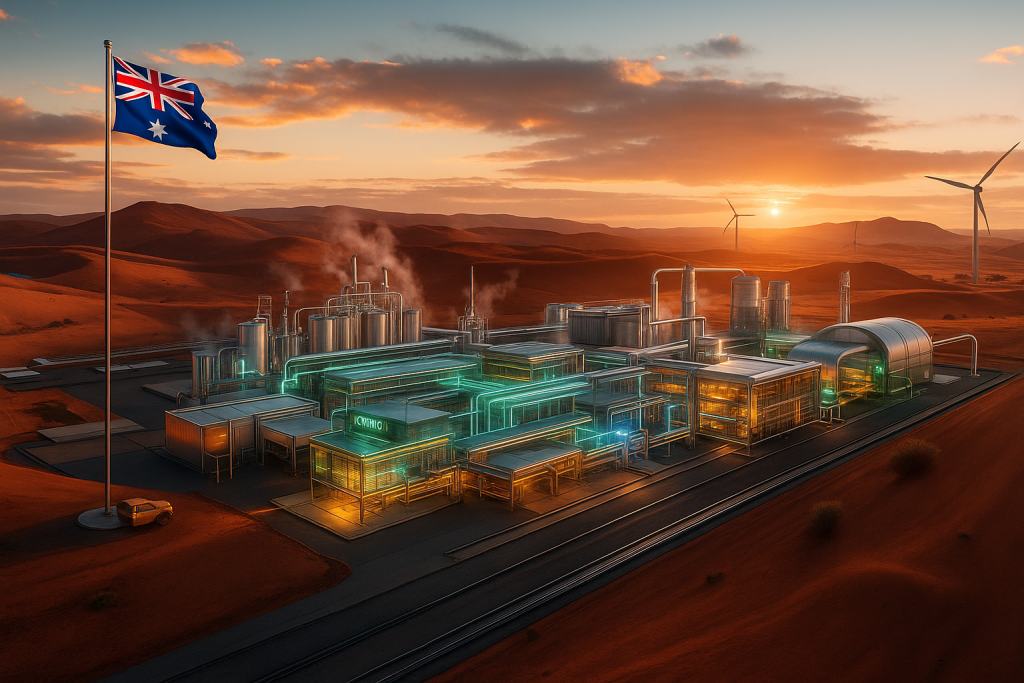
The Fortescue Christmas Creek Green Metal Project in Western Australia’s Pilbara region serves as a commercial demonstration plant integrating hydrogen-DRI technology with ESF smelting.
| Technical Parameter | Specification | Significance |
|---|---|---|
| Annual Capacity | ~1,500 t/y | Pilot-scale demonstration |
| Installation Timeline | Began September 2025 | Under construction |
| First Production | Targeted 2026 | Not yet operational |
| Ore Compatibility | Low-to-medium Pilbara grades | Expanded utilisation |
| Energy Source | 100% renewable hydrogen | Zero-carbon pathway |
| Development Status | Ongoing commercial-scale studies | Future scaling basis |
Dino Otranto, CEO of Metals and Operations at Fortescue, describes the initiative as a critical step toward demonstrating low-emission steelmaking pathways via integrated hydrogen and electric smelting technologies.
Economic & Market Context
Hydrogen-DRI-ESF systems have the potential to reshape ore-reserve utilisation by enabling processing of ore grades previously considered unsuitable for traditional DRI steelmaking. Renewables-based hydrogen also offers a long-term decarbonisation pathway as generation costs continue to decline.
While economic modelling remains under evaluation, Fortescue has not released operational expenditure figures or energy-per-tonne metrics for the Christmas Creek demonstration plant.
Strategic Positioning in the Pilbara
The Pilbara offers strategic advantages for green-iron demonstration:
- Proximity to vast iron ore resources
- Existing mining infrastructure
- High solar irradiance suitable for renewable hydrogen production
- Operational capability within Fortescue’s established mining network
Ore Grade Compatibility Implications
Traditional DRI processes typically require high-grade iron ore with low gangue content to achieve economic viability. However, the CircoredTM-ESF combination specifically addresses this constraint by accommodating ore grades previously considered unsuitable for direct reduction applications.
This capability has significant implications for resource utilisation:
• Reserve Extension: Lower-grade ore bodies become economically viable
• Mining Efficiency: Reduced selective mining requirements increase overall extraction rates
• Capital Optimisation: Existing infrastructure accommodates expanded production without major modifications
• Geological Flexibility: Variable ore grades can be processed through the same system
Steel Industry Decarbonisation Impact
Global Market Dynamics
The green metal production pathway addresses fundamental steel industry challenges related to carbon emissions and regulatory compliance. Traditional blast furnace operations account for approximately 70% of steelmaking carbon emissions globally, creating substantial market opportunities for zero-emission alternatives.
Market Drivers:
• Regulatory Pressure: Carbon pricing mechanisms and emissions trading systems increase costs for high-carbon steel production
• Corporate ESG Commitments: Major steel consumers increasingly specify low-carbon steel requirements
• Trade Policy Evolution: Border carbon adjustments favour low-emission steel products in international markets
• Technology Maturation: Pilot-scale demonstrations reduce technology risks for commercial deployment
Competitive Differentiation Strategy
Green metal production creates several competitive advantages for Australian iron ore exporters, particularly as mining industry evolution accelerates:
“Premium Product Positioning: Green metal products may attract differentiated interest from downstream steelmakers as they pursue emissions reduction commitments.”
Supply Chain Integration: Direct reduced iron products enable steelmakers to bypass traditional blast furnace operations entirely.
Quality Specifications: High metallisation DRI from hydrogen reduction meets stringent quality requirements for electric arc furnace operations.
Regulatory Compliance: Zero-carbon production pathway addresses increasingly stringent environmental regulations in major steel markets.
Technology Scaling and Commercial Development
Commercial-Scale Facility Planning
Studies are currently underway to develop commercial-scale facilities based on the Christmas Creek pilot project results. Furthermore, this scaling process involves several critical considerations:
Hydrogen Infrastructure: Large-scale operations require substantial renewable energy capacity and hydrogen production infrastructure.
Process Optimisation: Pilot-scale learnings inform design modifications for commercial efficiency.
Market Development: Customer agreements and supply contracts support investment decisions for scaled facilities.
Regulatory Approvals: Environmental and operational permits for larger facilities require comprehensive assessment processes.
Industry Transformation Potential
The successful demonstration of integrated hydrogen-DRI-electric smelting technology has implications extending beyond individual project economics. Moreover, this aligns with broader electrification & decarbonisation trends across mining operations:
Technology Transfer: Proven systems can be replicated across multiple mining operations and geographical regions.
Supply Chain Restructuring: Green metal production enables new trade relationships and market structures.
Investment Attraction: Demonstrated commercial viability attracts capital for additional projects and technology development.
Skills Development: Operational experience builds workforce capabilities for emerging metallurgical processes.
The next major ASX story will hit our subscribers first
Technical Innovation and Process Advantages
Process Engineering Advantages
The elimination of pelletisation requirements represents a significant technological advancement for iron ore processing. Traditional direct reduction processes necessitate pelletisation to achieve appropriate physical and chemical characteristics for reduction reactions.
Operational Benefits:
- Eliminates pelletisation as a processing step
- Simplifies process flows and reduces equipment complexity
- Improves material handling through fine-ore processing
- Enhances consistency and control over final product specifications
Metallurgical Quality Considerations
The DRI produced through hydrogen reduction exhibits specific metallurgical characteristics beneficial for downstream steel production:
High Metallisation Rates: Hydrogen-based reduction achieves superior iron recovery compared to traditional processes.
Reduced Impurities: Clean reduction chemistry minimises contamination from carbon-bearing reductants.
Consistent Quality: Controlled processing conditions enable precise quality specifications.
Electric Furnace Compatibility: DRI characteristics optimised for electric arc furnace operations.
What Are the Key Risk Factors in Implementation?
Technical Risk Factors
While hydrogen-based direct reduction demonstrates significant advantages, several technical challenges require ongoing management:
Hydrogen Supply Reliability: Consistent green hydrogen production requires substantial renewable energy capacity and storage systems.
Process Integration Complexity: Coordinating multiple advanced technologies increases operational complexity compared to conventional processes.
Equipment Reliability: New technology deployment involves performance uncertainties until operational experience accumulates.
Quality Consistency: Maintaining product specifications across variable operating conditions requires sophisticated process control.
Market and Commercial Risks
Commercial success depends on several external factors beyond direct technical control. Consequently, these factors must be carefully monitored:
Green Hydrogen Costs: Production economics depend on continued renewable energy cost declines and hydrogen infrastructure development.
Steel Market Acceptance: Customer adoption requires demonstration of consistent quality and supply reliability.
Regulatory Evolution: Carbon pricing and environmental regulations influence competitive positioning relative to conventional steel production.
Competition from Alternatives: Other decarbonisation technologies may compete for market share in sustainable steel production.
Investment Analysis and Financial Projections
Capital Investment Framework
The integrated hydrogen-DRI-electric smelting approach requires substantial upfront capital investment but offers several economic advantages over conventional iron ore processing:
Infrastructure Leveraging: Utilisation of existing mining operations reduces greenfield development costs.
Technology Integration: Combined systems achieve operational synergies not available through independent deployment.
Scale Economics: Commercial-scale development significantly improves per-tonne production costs.
Product Positioning: Green metal products may attract interest from steelmakers seeking low-emission feedstocks.
Market Penetration Strategy
Successful commercialisation requires systematic market development through multiple channels:
• Customer Partnership Development: Direct relationships with environmentally-conscious steelmakers
• Supply Agreement Negotiation: Long-term contracts provide investment certainty and revenue visibility
• Quality Certification Programs: Independent verification of green metal specifications and carbon footprint
• Market Education: Demonstrating value proposition to steel industry stakeholders
Future Outlook and Industry Implications
The Christmas Creek Green Metal Project strengthens Australia’s position in the global transition toward sustainable steel production. As a demonstration facility under construction, it provides critical insights for future commercial-scale development.
Its integration of hydrogen-DRI and electric smelting technologies offers a foundation for broader replication across mining regions as the sector continues its decarbonisation trajectory.
Disclaimer: This analysis is based on publicly available information and industry reports. Actual project performance, timelines, and financial outcomes may vary significantly from projections. Readers should conduct independent research and consult with qualified professionals before making investment decisions related to green metal production technologies or associated companies.
The successful implementation of the Fortescue Christmas Creek Green Metal Project represents a fundamental shift in metallurgical processing, combining renewable energy systems with advanced direct reduction chemistry to create zero-carbon steelmaking pathways. As global steel markets increasingly prioritise emissions reduction, these technologies position Australian mining operations at the forefront of industry transformation.
Ready to Capitalise on Green Metal Investment Opportunities?
Discovery Alert’s proprietary Discovery IQ model delivers real-time alerts on significant mining and metals discoveries across the ASX, instantly empowering subscribers to identify actionable opportunities in the rapidly evolving green technology sector. Begin your 30-day free trial today and secure your market-leading advantage as Australia’s mining industry transforms through revolutionary technologies like hydrogen-based metallurgy.