August 7, 2026
The Quiet Return of Appalachian Resource Capital
For most of the past decade, large-scale capital commitments to Appalachian energy assets were treated as relics of an earlier era. The dominant narrative centred on shale's displacement of conventional coal, the accelerating build-out of renewable generation, and the steady withdrawal of institutional money from legacy fossil fuel positions. Yet beneath that surface narrative, something more nuanced was developing: a reassessment of what integrated, multi-commodity domestic resource positions are actually worth when electricity demand begins to structurally outpace supply.
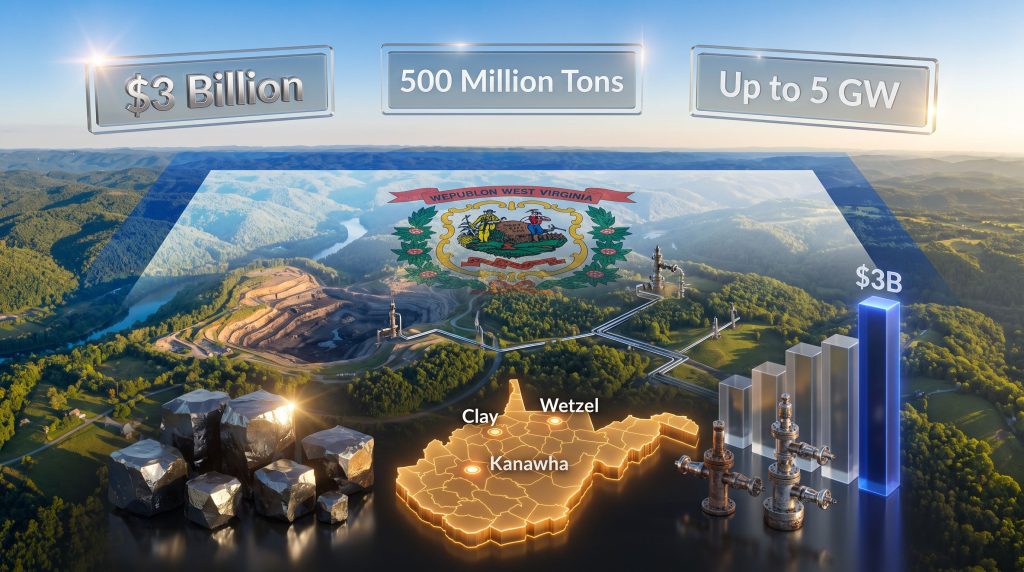
The Guess & Co. West Virginia energy asset acquisition crystallises that reassessment in a single, headline-scale transaction. At $3 billion, it represents one of the most significant domestic onshore resource commitments seen in Appalachia in recent memory, and its structure tells a more complex story than any single-commodity deal could.
When big ASX news breaks, our subscribers know first
Breaking Down the Guess & Co. West Virginia Energy Asset Acquisition
What the Transaction Actually Encompasses
The scale of this deal only becomes meaningful when examined through the lens of what was actually purchased. This is not a straightforward coal acquisition, nor a conventional upstream oil and gas transaction. The Guess & Co. West Virginia energy asset acquisition bundles four distinct asset classes into a single platform, a structural approach that is genuinely uncommon in today's deal environment.
| Asset Category | Reported Figures |
|---|---|
| Total Mineral and Coal Acreage | ~7,300 aggregate acres |
| Surface Estate | ~164 acres |
| Recoverable Coal Reserves | ~500 million tons (estimated) |
| Oil and Gas Wells | 40 wells |
| Counties Covered | Clay, Kanawha, Wetzel (WV) |
| Long-Term Power Generation Potential | Up to 5 GW |
| Transaction Value | $3 billion |
The separation between mineral interests and surface estate is worth unpacking. In Appalachian mineral ownership, the severed estate structure is historically common: a party can hold subsurface mineral rights across thousands of acres while the surface is owned separately, often by private landowners or timber companies. Guess & Co.'s acquisition of approximately 164 acres of surface estate alongside ~7,300 aggregate acres of mineral and coal interests reflects this regional ownership reality, and it has direct implications for how future development rights are exercised and what operational approvals are required.
The 40 oil and gas wells included in the package provide something the coal reserve position alone cannot: near-term production optionality. While coal reserves require significant capital mobilisation before generating cash flow, existing wellbores — depending on their production status — could offer more immediate revenue contribution while the longer-duration development strategy takes shape.
Per-Ton Acquisition Economics
One of the most analytically useful ways to contextualise this transaction is through a simple reserve arithmetic exercise. A $3 billion transaction anchored by an estimated 500 million tons of recoverable coal reserves implies an acquisition cost of approximately $6 per recoverable ton before attributing any value to the hydrocarbon assets, surface rights, or power generation optionality.
Whether that figure represents a premium or a discount relative to comparable Appalachian coal M&A transactions depends heavily on reserve quality, seam characteristics, and the proximity of those reserves to processing and transport infrastructure. Appalachian coal is not a monolithic commodity: Central Appalachian metallurgical grades command substantially different pricing than Northern Appalachian thermal coal, and the reserve classification methodology applied to the 500-million-ton figure will matter considerably to any independent valuation assessment.
Investors and analysts should treat forward-looking statements and reserve estimates as subject to material revision pending independent technical review.
Why West Virginia, and Why Now?
The Structural Case for Appalachian Resource Positioning
West Virginia sits at the intersection of several converging trends that are quietly reshaping how domestic energy assets are valued. The state has been a cornerstone of U.S. energy production for well over a century, with its geology offering coal seams, natural gas formations, and oil-bearing structures within relatively compact geographic footprints. That multi-commodity density is genuinely difficult to replicate in other domestic energy-producing regions.
Furthermore, the coal supply challenges emerging across the broader market have reinforced the strategic logic of securing integrated resource positions rather than relying on spot commodity access. The three counties targeted by the acquisition each contribute distinct strategic value:
-
Clay County sits in central West Virginia and is characterised by Appalachian plateau geology that has historically supported coal extraction from multiple seams within the Kanawha Formation.
-
Kanawha County is the state's most populous and industrially significant county, providing proximity to processing infrastructure, rail corridors, and the Kanawha River, which has historically served as a critical barge transport route for bulk commodities including coal.
-
Wetzel County in northern West Virginia lies within the Marcellus and Utica shale fairway, giving the asset package exposure to some of the most prolific natural gas geology in North America.
This geographic spread across central and northern West Virginia is not incidental. It positions Guess & Co. across multiple geological formations simultaneously, hedging against concentration risk that would exist in a single-county, single-commodity holding.
The Electricity Demand Catalyst That Changes the Valuation Calculus
The conventional framework for valuing Appalachian coal assets treated them primarily as commodity plays, where price realisations at the mine mouth or export terminal determined economic viability. That framework is being disrupted by a structural shift in electricity demand that has accelerated considerably since 2023.
Data centre construction, AI compute infrastructure, semiconductor manufacturing expansion, and industrial reshoring are collectively adding load to the U.S. grid at a pace that transmission planners and grid operators had not fully anticipated. PJM Interconnection, the regional transmission organisation that manages the grid across West Virginia and thirteen other states plus the District of Columbia, has publicly noted that load growth projections within its footprint have increased substantially, with retirements of dispatchable generation creating a capacity adequacy challenge that intermittent renewables alone cannot resolve.
Within that context, 500 million tons of recoverable coal reserves located within the PJM footprint, coupled with existing oil and gas production infrastructure, takes on a different character than it would have in a market defined primarily by commodity export economics. In addition, the broader shifts in natural gas price trends have further complicated the commodity outlook, making multi-asset positioning increasingly attractive to well-capitalised acquirers.
The Power Generation Ambition: FERC Authority and PJM Engagement
What Market-Based Rate Authority Actually Means
Guess & Co.'s receipt of market-based rate authority (MBRA) from the Federal Energy Regulatory Commission through its subsidiary, Guess & Co. Power Inc., is a regulatory milestone that often goes underappreciated by generalist investors. MBRA is the mechanism by which FERC determines that a seller lacks the ability to exercise horizontal or vertical market power in the relevant wholesale electricity market, and therefore permits that seller to transact at negotiated market prices rather than cost-of-service rates.
For a company at the resource development stage, holding MBRA before any generation capacity is constructed signals deliberate regulatory sequencing. It means the company is building its wholesale market participation framework in advance of physical infrastructure, which is the appropriate order of operations for entities intending to sell electricity into organised capacity and energy markets.
Navigating PJM's Interconnection Queue
PJM's interconnection queue has become one of the most closely watched constraints on new generation development in the eastern United States. As of recent reporting periods, thousands of megawatts of proposed generation capacity have been in various stages of the interconnection study process, with study timelines and interconnection cost estimates presenting material development risk for project sponsors.
For Guess & Co. to realise its stated potential of up to 5 GW of long-term power generation capacity, interconnection timing will be one of the most consequential gating factors. A 5 GW development programme, if phased across multiple sites and fuel types, could engage PJM's queue across several project clusters, with each requiring independent feasibility, system impact, and facility studies before interconnection agreements can be executed.
The 5 GW figure represents a long-term development ambition as characterised by the company and should not be interpreted as a near-term construction commitment or a guaranteed outcome. Actual capacity development will be subject to regulatory approvals, capital availability, market conditions, and interconnection outcomes.
Regulatory Dimensions and Development Pathways
Federal Oversight Framework
Multi-commodity Appalachian resource positions of this scale intersect with a wide array of federal regulatory bodies:
-
FERC governs wholesale electricity market participation and any interstate natural gas infrastructure.
-
The Mine Safety and Health Administration (MSHA) exercises jurisdiction over coal mining operations, including safety plans and permitting.
-
The Office of Surface Mining Reclamation and Enforcement (OSMRE) administers the Surface Mining Control and Reclamation Act, which governs the environmental standards applicable to coal extraction and post-mining land reclamation.
-
The Environmental Protection Agency maintains authority over water quality, air emissions, and waste disposal associated with both coal and hydrocarbon operations.
The company has indicated its intention to engage with state and federal agencies as it advances potential development projects, which suggests a phased approach to permitting rather than a single consolidated authorisation strategy. Understanding mining permitting basics is therefore essential context for appreciating the complexity involved in advancing a project of this scale.
West Virginia's State-Level Regulatory Environment
West Virginia's permitting framework for coal and oil and gas development has historically been regarded as more operationally accommodating than some neighbouring Appalachian jurisdictions. The West Virginia Department of Environmental Protection (WVDEP) administers state-level mining and drilling permits, while the West Virginia Public Service Commission has jurisdiction over certain utility-related activities.
For a company simultaneously developing coal, hydrocarbon, and power generation assets within the same state, the ability to engage a single state-level regulatory apparatus across multiple asset classes is a meaningful operational efficiency compared to a multi-state development programme. However, the recent changes to US mining permits at the federal level add another dimension that developers must navigate carefully. Furthermore, post-extraction obligations — particularly around mine reclamation — represent a growing area of regulatory focus that any responsible operator must factor into long-term cost planning.
Benchmarking the Transaction Against the Broader Market
How Does This Deal Compare?
| Transaction Dimension | Guess & Co. WV Acquisition | Typical Appalachian Coal M&A | Appalachian Gas Upstream Deals |
|---|---|---|---|
| Deal Value | $3 billion | $100M to $800M range | $500M to $5B+ |
| Reserve Scale | 500M tons coal + 40 O&G wells | 50M to 300M tons | Measured in Bcf/Tcf |
| Acreage | ~7,300 mineral acres | Variable | Tens of thousands of acres |
| Power Generation Angle | Up to 5 GW stated | Rare | Occasionally linked to gas-to-power |
| FERC Market-Based Rate Authority | Obtained via Power Inc. subsidiary | Uncommon in coal deals | More common for midstream players |
The combination of coal reserves, working hydrocarbon interests, and a pre-established wholesale electricity market participation framework within a single transaction structure is genuinely atypical by historical Appalachian M&A standards. Most transactions in the region have been commodity-specific: coal buyers acquiring coal, upstream operators acquiring wellbores and acreage, and power developers working from existing reserve positions that others assembled.
The Guess & Co. structure compresses those sequential steps, treating resource acquisition and power market preparation as simultaneous rather than consecutive activities.
The next major ASX story will hit our subscribers first
ESG, Legacy Infrastructure, and the Evolving Disclosure Landscape
Managing Legacy Oil and Gas Infrastructure
The 40 oil and gas wells included in this acquisition carry environmental obligations that go beyond production economics. West Virginia, like many Appalachian states, has a significant inventory of older oil and gas wells, some of which predate modern plugging and abandonment regulatory standards. Buyers of legacy wellbore assets in the region must account for potential remediation obligations as part of their acquisition due diligence, particularly in relation to methane emissions disclosure requirements that have tightened considerably at the federal level in recent years.
Coal in the Context of Evolving Emissions Policy
Acquiring 500 million tons of recoverable coal reserves in 2026 requires a clear-eyed view of the emissions policy landscape. Federal rules governing power plant air emissions continue to evolve, and any coal-to-power development strategy must account for the capital cost of emissions controls, the potential applicability of carbon capture provisions, and the long-term trajectory of carbon pricing mechanisms that remain under active policy debate.
Companies developing integrated coal and power positions are increasingly expected to articulate how those assets fit within a credible long-term emissions management framework, regardless of whether mandatory disclosure requirements apply at the time of acquisition. For independent analysis of the regulatory environment surrounding major energy transactions, resources such as S&P Global Commodity Insights provide useful benchmarking data.
Frequently Asked Questions: Guess & Co. West Virginia Acquisition
What did Guess & Co. acquire in West Virginia?
The acquisition covers approximately 7,300 aggregate acres of coal, oil, natural gas and mineral interests across Clay, Kanawha, and Wetzel counties, along with roughly 164 acres of surface estate, an estimated 500 million tons of recoverable coal reserves, and 40 oil and gas wells, for a total transaction value of $3 billion.
How much did Guess & Co. pay for the West Virginia energy assets?
The total transaction value is $3 billion, encompassing the full bundle of coal reserves, mineral interests, hydrocarbon wells, and surface estate across three West Virginia counties. No public breakdown of value attribution across individual asset classes has been disclosed.
What counties in West Virginia are included in the acquisition?
The assets span Clay, Kanawha, and Wetzel counties. Clay and Kanawha counties contribute primarily to the coal and conventional hydrocarbon position, while Wetzel County's location in northern West Virginia adds exposure to the Marcellus and Utica shale formations.
What is the power generation potential of the acquired assets?
The company has characterised the acquired asset base as capable of supporting up to 5 GW of long-term power generation capacity. This figure represents a development ambition rather than a committed project pipeline, and its realisation depends on interconnection outcomes, capital deployment, and regulatory approvals.
What is FERC market-based rate authority and why does it matter here?
Market-based rate authority is a FERC determination that permits an electricity seller to transact at negotiated wholesale market prices rather than regulated cost-of-service rates. Obtaining MBRA ahead of any physical generation development indicates that Guess & Co. is structuring its regulatory position in advance of infrastructure construction, which is strategically significant for wholesale market participation.
What is PJM and how does it relate to this West Virginia acquisition?
PJM Interconnection is the regional transmission organisation responsible for grid management across West Virginia and thirteen other states plus the District of Columbia. It administers the wholesale capacity and energy markets through which any power generated from Guess & Co.'s assets would ultimately be sold. PJM interconnection approval is a prerequisite for connecting new generation capacity to the regional grid. Detailed technical reporting on PJM capacity developments is available through PJM Interconnection's official resource centre.
Key Indicators to Watch as This Platform Develops
The Guess & Co. West Virginia energy asset acquisition establishes a resource foundation. What determines whether that foundation becomes a functioning energy platform will be revealed through a series of observable downstream milestones:
-
FERC filings from Guess & Co. Power Inc. related to interconnection applications or market participation notifications.
-
PJM queue entries and any announced study agreements tied to specific generation development sites within the acquired acreage.
-
State-level permit applications filed with WVDEP across Clay, Kanawha, and Wetzel counties for mining or drilling activities.
-
Capital structure announcements, including any project financing arrangements, infrastructure fund partnerships, or utility offtake agreements tied to the asset base.
-
Independent reserve certification or technical audit reports that would support or revise the 500-million-ton recoverable reserve estimate.
-
Any follow-on acquisitions in adjacent counties that would indicate a broader Appalachian consolidation strategy.
The transaction is significant not only for what it assembles today, but for what its structure implies about how Guess & Co. intends to sequence development across a multi-decade resource position in one of the United States' historically most productive energy-producing regions.
This article is intended for informational purposes only and does not constitute financial or investment advice. Reserve estimates, development timelines, and power generation figures referenced herein are based on company statements and should be independently verified. All forward-looking projections are subject to material uncertainty.
Want to Stay Ahead of Major Resource Discoveries as They Happen?
Discovery Alert's proprietary Discovery IQ model delivers real-time alerts on significant ASX mineral discoveries, transforming complex resource data into actionable investment insights — explore the historic returns major mineral discoveries have generated and begin your 14-day free trial at Discovery Alert to position yourself ahead of the broader market.