June 5, 2026
The manufacturing sector increasingly demands ultra-pure materials to support technological advancement, with high purity alumina emerging as a critical component across multiple high-technology applications. As industries embrace digital transformation and pursue enhanced performance standards, furthermore, the distinction between standard materials and their high-purity variants becomes paramount for product reliability and innovation potential.
Understanding the Technical Specifications That Drive Global Manufacturing Innovation
Industrial manufacturing has reached a critical threshold where material purity directly impacts technological advancement. In sectors demanding ultra-precise performance characteristics, the distinction between standard materials and their high-purity variants determines product reliability, efficiency, and innovation potential. This paradigm shift has elevated high purity alumina from a specialised chemical to a cornerstone material supporting the digital transformation of global industries.
Purity Classifications and Their Industrial Significance
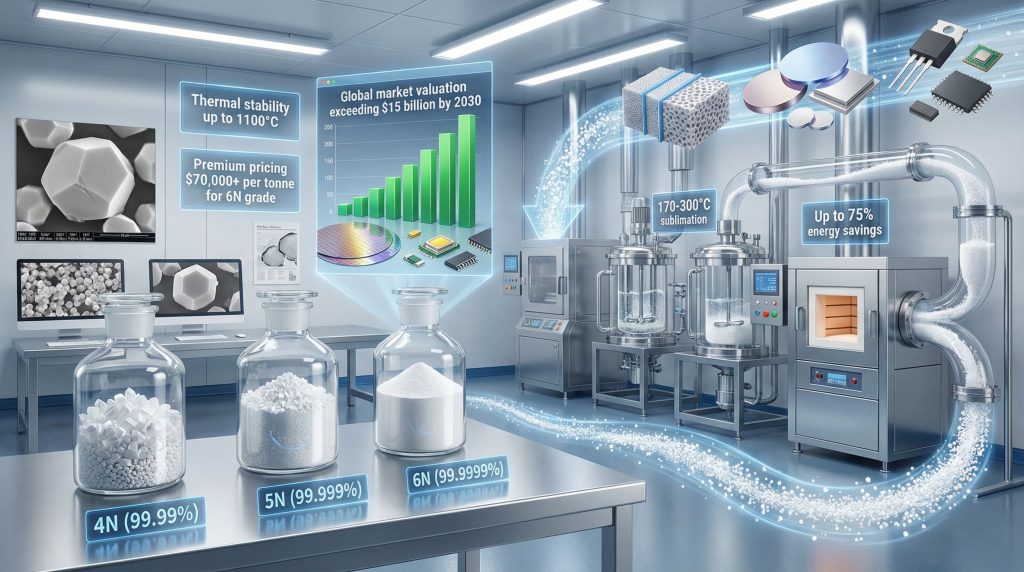
High purity alumina operates within strictly defined purity classifications that determine its suitability for advanced applications. The industry recognises three primary grades: 4N (99.99%), 5N (99.999%), and 6N (99.9999%) purity levels, each commanding distinct pricing structures and serving specific technological requirements.
These classifications represent more than numerical specifications. Each purity level corresponds to specific trace impurity thresholds that directly influence electrical and thermal performance characteristics. Higher purity grades command premium pricing, with 6N material reaching over $70,000 per tonne, reflecting the complex processing requirements and specialised applications these materials serve.
Quality control parameters vary significantly across end-use applications, with semiconductor manufacturing requiring the most stringent specifications. The presence of even minute trace elements can compromise electrical insulation capabilities or introduce thermal instabilities that affect component performance under extreme operating conditions.
Physical and Chemical Properties That Drive Demand
The exceptional properties of high purity alumina stem from its crystalline structure and minimal contamination levels. Its dielectric strength provides superior electrical insulation capabilities essential for high-voltage electronic systems, while thermal stability characteristics enable operation under extreme temperature variations without structural degradation.
Hardness characteristics and corrosion resistance profiles make high purity alumina indispensable for applications requiring long-term durability under aggressive environmental conditions. These properties become particularly critical in aerospace applications, nuclear industry components, and biomedical ceramics where material failure carries significant consequences.
The combination of electrical insulation, thermal management, and mechanical durability creates a unique materials profile that standard alumina cannot replicate. Consequently, this drives demand across multiple high-technology sectors whilst supporting industry evolution trends.
When big ASX news breaks, our subscribers know first
How Industrial Scale Manufacturing Transforms Raw Materials Into Ultra-Pure Products
The transformation from standard alumina to high purity variants requires sophisticated processing technologies that fundamentally differ from conventional Bayer Process operations. Standard alumina achieves 98-99% purity through established industrial methods, whilst high purity alumina demands additional crystallisation stages and continuous quality monitoring to reach 99-99.99% purity levels.
Primary Production Technologies and Process Engineering
Aluminium Alkoxide Hydrolysis Method
This advanced processing approach emphasises controlled crystallisation for achieving uniform particle distribution throughout the final product. Temperature and pressure optimisation becomes critical for α-alumina formation, requiring precise control systems that maintain consistent operating parameters across extended production cycles.
Quality assurance protocols operate continuously throughout production stages, with specialised instrumentation monitoring crystallisation progress and identifying potential contamination sources. The method demands fractional crystallisation equipment capable of isolating highly pure materials whilst maintaining production efficiency.
HCl-Based Processing from Aluminium Chloride
Hydrochloric acid-based processing operates within specific temperature ranges that optimise material transformation whilst minimising contamination risks. Sublimation and crystallisation occur between 170-300°C, followed by calcination stages reaching temperatures up to 1100°C for comprehensive impurity removal.
Contamination control specifically targets iron, silicon, and metallic elements that compromise purity specifications. Advanced filtration systems trace minute contaminant levels throughout processing, ensuring final products meet stringent quality requirements for semiconductor and electronics applications.
Advanced Solvent Extraction Technologies
Revolutionary solvent extraction approaches represent significant technological advancement in aluminium purification methodologies. These processes integrate with existing industrial infrastructure whilst reducing carbon footprint compared to traditional processing methods, supporting sustainability transformation initiatives.
The technology enables production of ultra-pure aluminium suitable for advanced technology sectors including LEDs, semiconductors, and synthetic sapphire manufacturing. Strategic integration with neighbouring industrial operations creates closed-loop material flows that enhance efficiency whilst reducing environmental impacts.
Sustainable Manufacturing Innovations
Clay-Based Feedstock Processing
Alternative feedstock sources beyond traditional bauxite offer substantial environmental advantages through reduced energy consumption. Clay-based processing achieves energy savings up to 75% compared to conventional methods whilst maintaining product quality specifications.
Environmental impact mitigation strategies include byproduct recycling and integration with local industrial ecosystems. These approaches transform waste streams into valuable feedstock for neighbouring operations, creating sustainable industrial clusters that benefit multiple stakeholders.
Critical Applications Transforming Technology Sectors
The semiconductor revolution has fundamentally altered demand patterns for high purity materials, with widespread digital technology adoption across all economic sectors significantly increasing processing requirements. High purity alumina serves essential functions in thermal management and electrical insulation within semiconductor components, directly correlating with increased consumption of ultra-pure materials.
Semiconductor and Electronics Manufacturing
Wafer Processing and Substrate Applications
Thermal management requirements in semiconductor components demand materials capable of maintaining performance under extreme temperature variations whilst providing consistent electrical insulation. High purity alumina meets these specifications through superior dielectric properties and thermal stability characteristics.
LED substrate manufacturing requires precise quality standards that ensure consistent light output and extended operational life. The material's optical clarity and thermal conductivity properties make it indispensable for high-performance lighting applications across commercial and industrial sectors.
Furthermore, the development of critical raw materials facility investments enhances supply chain security for these essential components.
Advanced Electronic Component Production
Insulating layer applications in microelectronics require materials with predictable performance characteristics under varying electrical loads. High purity alumina provides the stability and reliability necessary for advanced electronic systems operating in critical applications.
Precision polishing compounds for wafer fabrication utilise the material's hardness characteristics to achieve surface finishes meeting semiconductor industry specifications. Quality standards for different electronic grades ensure compatibility across diverse manufacturing processes.
Energy Storage and Battery Technologies
Lithium-Ion Battery Separator Manufacturing
Safety and performance requirements in electric vehicle applications demand separator materials capable of maintaining structural integrity under extreme operating conditions. High purity alumina separators provide thermal stability essential for preventing battery failures that could result in safety hazards.
Automotive-grade separator specifications require materials meeting stringent quality standards for thermal stability, electrical insulation, and mechanical durability. These specifications ensure battery performance consistency across extended operational lifecycles whilst maintaining safety margins.
Renewable Energy System Components
High-temperature applications in solar and wind systems utilise high purity alumina's thermal stability for components operating under extreme environmental conditions. Power electronics require electrical insulation materials capable of maintaining performance reliability across decades of operation.
Durability standards for long-term energy infrastructure emphasise materials capable of withstanding environmental stresses whilst maintaining electrical and thermal performance characteristics essential for grid stability and energy efficiency. However, the adoption of decarbonisation benefits remains crucial for sustainable development.
Advanced Ceramics and Sapphire Production
Synthetic Sapphire Growth Processes
Crystal growth environment requirements demand ultra-pure starting materials to ensure defect-free synthetic sapphire production. Purity specifications for optical applications require contamination levels below detection thresholds that could compromise optical clarity or introduce structural weaknesses.
Quality control in sapphire substrate manufacturing involves continuous monitoring of material purity throughout crystal growth processes. Specialised analytical equipment detects trace contamination that could affect final product performance.
Technical Ceramics for Industrial Applications
Biomedical ceramics and implant manufacturing utilise high purity alumina's biocompatibility and mechanical properties for long-term medical applications. Aerospace component specifications require materials capable of maintaining performance under extreme mechanical and thermal stresses.
Nuclear industry dielectric applications demand materials with predictable performance characteristics under radiation exposure, making high purity alumina essential for safety-critical nuclear facility components.
Regional Production Leadership and Strategic Advantages
Global high purity alumina production concentrates within regions possessing abundant bauxite resources and established alumina refining infrastructure. Countries with integrated supply chains from mining through refining maintain strategic advantages in serving growing demand from transportation, construction, packaging, and defence sectors.
Regional Production Capacity Analysis
| Region | Annual Capacity (Million Tonnes) | Key Facilities | Strategic Advantages |
|---|---|---|---|
| Brazil | 6.5 | Hydro Alunorte | Integrated bauxite supply chain with billion-tonne reserves |
| Australia | 17+ | Worsley (5.3), Alcoa Pinjarra (4.2), QAL (4.0), Rio Tinto Yarwun (3.4) | Geographic proximity to Asian markets with advanced port infrastructure |
| China | 85+ | Distributed facilities including Zhongzhou (3.05) | Domestic market integration with 60-61% global market share |
Australia's Strategic Position in HPA Manufacturing
Australia's tactical geographic distribution across Western Australia and Queensland provides access to major bauxite deposits concentrated in Darling Range and Weipa regions. Well-developed port infrastructure enhances export efficiency to Asian markets, whilst industrial clustering in the Gladstone region strengthens supply chain coordination.
Being an island nation in the Asia-Pacific region, Australia maintains access to vast markets across Southeast Asia, South Korea, and Taiwan. This geographic positioning creates natural export corridors that reduce logistics costs and improve delivery reliability for regional customers.
Industrial clustering benefits include shared logistics networks, concentrated skilled labour pools, and synchronised supply chains. These advantages reduce operational costs whilst improving coordination between related manufacturing operations.
Brazil's Integrated Production Model
Operating since 1995, Hydro Alunorte represents the world's largest single-site alumina refinery with capacity of 6.3 million tonnes annually. The facility processes bauxite from Paragominas mine containing approximately 1 billion tonnes of reserves, ensuring long-term feedstock security.
Environmental compliance frameworks operate under supervision from the Brazilian Institute of Environment and Renewable Natural Resources (IBAMA) and the National Department of Mineral Production (DNMP). These regulatory structures ensure large-scale industrial operations maintain environmental standards whilst supporting economic development.
Scale advantages in single-site operations include operational efficiency improvements, reduced transportation costs, and simplified supply chain coordination. These benefits enhance competitiveness in global markets whilst supporting economic development.
China's Domestic Capacity Expansion
China's dominance in global alumina refining, controlling 60-61% of global output with annual production exceeding 85 million tonnes, reflects strategic mineral security initiatives. Government prioritisation of domestic alumina refining capacity expansion enhances strategic mineral security through guaranteed supply chain control.
Production structure differs fundamentally from Brazilian and Australian mega-refineries, with typical single unit production around 3 million tonnes annually. This distributed approach provides flexibility and reduces concentration risks whilst supporting regional economic development across multiple provinces.
Integration with downstream manufacturing sectors creates vertical supply chains that reduce costs and improve coordination. In addition, this integration supports data-driven operations across the entire value chain.
Emerging Production Technologies and Market Players
Innovation in HPA Processing Methods
Breakthrough technologies focus on reducing production costs whilst improving quality in ultra-high purity grades. Automation and process control advancements enable consistent quality production with reduced manual intervention and improved monitoring capabilities.
The commercialisation of solvent extraction technology for aluminium purification represents significant technological advancement. This technology enables ultra-pure aluminium production with reduced carbon footprint compared to traditional methods.
Strong industrial integration through sourcing key inputs locally and returning byproducts as feedstock to neighbouring industries creates sustainable industrial ecosystems. These systems benefit multiple stakeholders whilst reducing environmental impacts.
Economic Forces Reshaping the HPA Market Landscape
Market dynamics for high purity alumina reflect broader technological transformation trends accelerating across global industries. Artificial intelligence advancement, high-performance computing expansion, and semiconductor usage proliferation indicate the emerging dominant role of ultra-pure materials in modern technology infrastructure.
Market Valuation and Growth Projections
Current Market Size and Value Drivers
The global alumina market achieved valuation exceeding $50 billion in 2024, with projections indicating growth to $85 billion by 2033. For specialised high purity alumina segments, market value projections reach $15 billion by 2030-2035, reflecting premium pricing for ultra-high purity applications.
Premium pricing structures reflect processing complexity and application criticality, with 6N purity material commanding prices exceeding $70,000 per tonne. Cost structures vary significantly across production methods, with advanced processing technologies justifying premium pricing through superior performance characteristics.
Demand Growth Catalysts
Semiconductor industry expansion serves as the primary demand driver, with projected semiconductor demand in 2030 expected to rise 52% with 8.2% annual growth rates. Electric vehicle market growth creates new application areas requiring high-performance materials for battery systems and power electronics.
Countries expanding domestic semiconductor ecosystems, particularly in Asia, drive regional demand growth. This geographic diversification of semiconductor manufacturing creates distributed demand patterns that benefit multiple producing regions.
Investment Landscape and Funding Trends
Government Support and Strategic Investments
National reconstruction fund allocations support advanced manufacturing development through strategic investment programmes. Government commitment includes $75 million investment through reconstruction funds, encouraging strategic approaches toward accelerating private investment in advanced manufacturing.
Private investment confidence reflects government backing and long-term demand projections, with companies accepting ongoing revenue commitments based on projected market growth. Furthermore, these investments span multiple application sectors across diverse industries.
Risk assessment frameworks address evolving market demand patterns whilst supporting technology development and capacity expansion initiatives.
Supply Chain Security Considerations
Strategic mineral classification reflects national security considerations surrounding critical material supply chains. Domestic production capacity development initiatives reduce import dependence whilst supporting industrial competitiveness across technology sectors.
International trade dynamics influence supply diversification strategies, with countries seeking balanced supply sources to reduce concentration risks. These strategies ensure consistent material availability during geopolitical uncertainty periods.
Technological Advances Driving Future Demand Scenarios
Accelerating advancement in artificial intelligence, high-performance computing, and semiconductor usage across modern technologies indicates expanding demand for ultra-pure materials supporting digital transformation initiatives. Regional expansion of semiconductor ecosystems creates distributed demand patterns requiring responsive supply chain capabilities.
Semiconductor Industry Evolution
AI and High-Performance Computing Requirements
Processing power demands for artificial intelligence applications require materials capable of supporting advanced semiconductor architectures operating under extreme performance conditions. Thermal management challenges in next-generation semiconductors demand materials with superior heat dissipation capabilities.
Quality requirements for advanced electronic devices continue escalating as computing power increases and component miniaturisation advances. These trends drive demand for ultra-pure materials meeting increasingly stringent contamination and performance specifications.
Regional Semiconductor Ecosystem Development
Domestic manufacturing capacity expansion across multiple regions reduces concentration risks whilst creating distributed demand patterns. Technology transfer and localisation strategies require material suppliers capable of supporting diverse manufacturing requirements across different markets.
Supply chain resilience building initiatives emphasise domestic capability development and supplier diversification. These efforts reduce import dependence during geopolitical uncertainty periods.
Future Applications and Market Opportunities
Emerging Technology Applications
Advanced battery technologies beyond lithium-ion systems require materials supporting next-generation energy storage performance requirements. Quantum computing material specifications demand ultra-pure substrates with minimal contamination levels that could compromise quantum state stability.
Space technology and aerospace applications utilise high purity alumina's exceptional properties for components operating under extreme environmental conditions. These conditions include radiation exposure, temperature variations, and mechanical stresses.
For instance, the development of specialised high-purity alumina products supports these demanding aerospace applications.
Market Growth Projections and Investment Opportunities
Overall high purity alumina market growth projections suggest 16-20% annual growth through 2030-2035, driven by expanding demand for LED lighting, lithium-ion battery separators, and semiconductor materials. Market value projections reaching $15 billion reflect continued technological advancement across multiple application sectors.
Geographic expansion of production capabilities follows regional demand growth patterns, with investment opportunities focusing on integrated supply chain development and advanced processing technology implementation.
The next major ASX story will hit our subscribers first
Quality Standards and Testing Protocols Ensuring Material Excellence
Material excellence in high purity alumina requires comprehensive quality management systems addressing purity verification, physical property characterisation, and performance validation across diverse application requirements. Testing protocols ensure consistent product quality whilst supporting continuous improvement initiatives.
Technical Specifications and Performance Metrics
Purity Testing and Contamination Analysis
Analytical methods for trace element detection utilise advanced instrumentation capable of identifying contamination levels below parts-per-million thresholds. Quality assurance protocols operate continuously throughout production processes, with real-time monitoring systems detecting deviations from specification requirements.
Certification standards vary across application sectors, with semiconductor manufacturing requiring the most stringent contamination controls and electrical performance validation. Testing frequency and acceptance criteria reflect end-use criticality and performance requirements.
Physical Property Testing Requirements
Particle size distribution analysis ensures consistent material handling characteristics and processing compatibility across different manufacturing operations. Surface area and morphology characterisation verify material structure meets application-specific requirements.
Thermal and electrical property validation confirms performance specifications under operating conditions relevant to end-use applications. These measurements provide confidence in material performance across expected operating temperature and electrical load ranges.
Industry Standards and Compliance Frameworks
International Quality Certifications
ISO standards applicable to high purity alumina production provide frameworks for quality management systems ensuring consistent material quality across global supply chains. Industry-specific quality requirements address unique performance needs across semiconductor, ceramics, and energy storage applications.
Regulatory compliance across different markets ensures material acceptance whilst supporting international trade relationships. Standardisation efforts facilitate material specification communication between suppliers and end-users across diverse geographic markets.
Customer Specification Management
Customised product development for specific applications requires close collaboration between material suppliers and end-users to optimise performance characteristics. Technical support and application engineering services ensure proper material selection and processing optimisation.
Long-term supply agreement structures provide supply security whilst supporting investment in specialised production capabilities. These relationships enable technology development partnerships that advance material performance capabilities across emerging applications.
This analysis is based on industry research and market data available as of early 2026. Investment decisions should consider multiple factors including market conditions, regulatory environments, and technological development uncertainties. Future market performance may differ from projections due to changing economic conditions, technological breakthroughs, or shifts in application demand patterns.
Want to Stay Ahead of Industrial Materials Investment Opportunities?
Discovery Alert's proprietary Discovery IQ model delivers real-time alerts on significant ASX mineral discoveries, including critical materials like high purity alumina that power modern technology sectors. Visit Discovery Alert's dedicated discoveries page to explore historic examples of how major mineral discoveries have generated substantial market returns, then begin your 14-day free trial to position yourself ahead of the market as industrial demand for ultra-pure materials continues accelerating.