July 27, 2026
The Infrastructure Gap That Has Kept Gold Pricing Power in the West
For decades, the disconnect between where gold is consumed and where its price is set has been one of the most structurally awkward features of global commodity markets. The bulk of physical demand flows east, yet the reference benchmarks governing trillions of dollars in transactions are anchored in London and New York. This tension has grown more pronounced as Asian economies have expanded, central bank reserve strategies have shifted, and geopolitical fault lines have complicated reliance on Western financial infrastructure. The question confronting market architects in Hong Kong is whether the conditions that made previous solutions fail have genuinely changed, or whether the Hong Kong gold futures comeback represents a fourth attempt at solving the same unsolvable problem.
When big ASX news breaks, our subscribers know first
Why Asia's Share of Gold Demand Makes the Case for Regional Infrastructure
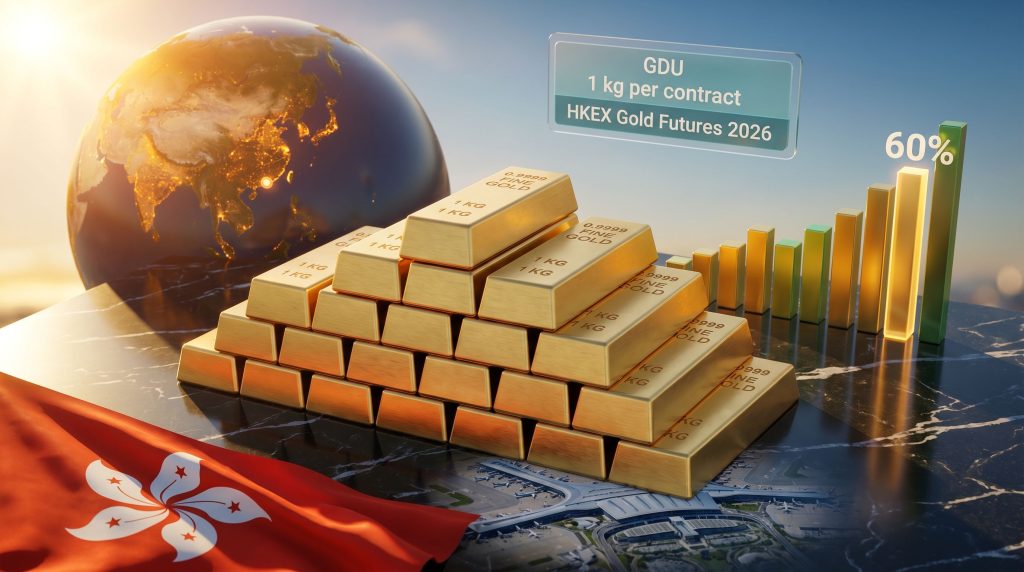
Asia's relationship with gold is structural, not cyclical. Cultural affinity, central bank policy, inflationary hedging, and rising middle-class wealth accumulation across the region have combined to produce a demand base that, according to Hong Kong's Financial Secretary Paul Chan Mo-po speaking at the LME Asia Metals Seminar in May 2026, now represents approximately 60% of total annual global gold demand.
That figure deserves careful attention. It is not a projection or an optimistic forecast. It reflects where physical gold actually flows today, encompassing Chinese consumer demand, Indian jewellery and investment buying, Southeast Asian accumulation, and central bank purchasing across multiple sovereign balance sheets. Yet the price benchmarks used to settle those transactions — the LBMA's spot reference and CME Comex futures — are set in time zones that are asleep when Asian markets are most active.
The implications of this mismatch extend beyond inconvenience:
- Asian buyers and sellers operate with price risk during hours when Western markets are closed
- Hedging requires engagement with foreign-jurisdiction exchanges, introducing cross-border counterparty and regulatory complexity
- Physical delivery mechanisms in London and New York are geographically impractical for most Asian market participants
- Time-zone arbitrage opportunities create inefficiencies that can be exploited by well-capitalised Western trading desks
The logical conclusion — that a market consuming 60% of a commodity should have meaningful infrastructure for pricing and risk management in its own time zone — has been obvious for decades. However, the harder problem has always been execution.
Four Attempts, One Persistent Challenge: Why Hong Kong's Gold Futures History Matters
Understanding the 2026 relaunch requires honestly confronting why three prior attempts did not achieve sustainable liquidity. The table below maps the trajectory:
| Launch Attempt | Era | Outcome |
|---|---|---|
| First Attempt | 1980s | Discontinued due to insufficient participation |
| Second Attempt | Late 1990s / Early 2000s | Discontinued |
| Third Attempt | 2017 | USD and CNY contracts listed; zero turnover for two years prior to 2026 |
| Fourth Attempt | 2026 (forthcoming) | Government-coordinated ecosystem strategy underway |
The 2017 attempt is particularly instructive. HKEX introduced both USD-denominated and CNY-denominated gold futures contracts, offering currency optionality that should theoretically have attracted a broad participant base. According to exchange data cited in reporting by the South China Morning Post in May 2026, neither contract recorded any trading turnover in the two years immediately preceding the 2026 relaunch announcement. Both contracts technically remain listed, but they exist as dormant instruments rather than functioning markets.
The Liquidity Bootstrapping Problem
New futures contracts face a fundamental chicken-and-egg challenge that has defeated many well-designed financial products. Hedgers will not commit to a contract without confidence that they can exit positions efficiently. Speculators will not provide liquidity without hedger flow to trade against. Market makers will not quote competitive spreads without sufficient two-sided activity to manage their inventory risk.
The result is that a new contract can be perfectly specified in every technical respect and still fail to attract the critical mass of participation needed for self-sustaining liquidity. This dynamic is amplified in gold futures, where CME Comex and the London OTC market represent entrenched liquidity pools with decades of established participant relationships.
"Previous Hong Kong gold futures launches were essentially exchange-driven projects asking market participants to build their activity around a new venue. The 2026 relaunch inverts this logic by building the surrounding infrastructure first."
The Ecosystem Architecture: What Is Being Built and Why It Changes the Equation
Robert Lee Wai-wang, a Hong Kong lawmaker and chairman of Grand Finance Group, articulated the critical distinction at the LME Asia Metals Seminar in May 2026. His assessment centred on the shift from an exchange-only initiative to a government-coordinated strategy that constructs supporting infrastructure in parallel with the futures market. The previous approach required market participants to trust that ecosystem development would follow if trading volumes emerged. The 2026 approach, furthermore, reverses this sequence entirely.
Central Clearing: Reducing Counterparty Risk at the Institutional Level
The establishment of a government-affiliated central clearing entity for precious metals is the architectural centrepiece of the new strategy. Central clearing functions as the buyer to every seller and the seller to every buyer, eliminating bilateral counterparty risk that would otherwise deter institutional participation. Trial operations for this clearing infrastructure are scheduled for 2026, according to Financial Secretary Paul Chan Mo-po's remarks at the LME Asia Metals Seminar.
For institutional participants, the existence of a credible clearing house addresses one of the primary objections to engaging with a new market. It standardises margin requirements, establishes transparent default procedures, and creates the kind of operational certainty that compliance departments at banks and fund managers require before allocating capital.
Vault Expansion: Making Physical Delivery a Genuine Proposition
The Hong Kong Airport Authority has set a target of exceeding 2,000 tonnes of gold storage capacity within three years — a figure disclosed by Financial Secretary Chan. This is not a marginal expansion. A 2,000-tonne storage target positions Hong Kong within a tier of physical custody that can credibly support large-scale institutional delivery obligations.
The strategic placement at Hong Kong International Airport is notable. Airport-based vaulting facilitates rapid cross-border movement with customs infrastructure already in place, reducing friction for market participants who need to import, store, and re-export physical metal. This mirrors models used by Singapore Changi Airport's Freeport facility, which has anchored Singapore's emergence as a regional precious metals trading hub.
In addition, Hong Kong's existing base of 15 London Metal Exchange-approved warehouses holding substantial volumes of non-ferrous metals provides a compliance and logistics foundation that can be extended to precious metals. These facilities already operate within internationally recognised custody and reporting standards.
The Physical Gold ETF: Building Retail Depth Alongside Institutional Infrastructure
In April 2026, Hong Kong listed a new gold exchange-traded fund offering physical redemption options. This product serves a distinct purpose in the ecosystem strategy: it creates a retail participation channel that deepens overall market liquidity while reinforcing the physical delivery credentials of the broader infrastructure. A physically-backed ETF with redemption rights requires custodial infrastructure that overlaps directly with the vault expansion, creating operational synergies between the retail and institutional layers of the market.
The tiered participation structure this creates is worth appreciating:
- Retail investors access gold exposure through the ETF without engaging futures markets directly
- Institutional investors use futures contracts for hedging, speculation, and basis trading
- Physical market participants (miners, refiners, importers) use futures for production and procurement hedging
- Arbitrageurs maintain pricing alignment between the ETF, futures, and physical markets
- Central banks and sovereign wealth funds engage at the institutional clearing level
Refinery Development: Completing the Supply Chain
Encouraging qualified bullion dealers to establish or expand domestic refining capacity adds the upstream component to what would otherwise remain a trading and storage hub. A refinery presence transforms Hong Kong from an importer of finished bullion into a node capable of processing raw or semi-refined gold into the standardised forms required for futures delivery. Consequently, this distinction matters for participants seeking to deliver metal against futures contracts without incurring additional transformation costs in third-country facilities.
Contract Design: The Technical Foundation of Market Credibility
While the precise specifications of the relaunched gold futures remain subject to market consultation as of May 2026, HKEX has outlined a USD-denominated contract structure with physical delivery in Hong Kong. The core parameters under discussion include:
| Specification | Detail |
|---|---|
| Contract Denomination | USD |
| Contract Size | 1 kg per contract |
| Gold Fineness Standard | 0.9999 (four nines purity) |
| Settlement Method | Physical delivery in Hong Kong |
| Day Session | 8:30 a.m. to 4:30 p.m. HKT |
| After-Hours Session | 5:15 p.m. to 3:00 a.m. HKT |
The 1 kg contract size is significantly smaller than CME Comex's standard 100-troy-ounce contract (approximately 3.1 kg), a deliberate choice that lowers the capital threshold for participation. This makes the instrument accessible to a broader pool of hedgers and investors, particularly those operating within Asian market conventions where 1 kg bars represent a standard unit of trade.
The trading hours deserve particular attention. The combined day and after-hours sessions provide coverage from early Asian business hours through to the early hours of the following morning in Hong Kong time, which corresponds to late afternoon in London. This creates substantial overlap with both the Asian trading day and the European session, addressing one of the persistent weaknesses of Asia-based contracts.
The Central Bank Dimension: Structural Demand That Justifies the Infrastructure Investment
Any analysis of Hong Kong's gold futures ambitions must account for the demand environment in which the relaunch is occurring. Global central banks have been purchasing gold at historically elevated rates, with the World Gold Council reporting that the first quarter of 2026 saw approximately 244 tonnes of central bank gold purchases. This continues a sustained pattern, with central bank net purchases exceeding 200 tonnes in 10 of the last 11 quarters, according to World Gold Council tracking data.
This sustained institutional demand is not incidental to Hong Kong's strategy. It represents a structural shift in how sovereign institutions are managing reserve portfolios, with diversification away from USD-denominated assets emerging as a clear policy orientation across multiple central banks. Gold, with its absence of counterparty risk and its independence from any single sovereign's monetary policy, has re-emerged as a foundational safe haven reserve asset after decades of declining official sector enthusiasm.
China's Reserve Picture: Official Figures and the Estimation Gap
China's People's Bank of China officially reports gold reserves of approximately 2,300 tonnes, placing it among the world's top official gold holders. However, analysts who incorporate data from domestic mine production, Shanghai Gold Exchange settlement flows, and documented import volumes have long argued that the official figure understates actual Chinese gold holdings.
"The divergence between officially declared reserves and estimated actual holdings reflects China's approach to reserve reporting, which has historically involved delayed or partial disclosure. Some researchers have suggested that state-affiliated accumulation channels beyond the central bank's direct balance sheet account for substantially larger gold positions, though these figures are inherently difficult to verify independently."
This opacity is itself a structural argument for Hong Kong's role: a freely accessible, internationally regulated gold market operating under common law frameworks provides a price discovery mechanism that sits within the broader context of gold's role in the global monetary system, complementing rather than replicating the mainland's Shanghai Gold Exchange.
The next major ASX story will hit our subscribers first
Hong Kong vs. the Field: Positioning Against Established Competitors
| Dimension | Hong Kong | Shanghai (SGE) | London (LBMA/OTC) | CME Comex |
|---|---|---|---|---|
| Primary Currency | USD / Multi-currency | CNY | USD | USD |
| International Access | Open to global participants | Restricted to approved entities | Open (OTC) | Open |
| Legal Framework | Common law | Chinese regulatory framework | English common law | US regulatory framework |
| Physical Infrastructure | Expanding (2,000t target) | Established | Distributed | US-based vaults |
| Clearing System | In development (2026 trial) | Operational | LCH / bilateral OTC | CME Clearing |
| Time Zone | UTC+8 | UTC+8 | UTC+0 | UTC-5 to UTC-4 |
The comparison with Shanghai is nuanced. The Shanghai Gold Exchange is the world's largest physical gold exchange by volume, but its participation is restricted to approved entities and its CNY denomination limits accessibility for international market participants who price risk in USD. Hong Kong's common law framework, free capital flows, and USD denomination, furthermore, create a genuinely complementary rather than competing proposition.
Against London, the argument is about time-zone coverage and physical proximity to demand. London's dominance in OTC gold is entrenched through centuries of market relationships and the LBMA benchmark pricing mechanism. Hong Kong is not positioned to displace this; rather, it aims to serve the risk management needs of Asian participants during hours when London is less active.
Risk Factors That Could Derail the Fourth Attempt
Honest assessment demands acknowledgment of the challenges that remain unresolved:
- Liquidity critical mass: Even with superior infrastructure, market participants may continue directing flow to established venues with tighter spreads and deeper order books
- Geopolitical complexity: US-China tensions create uncertainty for internationally active participants who must navigate compliance obligations in multiple jurisdictions simultaneously
- Regulatory fragmentation: A market bridging Hong Kong's common law framework with mainland Chinese policy priorities must manage the perception that regulatory changes could affect market access
- Competitive entrenchment: CME, LBMA, and SGE all have deeply embedded participant relationships that will not migrate without compelling cost or efficiency advantages
- Clearing system readiness: Trial operations scheduled for 2026 means the clearing infrastructure has not yet demonstrated operational robustness under market stress conditions
What the Hong Kong Gold Futures Relaunch Means for Market Participants
For different categories of market participants, the Hong Kong gold futures comeback presents distinct implications:
For Asian gold producers and refiners: A functioning Hong Kong futures market offers a hedging venue operating in a familiar time zone, under a familiar legal framework, with physical delivery infrastructure that reduces logistical complexity compared to CME or LBMA-based hedging arrangements.
For institutional investors: The combination of USD denomination, common law protections, and central clearing creates a risk management tool that can be integrated into internationally compliant investment frameworks without the regulatory constraints of mainland Chinese market access.
For retail investors: The April 2026 ETF with physical redemption options provides exposure to gold's price performance without requiring direct engagement with futures contracts, while the underlying infrastructure ensures the ETF is backed by auditable physical metal.
For arbitrageurs and market makers: Persistent price differentials between Hong Kong, Shanghai, and London represent profit opportunities for participants capable of operating across multiple venues, and arbitrage activity itself contributes to price alignment and liquidity depth.
Frequently Asked Questions: Hong Kong Gold Futures 2026
When will HKEX officially relaunch gold futures?
As of May 2026, no precise launch date has been confirmed. Acting Secretary Joseph Chan Ho-lim indicated to lawmakers that HKEX planned to relaunch in coming months while seeking market feedback on product design.
What makes the 2026 relaunch different from the 2017 attempt?
The fundamental distinction is the shift from an exchange-led product launch to a government-coordinated ecosystem strategy. The 2026 approach builds central clearing infrastructure, expands physical vault capacity, encourages domestic refinery development, and has explicit support from mainland China for Hong Kong's gold hub ambitions, rather than simply listing contracts and waiting for liquidity to develop organically.
What gold purity standard applies to the proposed contracts?
The proposed contract specifications reference 0.9999 fineness — the four-nines standard representing 99.99% pure gold, which is the highest commercially traded purity grade and aligns with standards used on the Shanghai Gold Exchange.
How does Hong Kong's vault target compare to global benchmarks?
The 2,000-tonne target within three years represents a substantial storage commitment. For context, the Bank of England holds approximately 400,000 gold bars (roughly 5,000 tonnes) for sovereign and institutional clients, while the Federal Reserve Bank of New York holds approximately 6,000 tonnes. A 2,000-tonne commercial vault network would position Hong Kong as a regionally significant but globally mid-tier storage location, sufficient to credibly support futures delivery obligations.
Is the physical gold ETF listed in April 2026 connected to the futures market?
The ETF strengthens the overall ecosystem by creating retail demand that supports physical gold flows through Hong Kong's custody infrastructure. While not mechanically linked to the futures contract, both instruments rely on and reinforce the same physical storage and clearing systems.
The Longer Arc: Gold's Return as a Systemic Asset
The Hong Kong gold futures relaunch is occurring against a backdrop that extends well beyond Asian market infrastructure. Gold's re-emergence as a central bank reserve asset of choice, after decades of official sector selling and disinterest, reflects a reassessment of the monetary system itself. The combination of elevated sovereign debt levels in Western economies, heightened sanctions risk following geopolitical events since 2022, and accelerating de-dollarisation rhetoric among emerging market economies has elevated gold from a legacy reserve asset to an actively accumulated strategic holding.
In this context, Hong Kong's ambition to become a gold trading hub is not merely a financial market development story. It sits within a broader realignment of commodity market infrastructure toward Asia — one that is being driven by where demand originates, where reserves are accumulating, and where the institutional appetite for non-sovereign stores of value is growing fastest.
Whether the fourth attempt succeeds where three prior efforts fell short will ultimately depend on whether the ecosystem approach resolves the liquidity bootstrapping problem that has historically prevented new futures markets from reaching critical mass. The infrastructure being built suggests the preconditions are more favourable than they have ever been. Whether market participants translate that infrastructure into genuine price discovery and hedging activity remains the open question that only time and trading volume will answer.
Disclaimer: This article is intended for informational purposes only and does not constitute financial advice. References to gold price forecasts, central bank purchasing trends, and market projections involve forward-looking elements subject to significant uncertainty. Readers should conduct independent research and consult qualified financial advisers before making investment decisions. Specifications for the relaunched HKEX gold futures contracts remain subject to market consultation and may differ from details referenced herein.
Want to Stay Ahead of Major ASX Mineral Discoveries in Real Time?
Discovery Alert's proprietary Discovery IQ model delivers instant alerts on significant ASX mineral discoveries, transforming complex commodity data into clear, actionable investment insights for both short-term traders and long-term investors. Explore how historic discoveries have generated substantial returns by visiting Discovery Alert's dedicated discoveries page — and begin your 14-day free trial today to position yourself ahead of the market.