July 27, 2026

Africa's Gold Boom Is Being Built on Structural Demand, Not Speculation
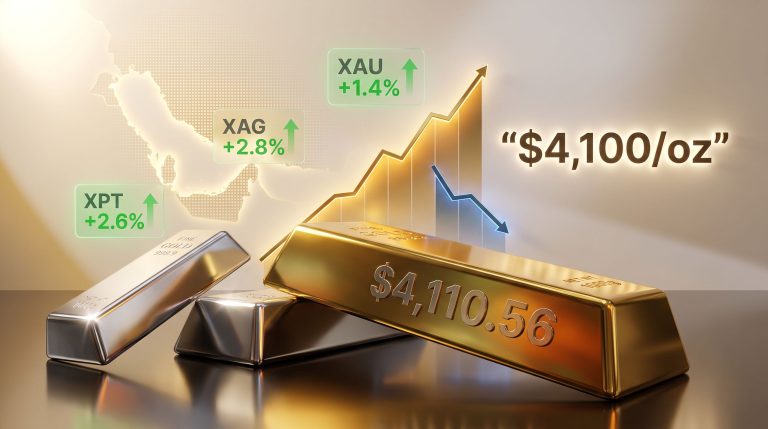
Every major commodity supercycle in modern history has shared one defining characteristic: a point at which cyclical momentum transitions into structural permanence. For gold, that inflection appears to be unfolding across the African continent right now. African Mining Week gold production growth has become a central theme in 2026, with gold prices sustaining levels above $4,000 per ounce and the conversation among mining operators, governments, and institutional investors shifting decisively from price speculation to production capacity. The question is no longer whether demand for gold is durable. The question is which jurisdictions can scale output fast enough to meet it.
That context makes African Mining Week 2026 one of the most consequential gathering points in the global gold calendar. Taking place October 14 to 16 in Cape Town, South Africa, AMW 2026 arrives at a moment when multiple African nations are simultaneously executing major production expansion programs, reforming regulatory frameworks governing artisanal mining, and attracting long-cycle capital from some of the world's largest gold operators. Furthermore, the forum is positioned not just as an industry conference but as an active deal-facilitation environment where national policy ambitions are translated into investable structures for private capital.
When big ASX news breaks, our subscribers know first
Why Gold Prices Above $4,000 Per Ounce Signal More Than a Market Cycle
The headline figure commands attention, but the mechanism behind sustained gold prices at these levels reveals something more significant than a typical bull run. The primary driver in 2026 is not retail speculation or ETF inflows. It is sovereign demand from central banks accumulating gold to diversify foreign exchange reserves and strengthen financial resilience against currency volatility and geopolitical uncertainty.
Across Africa alone, six central banks have expanded their domestic gold purchase programs in recent years:
- Tanzania
- Kenya
- Ghana
- Uganda
- Egypt
- Namibia
This regional pattern reflects a global trend. Central bank gold demand has been running at historically elevated levels since 2022, and it shows no meaningful sign of reversal. When sovereign buyers rather than speculative funds anchor demand, the price floor becomes structurally more resilient. For African gold producers, this creates something relatively rare in commodity markets: predictable, long-horizon offtake certainty from buyers with no leverage constraints or redemption pressures.
Sustained central bank acquisition at this scale fundamentally alters the risk calculus for gold mine investment. Long-cycle capital decisions that require decades to generate returns become considerably easier to justify when the demand floor is being held by sovereign institutions rather than sentiment-driven market participants.
The downstream effect for domestic producers is particularly significant. As African central banks scale gold acquisition programs, local producers gain access to new offtake channels that reduce their dependency on international export markets. In addition, these channels create more stable revenue environments even during periods of global financial market turbulence. For a broader perspective on central bank buying trends and their influence on the sector, the data points to a sustained structural shift rather than a temporary cycle.
African Mining Week Gold Production Growth: A Country-by-Country Breakdown
The continent's African mining week gold production growth story is being written across multiple jurisdictions simultaneously. Each country presents a distinct combination of growth drivers, regulatory environments, and capital requirements.
| Country | Recent Output | Target / Projection | Key Growth Driver |
|---|---|---|---|
| Mali | 60+ metric tons (annual) | Maintain above 60 MT | ASGM formalization, major mine partnerships |
| Zimbabwe | 50.6 MT (2025) | ~55 MT projected (2026) | 31% year-on-year growth; ASGM + large-scale expansion |
| Ghana | 6 million oz (2025) | 6.5 million oz target | New mines and ASGM activity |
| Egypt | Expanding reserves | 800,000 oz by 2030 | Partnership-driven exploration |
| Uganda | Rising from low base | 1.5 MT per year (Wagagai mine) | First large-scale mine entering production |
| South Africa | Revitalization phase | Long-term mine investment | Junior exploration fund and deep-mine capital |
Zimbabwe's 31% Output Surge
Zimbabwe's production trajectory stands out as the most dramatic near-term growth story on the continent. Output grew from 38.6 metric tons in 2024 to 50.6 metric tons in 2025, representing a 31% year-on-year increase driven by a combination of large-scale mine expansion and a growing formalized artisanal sector. If that trajectory continues, Zimbabwe's 2026 projection of approximately 55 metric tons would represent one of the fastest sustained growth rates of any gold-producing nation globally.
Ghana's Push Toward 6.5 Million Ounces
Ghana, historically one of West Africa's dominant gold producers, recorded output of 6 million ounces in 2025 and is targeting 6.5 million ounces through a combination of new mine commissioning and expanded artisanal activity. Ghana's regulatory experience with artisanal and small-scale mining (ASGM) formalization is arguably the most developed on the continent, making it a reference model for other jurisdictions now attempting similar programs.
Uganda's Emergence as a Large-Scale Producer
Uganda represents a different category of growth: a nation moving from negligible large-scale output to a defined industrial production base. The Wagagai Mine is projected to contribute approximately 1.5 metric tons per year, marking Uganda's entry into industrial-scale gold production. This transition from artisanal-dominated output to organised large-scale mining brings with it entirely new infrastructure requirements, licensing frameworks, and community engagement obligations.
The ASGM Formalization Imperative Across Africa
Artisanal and small-scale gold mining (ASGM) is one of the most misunderstood variables in African production statistics. In many jurisdictions, informal ASGM output is either underreported or excluded from official figures entirely, meaning published national production data can significantly understate the true volume of gold being extracted. When formalization programmes succeed, they do not necessarily increase physical production. They make existing production visible, taxable, and bankable.
This distinction matters enormously for investors interpreting African gold output data:
- Reported production increases following formalization may partly reflect statistical capture rather than new extraction.
- Revenue and royalty flows to governments improve dramatically when ASGM enters the regulated economy.
- Environmental and social risks attached to informal mining are substantially reduced under formal oversight.
- Traceability and supply chain compliance requirements from international buyers increasingly demand documented provenance.
Mali's Regulatory Architecture: The Malian Office of Precious Substances
Mali's approach to ASGM governance represents one of the most ambitious formalization programmes currently underway anywhere in Africa. In July 2026, the government established the Malian Office of Precious Substances, a dedicated state institution with a mandate to regulate and formalize artisanal gold production.
The scale of the challenge is considerable:
- Approximately 400 active mining sites fall under the new institution's oversight.
- Close to two million people are involved in artisanal gold production across these sites.
- The regulatory objective is to bring this workforce and its output formally within Mali's national production accounting while reducing illegal trafficking of gold.
Mali's strategy pairs this regulatory reform with sustained partnerships with major mining operators including Barrick, B2Gold, Toubani Resources, and Cora Gold. These relationships provide capital continuity and technical expertise that smaller jurisdictions cannot replicate independently, creating a hybrid model in which large-scale formal mining and formalized ASGM develop in parallel rather than in competition.
The creation of a purpose-built state institution to govern artisanal mining at this scale reflects a pragmatic acknowledgment that informal gold extraction cannot simply be policed out of existence. Two million participants represent a social and economic reality that must be incorporated into the formal sector, not suppressed.
Comparing ASGM Formalization Models
The approaches taken by Ghana, Zimbabwe, and Mali differ in meaningful ways that prospective investors should understand:
- Ghana uses a community mining scheme model with licensed aggregation entities, giving informal miners a pathway into the formal supply chain without requiring individual licensing.
- Zimbabwe has integrated ASGM into national production targets through the Fidelity Gold Refinery, which acts as a mandatory offtake mechanism that effectively brings artisanal output into the formal economy.
- Mali's newly created Malian Office of Precious Substances represents a more centralised regulatory model, using a dedicated agency to supervise compliance across a geographically dispersed network of sites.
Major Capital Commitments Reshaping Africa's Gold Infrastructure
Gold Fields and South Deep: Deep Capital for a Deep Mine
Gold Fields has committed R1.714 billion through 2027 to deepen its flagship South Deep Mine in South Africa, with the objective of extending the operation's productive life well beyond 2030. South Deep is already one of the largest gold mines by contained resource, but its full potential has historically been constrained by the capital intensity required to access ore at extreme depth.
The investment thesis behind this commitment is worth examining closely. Deep-level gold mining in South Africa typically operates at depths exceeding 2,000 metres, where seismic activity, ventilation costs, and logistics create operating cost structures fundamentally different from open-pit or shallow underground operations. Gold prices above $4,000 per ounce shift the economic viability calculation for these high-cost, high-reserve operations dramatically, justifying capital expenditure that would have been borderline at $1,800 per ounce.
South Africa's Junior Mining Exploration Fund
South Africa's government expanded the Junior Mining Exploration Fund to R600 million in 2026, directing capital toward emerging mining companies seeking access to exploration financing. The rationale is straightforward: South Africa's reserve base has been progressively depleted as older mines reach end of life, and replenishing that base requires a pipeline of new discoveries that only sustained early-stage exploration can generate.
Junior explorers typically cannot access debt markets for pre-resource stage work, making grant or concessional financing from state vehicles essential to maintaining exploration activity. Consequently, this fund expansion is designed to catalyse activity across prospective gold geology that larger operators have not yet prioritised.
What AMW 2026 Means for Investors: Surfacing the Capital Gap
African Mining Week 2026 is structured to address a specific market failure: the disconnect between available private capital and actionable investment opportunities in African gold. The dedicated panel on Expanding Africa's Gold Output, moderated by Matt Banton of Moore Global and featuring Gold Fields Executive Vice President Benford Mokoatle and Mali Chamber of Mines President Fousseni Togola, is designed to bridge exactly this gap.
The capital requirements across the African gold sector are concentrated in three distinct categories:
- Exploration-stage financing across underexplored jurisdictions where geological prospectivity is established but resource definition work has not been completed.
- Infrastructure investment to enable remote mine development, including power, water, and transport connectivity.
- Processing and technology upgrades to improve metallurgical recovery rates and reduce unit costs, particularly in jurisdictions where ore grade variability makes efficient processing critical.
Institutional investors approaching African gold need to understand that the risk profile varies significantly across these three categories. Infrastructure and processing investments in operating jurisdictions with established regulatory frameworks carry substantially lower political and technical risk than greenfield exploration in frontier mining countries. AMW 2026 is positioned to facilitate engagement across this entire spectrum. Furthermore, understanding the current gold price outlook is essential context for investors evaluating where to deploy capital across these categories.
In addition, gold M&A activity across global markets provides useful parallel context, as consolidation trends in established mining regions often signal capital appetite that eventually flows toward frontier opportunities in Africa.
The next major ASX story will hit our subscribers first
Africa's Gold Production Trajectory Through 2030: Three Scenarios
The following scenarios represent analytical projections based on current trends and are inherently speculative. They should not be relied upon as investment guidance.
Scenario 1: Accelerated Formalization and Capital Inflow
If ASGM formalization programmes in Mali, Zimbabwe, and Ghana deliver on their stated objectives, exploration capital flows freely into frontier jurisdictions, and gold prices remain elevated, Africa could meaningfully increase its share of global gold supply by 2030. Egypt reaching its 800,000-ounce target, Uganda scaling Wagagai and related projects, and South Africa stabilising output through South Deep and new junior discoveries would together represent a significant continental production uplift.
Scenario 2: Moderate Reform with Uneven Execution
This is arguably the base-case scenario. Policy reforms advance in some jurisdictions faster than others. Capital flows to established producers like Ghana and Mali but remains cautious toward frontier markets. Production grows, however national targets are met partially rather than fully. Africa's share of global supply increases modestly.
Scenario 3: Structural Headwinds Emerge
A meaningful gold price correction, regulatory reversals in key jurisdictions, or broader geopolitical disruption could cause investment to retreat toward established low-risk producers in other regions. Frontier market programmes stall without the price support that makes high-cost or complex projects viable. This scenario would not eliminate Africa's gold growth story but would delay it materially.
Key Variables Determining the Outcome
- Consistency of regulatory enforcement in ASGM formalization programmes
- Availability and cost of infrastructure financing for remote project development
- Sustained central bank demand maintaining the gold price floor
- Political stability across key producing jurisdictions
- Speed of technology adoption to improve recovery rates in complex ore bodies
Africa's Role in the Global Gold Supply Equation
Africa currently accounts for a substantial portion of global gold production, with South Africa, Ghana, Mali, Sudan, and Tanzania all featuring among the world's significant producing nations. According to recent coverage from Mining Review, the African mining sector is signalling broad-based growth amid sustained global demand, reinforcing the structural narrative outlined throughout this article.
What is changing in 2026 is not just the volume of output but the sophistication of the institutional architecture surrounding it. The combination of dedicated central bank offtake programmes, formalised ASGM frameworks, long-cycle capital commitments from major operators, and purpose-built industry platforms like African Mining Week reflects a continent approaching gold production not as a legacy extractive activity but as a strategically managed economic asset. That reframing, more than any single mine's output figure, is what makes African Mining Week gold production growth the defining theme of the current period in Africa's gold history.
This article contains forward-looking statements and scenario projections based on publicly available information as of mid-2026. All financial figures, production targets, and policy details are drawn from publicly reported sources. Nothing in this article constitutes investment advice. Readers should conduct independent due diligence before making any investment decisions related to companies or projects mentioned.
Readers seeking further context on African gold sector developments can explore ongoing coverage via ZAWYA's Africa Press Release section, which tracks developments across African mining jurisdictions.
Want to Stay Ahead of the Next Major Gold Discovery on the ASX?
Discovery Alert's proprietary Discovery IQ model scans ASX announcements in real time, delivering instant alerts on significant mineral discoveries — including gold — so subscribers can identify actionable opportunities before the broader market reacts. Explore historic discoveries and their returns to understand what major finds can mean for investors, then begin your 14-day free trial at Discovery Alert to position yourself at the forefront of the next significant ASX announcement.