July 17, 2026
When Geography Becomes Destiny: The Hormuz Chokepoint and What It Means for Global Oil in 2026
Energy markets have long operated on the assumption that physical geography is a manageable risk. Shipping lanes, pipeline corridors, and transit chokepoints are factored into price models, hedged through derivatives, and backstopped by strategic reserves. Yet history repeatedly demonstrates that when a single maritime passage becomes the epicentre of armed conflict, no amount of financial engineering fully insulates the global economy from the consequences. The Strait of Hormuz, a waterway barely 33 kilometres wide at its narrowest point, is the defining case study for exactly this kind of vulnerability.
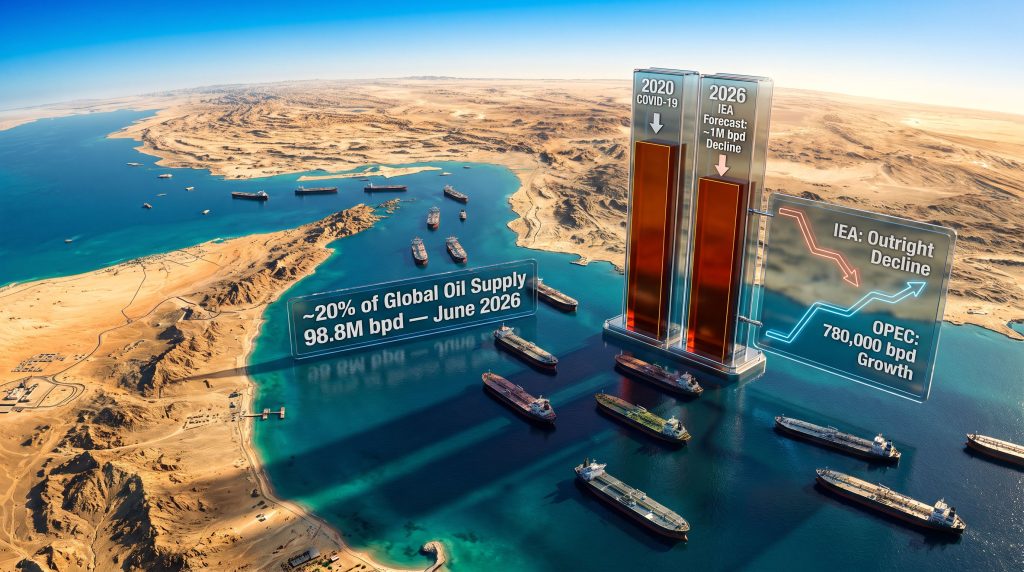
In July 2026, the International Energy Agency published its monthly oil market report with a projection that caught many energy analysts off guard: global oil demand is expected to fall by approximately 1 million barrels per day on an annual basis in 2026. If confirmed, this would represent the first annual contraction in worldwide oil consumption since the COVID-19 pandemic shuttered economies across the globe in 2020. The IEA predicts first decrease in global oil demand since 2020 not because of a virus or a financial collapse, but because of sustained geopolitical disruption to one of the most critical energy transit routes on Earth.
When big ASX news breaks, our subscribers know first
The Strait of Hormuz: Understanding the Geography of Vulnerability
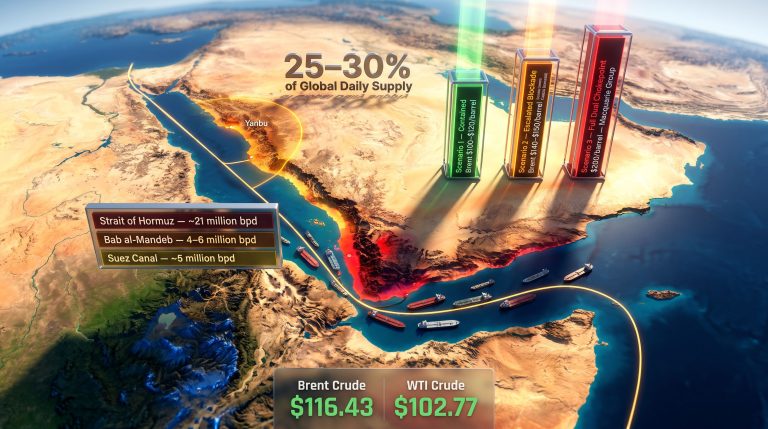
The Strait of Hormuz connects the Persian Gulf to the Gulf of Oman and, ultimately, to global shipping lanes serving Asia, Europe, and beyond. Under normal operating conditions, approximately 20% of the world's total oil supply transits this corridor. That figure alone illustrates the extraordinary concentration of energy risk in a single geographic location.
What makes Hormuz particularly difficult to route around is the absence of immediately scalable alternatives. While pipelines such as the Abu Dhabi Crude Oil Pipeline and Saudi Arabia's East-West Pipeline offer partial bypass capacity, their combined throughput falls substantially short of the volumes normally carried through the Strait. Consequently, any sustained disruption to Hormuz traffic creates an almost immediate physical supply shortfall in global markets, not merely a pricing signal.
The conflict that escalated in early 2026 involving U.S., Israeli, and Iranian forces triggered the closure and severe restriction of Hormuz transit flows. Tanker attacks reported in July 2026 continued to suppress vessel movements through the corridor. By June 2026, global oil production had reached approximately 98.8 million bpd following a partial reopening of the Strait, yet this figure remained roughly 9.4 million bpd below pre-war output levels, illustrating the scale of the production gap that accumulated over preceding months. For broader context on the crude oil market overview, these figures represent a historically significant departure from baseline conditions.
The Dual-Compression Dynamic: Supply Shock Meets Demand Destruction
What distinguishes the 2026 oil market disruption from typical geopolitical price spikes is its dual-sided nature. Most supply disruptions produce elevated prices that eventually stimulate production elsewhere and moderate over time. However, the current environment features two simultaneous forces compressing market activity from opposite directions.
Supply-Side Pressures
- Hormuz closure removed a significant volume of Middle Eastern crude from accessible global markets for multiple consecutive months
- Tanker attacks created compounding uncertainty, deterring shipping operators even when partial access to the Strait was restored
- OPEC+ production targets set from April 2026 onward proved largely unachievable due to the physical constraints imposed by the conflict
- OPEC+ output averaged approximately 36.28 million bpd in June 2026, an increase of roughly 3 million bpd from May, but still well below planned ambition
Demand-Side Pressures
- Elevated crude prices driven by supply constraints suppressed consumer fuel consumption, particularly across road transport and aviation
- Industrial activity slowdowns across multiple major importing economies reduced petroleum product demand independent of price effects
- Countries that pivoted to coal and renewables as emergency alternatives during the disruption period may not fully revert to prior consumption patterns
- Strategic reserve drawdowns by importing nations created a temporary buffer that reduced spot market purchasing activity
This combination of supply-side shock and price-induced demand destruction is the defining characteristic of what energy economists sometimes call a dual-compression dynamic — a market condition rarely observed outside pandemic-era or major conflict environments. Furthermore, understanding the trade war oil impact on prior price formations helps contextualise just how severe the 2026 disruption has become by comparison.
How 2026 Compares to the 2020 Pandemic Decline
Placing the 2026 contraction in historical context requires understanding how different the causal mechanisms are compared to the last demand collapse.
| Metric | 2020 (COVID-19 Pandemic) | 2026 (IEA Forecast) |
|---|---|---|
| Primary Cause | Global lockdowns, economic shutdown | Geopolitical conflict, Hormuz closure |
| Annual Demand Change | Largest on record | ~1 million bpd contraction |
| Sharpest Quarterly Drop | Q2 2020 | Q2 2026 (~1.5M bpd vs. Q2 2025) |
| Supply Response | OPEC+ emergency production cuts | Non-Gulf producers ramping output |
| Recovery Pathway | Vaccine rollout, economic reopening | Ceasefire, Hormuz normalisation |
| 2027 Rebound Projection | Strong post-pandemic recovery | ~2 million bpd increase (conditional) |
The 2020 pandemic triggered the largest single-year demand collapse ever recorded, as aviation ceased almost entirely and road transport volumes collapsed across developed and developing economies alike. The 2026 contraction is smaller in absolute terms, but its structural cause is arguably more uncertain in duration. A pandemic follows biological timelines; a geopolitical conflict follows human decision-making, which is inherently less predictable.
A lesser-appreciated dimension of the 2026 disruption is that it has functioned as a real-world stress test of oil import dependency for major consuming nations in Asia and Europe. Countries that successfully pivoted supply chains away from Middle Eastern crude during the crisis may retain some of those alternative arrangements permanently, contributing to a structural rather than purely cyclical reduction in demand from Gulf producers.
IEA vs. OPEC: A Tale of Two Frameworks
The divergence between the IEA's July 2026 assessment and OPEC's concurrent monthly report reveals more than a simple disagreement over data. It reflects fundamentally different analytical assumptions about conflict duration, economic resilience, and energy substitution rates.
| Forecast Dimension | IEA (July 2026) | OPEC (July 2026) |
|---|---|---|
| 2026 Demand Direction | Outright decline (~1M bpd) | Slower growth (780K bpd) |
| 2026 Supply Shortfall | ~860,000 bpd | Not quantified equivalently |
| 2027 Demand Growth | ~2M bpd rebound (conditional) | 1.94M bpd increase |
| Core Assumption | Ceasefire + gradual Hormuz reopening | Geopolitical tension moderation |
| Analytical Tone | Cautionary, risk-weighted | Cautiously optimistic |
OPEC's July 2026 report revised its 2026 global demand growth forecast down to 780,000 bpd, marking the third consecutive monthly downward revision from an original projection of approximately 970,000 bpd. Crucially, OPEC still frames this as growth, not contraction, contrasting sharply with the IEA's projection of an outright annual decline.
For 2027, OPEC projects global oil demand to increase by 1.94 million bpd, a figure 210,000 bpd higher than its previous forecast, reflecting an expectation that easing geopolitical tensions could restore demand momentum. The organisation has pointed to broadly resilient global economic conditions in the first half of 2026 as a foundation for its more optimistic medium-term outlook. In addition, OPEC's global influence over production decisions will remain a central variable in how quickly markets can rebalance once transit flows normalise.
"The gap between these two forecasts is not simply a matter of different numbers. It represents a fundamental disagreement about whether the 2026 disruption is reshaping long-term demand patterns or merely creating a temporary cyclical trough from which recovery will be swift."
What a Hormuz Reopening Would Actually Require
The IEA's base case for market rebalancing rests on several conditions that must be met in sequence rather than simultaneously:
- A durable ceasefire must take hold between the parties to the conflict, removing the immediate threat to tanker operations
- Hormuz transit volumes must recover meaningfully, allowing physical cargo flows to resume at scale
- Gulf producers must be able to restart fields that have been idled during the conflict period, which involves operational as well as commercial timelines
- Refineries in the Middle East and beyond must resume product shipments, restoring downstream supply chains
- Importing nations that drew down strategic reserves must begin rebuilding inventory buffers, which supports sustained demand for Gulf crude
If these conditions are met, the IEA models a potential 2 million bpd demand rebound in 2027, alongside a shift toward surplus conditions emerging in the final quarter of 2026. The supply deficit estimated at approximately 860,000 bpd in 2026 is projected to widen to 7.5 million bpd in 2027 on a cumulative basis as idled production capacity gradually comes back online.
The downside scenario is less discussed but arguably more consequential for long-term market structure. Extended hostilities would accelerate energy substitution, entrench alternative supply relationships, and potentially trigger the kind of permanent demand destruction that analysts have long theorised about in the context of the energy transition — but through a geopolitical rather than a technological pathway. Reviewing crude oil price trends from prior years further underscores how unprecedented the current trajectory has become.
The next major ASX story will hit our subscribers first
Energy Security Recalibration: The Longer Strategic Story
Beyond the immediate market mechanics, the 2026 Hormuz crisis is catalysing a broader strategic reassessment of energy supply chain architecture. Several dynamics are already observable:
- Asian oil importers, including major consumers in China, India, Japan, and South Korea, have been actively pivoting toward U.S. crude supplies and alternative trade routes as Hormuz risks intensified
- The crisis has demonstrated that routing a fifth of global oil supply through a single maritime chokepoint represents a systemic risk that strategic reserves alone cannot fully mitigate
- Investment interest in pipeline bypass routes, floating storage alternatives, and regional refining capacity has accelerated among both governments and private sector operators
- The temporary increase in coal consumption across some markets, adopted as an emergency alternative to constrained oil and gas supplies, has created short-term upward pressure on carbon emissions even as long-term energy transition investment continues
Price Discovery and the Repricing of Geopolitical Risk
One underappreciated structural consequence of the 2026 disruption is its effect on oil price discovery mechanisms. When a chokepoint of Hormuz's scale is compromised for an extended period, the traditional relationship between global benchmark prices like Brent and physical supply availability breaks down. Regional price differentials widen dramatically, spot market liquidity thins, and hedging becomes more expensive and less effective.
This repricing of geopolitical risk has implications for energy investment planning that extend well beyond the immediate conflict timeline. Furthermore, the oil price rally seen in prior periods has already demonstrated how rapidly sentiment can shift when transit security deteriorates. According to EIA global oil market projections, non-OPEC supply growth is expected to partially offset some of these structural deficits, though the timeline remains highly uncertain.
Key Data Points at a Glance
- ~1 million bpd projected annual demand decline in 2026, the first since the 2020 pandemic
- ~1.5 million bpd sharpest quarterly contraction, recorded in Q2 2026 versus Q2 2025
- ~20% of global oil supply normally transits the Strait of Hormuz under normal conditions
- ~9.4 million bpd below pre-war production levels as of June 2026
- 3.7 million bpd estimated global supply contraction for full-year 2026
- 860,000 bpd projected supply shortfall relative to global demand
- 36.28 million bpd OPEC+ output in June 2026, up approximately 3 million bpd from May
- 780,000 bpd OPEC's revised 2026 demand growth forecast after three consecutive downward revisions
- 1.94 million bpd OPEC's 2027 demand growth projection
- 7.5 million bpd projected cumulative supply deficit in 2027 if Hormuz normalisation proceeds as modelled
Whether the demand contraction of 2026 ultimately proves to be a temporary geopolitical shock or the opening chapter of a more permanent structural shift in global oil consumption will depend on decisions made in diplomatic chambers as much as in energy boardrooms. The IEA predicts first decrease in global oil demand since 2020, and the market is currently pricing both a recovery scenario and a prolonged disruption scenario simultaneously — which is precisely why uncertainty in current forecasts remains so elevated.
This article contains forward-looking statements, projections, and forecasts drawn from IEA and OPEC reports. These projections are subject to significant uncertainty and should not be construed as investment advice. Readers should conduct their own research before making any financial decisions related to energy markets.
Want to Stay Ahead of Major Resource Discoveries Triggered by Energy Market Shifts?
When geopolitical disruptions reshape global commodity markets at this scale, the flow-on effects for ASX-listed resource companies can be swift and significant — Discovery Alert's proprietary Discovery IQ model scans ASX announcements in real time, delivering instant alerts on significant mineral discoveries so subscribers can identify actionable opportunities before the broader market reacts. Explore historic examples of exceptional discovery returns and begin a 14-day free trial at Discovery Alert to position yourself ahead of the next major market-moving announcement.