The Geopolitics of Chokepoints: Why Strait Governance Is Never Just About Shipping
Every generation of global trade produces a handful of geographic bottlenecks so consequential that their disruption would cascade across continents within hours. The Strait of Hormuz is the defining example of this phenomenon. However, the strategic significance of a chokepoint is only partially a function of geography. The other half is governance, and it is precisely on the question of governance that one of the most consequential maritime disputes of 2026 has crystallised.
Iran rules out Oman's proposal for joint management of Hormuz Strait, and the implications of that rejection stretch well beyond a bilateral diplomatic disagreement. They touch on the architecture of international maritime law, the structural vulnerabilities of Asian energy supply chains, and the persistent leverage Tehran holds in its confrontations with Western powers and Gulf rivals alike. Furthermore, oil price movements tied to this dispute are already attracting close attention from energy analysts worldwide.
When big ASX news breaks, our subscribers know first
The Volume Reality: Why Hormuz Has No Substitute
Before examining the political dispute, it is worth grounding the analysis in hard numbers, because the scale of what transits the Strait of Hormuz daily is genuinely difficult to overstate.
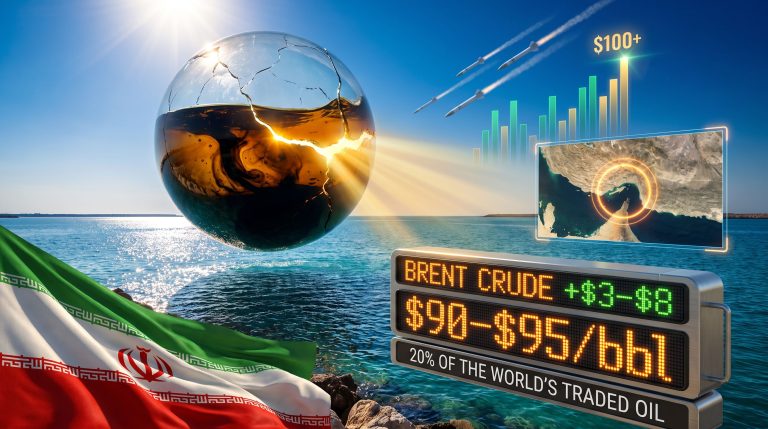
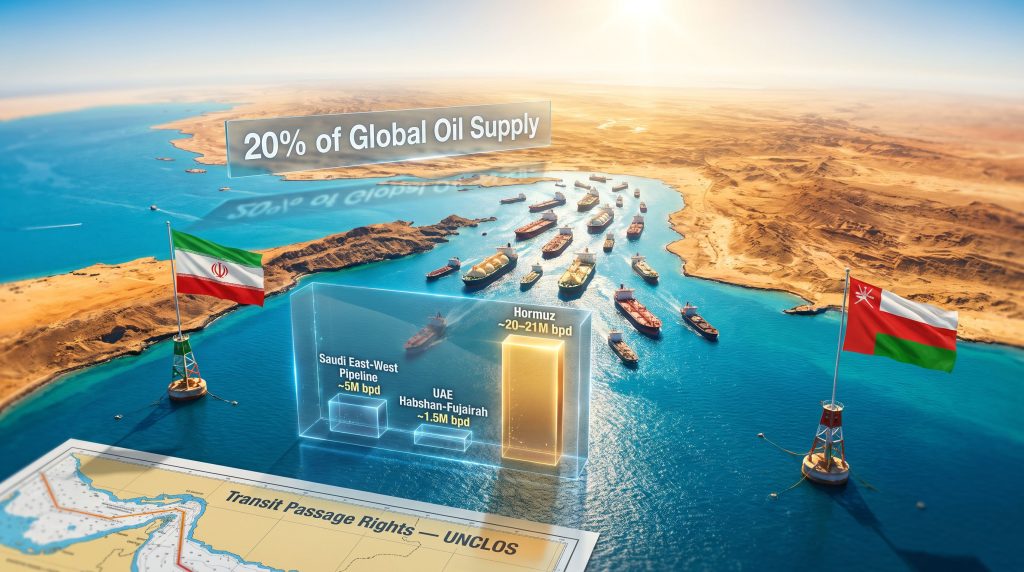
Approximately 20 to 21 million barrels of crude oil and petroleum products move through the strait every single day. That figure represents close to 20% of total global oil consumption and nearly one-third of all seaborne oil trade worldwide. Alongside crude, the strait serves as the primary export corridor for Qatar's liquefied natural gas, making it a dual-commodity chokepoint of extraordinary importance.
The physical dimensions of the waterway make its strategic exposure even more pronounced. At its narrowest, the strait spans just 33 to 39 kilometres, with usable shipping lanes narrowed further by shallow waters and designated traffic separation schemes. The two navigable corridors, each roughly three kilometres wide with a buffer zone between them, carry the weight of global energy supply through a passage that would take a supertanker less than a day to traverse.
The countries most exposed to disruption paint a picture of Asia's energy dependency:
| Country/Region |
Estimated Hormuz Dependency |
| Japan |
~85% of total oil imports |
| China |
~76% of Gulf oil imports |
| South Korea |
~70% of total oil imports |
| India |
~60%+ of crude oil imports |
| European Union |
Significant LNG exposure via Qatar |
Structural Vulnerability: No other single maritime passage on Earth concentrates this volume of energy trade within such a narrow geographic corridor. The strait's governance is therefore a matter of global economic consequence, not merely a regional territorial question.
What Oman Actually Proposed and Why Tehran Said No
The Architecture of the Joint Management Framework
Oman's proposal envisaged a multilateral mechanism through which Gulf states would collectively participate in managing navigation through the strait. The framework's reported core elements included a voluntary fee-based structure for transiting vessels, distributed administrative oversight rather than single-sovereign control, and an explicit design commitment to preserve the toll-free passage principles embedded in international maritime law. Critically, the framework was structured to prevent any single nation from exercising unilateral dominance over traffic management decisions.
The logic behind Oman's initiative was coherent. Muscat has historically maintained open diplomatic channels with Tehran even during periods of broader regional tension, a posture that has made it a trusted intermediary in Gulf affairs. According to Reuters, Oman's own crude oil exports depend on Hormuz access, giving it a genuine economic stake in strait stability that cannot be reduced to proxy interest-serving on behalf of larger powers.
Iran's Counter-Position: Sovereignty as a Non-Negotiable
Tehran's rejection, communicated through Deputy Foreign Minister Kazem Gharibabadi, was not a wholesale refusal to discuss governance arrangements. It was a targeted objection to the specific allocation of control authority within the proposed framework. Iran's position drew a sharp territorial line:
- The inbound traffic lane must fall entirely under Iranian sovereign jurisdiction
- The outbound traffic lane could accommodate partial Omani administrative involvement
- Any arrangement that dilutes Iranian authority over its own maritime territory is structurally unacceptable
This distinction matters because it reveals the underlying principle at stake. Iran's concern is not primarily operational, it is constitutional. Any governance framework that treats the inbound lane as jointly administered implicitly subordinates Iranian sovereign authority to a multilateral body, which Tehran views as an unacceptable precedent regardless of the operational merits.
A senior Iranian official also publicly characterised the Omani proposal as the product of pressure from the United States and Saudi Arabia. Oman has resisted this pressure, describing the initiative as advancing what were termed unrealistic plans for the strait. This framing served a dual strategic function: it delegitimised the proposal by attributing its origins to external pressure rather than genuine Omani initiative, and it signalled to Muscat that any revised framework would need to be visibly decoupled from perceived US-Saudi influence before Tehran would engage substantively.
The Earlier Framework That Made This Rejection More Significant
What makes the July 2026 rejection particularly noteworthy is the contrast with the position Iran and Oman had jointly articulated just weeks earlier. In June 2025, both governments issued statements confirming their commitment to continuing talks through a joint working group, with the shared understanding that any arrangements would need to:
- Fully respect each nation's sovereignty and sovereign rights
- Remain consistent with applicable international maritime law
- Proceed through bilateral diplomatic channels rather than multilateral structures
Iran's hardened position represents a meaningful departure from that earlier posture of conditional engagement, suggesting that internal political dynamics within Tehran, or a calculated reassessment of the proposal's strategic implications, shifted the calculus between June and July.
The Legal Fault Line: UNCLOS vs. Sovereign Assertion
The governance dispute cannot be properly understood without examining the legal framework within which it operates, because Iran's preferred position sits in direct tension with established international maritime law.
| Legal Principle |
Implication for Hormuz |
| UNCLOS Transit Passage (Part III) |
All vessels have the right of continuous, expeditious transit through international straits; bordering states cannot suspend this right |
| Sovereign Territorial Waters |
Both Iran and Oman hold territorial water jurisdiction over portions of the strait |
| Voluntary Fee Frameworks |
No established international precedent supports mandatory transit fees on straits used for international navigation |
| Joint Management Precedents |
Limited global models exist but none involve states with active geopolitical tensions of this magnitude |
Iran's insistence on exclusive control over the inbound lane creates a significant legal vulnerability. Under the UN Convention on the Law of the Sea, the Strait of Hormuz qualifies for transit passage rights, meaning vessels hold an inherent right to continuous and expeditious transit regardless of the political posture of bordering states. Any Iranian attempt to impose fees, restrict passage, or assert unilateral administrative authority over traffic flows would face immediate legal challenge.
The complicating factor is that Iran's relationship with UNCLOS is not straightforwardly binding in the way that fully ratified membership would imply, which creates operational grey zones that Iranian strategic doctrine has historically exploited.
Global Precedents Iran Has Watched Closely
Three international precedents are frequently cited in discussions of Hormuz governance, and each carries different lessons:
- Strait of Malacca: A cooperative model between Malaysia, Indonesia, and Singapore supported by IMO frameworks. Often cited as a functional multilateral precedent, though it operates between states without active geopolitical hostility
- Danish Straits: Governed under the 1857 Copenhagen Treaty, which abolished tolls and established free passage, demonstrating the durability of toll-free frameworks once legally embedded
- Turkish Straits: Governed under the 1936 Montreux Convention, which grants Turkey significant regulatory authority over transit. Iranian strategic thinkers have historically referenced this model as a potential template, precisely because it legitimises a bordering state's elevated governance role within an internationally recognised legal instrument
The Montreux analogy is particularly revealing. If Iran's long-term objective is a Hormuz-equivalent convention that formalises Iranian authority over strait governance, then rejecting the Omani multilateral framework is not a dead end. It is the opening position in a longer negotiation aimed at a fundamentally different legal architecture.
The US-Saudi-Iran Triangle and Hormuz Leverage
The strategic context surrounding this dispute involves three intersecting dynamics that shape each actor's incentives. Consequently, the geopolitical risk landscape across the broader region is shifting in ways that extend well beyond maritime governance alone.
Washington's Sanctions Architecture
US sanctions against Iran create a structural incentive for Tehran to preserve its unilateral leverage over the strait as a deterrent asset. A governance framework that distributes administrative authority dilutes Iran's ability to threaten strait closure as a response to escalating pressure, effectively reducing the deterrent value of its most potent non-military strategic tool.
Riyadh's Export Exposure
Saudi Arabia exports a substantial share of its crude oil through the Hormuz corridor, giving it a direct economic interest in keeping the strait open under a governance regime that cannot be weaponised against Gulf Arab producers. Any formalised Iranian control over inbound traffic lanes represents a structural risk to Saudi Arabia's ability to guarantee uninterrupted export flows.
Oman's Balancing Imperative
Muscat's willingness to advance the multilateral proposal reflects a genuine economic interest in strait stability, since Oman's own export revenues depend on Hormuz access. Iran's public accusation that Oman was acting under US-Saudi influence complicates this balancing role considerably, and may require Muscat to either distance itself more explicitly from Washington and Riyadh or accept that its intermediary function is temporarily compromised.
Energy Market Implications: What a Governance Breakdown Would Mean for Oil Prices
Energy markets have a well-documented sensitivity to Hormuz risk signals. Historical evidence demonstrates that credible threats to strait navigation, even without actual disruption, can produce oil price spikes of 5 to 15% within compressed trading windows. A formal collapse of Iran-Oman governance talks, combined with escalating US-Iran tensions, would likely produce three near-term market effects:
- Elevated geopolitical risk premiums embedded in crude oil futures, particularly for Brent and Dubai grades
- Accelerated investment in alternative pipeline infrastructure as producers seek to reduce Hormuz exposure
- Higher War Risk insurance premiums for vessels transiting the strait, which flow directly into shipping costs and ultimately into delivered commodity prices
In addition, the geopolitical oil price factors at play here interact with broader supply chain pressures that analysts have been monitoring closely throughout 2025 and into 2026.
The Bypass Infrastructure Gap
One of the least publicly understood aspects of this dispute is the fundamental inadequacy of existing bypass infrastructure relative to Hormuz volumes:
| Bypass Route |
Capacity |
Status |
| Saudi Arabia East-West Pipeline (Petroline) |
~5 million bpd |
Operational |
| UAE Habshan-Fujairah Pipeline |
~1.5 million bpd |
Operational |
| Iraq-Turkey Kirkuk-Ceyhan Pipeline |
~0.4 to 0.6 million bpd |
Intermittent |
| Total Bypass Capacity |
~7 million bpd |
Covers ~33% of Hormuz flow |
Critical Infrastructure Gap: Even at full simultaneous utilisation, existing bypass routes can redirect only approximately one-third of current Hormuz transit volume. No combination of alternative infrastructure can absorb a prolonged strait disruption without triggering severe global supply shortfalls and sustained price escalation.
This gap is itself a strategic asset for Iran. The arithmetic of bypass inadequacy means that any threat of strait disruption carries credible market consequences regardless of whether Iran ever acts on it, which is precisely why preserving unilateral leverage over the strait is a rational strategic priority for Tehran. Furthermore, the LNG supply outlook for Asian buyers remains directly exposed to any deterioration in Hormuz governance arrangements.
The next major ASX story will hit our subscribers first
Three Pathways Forward: Scenario Analysis
The dispute's resolution, or non-resolution, will likely follow one of three trajectories, each with distinct implications for regional stability and global energy markets.
Scenario 1: Bilateral Renegotiation
Iran and Oman return to direct talks, bypassing the multilateral framework entirely. A revised arrangement focusing narrowly on maritime safety coordination rather than traffic management authority could provide face-saving flexibility for both governments. This is the most likely short-term pathway given both states' shared interest in avoiding a complete governance vacuum.
Scenario 2: Extended Diplomatic Stalemate
Talks remain suspended while Iran continues to assert informal authority over inbound traffic through existing mechanisms. The status quo is nominally maintained, but the absence of a formalised framework elevates the risk of ad hoc incidents, miscommunication, and miscalculation in a corridor where tankers, naval vessels, and patrol boats operate in close proximity daily.
Scenario 3: Internationalisation
The dispute escalates to the International Maritime Organization or the UN Security Council, drawing in major maritime powers including the United States, China, and the European Union. This pathway would remove the governance question from bilateral control and could trigger a broader multilateral process that neither Iran nor Oman fully controls, which is precisely why both states are likely to resist this outcome. The trade war and oil prices dynamic further complicates any internationalised negotiation, given the competing interests of major consuming nations.
Frequently Asked Questions: Hormuz Strait Governance
What is the Strait of Hormuz and why does it matter for global energy security?
The Strait of Hormuz is a narrow waterway between Iran and Oman connecting the Persian Gulf to the Gulf of Oman and the broader Arabian Sea. It serves as the primary transit corridor for approximately 20% of global oil supply and is the only maritime route through which Qatar can export its LNG. No other passage combines this volume with this level of geographic constraint.
Why did Iran reject Oman's joint management proposal specifically?
Iran rules out Oman's proposal for joint management of Hormuz Strait primarily because of the proposed distribution of control authority over the inbound navigation lane. Tehran's position holds that the inbound lane must fall entirely under Iranian sovereign jurisdiction, making any shared administrative framework structurally incompatible with Iranian doctrine on territorial maritime sovereignty.
Can Iran legally restrict or close the Strait of Hormuz?
Under UNCLOS transit passage provisions, Iran cannot legally suspend international vessels' right to transit the strait. However, Iran's relationship with UNCLOS creates legal ambiguities that its strategic doctrine has historically exploited. Any actual restriction would almost certainly trigger a confrontation with the US Navy's Fifth Fleet, headquartered in Bahrain.
What role does Saudi Arabia play in this dispute?
Saudi Arabia has a direct economic stake in strait openness, as a significant share of its crude oil exports transit Hormuz. Iran has accused Saudi Arabia of working alongside the United States to pressure Oman into advancing the joint management proposal, a characterisation that serves to delegitimise the framework while also signalling that any revised approach would need to visibly exclude Riyadh's influence.
Iran's public attribution of the proposal to US-Saudi pressure does complicate Oman's traditional intermediary function. However, Muscat's geographic position, its shared Hormuz border with Iran, and its established diplomatic relationships mean it retains strong structural incentives to continue engaging both sides, even if the specific multilateral framework has been decisively rejected.
Readers seeking ongoing coverage of developments in global oil and gas markets and Gulf energy geopolitics can follow reporting at ET EnergyWorld.
This article contains forward-looking analysis and scenario projections based on publicly available information. It does not constitute investment advice. Energy market forecasts involve significant uncertainty and actual outcomes may differ materially from those described.
Want To Stay Ahead of the Next Major Mineral Discovery on the ASX?
While geopolitical flashpoints like the Strait of Hormuz dominate energy market headlines, savvy investors know that real wealth-building opportunities often emerge closer to home — Discovery Alert's proprietary Discovery IQ model scans ASX announcements in real time, instantly notifying subscribers of significant mineral discoveries before the broader market reacts. Explore how historic discoveries have generated substantial returns on Discovery Alert's dedicated discoveries page, and begin your 14-day free trial today to position yourself ahead of the market.

 Commodities