Iceni Gold Ltd
- ASX Code: ICL
- Market Cap: $11,073,572
Iceni Gold Confirms Gander Fault Discovery at Goose Well
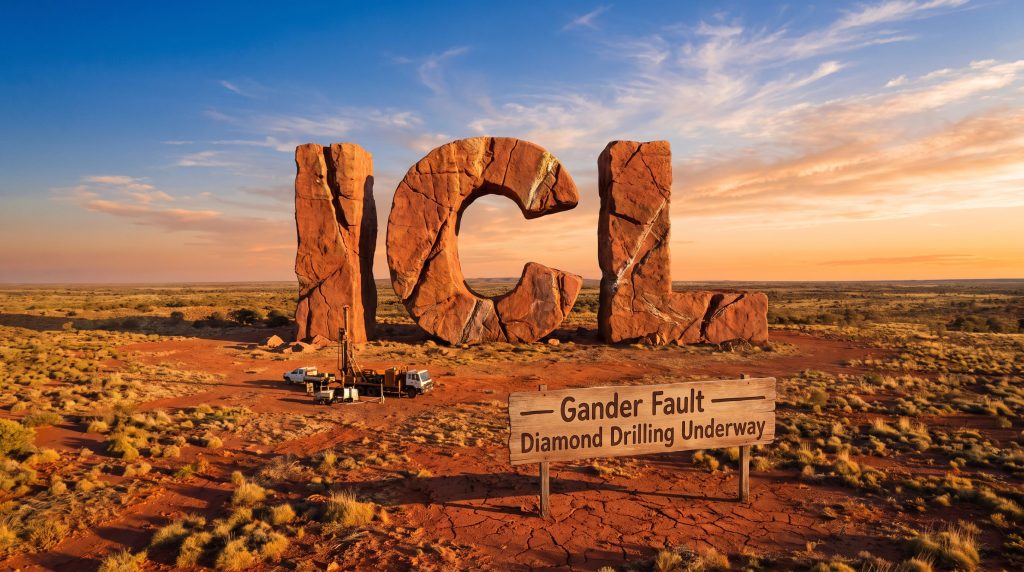
Iceni Gold Ltd (ASX: ICL) has confirmed a major structural corridor at the Goose Well target within its 14 Mile Well Gold Project in Western Australia, with diamond drillhole FMDD0058 intersecting a ~25 metre zone interpreted as the Gander Fault. According to the ASX announcement dated 14 July 2026, this Iceni Gold confirms Gander Fault discovery at Goose Well through a geology-first program designed to refine the structural model controlling gold mineralisation at the Goose Well Intrusive Complex, ahead of assay results expected in August.
"This drillhole represents a strategic investment in understanding the system, reducing exploration risk and positioning Iceni to effectively target new discoveries within the Goose Well Intrusive Complex," said Wade Johnson, Managing Director of Iceni Gold Ltd. "The team is pleased with the geological information obtained and looks forward to reporting assay results in due course."
When big ASX news breaks, our subscribers know first
Gander Fault Confirmed as a Major Structural Corridor
Diamond drillhole FMDD0058 was completed to a depth of 362.3 m at the Goose Well prospect to test the interpreted Gander Fault and better understand the intrusive and structural architecture of the Goose Well Intrusive Complex (GWIC).
Core logging has identified:
- A ~25 m wide fault zone from 222.21 m downhole, comprising broken, brecciated and fault-gouged quartz syenite–monzogranite with intensely sheared lamprophyre.
- Strong silica–carbonate alteration of the host intrusive rocks increasing in intensity towards the fault.
- Multiple intrusive phases of quartz syenite and monzogranite, intruded by several generations of lamprophyre dykes.
- Abundant disseminated sulphides, particularly within the lamprophyres and along quartz vein margins.
- Significant demagnetisation over the fault zone, consistent with a magnetic low already mapped in aeromagnetic data.
- Steeply dipping lamprophyres interpreted as broadly parallel to the north–south trending Gander Fault.
These observations support the company's interpretation that the Gander Fault is a substantial structure with the potential to act as a conduit for gold-bearing hydrothermal fluids.
"The diamond core has provided information that could not have been obtained through RC drilling alone, with early observations confirming the presence of a major fault corridor, named the 'Gander Fault'," said Mr Johnson. "Multiple generations of quartz veining within both the quartz syenite and lamprophyre, together with silica–carbonate alteration halos surrounding the lamprophyre dykes, indicate a prolonged hydrothermal history."
Drillhole FMDD0058 – Key Technical Details
The collar and orientation data for the single diamond hole are summarised below:
| Parameter | Detail |
|---|---|
| Hole ID | FMDD0058 |
| Type | Diamond drilling (DD) |
| Max depth | 362.3 m |
| Dip | -60° |
| Azimuth | 100° |
| Easting (MGA94 Z51) | 390,637 |
| Northing (MGA94 Z51) | 6,796,286 |
| RL | 438 m |
| Prospect | Goose Well |
| Gander Fault interval | From 222.21 m, ~25 m wide |
Core photographs released by Iceni Gold Ltd show progressively increasing carbonate–silica alteration in quartz syenite–monzogranite approaching the fault zone, followed by intensely brecciated and gouged rock with sheared lamprophyre, consistent with a major faulted interval.
Educational Focus: Intrusive Complexes, Faults and Gold Systems
Goose Well is centred on the Goose Well Intrusive Complex (GWIC), a multi-phase intrusive body comprising quartz syenite and monzogranite, intruded by multiple lamprophyre dykes. This type of geological setting is typical of several known gold deposits in the Laverton greenstone belt.
What Is an Intrusive Complex?
An intrusive complex is a body of igneous rock that formed when molten rock solidified below the Earth's surface. At GWIC:
- The main intrusive rocks are quartz syenite and monzogranite, which are light-coloured and relatively rich in silica.
- These intrusives have metamorphosed surrounding rocks, forming a magnetite-rich reaction rim clearly visible in aeromagnetic imagery.
- The complex has subsequently been cut by lamprophyre dykes, which are darker, finer-grained intrusions that often have a closer association with mineralising fluids.
In the Laverton belt, syenite-associated gold mineralisation is well documented. Iceni Gold Ltd notes that deposits such as Jupiter, Heffernans, Cameron Well and Wallaby are hosted in or associated with syenite intrusions, providing a strong regional context for the GWIC.
Why Do Structures Like the Gander Fault Matter?
Faults and shear zones often act as pathways for mineralising fluids. At Goose Well:
- The Gander Fault is interpreted as a north–south trending structure with an associated aeromagnetic low.
- The confirmed ~25 m wide interval of breccia and fault gouge indicates substantial movement and rock fracturing.
- Breccia refers to rock broken into angular fragments, typically due to fault movement. These broken zones can allow fluids to move and deposit minerals.
- Fault gouge is very fine rock powder formed along a fault. Its presence indicates repeated movement and can mark the core of the fault.
The presence of strong alteration, abundant sulphides and multi-generational quartz veins in and around this structure is consistent with a long-lived hydrothermal system. Furthermore, gold in many orogenic deposits is closely associated with precisely these types of features.
Key Geological Terms in Plain Language
| Term | Plain-language meaning | Relevance at Goose Well |
|---|---|---|
| Lamprophyre | Dark, fine-grained intrusive rock that cuts through older rocks as dykes | At Goose Well, lamprophyres contain abundant sulphides and quartz veins, and are interpreted as steeply dipping and parallel to the Gander Fault |
| Brecciation | Rock broken into sharp, angular fragments by movement or fluid pressure | The Gander Fault interval shows intense brecciation, suggesting a high-permeability zone for mineralising fluids |
| Silica–carbonate alteration | Replacement of original minerals by silica and carbonate minerals due to hot fluid flow | At GWIC, this alteration intensifies toward the Gander Fault, supporting its role in fluid movement |
| Sulphides | Minerals with sulphur, such as pyrite or arsenopyrite | Gold in many systems is closely associated with sulphide minerals; lamprophyres at Goose Well contain abundant sulphides |
| Magnetic susceptibility | How strongly a rock reacts to a magnetic field | Measurements show a marked decrease over the Gander Fault, supporting the demagnetised zone seen in aeromagnetic data |
By confirming the geometry and characteristics of this structure, Iceni Gold Ltd is consequently better positioned to predict where gold might be concentrated within the GWIC.
Goose Well in Context: History and Dataset
The ASX announcement states that Goose Well is located on the westernmost extent of the 14 Mile Well Gold Project, midway between Leonora and Laverton. It is described as a priority gold target within the company's portfolio, supported by geology, historical workings, nugget discoveries and geochemical anomalies.
The Goose Well tenements were acquired from prospectors in 2022 and 2024, and an independent review identified multiple datasets:
- A six-line soil sampling program (400 m spacing) returning 1–35 ppb Au and elevated silver.
- High-grade rock chips from old workings at Laccos shaft, with values above 10 g/t Au.
- Several small RC drilling programs by previous operators, including Hawk Investments (1980s), Normandy Mining (1994–1996), and prospectors in 2008 and 2014.
For the 2014 RC program, documentation indicated zones of gold mineralisation, but original assay certificates were not publicly available. Iceni Gold Ltd has, however, treated these results as indicative only, undertaking field validation and resampling of preserved drill spoil from four RC holes.
Rock chip sampling by Iceni Gold Ltd has returned peak gold values exceeding 20 g/t Au, with associated silver (Ag), bismuth (Bi) and tellurium (Te) anomalies. These samples occur in quartz veins with fresh sulphide or boxworks and generally coincide with anomalous soil zones and historical drilling.
Why a Single Diamond Hole Matters for the Geological Model
The Goose Well diamond program is described as a geology-focused hole designed to address several technical objectives that cannot easily be resolved by reverse circulation (RC) drilling alone. According to Iceni Gold Ltd, the objectives for FMDD0058 were to:
- Confirm continuity of interpreted flat-lying, high-grade mineralised structures to optimise future drilling.
- Define vein density at the main target zones.
- Characterise mineralised veins in terms of mineralogy, texture and structural orientation.
- Clarify relationships between different intrusive phases within GWIC and any association with gold mineralisation.
- Investigate lamprophyres logged in previous RC drilling, including their relationship with major structures.
- Intersect and confirm the interpreted north–south trending Gander Fault and possible splays.
Initial logging indicates these geological objectives have been addressed at the observational level. Importantly, the lamprophyres, previously interpreted as shallow-dipping, are now thought to be steeply dipping and aligned parallel to the Gander Fault. This structural re-interpretation may reduce the risk of "missing" narrow but high-grade structures in future drilling campaigns.
Next Steps: Assays and Model Refinement
Core processing is underway, and assays from FMDD0058 are expected in August. Planned workstreams include:
- Ongoing geological, petrophysical and structural logging of the core.
- Integration of data into the 3D geological model of GWIC.
- Assessment of how the Gander Fault has influenced emplacement of intrusive units, alteration patterns and potential gold mineralisation.
- Identification of key mineralised structures for follow-up drilling.
- Refinement of drill targeting across the Goose Well area.
The assay results will provide the first quantitative test of whether the hydrothermal indicators observed in the fault zone correspond to elevated gold grades at depth.
Broader Project and Investment Context
The Gander Fault result at Goose Well sits within a much larger landholding. Iceni Gold Ltd holds a ~645 km² contiguous tenement package at the 14 Mile Well Gold Project in the Laverton greenstone belt, within 75 km of multiple high-capacity operating gold mills.
The company is focused on multiple high-priority targets including Everleigh, Goose Well, Keep It Dark and the 15 km Guyer Trend, and also holds exploration licences over the Welcome Creek Au-Cu target in the Paterson Province.
In addition, Iceni Gold Ltd highlights two Farm-In Agreements with Gold Fields Australia (formerly Gold Road Resources): one over the Guyer Trend, announced 18 December 2024, and a second over the Everleigh Project, announced 30 June 2026. Gold Fields is identified as Iceni's second-largest shareholder, alongside major shareholder Yandal Investments Pty Ltd.
The next major ASX story will hit our subscribers first
Key Considerations for Investors
Several factors may be relevant for those tracking Iceni Gold Ltd:
- Technical milestone, not yet a grade outcome — The confirmation that Iceni Gold confirms Gander Fault discovery at Goose Well is a structural milestone. Assays from FMDD0058 are still pending, so no conclusions on grade can yet be drawn.
- Refined structural model — Reinterpretation of lamprophyres as steeply dipping and parallel to the Gander Fault changes the targeting strategy and may improve future drilling effectiveness.
- Established hydrothermal indicators — The combination of silica–carbonate alteration, sulphides, vein density and demagnetisation is consistent with a significant hydrothermal system.
- Large, underexplored landholding — Many tenements across the 14 Mile Well Gold Project have seen limited systematic drilling.
- Partnerships and capital discipline — The use of a single, carefully designed diamond hole and farm-in arrangements with Gold Fields indicates a staged approach to exploration and funding.
Overall, the latest ASX announcement positions the Gander Fault as a confirmed structural feature within the Goose Well Intrusive Complex. The next critical step for Iceni Gold Ltd is the release of assays in August, which will determine whether this structurally focused investment in FMDD0058 is matched by gold mineralisation within the fault zone and associated intrusives.
Ready to Learn More About Iceni Gold's Goose Well Discovery?
With the Gander Fault now confirmed as a major structural corridor and assay results from FMDD0058 expected in August, Iceni Gold Ltd (ASX: ICL) is approaching a potentially defining moment for the 14 Mile Well Gold Project. Backed by a ~645 km² tenement package, farm-in agreements with Gold Fields Australia, and a disciplined, geology-first exploration approach, Iceni Gold is building a compelling case for investors watching the Laverton greenstone belt. To explore the company's full project portfolio, partnerships, and upcoming catalysts, visit www.icenigold.com.au.