July 30, 2026
Understanding the International Energy Agency's Strategic Reserve System
The global energy security framework relies on a sophisticated network of strategic petroleum reserves that function as both physical insurance and market stabilisation mechanisms. The IEA emergency oil stocks release system represents crude oil and petroleum products held in reserve by IEA member states specifically to address supply disruptions, creating a coordinated defence against market volatility. Furthermore, these strategic deployments demonstrate how coordinated intervention can influence oil price rally dynamics across global markets.
The International Energy Agency comprises 38 member countries as of 2024, each required to maintain reserves equal to at least 90 days of net imports under the International Energy Programme Agreement established in 1974. This 90-day import equivalent requirement ensures that member nations can weather significant supply disruptions while coordinating response efforts across the alliance.
Strategic petroleum reserves differ fundamentally from commercial inventories in their purpose and accessibility. While commercial stocks are actively traded and used in normal market operations by refiners, traders, and distributors, strategic reserves remain under government control and are released only during designated emergency situations. This distinction creates a credible threat of coordinated market intervention that influences pricing psychology even when reserves remain untapped.
Legal Framework and Activation Mechanisms
The International Energy Programme Agreement, established on November 23, 1974, following the 1973-74 oil embargo, provides the legal foundation for coordinated emergency responses. This framework enables the IEA to activate emergency stock releases through several specific mechanisms. Moreover, understanding these triggers helps explain how OPEC production impact influences global emergency response protocols.
Activation triggers include:
• Coordinated emergency situation: When an IEA member country experiences supply disruption of 7% or more of normal imports
• Collective decision: Unanimous or weighted-vote decision among IEA Governing Board members
• Alternative measures: Discretionary demand restraint programmes when coordinated releases prove insufficient
The coordination process operates through the IEA's Governing Board and Standing Group on Emergency Questions, utilising weighted voting systems based on country size and consumption patterns. This structure ensures rapid decision-making while maintaining proportional representation among member states.
When big ASX news breaks, our subscribers know first
Historical Scale and Market Impact of Emergency Releases
Scale and Historical Context of Strategic Reserve Deployments
Emergency oil stock releases have evolved significantly since the IEA's establishment, with recent coordinated actions demonstrating unprecedented scale and sophistication. The November 2021 coordinated release involved approximately 180 million barrels across member states, addressing OPEC+ production underperformance and global demand recovery challenges following pandemic disruptions. Additionally, factors such as US oil production decline have necessitated more frequent strategic interventions.
| Release Event | Volume (Million Barrels) | Year | Primary Trigger | Duration |
|---|---|---|---|---|
| Gulf War Response | ~35 | 1991 | Iraq-Kuwait invasion | Coordinated over months |
| Hurricane Katrina | ~30 | 2005 | US refinery shutdowns | Rapid deployment |
| Libya Crisis | ~60 | 2011 | Political instability | Phased release |
| 2021 Energy Crisis Response | ~180 | 2021 | Supply-demand mismatch | Planned drawdown |
These releases demonstrate increasing coordination sophistication and market understanding, with recent deployments incorporating advanced timing strategies and psychological impact assessments. The effectiveness of emergency releases extends beyond physical oil delivery, creating immediate futures market responses and dampening speculative behaviours.
Geographic Distribution and Deployment Strategies
Emergency stock deployments follow carefully orchestrated geographic distribution patterns designed to maximise market impact while maintaining regional supply security. Major IEA member countries contribute proportionally based on their reserve capacities and strategic positioning relative to global supply chains.
The United States typically leads coordinated releases through Strategic Petroleum Reserve deployments, while European Union members coordinate through their collective stockholding obligations under EU Directive 2009/119/EC. Japan and South Korea contribute through their substantial strategic reserves, ensuring Asian market stability during crisis periods. Consequently, these regional efforts help stabilise oil price movements across multiple markets simultaneously.
Regional allocation strategies prioritise refinery intake schedules and transportation logistics, with released oil directed toward markets experiencing the most severe supply constraints. This targeted approach maximises price stabilisation effects while minimising logistical complexities.
Economic Forces Behind Emergency Stock Decisions
Supply Disruption Analysis and Market Vulnerability Assessment
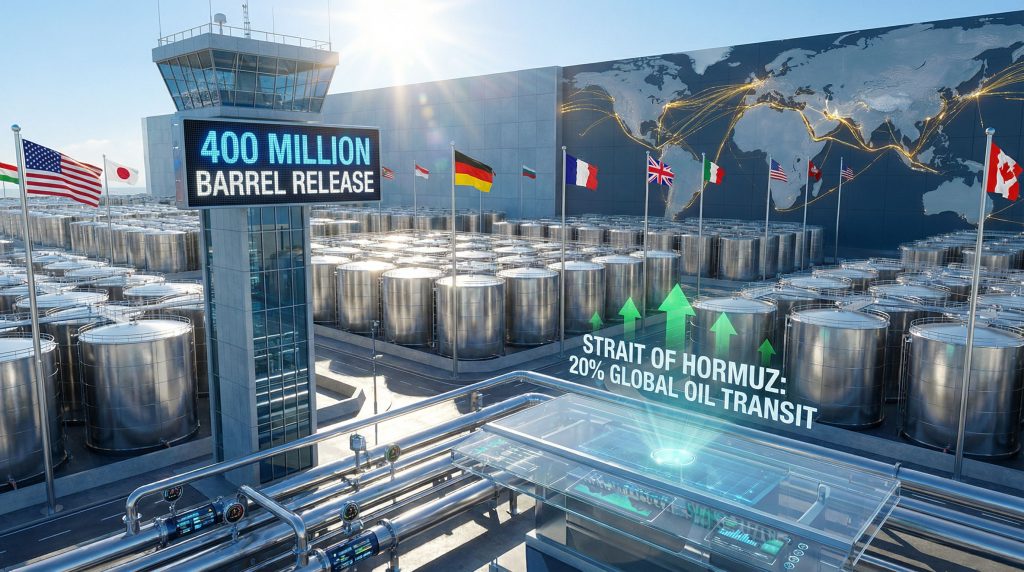
The Strait of Hormuz represents the world's most critical energy chokepoint, with approximately 21% of global petroleum liquids transiting through this narrow waterway annually. This geographic concentration creates systemic vulnerability that emergency stock systems are specifically designed to address.
Critical supply route dependencies include:
• Strait of Hormuz: 21% of global oil transit, serving Asian and European markets
• Suez Canal and Sumed Pipeline: Alternative routing with limited capacity to replace Strait volumes completely
• Panama Canal: Growing importance for LNG and refined product flows
• Turkish Straits: Key route for Caspian Sea energy exports
Historical analysis reveals that even partial disruptions trigger immediate market responses, with crude oil prices increasing 15-50% depending on disruption duration and perceived resolution timeline. The 2019 Strait of Hormuz tensions demonstrated this dynamic clearly, with crude oil prices rising from approximately $50 to $65 per barrel based primarily on psychological impact rather than actual supply loss.
Price Stabilisation Mechanisms and Market Psychology
Emergency oil stock announcements function through sophisticated market psychology mechanisms that often exceed their physical supply impact in the short term. These psychological effects operate through multiple channels that demonstrate the strategic value of maintaining credible reserve systems.
Market Psychology Framework: Emergency releases serve dual functions as immediate supply supplements and credible commitments to increase supply, reducing speculative hoarding behaviour and dampening precautionary purchasing while lowering risk premiums in futures contracts.
Key psychological components include:
• Futures pricing compression: Forward contracts incorporate risk premiums that reduce when emergency supplies are announced
• Inventory management shifts: Refiners decrease hedging purchases when convinced of supply restoration
• Speculation reversal: Long positioning in crude futures decreases following credible supply announcements
The November 2021 IEA emergency oil stocks release demonstrated these mechanisms clearly, triggering an immediate $5 per barrel response in Brent crude futures within hours of announcement. This psychological market impact exceeded physical delivery impact during the first 30 days of implementation, highlighting the importance of credible communication strategies.
Non-Member Country Participation in Global Oil Security
India's Role as an IEA Associate Member
India's February 2017 elevation to IEA Associate Member status marked a significant expansion of global energy security cooperation, bringing the world's third-largest oil consumer into formal coordination frameworks. This associate membership provides India with consultation rights and coordination opportunities while maintaining flexibility in domestic energy policies.
India's Strategic Petroleum Reserve Infrastructure:
| Facility Location | Capacity (Million Barrels) | Operational Status | Strategic Focus |
|—|—|—|—|—|
| Mangalore | 12.48 | Operational | Southwest coast coverage |
| Padur | 11.19 | Operational | Karnataka regional supply |
| Visakhapatnam | 10.67 | Operational | East coast security |
| Chandikhol | 10.20 | Under development | Northern distribution |
India's total strategic petroleum reserve capacity reaches approximately 33.6 million barrels across operational facilities, with additional capacity under development to enhance energy security resilience. These reserves operate independently while coordinating with IEA frameworks during crisis periods.
Emerging Market Energy Security Strategies
Non-IEA member countries have developed sophisticated energy security strategies that complement global coordination efforts while addressing specific regional vulnerabilities. China maintains substantial strategic reserves despite non-member status, while Singapore serves as a critical trading hub with significant storage capabilities.
Regional Energy Security Comparison:
| Country | Reserve Approach | IEA Relationship | Regional Influence |
|—|—|—|—|—|
| China | Independent strategic reserves | Dialogue partner | East Asian anchor |
| Singapore | Trading hub storage | Non-member coordination | Southeast Asian centre |
| Brazil | Producer-consumer hybrid | Associate dialogue | Latin American leader |
| Turkey | Transit hub management | Member coordination | Eurasian bridge |
These diverse approaches create a global energy security network that extends beyond formal IEA membership, incorporating major consumers and producers through bilateral and multilateral coordination mechanisms. Furthermore, understanding global crude shipments helps explain how these networks function during crisis periods.
Long-Term Economic Implications and Market Evolution
Energy Transition and Strategic Reserve Evolution
The global energy transition toward renewable sources creates complex implications for traditional strategic petroleum reserve systems. While immediate oil security needs remain critical, long-term reserve strategies must adapt to changing energy consumption patterns and geopolitical dynamics.
Transitional considerations include:
• Renewable energy growth impact: Declining long-term oil demand affects reserve sizing requirements
• Grid stability needs: Increased focus on electricity sector resilience and storage systems
• Critical mineral security: Strategic reserve concepts expanding beyond petroleum to include battery materials
• Geopolitical evolution: Shifting alliances affecting traditional energy security partnerships
These factors suggest strategic reserve systems will evolve toward hybrid models incorporating traditional petroleum stocks alongside critical mineral reserves and renewable energy infrastructure redundancy.
Global Supply Chain Resilience Building
Modern energy security strategies increasingly emphasise supply chain diversification beyond traditional oil sources, incorporating alternative energy infrastructure development and economic modelling for comprehensive security investments. This evolution reflects growing understanding of interconnected energy system vulnerabilities.
Advanced economic modelling now incorporates renewable energy integration costs, grid modernisation requirements, and critical mineral supply security alongside traditional petroleum reserve calculations. These comprehensive approaches provide more robust energy security frameworks for increasingly complex global energy systems.
Sectoral Economic Impact Analysis
Transportation and Logistics Industry Responses
Emergency oil stock releases create immediate impacts across transportation sectors, with shipping, aviation, and ground transportation industries experiencing distinct response patterns during supply disruptions and recovery periods.
Transportation sector impacts include:
• Shipping costs: Bunker fuel price fluctuations affecting global trade routes
• Aviation fuel availability: Jet fuel supply prioritisation during crisis periods
• Ground transportation: Diesel and petrol market stabilisation effects
• Logistics optimisation: Route planning adjustments based on fuel availability and pricing
The shipping industry particularly benefits from emergency stock releases through bunker fuel market stabilisation, which affects global trade competitiveness and route optimisation decisions. Airlines similarly adjust route planning and fuel hedging strategies based on emergency release announcements and expected duration.
Manufacturing and Industrial Sector Adaptations
Energy-intensive industries develop sophisticated adaptation strategies for managing supply disruption risks, incorporating emergency stock release expectations into operational planning and supply chain management systems.
Industrial Strategy Example: Chemical and petrochemical facilities maintain elevated inventory levels during geopolitical tension periods, utilising emergency stock release announcements to optimise procurement timing and reduce hedging costs while maintaining production continuity.
Manufacturing sectors demonstrate varying sensitivity to oil price volatility, with petrochemical industries showing immediate response patterns while other sectors experience delayed impacts through transportation and raw material cost channels.
The next major ASX story will hit our subscribers first
Policy Coordination and International Cooperation Mechanisms
International Cooperation Frameworks
Effective emergency response systems require sophisticated coordination mechanisms extending beyond formal IEA membership, incorporating producer-consumer dialogue and regional partnership protocols. These frameworks enable rapid information sharing and coordinated policy responses during crisis periods.
Key coordination mechanisms include:
• IEA-OPEC dialogue: Producer-consumer communication during crisis periods
• G20 energy security protocols: Broader international coordination frameworks
• Regional partnerships: Asia-Pacific, European, and Atlantic cooperation agreements
• Bilateral arrangements: Direct coordination between major consumers and producers
These multilevel coordination systems provide redundancy and flexibility while ensuring comprehensive global coverage during energy security crises. In addition, organisations such as the International Energy Agency maintain detailed monitoring systems for tracking supply disruptions and coordinating member country responses.
National Implementation Strategies
Individual countries implement international coordination agreements through diverse national frameworks adapted to specific energy security vulnerabilities and domestic policy priorities. Sweden's implementation of EU Directive 2009/119/EC exemplifies effective national coordination, requiring oil importers and distributors to maintain minimum stock levels monitored annually by the Swedish Energy Agency.
National implementation strategies incorporate early warning systems, cross-border coordination mechanisms, and technology integration for faster response deployment. These systems demonstrate how international agreements translate into practical national energy security measures while maintaining coordination capabilities.
Market Participant Response Patterns and Trading Dynamics
Financial Market Reactions and Trading Behaviours
Oil futures markets respond to emergency stock announcements within seconds to minutes of official communication, demonstrating sophisticated algorithmic trading systems and institutional response mechanisms. Historical volatility during crisis periods shows increased trading volume of 30-50% above normal levels.
Market response characteristics include:
• Immediate price adjustments: Crude oil futures respond within minutes of announcements
• Volume increases: Trading activity spikes 30-50% during crisis periods
• Currency impacts: Dollar appreciation/depreciation affecting oil-importing nations
• Energy sector equity: Stock performance variations across integrated oil companies and independents
The Commodity Futures Trading Commission's large trader positioning data surrounding the November 2021 IEA emergency oil stocks release revealed significant shifts in speculative positioning, with long crude positions decreasing substantially following credible supply announcements.
Strategic Purchasing and Corporate Response Patterns
Corporate energy procurement strategies demonstrate increasing sophistication in incorporating emergency stock release expectations into purchasing decisions and inventory management systems. Refineries optimise utilisation rates based on expected supply restoration timelines, while storage facilities adjust capacity utilisation patterns.
Advanced procurement strategies now incorporate geopolitical risk assessments and emergency response probabilities into hedging decisions, creating more resilient corporate energy security frameworks. These corporate adaptations contribute to overall market stability by reducing panic purchasing behaviours during crisis periods.
Future Preparedness and Crisis Management Evolution
Effectiveness Measurement and Performance Analytics
Modern emergency stock release systems incorporate comprehensive performance measurement frameworks assessing market stabilisation success, supply restoration timeline effectiveness, and economic impact mitigation capabilities. These analytics inform continuous improvement efforts and system optimisation.
Performance metrics include:
• Price stabilisation effectiveness: Volatility reduction measurements and duration analysis
• Supply restoration timelines: Physical delivery schedules and market normalisation periods
• Economic impact mitigation: GDP effects and sectoral disruption minimisation assessments
• Coordination efficiency: Response time measurements and member country participation rates
These comprehensive measurement systems enable evidence-based refinements to emergency response protocols while maintaining system credibility through transparent performance reporting. Additionally, financial news outlets provide ongoing analysis of market reactions to emergency releases and their effectiveness in achieving stabilisation objectives.
Technology Integration and System Modernisation
Emergency response systems increasingly incorporate advanced technology for early warning system improvements, cross-border coordination mechanism refinements, and faster response deployment capabilities. Artificial intelligence and machine learning systems now support threat assessment and response optimisation.
Modern coordination platforms enable real-time information sharing among member countries while maintaining security protocols and confidentiality requirements. These technological advances significantly reduce response times while improving coordination effectiveness and system reliability.
The IEA emergency oil stocks release mechanism continues evolving to address emerging challenges in global energy security, incorporating technological innovations and expanding coordination frameworks to maintain effective crisis response capabilities. Consequently, these systems represent critical infrastructure for maintaining global economic stability during periods of energy market volatility.
Disclaimer: This analysis incorporates publicly available information and historical data through April 2024. Future energy market developments, geopolitical events, and policy changes may affect the relevance and accuracy of projections and assessments contained herein. Readers should consult current official sources and professional advisors for the most recent information and specific investment or policy guidance.
Want to Discover the Next Major Energy Investment Opportunity?
The strategic importance of emergency oil reserves demonstrates how global energy markets create significant opportunities for informed investors. Discovery Alert's proprietary Discovery IQ model delivers real-time alerts on significant ASX mineral discoveries, including energy sector breakthroughs, empowering subscribers to identify actionable opportunities ahead of the broader market whilst transforming complex mineral data into clear investment insights. Begin your 14-day free trial today and secure your market-leading advantage in the rapidly evolving energy and commodities landscape.