August 24, 2026
Global energy markets stand at a crossroads where traditional supply-demand fundamentals intersect with rapidly evolving geopolitical risks and strategic policy responses. The IEA largest oil reserve release under consideration represents a watershed moment that could reshape energy security frameworks worldwide. Furthermore, the architecture of international energy security, built over decades around coordinated reserve management and crisis intervention protocols, now faces unprecedented stress testing as conflicts reshape regional supply chains and challenge established price stability mechanisms.
Understanding the Scale of Emergency Oil Reserve Interventions
The International Energy Agency's coordination of strategic petroleum reserves represents one of the most sophisticated crisis management systems in global commodity markets. When emergency releases are triggered, the scale and timing create ripple effects that extend far beyond immediate price adjustments.
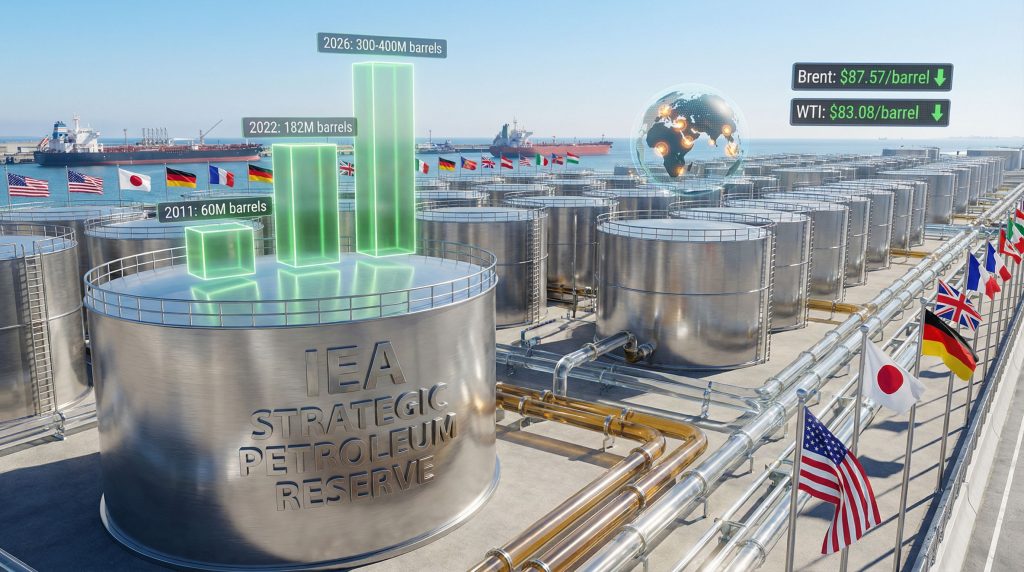
Historical data reveals distinct patterns in reserve deployment magnitudes. The 2011 Libya crisis prompted a 60 million barrel coordinated release, addressing regional supply disruption affecting approximately 1.6 million barrels daily. The 2022 response to the Russia-Ukraine conflict escalated significantly, with member nations deploying 182 million barrels across two separate tranches to offset production losses exceeding 3 million barrels per day.
The March 2026 proposal under consideration would exceed these precedents, with discussions centering on a 300-400 million barrel release. This magnitude represents approximately 25-30% of total IEA emergency stock capacity, crossing into territory that fundamentally alters the strategic reserve landscape. Such drawdown levels approach the threshold where reserve adequacy itself becomes a market concern, creating secondary effects on energy security planning.
Comparing Historical IEA Reserve Release Magnitudes
The coordination mechanisms for these releases involve complex multilateral negotiations among 32 member nations, each with distinct domestic energy security priorities and political constraints. However, decision-making operates on consensus principles, where even a single member state can trigger delays through formal objections, though outright vetoes remain rare in practice.
Moreover, the IEA largest oil reserve release considerations must account for broader market dynamics. The interplay between US oil production decline trends and strategic reserve policies creates additional complexity in global supply calculations.
Emergency Stock Management Framework
The IEA's emergency response protocol follows a structured timeline from crisis assessment to physical deployment:
- Initial Assessment Phase: 24-48 hours for technical evaluation
- Member State Consultation: 48-72 hours for political consensus building
- Deployment Authorisation: 24 hours for final approval processes
- Physical Release Initiation: 7-14 days for logistics coordination
- Market Arrival: 14-30 days depending on transportation routes
This framework balances rapid response capabilities with the deliberative processes necessary for coordinated international action. The March 11, 2026 extraordinary meeting followed this pattern, with member states convening within 24 hours of the crisis escalation and targeting Wednesday decisions for a Tuesday assessment.
When big ASX news breaks, our subscribers know first
How Do Geopolitical Supply Disruptions Trigger Reserve Releases?
The psychology of oil market disruptions operates on multiple levels, combining actual supply losses with perceived risks and market participant responses to uncertainty. In addition, modern reserve release decisions increasingly factor in anticipated rather than realised disruptions, reflecting the speed at which financial markets price geopolitical risk.
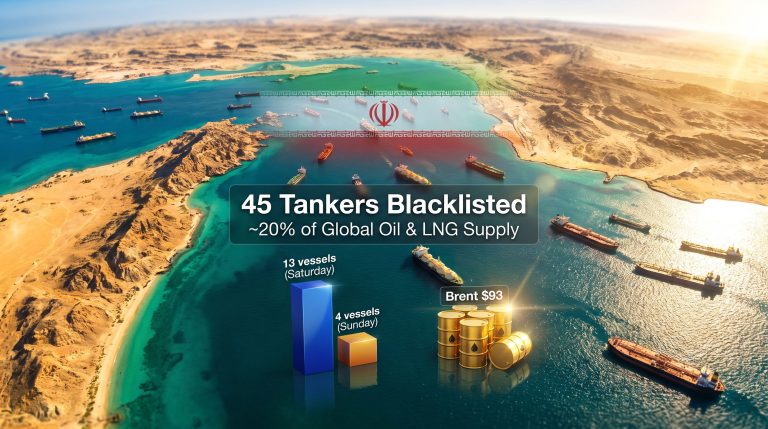
Critical infrastructure vulnerabilities create systematic risks that extend beyond individual conflict zones. The Strait of Hormuz, through which approximately 21% of global petroleum liquids transit, represents a single point of failure capable of removing 14 million barrels per day from global supply chains. Consequently, even partial closures or increased transit times create cascading effects through just-in-time delivery systems that modern refineries depend upon.
Critical Chokepoint Analysis
Current shipping route analysis reveals the concentration of supply risk in key maritime passages:
- Strait of Hormuz: 14.2M bpd transit capacity
- Strait of Malacca: 16.8M bpd transit capacity
- Suez Canal/SUMED Pipeline: 5.9M bpd combined capacity
- Bab el-Mandab Strait: 6.2M bpd transit capacity
The Red Sea routing disruptions experienced during the Iran conflict forced numerous tankers to redirect around the Cape of Good Hope, adding 10-14 days to delivery schedules and requiring additional vessel capacity that strains global shipping resources. These delays compound physical supply shortages with logistical bottlenecks that persist even after political tensions ease.
Regional supply chain vulnerability assessments indicate that Middle Eastern production disruptions create asymmetric impacts across global markets. For instance, European refineries, designed for lighter crude specifications, face greater adjustment challenges when Iranian and Iraqi supplies are restricted, while Asian markets with greater heavy crude processing capability can partially compensate through alternative suppliers.
Price Threshold Economics
Oil price behaviour around the $100 per barrel psychological threshold exhibits distinct patterns that influence policy responses. Historical analysis shows that sustained pricing above $95-100 triggers consumer demand destruction in developed economies, while simultaneously activating strategic reserve release discussions among policymakers.
The March 2026 price surge to "almost four-year highs" on Monday, followed by the immediate policy response coordination on Tuesday, demonstrates how rapidly modern energy crisis management operates. Furthermore, benchmark Brent crude reaching $87.57 after the reserve release announcement, declining 0.26%, illustrates the announcement effect that precedes physical supply impacts.
Market volatility patterns during geopolitical crises follow predictable escalation sequences:
- Initial Shock Phase: 15-25% price increases within 24-48 hours
- Policy Response Assessment: Price stabilisation as intervention options are evaluated
- Implementation Rally: Secondary price increases if interventions appear inadequate
- Supply Rebalancing: Gradual normalisation as alternative supplies activate
What Market Mechanisms Respond to Strategic Reserve Announcements?
Financial markets in crude oil operate with sophisticated forward-looking mechanisms that price reserve releases before physical oil reaches consumers. The immediate price response to IEA announcements reflects this anticipatory behaviour, where futures contracts adjust based on expected supply increases rather than current inventory changes.
The March 11, 2026 market reaction demonstrated these dynamics clearly. Brent crude futures declined 0.26% to $87.57 per barrel within hours of the reserve release report, while West Texas Intermediate dropped 0.44% to $83.08 per barrel. Nevertheless, these movements occurred despite no physical oil being deployed, highlighting how announcement effects create market confidence that reduces risk premiums.
Immediate Price Response Patterns
Trading volume analysis during reserve announcements reveals distinct institutional behaviour patterns:
- Algorithmic Trading Response: Immediate price adjustments within seconds
- Hedge Fund Positioning: Rapid unwinding of long positions within minutes
- Commercial Trading: Gradual adjustment over hours as supply contracts are reassessed
- Retail Investor Activity: Delayed response over 24-48 hours following news coverage
The temporal mismatch between announcement effects and physical supply delivery creates opportunities for sophisticated market participants while potentially misleading retail investors about actual supply-demand fundamentals. However, the impact of OPEC global influence on pricing decisions adds another layer of complexity to these market responses.
Strategic reserves may require 30-90 days to reach end consumers through refining and distribution systems, yet prices adjust immediately based on anticipated effects.
Supply-Demand Rebalancing Effects
Storage capacity utilisation rates during emergency releases present complex logistical challenges. Global commercial crude storage operates near 85-90% capacity utilisation during normal conditions, leaving limited buffer space for strategic reserve additions. This constraint means emergency releases must be carefully timed to match refining demand rather than simply flooding storage facilities.
Refinery processing capabilities create additional bottlenecks during crisis periods. Most refineries operate with specific crude slate requirements, and sudden shifts in available crude types can reduce processing efficiency even when total supply appears adequate. For instance, the technical specifications of strategic reserve crude may not match optimal refinery configurations, creating quality-adjusted supply shortages despite numerical barrel availability.
Physical delivery logistics compound these challenges. Strategic reserves are typically stored at coastal facilities designed for rapid marine transport, but inland distribution requires pipeline, rail, and truck transportation that operates at fixed capacity levels. During crises, these distribution networks become congested as commercial and strategic supplies compete for the same transportation infrastructure.
Which Countries Control Global Emergency Oil Reserves?
The concentration of strategic petroleum reserves among developed economies reflects historical energy security architectures established during the 1973-74 oil embargo. IEA member states collectively maintain approximately 1.2-1.5 billion barrels in emergency reserves, representing 90-120 days of net import coverage across the membership base.
The United States Strategic Petroleum Reserve, historically the world's largest emergency stockpile, has undergone significant changes in capacity and utilisation over recent years. Furthermore, current holdings fluctuate based on market conditions and policy decisions, but the infrastructure maintains capacity for rapid deployment when crisis conditions emerge.
IEA Member State Reserve Holdings
European Union coordination of emergency stocks operates through a distributed model where individual member states maintain national reserves while participating in coordinated release decisions. This structure balances sovereignty concerns with collective security benefits, though it creates complexity during rapid response scenarios.
Asia-Pacific emergency stock distribution has evolved significantly as economic growth in the region increased import dependence. Japan, South Korea, and Australia maintain substantial reserves relative to their consumption, while newer IEA members have developed emergency stock programmes aligned with international standards.
The decision-making authority within IEA structures requires consensus among 32 member nations, each with veto capability through formal objection processes. This governance model ensures broad support for major releases while potentially slowing response times when political consensus proves elusive.
Non-IEA Strategic Reserve Players
China's strategic petroleum reserve programme operates outside IEA coordination but influences global oil markets through its accumulation and deployment decisions. The scale and timing of Chinese reserve changes can offset or amplify IEA actions, creating complex interactions between coordinated and unilateral reserve policies.
India's emergency petroleum reserves expansion reflects growing recognition of import vulnerability as economic development increases energy consumption. Recent infrastructure investments have enhanced India's ability to weather supply disruptions, though reserve levels remain below IEA standards relative to import volumes.
Regional cooperation frameworks outside the IEA structure include the Association of Southeast Asian Nations (ASEAN) petroleum security initiatives and various bilateral arrangements between major consuming and producing nations. These alternative frameworks provide backup coordination mechanisms when IEA consensus proves difficult to achieve.
How Do Emergency Releases Impact Long-Term Energy Security?
Strategic reserve depletion through major releases creates subsequent challenges for energy security planners as depleted stocks must be replenished while maintaining crisis response capabilities. The financial and logistical requirements for restocking operations can strain government budgets and compete with other policy priorities.
Replenishment timing decisions involve complex trade-offs between market impact and fiscal efficiency. Restocking during periods of low oil price movements minimises costs but may prevent prices from reaching levels that incentivise increased production. Conversely, delaying restocking until prices rise reduces fiscal burden but may signal reduced emergency preparedness to market participants.
Reserve Replenishment Strategies
Cost averaging approaches for reserve rebuilding spread purchases over extended periods to reduce market impact and smooth budget expenditures. This strategy requires discipline during volatile price periods when political pressure may exist to accelerate or delay purchases based on short-term price movements.
Budget allocation priorities across member nations reflect different fiscal constraints and energy security assessments. Countries with stronger public finances can rebuild reserves more rapidly, while nations facing fiscal pressures may extend replenishment timelines or reduce target reserve levels.
International coordination of replenishment activities helps minimise market disruption as member states rebuild stocks simultaneously. Coordinated buying programmes can provide bulk purchasing advantages while signalling sustained commitment to emergency preparedness despite recent drawdowns.
Alternative Energy Transition Considerations
The relevance of petroleum reserves during renewable energy scaling presents strategic planning challenges for long-term energy security. Investment in emergency oil stocks competes with funding for renewable energy infrastructure and grid resilience improvements that may provide more durable security benefits.
Critical mineral stockpiling has emerged as a complementary emergency preparedness strategy as renewable energy systems require lithium, cobalt, rare earth elements, and other materials subject to supply concentration risks. The strategic framework developed for petroleum reserves provides templates for critical mineral security programmes.
Energy security diversification beyond petroleum includes investments in electricity storage, grid redundancy, and demand response systems that can reduce oil import dependence during crisis periods. These alternative approaches may prove more cost-effective than maintaining large petroleum reserves as transportation electrification accelerates.
What Are the Economic Implications of Massive Reserve Releases?
The fiscal impact of strategic reserve releases extends beyond the immediate market intervention to encompass asset valuation changes, opportunity costs, and revenue implications across member nation budgets. When reserves are released during price spikes, governments capture elevated values while simultaneously reducing price pressures that affect consumer spending and economic growth.
Reserve asset valuations fluctuate significantly during market volatility, creating accounting challenges for government balance sheets and budget planning processes. The March 2026 proposed release, valued at approximately $26-35 billion at current prices, represents substantial fiscal exposure for participating nations.
Fiscal Impact on Member Nations
Opportunity costs of emergency stock maintenance include storage facility expenses, inventory management systems, and the foregone returns from alternative investments of the capital tied up in petroleum reserves. These costs must be weighed against the economic benefits of crisis intervention capabilities and reduced import vulnerability.
Tax revenue implications from stabilised fuel prices create complex fiscal feedback effects. Lower petrol and diesel prices reduce excise tax collections while potentially stimulating economic activity that generates income and corporate tax revenues. The net fiscal impact varies by country based on tax structures and economic conditions.
Industry Response and Investment Patterns
Oil company production adjustment strategies during strategic reserve releases involve complex optimisation decisions balancing market prices, production costs, and long-term capacity planning. Reserve releases can reduce incentives for emergency production increases while providing time for orderly capacity adjustments.
Exploration and development project timelines may be influenced by reserve release announcements that signal government willingness to intervene during price spikes. This policy predictability can reduce investment incentives for high-cost production projects while encouraging investment in lower-cost, more reliable production sources.
Downstream refining margins face pressure during reserve releases as crude supply increases may not be matched by proportional increases in refined product demand. This margin compression can affect refinery utilisation rates and investment decisions for facility upgrades and expansions.
The broader context of OPEC meeting impact on global supply decisions adds another dimension to industry planning considerations during major reserve releases.
The next major ASX story will hit our subscribers first
Future Strategic Reserve Policy Evolution
Climate policy integration with strategic reserve management creates tensions between carbon reduction goals and traditional energy security approaches. Maintaining large petroleum reserves conflicts with long-term decarbonisation objectives while remaining necessary for near-term security during the energy transition period.
Climate Policy Integration
Carbon reduction goals established by IEA member nations include net-zero emissions targets that ultimately eliminate petroleum demand for most applications. Strategic reserve policy must adapt to declining long-term oil demand while maintaining adequate crisis response capabilities during the transition period.
Green transition timeline compatibility requires coordination between reserve policy and renewable energy deployment schedules. As transportation electrification and industrial decarbonisation progress, the appropriate size and composition of strategic reserves will need regular reassessment.
International cooperation framework adaptations may include expanded coordination with non-IEA nations whose reserve policies increasingly influence global markets, as well as integration with critical mineral security initiatives that support renewable energy infrastructure.
Technology-Enhanced Reserve Management
Digital monitoring and deployment systems enable more precise crisis response through real-time market analysis, automated decision support, and coordinated release execution. These technological improvements can reduce response times and improve the effectiveness of reserve interventions.
Predictive analytics for crisis intervention timing uses artificial intelligence and machine learning to analyse geopolitical risk factors, supply chain vulnerabilities, and market conditions. These tools can improve the precision of reserve release decisions and optimise timing for maximum market impact.
Automated market response mechanisms could enable pre-programmed reserve releases triggered by specific market conditions, reducing the time required for political consultation while ensuring consistent policy responses across different crisis scenarios.
The IEA largest oil reserve release proposal represents a pivotal moment in energy security policy evolution. As markets grapple with unprecedented geopolitical challenges, the coordination between strategic reserves and emerging energy transition policies will define global energy security frameworks for decades to come. Nevertheless, the success of such massive interventions depends not only on their immediate market impact but also on their integration with long-term sustainability and security objectives.
The coordination with broader market dynamics, including understanding oil price stagnation patterns and their underlying causes, will be crucial for policymakers as they navigate these complex energy security challenges. Moreover, the lessons learnt from this historic intervention will inform future crisis response mechanisms and reshape international energy cooperation frameworks.
Additionally, analysis from major financial institutions suggests that market participants are closely monitoring both the immediate price impacts and longer-term implications of such unprecedented reserve deployment strategies.
Disclaimer: This analysis is based on publicly available information and involves discussion of speculative scenarios, market forecasts, and policy implications. Actual market conditions, government policies, and geopolitical developments may differ materially from the scenarios discussed. Readers should consult official government sources and qualified financial advisors before making investment or policy decisions based on this information.
Want to Navigate Energy Market Volatility and Profit from Resource Discoveries?
Discovery Alert's proprietary Discovery IQ model delivers real-time alerts on significant ASX mineral discoveries, helping investors identify opportunities that could benefit from global energy market shifts and commodity price movements. Begin your 14-day free trial today to position yourself ahead of market volatility and secure actionable insights across the resource sector.