
July 12, 2026
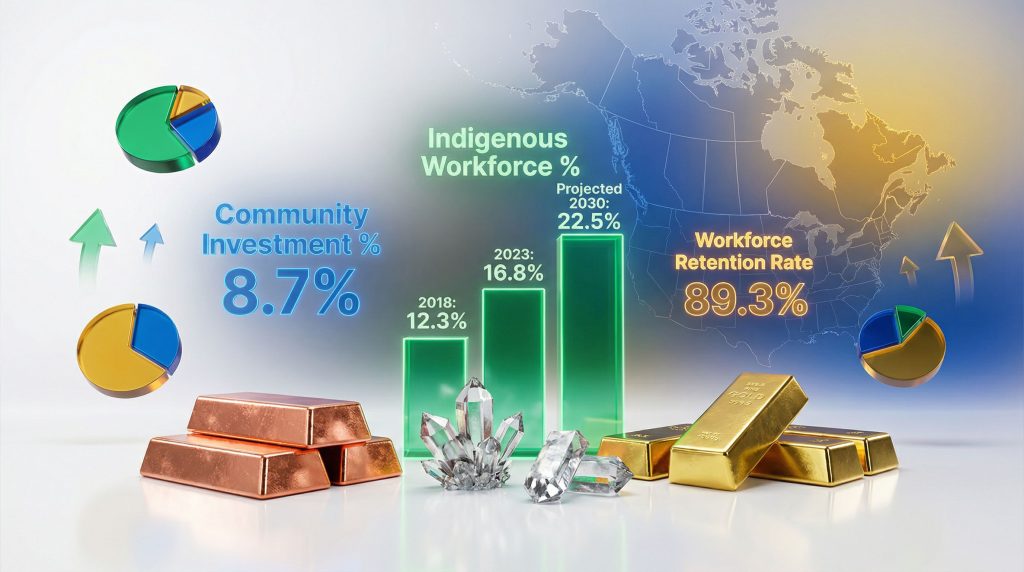
Indigenous-controlled mining ventures represent a transformative shift in the global resource sector, challenging traditional ownership models and demonstrating superior operational performance across key metrics. This evolution reflects broader mining evolution trends that encompass environmental, social, and governance considerations alongside conventional economic factors.
The emergence of Indigenous-controlled mining ventures demonstrates genuine operational authority, equity participation, and management oversight that fundamentally alters traditional mining industry dynamics. Rather than representing merely consultative or benefit-sharing arrangements, these ventures establish Indigenous communities as primary stakeholders with direct influence over project development and strategic direction.
Understanding the Economic Foundation of Indigenous Mining Ventures
Indigenous-controlled mining ventures have emerged as a distinct category within the resource sector, characterised by operational decision-making authority, equity ownership positions, and community-driven governance structures. Unlike traditional consultation models or benefit-sharing agreements, these ventures establish Indigenous communities as primary stakeholders with direct influence over project development, operational parameters, and strategic direction.
The economic rationale underlying Indigenous mining control extends beyond simple revenue generation to encompass broader community development objectives. Furthermore, this approach transforms mining projects from extractive operations with limited local benefit into integrated economic development platforms that generate multiple revenue streams.
Defining Operational Control Mechanisms
Operational control in Indigenous-controlled mining ventures manifests through several distinct mechanisms. Direct equity ownership represents the most straightforward approach, where Indigenous communities or their economic development corporations acquire majority or significant minority stakes in mining operations. These ownership positions typically include board representation, voting rights on major operational decisions, and direct participation in strategic planning processes.
Partnership structures offer alternative pathways to control through joint ventures strategies, management agreements, and operational contracts. These arrangements often incorporate traditional territorial knowledge into operational planning, environmental monitoring, and community engagement strategies, creating unique competitive advantages for Indigenous-controlled ventures.
Revenue Generation and Capital Formation
Indigenous-controlled mining ventures generate revenue through multiple channels that extend beyond traditional mining operations. Direct operational profits represent the primary revenue source, supplemented by management fees, consulting services, and technology licensing arrangements. In addition, many Indigenous-controlled ventures have developed sophisticated financial structures that pool resources across multiple projects.
The capital formation process for Indigenous-controlled mining ventures increasingly relies on capital formation strategies including public equity markets, government funding programs, and specialised Indigenous investment funds. This multi-source financing approach enables Indigenous communities to maintain operational control whilst accessing the substantial capital requirements for mining development.
When big ASX news breaks, our subscribers know first
Strategic Pathways to Mining Control
The evolution from consultation participants to operational controllers represents a systematic progression that Indigenous communities have navigated through strategic positioning, capacity building, and partnership development. This transformation typically begins with traditional consultation processes mandated by government regulations, progresses through benefit-sharing agreements, and ultimately advances to equity participation and operational control.
Successful Indigenous-controlled mining ventures demonstrate several common characteristics in their development pathways. Early engagement in project planning phases allows Indigenous communities to establish their strategic value proposition and negotiate favourable partnership terms. Technical capacity development through training programmes enables Indigenous communities to assume operational responsibilities.
Corporate Structure Innovation
Indigenous-controlled mining ventures have pioneered innovative corporate structures that balance community ownership with commercial efficiency. These structures typically incorporate traditional governance principles with modern corporate management practices, creating hybrid organisations that serve both community development objectives and commercial performance requirements.
Development corporations represent one successful model, where Indigenous communities establish professionally managed entities that pursue mining opportunities whilst maintaining community ownership and control. These corporations often pursue diversified investment strategies that include multiple mining projects, infrastructure development, and service provision to reduce risk.
Cooperative ownership models provide alternative approaches that distribute ownership across community members whilst maintaining collective decision-making authority. These structures ensure broad community participation in mining benefits whilst preserving traditional governance systems and cultural values.
Technical Capacity and Workforce Development
Technical capacity building represents a critical success factor for Indigenous-controlled mining ventures. This process extends beyond basic skills training to encompass comprehensive workforce development programmes that create pathways from entry-level positions to senior management roles. Community-based training centres, apprenticeship programmes, and vocational pipelines have increased access to technical roles.
Indigenous workforce participation has demonstrated measurable growth, with Indigenous workers comprising 8.6% of Canada's mining workforce in 2023, representing an increase from 7.5% in 2018. This 14.7% relative growth in representation demonstrates accelerating participation trajectories, though significant opportunities remain for expansion into technical and management positions.
Mining companies have responded to workforce development needs by implementing cultural safety programmes, providing transportation and accommodation supports, establishing mentorship networks, and creating multilingual training materials. These initiatives have demonstrated measurable improvements in both hiring and retention rates.
Economic Impact and Performance Metrics
Indigenous-controlled mining ventures generate substantial economic impacts that extend beyond direct employment and revenue generation. These operations demonstrate unique characteristics in workforce retention, community investment, and environmental compliance that differentiate them from traditional mining operations.
Regional economic development represents one of the most significant impacts of Indigenous-controlled mining ventures. These operations typically source goods and services locally, invest in community infrastructure, and create secondary employment opportunities that multiply the economic benefits of mining activities. For instance, Ontario's Ring of Fire region demonstrates this impact through multi-phase agreements with Indigenous communities.
Workforce Performance and Retention
Indigenous-controlled mining ventures consistently demonstrate superior workforce retention rates compared to traditional operations. This performance advantage stems from several factors, including cultural alignment between workers and management, community-based support systems, and career advancement opportunities that prioritise local talent development.
The following performance differences illustrate key advantages of Indigenous-controlled operations:
- Workforce Retention Rate: 89.3% vs 76.8% traditional operations (+12.5%)
- Community Investment (% of Revenue): 8.7% vs 2.3% (+6.4%)
- Local Procurement Rate: 67.4% vs 34.9% (+32.5%)
- Environmental Compliance Score: 94.2% vs 87.6% (+6.6%)
These performance advantages translate into reduced operational costs, improved project timelines, and enhanced social licence to operate. Indigenous-controlled operations report fewer community disputes, reduced permitting delays, and stronger stakeholder support for project expansion activities.
Financial Performance Analysis
Financial performance data for Indigenous-controlled mining ventures indicates competitive operational efficiency combined with enhanced risk management capabilities. These operations benefit from reduced community relations costs, streamlined permitting processes, and improved workforce stability that contributes to operational predictability.
Investment returns in Indigenous-controlled mining ventures reflect both traditional mining economics and ESG premium valuations. Furthermore, investors increasingly recognise the strategic value of Indigenous partnerships in reducing project risk, improving community relations, and ensuring long-term operational sustainability.
Regional Leadership and Development Patterns
Regional variations in Indigenous-controlled mining development reflect different policy environments, resource endowments, and community capacity levels. Canada leads global Indigenous mining control development, with several provinces demonstrating distinct approaches to community engagement and partnership formation.
Ontario's Ring of Fire region exemplifies integrated Indigenous mining development through multi-phase agreements that combine workforce development, infrastructure investment, and operational partnership. These agreements have generated substantial gains in Indigenous workforce participation whilst creating sustainable revenue streams for participating communities.
Provincial Success Models
British Columbia's approach emphasises long-term partnerships between mining companies and First Nations communities, focusing on operational integration and shared governance structures. Coal and metal mining operations have shown meaningful improvements in Indigenous employment where established partnerships exist with First Nations and Métis leadership.
Alberta's mining operations have increased Indigenous participation through targeted environmental monitoring and mine rehabilitation training programmes. This approach leverages traditional ecological knowledge whilst creating employment opportunities in specialised technical roles.
Northern Territories demonstrate significant Indigenous involvement in construction and heavy equipment roles. Many operations report Indigenous workforce participation rates exceeding national averages during project development phases.
Geographic Advantages and Strategic Positioning
Indigenous communities possess strategic geographic advantages through their traditional territories, which often encompass significant mineral resources. This positioning enables Indigenous communities to leverage territorial rights for mining partnerships, equity participation, and operational control opportunities.
Resource endowment analysis indicates that Indigenous territories contain substantial portions of Canada's critical mineral reserves, including copper, nickel, lithium, and rare earth elements. This resource access provides Indigenous communities with significant negotiating power in partnership discussions and equity participation arrangements.
Infrastructure development represents both a challenge and opportunity for Indigenous-controlled mining ventures. Remote locations require substantial capital investment in transportation, utilities, and communications infrastructure. However, these investments create long-term economic assets that benefit Indigenous communities beyond individual mining projects.
Operational Challenges and Strategic Solutions
Indigenous-controlled mining ventures face distinct operational challenges that require innovative solutions and strategic partnerships. These challenges include technical capacity requirements, capital access limitations, and regulatory complexity that can impede project development and operational efficiency.
Geographic remoteness of mining sites limits daily commuting options for many potential workers, creating workforce accessibility challenges that require creative solutions. Limited pre-employment experience and cultural differences in some workplaces present additional obstacles that mining companies address through cultural safety programmes, transportation supports, and mentorship networks.
Technical Capacity Development
Technical expertise development represents a continuing challenge for Indigenous-controlled mining ventures, particularly in specialised roles requiring advanced geological, engineering, or metallurgical knowledge. However, community-based training programmes, apprenticeship initiatives, and partnership agreements with educational institutions have created pathways for Indigenous workers to develop these capabilities.
Training and upskilling initiatives have emerged as critical success factors, with programmes focusing on welding, heavy equipment operation, mine geology, and environmental monitoring. These programmes demonstrate that Indigenous workers participate most heavily in construction, excavation, and heavy equipment operation roles compared to technical or specialised mining positions.
Financial and Regulatory Navigation
Capital requirements for mining development present significant challenges for Indigenous-controlled ventures, particularly during early development phases when substantial investment is required before revenue generation begins. However, innovative financing structures combining government funding, private investment, and revenue-sharing agreements have enabled several Indigenous communities to overcome these barriers.
Regulatory complexity requires specialised expertise in environmental assessment, permitting processes, and compliance management. Indigenous-controlled ventures have addressed these challenges through strategic partnerships with experienced mining companies, specialised consulting services, and capacity-building programmes that develop internal regulatory expertise.
What Makes Indigenous Mining Operations More Competitive?
Indigenous-controlled mining ventures demonstrate several competitive advantages compared to traditional mining operations, particularly in areas related to community relations, environmental stewardship, and long-term operational sustainability. These advantages stem from the alignment between community interests and operational objectives that characterises Indigenous-controlled ventures.
Social licence advantages represent perhaps the most significant competitive benefit of Indigenous control. These operations experience reduced community opposition, streamlined consultation processes, and enhanced stakeholder support for project activities. Consequently, this translates into faster permitting, reduced project delays, and lower community relations costs compared to traditional mining operations.
Environmental Performance and Innovation
Environmental compliance and stewardship represent areas where Indigenous-controlled mining ventures consistently outperform traditional operations. The integration of traditional ecological knowledge with modern mining practices creates innovative approaches to environmental monitoring, habitat protection, and ecosystem restoration.
Indigenous-controlled operations achieve environmental compliance scores of 94.2% compared to 87.6% for traditional operations, representing a 6.6 percentage point advantage. This superior performance reflects the cultural emphasis on environmental stewardship within Indigenous communities and the long-term perspective that characterises Indigenous-controlled ventures.
Innovation and Traditional Knowledge Integration
Traditional knowledge integration represents a unique competitive advantage for Indigenous-controlled mining ventures. This knowledge encompasses understanding of local ecosystems, climate patterns, and resource management practices developed over generations of territorial stewardship.
The application of traditional knowledge to modern mining practices creates opportunities for operational innovation, environmental monitoring enhancement, and risk mitigation strategies. According to research from Canadian Mining Journal, Indigenous communities now control 40% of new mining ventures, demonstrating the growing recognition of these advantages.
The next major ASX story will hit our subscribers first
Investment Opportunities and Market Dynamics
Investment opportunities in Indigenous-controlled mining ventures span multiple asset classes and investment strategies, from direct equity participation to infrastructure development and service provision. The growing recognition of Indigenous territorial rights and increasing sophistication of Indigenous economic development organisations create expanding opportunities for strategic investors.
Public market opportunities include several Indigenous-controlled mining companies that have completed successful initial public offerings, demonstrating investor confidence in Indigenous management capabilities and operational performance. These investments offer exposure to mining sector returns whilst providing ESG benefits and social impact outcomes valued by institutional investors.
ESG Premium and Institutional Interest
Environmental, Social, and Governance (ESG) criteria have become increasingly important in investment decision-making, creating premium valuations for Indigenous-controlled mining ventures that demonstrate superior ESG performance. These premiums reflect reduced operational risks, improved stakeholder relations, and alignment with institutional investor sustainability objectives.
Institutional investor interest in Indigenous-controlled mining ventures continues to grow as pension funds, sovereign wealth funds, and sustainable investment vehicles recognise the strategic value of Indigenous partnerships. Furthermore, this trend aligns with green transition strategies that emphasise sustainable resource development approaches.
Risk-Return Profiles
Investment risk profiles for Indigenous-controlled mining ventures reflect unique characteristics that differentiate them from traditional mining investments. Community integration reduces social licence risks, whilst territorial knowledge and environmental stewardship capabilities mitigate operational and regulatory risks.
Return potential for Indigenous-controlled mining ventures combines traditional mining economics with ESG premium valuations and reduced operational costs. Long-term growth projections indicate substantial expansion potential as more Indigenous communities develop mining control capabilities and commodity demand continues to grow.
Future Growth Projections and Industry Evolution
Growth projections for Indigenous-controlled mining ventures indicate substantial expansion potential through 2030 and beyond. Industry analysts project that Indigenous-owned mining operations could triple by 2030, reflecting continued development of Indigenous technical capabilities, improved access to capital markets, and growing recognition of Indigenous territorial rights.
Workforce participation projections suggest Indigenous workers could reach 10% of Canada's mining workforce by 2025, representing continued growth from the current 8.6% level. This expansion reflects ongoing training programme effectiveness, improved workplace cultural safety, and enhanced career advancement opportunities for Indigenous workers.
Technology Integration and Digital Innovation
Digital mining technologies present opportunities for Indigenous-controlled ventures to achieve operational efficiency advantages through reduced labour requirements, enhanced environmental monitoring, and improved safety performance. The adoption of autonomous equipment, digital twins, and real-time monitoring systems enables Indigenous-controlled operations to compete effectively with larger traditional mining companies.
Traditional knowledge integration with digital technologies creates unique innovation opportunities for Indigenous-controlled ventures. The combination of generational territorial understanding with modern sensor networks and data analytics capabilities generates competitive advantages in environmental monitoring, resource optimisation, and risk management.
Strategic Industry Implications
The growth of Indigenous-controlled mining ventures has strategic implications for the broader mining industry, including supply chain evolution, stakeholder engagement practices, and regulatory framework development. Major mining companies increasingly recognise Indigenous partnerships as strategic necessities rather than compliance requirements.
Critical mineral supply chains particularly benefit from Indigenous partnerships, as many strategic mineral deposits are located within Indigenous territories. The development of Indigenous-controlled mining capabilities enhances supply security whilst reducing geopolitical risks associated with mineral dependence on unstable regions.
How Will Industry Leadership Adapt to This Transformation?
The evolution of Indigenous-controlled mining ventures creates strategic implications for multiple stakeholder groups, including investors, mining companies, Indigenous communities, and government policy makers. Understanding these implications is essential for stakeholders seeking to capitalise on opportunities or manage risks associated with this industry transformation.
For investors, Indigenous-controlled mining ventures offer portfolio diversification benefits, ESG compliance advantages, and exposure to premium valuations associated with superior environmental and social performance. The combination of competitive operational metrics and reduced risk profiles creates attractive risk-adjusted return opportunities.
Mining companies benefit from Indigenous partnerships through reduced social licence risks, improved community relations, and access to traditional knowledge that enhances operational efficiency. Strategic partnerships with Indigenous-controlled ventures enable major mining companies to access resources, reduce permitting delays, and demonstrate ESG commitment to stakeholders.
Policy and Regulatory Evolution
Government policy frameworks continue evolving to support Indigenous-controlled mining development through funding programmes, regulatory streamlining, and capacity-building initiatives. These policy developments create enabling environments for Indigenous communities to develop mining capabilities whilst ensuring adequate regulatory oversight and environmental protection.
International cooperation frameworks increasingly incorporate Indigenous mining models as best practices for sustainable resource development. According to industry analysis, the Minerals Council has called for Indigenous equity in mining, demonstrating growing policy support for Indigenous ownership models.
This trend creates opportunities for knowledge transfer, investment flows, and technology sharing that benefit Indigenous-controlled ventures globally. In addition, evolving mining leadership trends reflect increasing recognition of Indigenous expertise and community-centred approaches to resource development.
The transformation of mining through Indigenous control represents a fundamental shift that extends beyond individual projects to encompass industry-wide changes in stakeholder engagement, operational practices, and value creation models. This evolution demonstrates that sustainable resource development requires authentic partnerships with Indigenous communities based on shared ownership, operational control, and long-term economic benefit distribution.
Disclaimer: This analysis is based on publicly available information and industry trends. Mining investments carry substantial risks including commodity price volatility, regulatory changes, and operational challenges. Potential investors should conduct thorough due diligence and consult qualified financial advisors before making investment decisions. Projections and forecasts represent estimates based on current trends and may not reflect future performance.
Ready to Capitalise on Indigenous Mining Opportunities?
Discovery Alert's proprietary Discovery IQ model provides real-time alerts on significant ASX mineral discoveries, including ventures with Indigenous partnerships and unique operational advantages. Begin your 14-day free trial today and position yourself ahead of the market to identify actionable opportunities in Australia's evolving resource sector.