July 25, 2026
Indonesia's aluminium expansion challenges represent one of the most ambitious industrial transformations in modern mining history. The country's aggressive pursuit of vertical integration from bauxite mining through aluminum smelting could fundamentally reshape global supply chains. However, this transformation faces significant obstacles that threaten to derail even the most optimistic projections.
What Makes Indonesia's Aluminum Expansion So Ambitious?
The Scale of Indonesia's Industrial Transformation
Indonesia's aluminum sector expansion represents one of the most dramatic industrial transformations in recent mining industry transformation. Current alumina production capacity of 1.5 million tonnes annually positions the country as a mid-tier global producer, while aluminum smelting operations generate approximately 1.13 million tonnes per year. However, these baseline figures pale in comparison to the sector's projected trajectory.
If all planned projects reach completion, Indonesia's alumina capacity could surge to 29.8 million tonnes annually, representing a staggering 1,900% expansion from current levels. Simultaneously, aluminum smelting capacity targets 14.9 million tonnes, marking a 1,220% increase over existing operations. This ambitious scope fundamentally reshapes Indonesia's aluminium expansion challenges across multiple dimensions.
Historical capacity additions provide context for this acceleration. Between 2014 and 2024, Indonesia's alumina refining capacity increased by approximately 4.1 million tonnes, demonstrating sustained investment momentum over the past decade. However, aluminum smelting capacity grew by only 0.3 million tonnes during the same period, highlighting a critical infrastructure imbalance that current expansion plans aim to address.
The Indonesian government's downstream processing policies drive this transformation through export restrictions designed to capture greater economic value domestically rather than exporting raw materials. These regulations have successfully attracted substantial private and foreign investment, creating an integrated value chain from bauxite mining through aluminum smelting.
However, industry analysis reveals fundamental coordination challenges. Investment approvals and mining project expansion have substantially outpaced downstream refining and smelting infrastructure development, creating supply-side inefficiencies that threaten optimal resource utilisation.
Strategic Positioning in Global Supply Chains
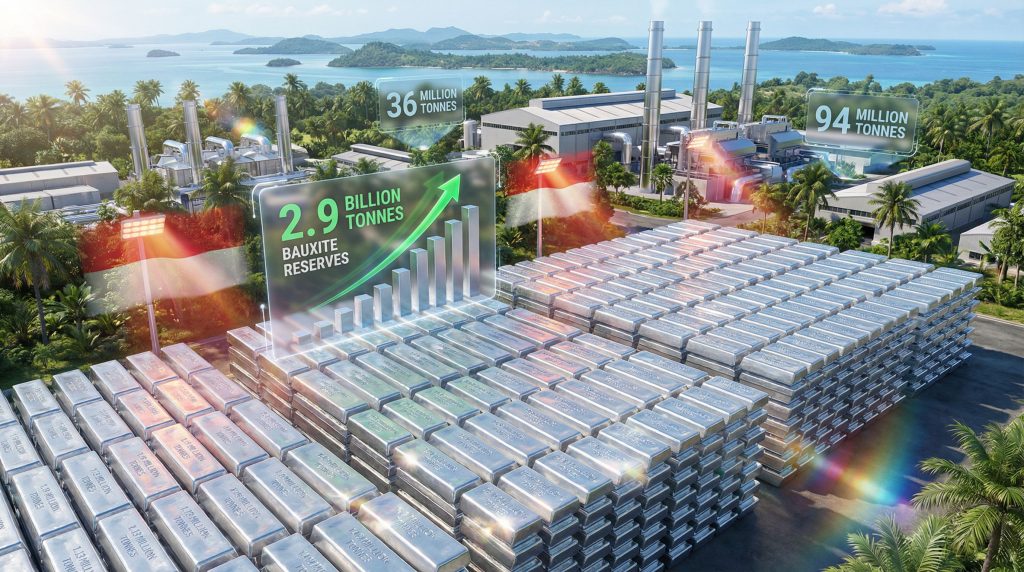
Indonesia leverages substantial bauxite reserves totaling 2.9 billion tonnes to challenge established aluminum producers including China, Australia, and Guinea. Current bauxite production of 10 million tonnes annually provides the foundation for this strategic repositioning, though substantial expansion will be required to support projected capacity increases.
The competitive differentiation strategy centres on transforming Indonesia from a commodity supplier into an integrated aluminum producer capable of capturing downstream profit margins. This approach directly contrasts with traditional raw material export models, instead emphasising value-added processing that retains economic benefits domestically.
Bauxite project insights reveal that ore contains aluminum oxide (alumina) plus other minerals, requiring specialised refining through the Bayer process to produce alumina. Subsequently, alumina undergoes electrolytic smelting using the Hall-Héroult process to generate primary aluminum. Indonesia's integrated strategy performs both conversion stages domestically rather than exporting bauxite to established processing centres.
China dominates global aluminum production through comprehensive value chain control, managing significant refining capacity and smelting operations. Australia similarly leverages bauxite resources through integrated domestic processing infrastructure. Guinea possesses substantial bauxite reserves but historically exported significant raw material volumes. Indonesia's policy framework seeks to replicate the integrated model rather than following the commodity export approach.
When big ASX news breaks, our subscribers know first
Can Indonesia's Bauxite Reserves Support Massive Industrial Growth?
Resource Demand vs. Supply Mathematics
Current Indonesian refineries consume approximately 36 million tonnes of bauxite annually to support existing alumina production. However, projected capacity expansion would dramatically increase resource requirements to approximately 94 million tonnes annually, representing a 161% increase over current demand levels.
This dramatic escalation in resource consumption raises fundamental sustainability questions. At planned demand of 94 million tonnes annually, Indonesia's 2.9 billion tonne reserve base would theoretically sustain operations for approximately 31 years, assuming no new reserve discoveries and consistent production rates.
The mathematics reveal concerning supply gaps. Current bauxite production of 10 million tonnes annually falls dramatically short of the 94 million tonnes required for full capacity utilisation, creating an 84 million tonne annual deficit that must be addressed through massive mining expansion.
Industry analysis indicates that bauxite mining expansion has actually outpaced downstream processing development, resulting in current excess supply and domestic stockpiling. This creates a risk inversion where mining expansion may decelerate if prices remain suppressed by oversupply conditions, potentially constraining the very resource base needed for aluminum expansion.
| Resource Metric | Current | Projected | Gap |
|---|---|---|---|
| Bauxite Production | 10 million tonnes | 94 million tonnes | 84 million tonnes |
| Alumina Capacity | 1.5 million tonnes | 29.8 million tonnes | 28.3 million tonnes |
| Aluminum Capacity | 1.13 million tonnes | 14.9 million tonnes | 13.8 million tonnes |
Mining Capacity Expansion Requirements
Expanding bauxite production from 10 million to 94 million tonnes annually requires identifying, permitting, and developing mining operations capable of producing an additional 84 million tonnes, representing nearly a 10-fold capacity increase. This expansion must occur primarily in remote regions, particularly in Kalimantan and eastern Indonesian islands, where infrastructure remains limited.
Geographic distribution creates significant logistical challenges. Much of Indonesia's bauxite deposits are located in areas with limited existing transportation networks, requiring substantial infrastructure development including roads, ports, power generation facilities, and worker accommodation. These supporting infrastructure requirements represent substantial capital and timeline commitments beyond mine development itself.
Environmental compliance requirements have been strengthening in Indonesia, including forest protection regulations that increase operational costs and extend permitting timelines. These evolving environmental standards suggest that regulatory factors may become more restrictive, potentially constraining the speed at which new mining capacity can be brought online.
Furthermore, the country's substantial increase in nickel ore production faced environmental scrutiny, permitting delays, and infrastructure constraints. The nickel sector experience demonstrates that theoretical reserve availability does not automatically translate to rapid production expansion when regulatory and infrastructure factors are considered.
What Energy Challenges Could Derail Indonesia's Aluminum Dreams?
Power Generation Bottlenecks
Aluminum smelting represents one of the most energy-intensive industrial processes, requiring 13-15 megawatt-hours (MWh) of electricity per tonne of aluminum produced through the standard Hall-Héroult process. Indonesia's projected 14.9 million tonnes of annual aluminum production would therefore demand approximately 194-224 terawatt-hours (TWh) annually.
This enormous electricity requirement poses significant infrastructure challenges. Indonesia's current total electricity generation capacity of approximately 150-170 TWh annually suggests that aluminum expansion alone could consume the majority of the country's power generation capacity, creating potential conflicts with other industrial sectors and residential demand.
Coal remains the predominant power generation source in Indonesia's energy mix, supporting production costs but creating long-term competitiveness concerns. As global markets shift toward low-carbon materials, carbon pricing implications for coal-dependent operations may significantly impact Indonesian aluminum's market position.
The energy intensity calculations reveal the scale of the challenge:
- Minimum power requirement: 14.9 million tonnes × 13 MWh = 193.7 TWh annually
- Maximum power requirement: 14.9 million tonnes × 15 MWh = 223.5 TWh annually
- Current Indonesian generation: Approximately 150-170 TWh annually
Cost Competitiveness Analysis
Indonesian electricity costs must compete with established global aluminum producers to maintain economic viability. Coal-dependent power generation provides near-term cost advantages but creates exposure to carbon border adjustment mechanisms being implemented by major aluminum-importing regions.
Grid reliability issues in key industrial zones compound cost competitiveness challenges. Aluminum smelting requires continuous, stable power supply, as production interruptions can damage equipment and create substantial restart costs. Indonesia's power grid must achieve reliability standards comparable to established aluminum-producing regions.
Renewable energy transition timeline and feasibility present both opportunities and decarbonisation challenges. While renewable energy could address carbon concerns, the capital requirements and development timelines for renewable infrastructure capable of supporting 200+ TWh of additional demand remain substantial.
How Might Oversupply Risks Mirror Indonesia's Nickel Experience?
Market Dynamics Comparison Framework
Indonesia's nickel sector expansion provides concerning parallels for aluminum development. The country's rapid nickel production capacity expansion led to supply growth exceeding demand growth, resulting in significant price suppression and market volatility.
Global aluminum demand growth projections must be carefully compared against Indonesian supply additions to assess oversupply risks. If Indonesia's 14.9 million tonnes of additional aluminum capacity enters global markets faster than demand absorption capacity, price volatility scenarios similar to the nickel experience could emerge.
The refinery-to-smelting development imbalance observed in the nickel sector is already evident in aluminum. While alumina refining capacity increased by 4.1 million tonnes between 2014-2024, aluminum smelting grew by only 0.3 million tonnes, indicating structural challenges in synchronised value chain development.
Industry Warning Signals
PT Inalum has recommended expansion moratoriums for new alumina refineries and aluminum smelters, citing oversupply risks. The company warned that excessive project approvals could increase supply and reduce prices, potentially following the same trajectory as nickel sector price declines.
Chinese investment patterns in Indonesian aluminum projects mirror earlier nickel sector investments. While providing capital and technology transfer, these investments may also create market saturation risks if multiple projects achieve completion simultaneously.
However, the challenges extend beyond mere capacity additions. Commodity market volatility represents a critical constraint. Global aluminum markets must absorb Indonesia's production increases without significant price disruption, requiring careful analysis of demand growth in key importing regions.
Which Infrastructure Gaps Pose the Greatest Expansion Risks?
Logistical Network Constraints
Inter-island transportation costs significantly impact Indonesia's aluminum competitiveness. Moving bauxite from mining sites to refineries and transporting finished aluminum to export ports requires efficient maritime logistics networks that currently face capacity constraints.
Port capacity requirements for increased aluminum exports demand substantial infrastructure investment. Indonesia's existing port facilities must accommodate 10-fold increases in bauxite throughput plus significant aluminum export volumes, requiring dedicated terminal facilities and handling equipment.
Raw material supply chain vulnerabilities extend beyond domestic transportation to include imported inputs. Aluminum smelting requires various chemicals and consumables that must be reliably sourced and delivered to often remote production facilities.
Regional Development Imbalances
Kalimantan versus Java industrial zone advantages create geographic optimisation challenges. While Kalimantan offers proximity to bauxite reserves, Java provides better infrastructure and workforce availability. This geographic split requires careful supply chain coordination.
Workforce availability and skill development needs represent critical human capital constraints. Expanding production by 13.8 million tonnes of aluminum annually requires substantial increases in skilled operators, technicians, and engineers across multiple remote locations.
Regulatory coordination between central and regional governments affects permitting timelines and operational consistency. Indonesia's aluminium expansion challenges include ensuring regulatory alignment across multiple jurisdictions and administrative levels.
What Environmental and Social Pressures Could Slow Development?
Regulatory Compliance Evolution
Forest protection enforcement strengthening directly impacts bauxite mining expansion timelines. Indonesian environmental regulations have become more stringent, requiring comprehensive impact assessments and mitigation measures that extend project development schedules.
Land rights and community displacement concerns create social licence challenges for mining expansion. Bauxite deposits often overlap with indigenous territories and agricultural areas, requiring extensive consultation and compensation processes.
ESG requirements from international buyers and investors impose additional operational standards. Global aluminum purchasers increasingly demand environmental and social compliance documentation, potentially affecting market access for non-compliant producers.
Sustainability Transition Pressures
Global shift toward low-carbon aluminum demand creates competitive pressure for Indonesian producers relying on coal-powered production. Carbon border adjustment mechanism implications may impose additional costs on carbon-intensive aluminum imports to major markets.
Green technology adoption costs and timelines require substantial capital investment. Transitioning to renewable energy sources or implementing carbon capture technologies involves significant upfront costs and technical complexity.
The red mud residue generated by alumina refining requires proper disposal and management systems. Expanding alumina production to 29.8 million tonnes annually would generate substantial waste streams requiring environmental compliance infrastructure.
The next major ASX story will hit our subscribers first
How Will Global Markets Respond to Indonesia's Aluminum Surge?
Competitive Response Scenarios
Established producer capacity adjustments represent likely market responses to Indonesian expansion. Existing aluminum producers may reduce capacity utilisation or postpone expansion projects to accommodate Indonesian supply additions.
Trade policy reactions from major aluminum importers could include anti-dumping investigations or tariff implementations if Indonesian exports are perceived as unfairly subsidised or sold below market pricing.
Technology transfer and joint venture implications involve complex intellectual property and market share considerations. International aluminum companies participating in Indonesian projects must balance technology sharing with competitive positioning.
Price Impact Modelling
Short-term versus long-term market equilibrium effects suggest different price dynamics. Initial Indonesian capacity additions may create price pressure, while long-term demand growth could absorb increased supply.
Regional price differential evolution may emerge as transportation costs and regional demand variations create geographic pricing disparities. Indonesian aluminum may achieve price advantages in Asian markets while facing competitive pressure in more distant regions.
Energy transition risks could result from aluminum price volatility. Industries consuming significant aluminum volumes may adjust sourcing strategies or product designs in response to price and supply changes.
What Strategic Scenarios Could Emerge by 2030?
Optimistic Growth Scenario
Successful infrastructure development and energy transition could position Indonesia as a leading global aluminum producer with sustainable production methods. Strong global demand absorption and premium pricing for environmentally compliant aluminum would support profitable operations.
Technology leadership in sustainable aluminum production might emerge through successful renewable energy integration and advanced smelting technologies. This scenario would establish Indonesian aluminum as a preferred product in environmentally conscious markets.
Key success factors include:
- Coordinated infrastructure development matching mining, refining, and smelting capacity
- Successful renewable energy transition reducing carbon intensity
- Strong global demand growth absorbing increased supply
- Effective regulatory frameworks balancing growth with environmental protection
Constrained Development Scenario
Resource bottlenecks forcing capacity reductions could emerge if bauxite supply cannot support projected expansion. Environmental restrictions limiting mining expansion or infrastructure development delays might constrain overall capacity growth.
Market oversupply triggering consolidation represents a significant risk scenario. Excessive capacity additions could create price pressures forcing project cancellations or producer consolidation, similar to Indonesia's nickel sector experience.
Constraining factors include:
- Bauxite reserve limitations preventing full capacity utilisation
- Infrastructure development delays creating production bottlenecks
- Environmental compliance costs exceeding economic viability thresholds
- Global market saturation limiting export opportunities
Balanced Integration Scenario
Phased development matching resource availability could optimise long-term sustainability while maintaining economic viability. Regional specialisation and value chain optimisation might emerge as different areas focus on specific production stages.
Sustainable growth within environmental limits would require careful capacity planning aligned with resource availability and environmental compliance requirements. This scenario emphasises measured expansion rather than aggressive growth targets.
Balanced development characteristics:
- Gradual capacity increases synchronised with infrastructure development
- Environmental compliance integration from project initiation
- Market-responsive expansion adjusting to demand conditions
- Technology adoption improving efficiency and sustainability
Key Investment and Policy Implications
Critical Decision Points for Stakeholders
Government policy calibration requirements include balancing growth promotion with environmental protection and market stability. Export restriction policies must consider global trade relationships and competitive responses from other producing countries.
Private investor risk assessment frameworks should incorporate resource availability, infrastructure development timelines, and market absorption capacity. Indonesia's aluminium expansion challenges require comprehensive due diligence across multiple risk dimensions.
International buyer sourcing strategy adjustments may be necessary as Indonesian capacity additions alter global supply dynamics. Long-term supply agreements and quality specifications require careful evaluation.
Monitoring Indicators for Market Participants
Bauxite reserve utilisation rates provide early warning signals for resource constraints. Monitoring actual mining production versus projected requirements can identify potential supply bottlenecks.
Energy infrastructure development progress affects smelting capacity viability. Tracking power generation capacity additions and grid reliability improvements helps assess expansion feasibility.
Meanwhile, Indonesia's bauxite supply constraints indicate market absorption capacity for Indonesian production increases. Price volatility patterns may signal oversupply conditions requiring capacity adjustments.
Essential monitoring metrics include:
- Bauxite production growth rates versus capacity requirements
- Power generation capacity additions supporting aluminum smelting
- Environmental compliance timeline for new projects
- Global aluminum price trends indicating market absorption capacity
- Infrastructure development milestones enabling production growth
This analysis incorporates data from multiple industry sources and government projections to provide comprehensive strategic scenario modelling for Indonesia's aluminum sector development. Investment decisions should consider all risk factors and conduct independent due diligence.
Considering Opportunities in Indonesian Aluminium and Mining Investments?
Discovery Alert's proprietary Discovery IQ model delivers real-time alerts on significant mineral discoveries across the ASX, instantly empowering subscribers to identify actionable opportunities ahead of the broader market. Understanding how major mineral discoveries can generate substantial returns by exploring Discovery Alert's dedicated discoveries page showcases historic examples of exceptional outcomes.