May 12, 2026
Industrial Automation Complexity in European Critical Minerals Development
Complex mineral extraction projects across Europe increasingly depend on sophisticated automation frameworks to navigate technical challenges, regulatory compliance, and operational efficiency requirements. The integration of distributed control systems, cybersecurity protocols, and multi-site coordination represents a fundamental shift in how critical mineral projects approach infrastructure development. As European Union policy frameworks emphasise supply chain sovereignty and strategic autonomy, industrial partnerships between technology providers and mineral extraction companies have evolved beyond traditional supplier relationships into comprehensive strategic alliances.
Modern lithium extraction innovations operations, particularly those utilising geothermal technologies, require unprecedented levels of process control and monitoring capabilities. The convergence of renewable energy generation with battery-grade mineral processing creates unique automation challenges that demand specialised expertise and long-term technology partnerships. This technological complexity, combined with regulatory frameworks governing critical infrastructure, has created a new paradigm for major project development in the European critical minerals energy security sector.
When big ASX news breaks, our subscribers know first
The Strategic Context Behind Major Industrial Automation Partnerships
Advanced Process Control Requirements in Geothermal Lithium Operations
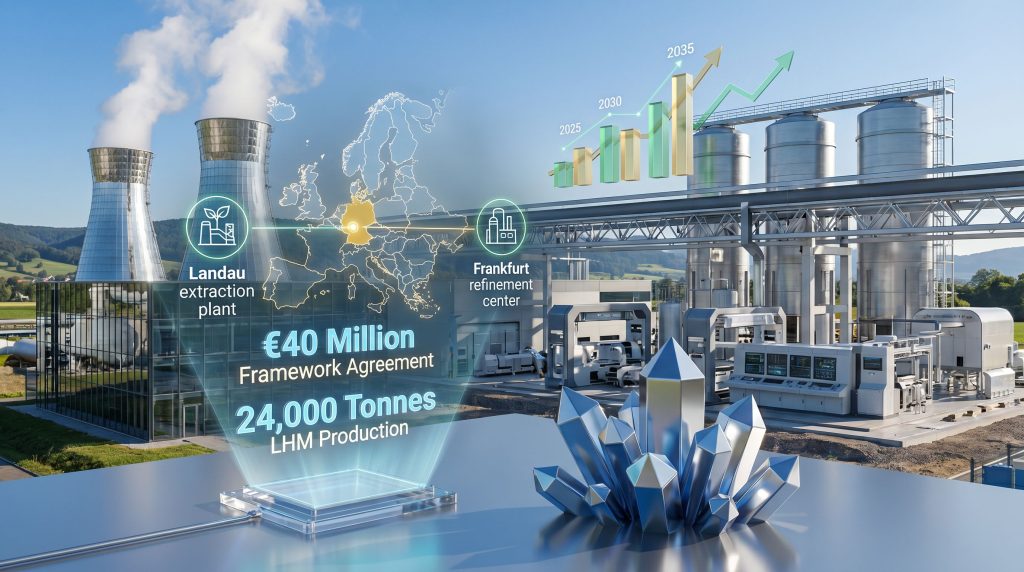
The Vulcan Energy and Siemens agreement on Lionheart project represents a significant milestone in European critical minerals automation. The €40 million framework agreement encompasses comprehensive automation systems across multiple facilities in Germany's Upper Rhine Valley region. Furthermore, Siemens will serve as the Main Automation Contractor (MAC) for Vulcan's upstream commercial Lithium Extraction Plant in Landau, the downstream Central Lithium Plant at Industrial Park Höchst Frankfurt, and distributed production well sites.
The technical scope includes engineering and delivery of distributed control systems (DCS), industrial network infrastructure, cybersecurity frameworks, building automation, safety systems, and associated design and lifecycle services. Consequently, this comprehensive approach reflects the complexity of integrating geothermal energy extraction with precision lithium processing operations.
Key Automation Components:
- Distributed control system architecture for multi-site coordination
- Industrial network infrastructure connecting geothermal wells to processing facilities
- Cybersecurity frameworks protecting critical mineral infrastructure
- Building automation systems optimising energy efficiency
- Safety systems ensuring operational continuity across 30-year project timeline
European Supply Chain Sovereignty Imperatives
The partnership extends beyond immediate project requirements, establishing Siemens as a preferred supplier until December 31, 2035, for both Lionheart and future development phases. This long-term commitment structure reflects broader European strategic objectives around critical minerals independence and technology sovereignty.
The agreement follows a Memorandum of Understanding entered into by Vulcan and Siemens in 2025, demonstrating the planned nature of this strategic partnership. Additionally, Siemens Financial Services has committed €67 million as part of Vulcan's €2.2 billion (US$3.9 billion) financing package secured in December 2025, illustrating the financial depth of the collaboration.
Analyzing the €40 Million Framework Agreement Structure
Multi-Site System Integration Complexity
The Vulcan Energy and Siemens agreement on Lionheart project encompasses three distinct operational environments, each requiring specialised automation approaches. The Landau Lithium Extraction Plant, currently under construction, focuses on upstream geothermal brine processing and lithium concentration. In contrast, the Central Lithium Plant at Frankfurt Industrial Park Höchst handles downstream refinement to battery-grade lithium hydroxide specifications.
Operational Facility Breakdown:
| Facility Type | Location | Primary Function | Automation Focus |
|---|---|---|---|
| Extraction Plant | Landau | Upstream processing | Geothermal integration systems |
| Central Plant | Frankfurt Industrial Park | Downstream refinement | Battery-grade quality control |
| Production Wells | Upper Rhine Valley | Resource extraction | Distributed monitoring networks |
Long-Term Service Architecture Through 2035
The framework agreement establishes a comprehensive service model extending through the project's operational life. Engineering design consultation, installation and commissioning support, ongoing maintenance optimisation, and technology upgrade pathways create a continuous partnership structure designed to adapt to evolving technological capabilities and regulatory requirements.
This approach addresses the inherent complexity of maintaining automation systems across multiple decades of operation, particularly in the context of rapidly evolving cybersecurity threats and technological advancement cycles. Moreover, the 10-year preferred supplier designation provides operational certainty whilst allowing for technological evolution and system optimisation.
The Lionheart Project's Production Scale and Market Implications
Battery-Grade Lithium Production Capacity
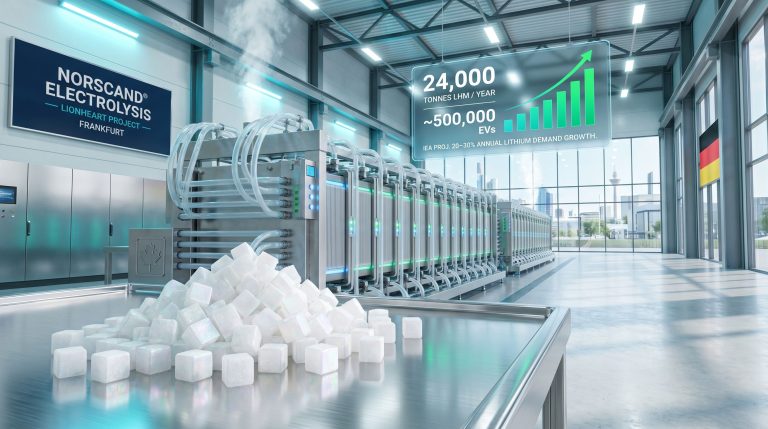
The Lionheart Project targets production of 24,000 tonnes of lithium hydroxide monohydrate (LHM) annually, sufficient for approximately 500,000 electric vehicle batteries per year over an estimated 30-year operational timeline. This production scale positions the project as a significant contributor to European lithium supply chains, particularly given the current limited domestic production capacity across the continent.
Production Specifications:
- Annual LHM Output: 24,000 tonnes
- EV Battery Equivalence: 500,000 vehicles annually
- Project Lifespan: 30-year operational horizon
- Quality Standards: Battery-grade lithium hydroxide monohydrate
Integrated Renewable Energy Co-Production
Beyond lithium extraction, the Lionheart Project demonstrates the potential for integrated resource utilisation through geothermal energy generation. The project targets 275 GWh of renewable power and 560 GWh of heat annually for local consumption, creating a dual-revenue model that enhances project economics whilst supporting regional energy infrastructure.
This co-production approach addresses one of the key challenges in lithium extraction: energy intensity. By utilising geothermal resources for both lithium extraction and renewable energy generation, the project creates operational synergies that differentiate it from conventional lithium mining operations.
Energy Generation Capacity:
- Renewable Power: 275 GWh annually
- Heat Distribution: 560 GWh for local consumers
- Energy Integration: Geothermal systems supporting both lithium extraction and power generation
Financial Architecture and Investment Strategy Analysis
Siemens Financial Services Strategic Investment
The €67 million commitment from Siemens Financial Services represents approximately 3% of the total €2.2 billion financing package, indicating substantial confidence in the project's technical and commercial viability. This investment structure aligns Siemens' interests with long-term project success whilst providing financial support for the comprehensive automation infrastructure.
Investment Structure Components:
- Siemens Financial Services: €67 million commitment
- Total Project Financing: €2.2 billion (US$3.9 billion)
- Financing Completion: December 2025
- Automation Agreement Value: €40 million framework
The investment by Siemens Financial Services creates a unique alignment of interests, where the technology provider has both contractual obligations and financial exposure to project outcomes. Therefore, this structure provides additional incentives for system optimisation and long-term performance excellence.
Strategic Partnership Revenue Model
The combination of upfront automation system deployment, ongoing lifecycle services, and long-term preferred supplier status creates a diversified revenue stream for Siemens across multiple project phases. Furthermore, the framework agreement structure allows for technology upgrades and system expansion as the project scales and potentially expands to additional sites.
"The signing of this framework agreement with Siemens AG builds on our established partnership with the broader Siemens group, which shares Vulcan's commitment to innovation and sustainability."
According to Vulcan Energy's Managing Director and CEO, Cris Moreno, the partnership leverages Siemens' vast local presence and history working in the broader region, along with decades of experience in delivering engineering, automation, telecommunications, and digital technology systems to similar industrial projects.
Competitive Positioning in European Critical Minerals Strategy
First-Mover Advantages in Domestic European Lithium
The Vulcan Energy and Siemens agreement on Lionheart project supports what the company describes as Europe's first fully domestic and sustainable lithium supply chain. This positioning addresses growing European Union concerns about critical mineral dependence and strategic autonomy in battery supply chains.
The signing of the Siemens Agreement represents the final major supply agreement for Lionheart, following the completion of other major works agreements in the latter half of 2025. This milestone indicates advanced project development and preparation for construction phases.
Competitive Differentiation Factors:
- Domestic Supply Chain: Fully European lithium production and processing
- Sustainability Integration: Geothermal energy utilisation reducing carbon footprint
- Technology Partnership: Advanced automation systems enhancing operational efficiency
- Long-term Commitment: 10-year preferred supplier relationship ensuring system evolution
Automation Technology Standardisation Implications
The comprehensive scope of the Siemens partnership, covering distributed control systems, cybersecurity frameworks, and lifecycle services, establishes potential technology standards for European critical mineral projects. As other domestic lithium developments advance, the proven automation architecture from Lionheart could provide replication opportunities and cost efficiencies.
The 2035 timeline for the preferred supplier agreement suggests anticipation of additional project phases or related developments that could benefit from standardised automation approaches and accumulated operational experience.
The next major ASX story will hit our subscribers first
Technology Integration and Innovation Implications
Cybersecurity Framework for Critical Infrastructure
The integration of cybersecurity infrastructure as a core component of the automation system reflects growing recognition of critical mineral facilities as strategic national assets requiring protection from digital threats. The distributed nature of geothermal well sites across the Upper Rhine Valley creates unique network security challenges that require specialised solutions.
Security Architecture Components:
- Industrial network infrastructure connecting multiple facility types
- Cybersecurity frameworks protecting operational technology (OT) systems
- Building automation integration with security protocols
- Safety systems incorporating cyber-physical security measures
Distributed Control System Innovation
The requirement for coordinating automation across geothermal extraction sites, central processing facilities, and renewable energy generation creates opportunities for advanced distributed control system (DCS) architecture development. Real-time coordination between lithium extraction rates, geothermal energy output, and battery-grade quality control represents a complex optimisation challenge.
The 30-year operational timeline and technology partnership through 2035 provide opportunities for continuous system optimisation and innovation as operational experience accumulates and technology capabilities advance. This aligns with the broader data-driven mining operations trend shaping the industry.
Regional Economic and Policy Impact Assessment
Upper Rhine Valley Industrial Development
The concentration of Lionheart facilities across the Upper Rhine Valley region, spanning Landau for extraction operations and Frankfurt Industrial Park Höchst for central processing, creates opportunities for regional industrial cluster development around critical minerals and advanced manufacturing.
The integration of high-tech automation systems, renewable energy generation, and precision chemical processing establishes a foundation for additional technology-intensive industrial development in the region. This development contributes to the broader mining industry evolution taking place across Europe.
Regional Development Components:
- Advanced manufacturing capabilities in lithium processing
- Renewable energy infrastructure through geothermal systems
- Industrial automation expertise development
- Technology cluster formation around critical minerals
European Strategic Autonomy Alignment
The project's positioning as Europe's first fully domestic and sustainable lithium supply chain directly supports European Union strategic autonomy objectives in critical materials. The combination of domestic resource extraction, European technology providers, and integrated renewable energy aligns with multiple EU policy frameworks.
The long-term partnership structure and substantial financial commitments demonstrate confidence in European regulatory stability and policy support for critical mineral development, creating precedents for additional domestic supply chain investments.
Risk Assessment and Mitigation Strategies
Technical Integration Risk Management
The complexity of coordinating automation systems across multiple facility types, processing stages, and operational environments creates significant technical integration risks. The selection of Siemens as Main Automation Contractor addresses these risks through proven experience in similar industrial projects and comprehensive lifecycle service capabilities.
Primary Risk Factors:
- System integration complexity across diverse operational environments
- Quality control consistency for battery-grade lithium hydroxide specifications
- Cybersecurity threat evolution over 30-year operational timeline
- Technology obsolescence requiring upgrade pathways through 2035
Long-Term Partnership Risk Mitigation
The 10-year preferred supplier designation and lifecycle service commitments provide mechanisms for addressing technology evolution and operational optimisation requirements. The combination of contractual relationships and financial investment through Siemens Financial Services creates aligned incentives for long-term performance excellence.
Mitigation Mechanisms:
- Preferred supplier status ensuring continuity through 2035
- Lifecycle services providing ongoing optimisation capabilities
- Financial investment alignment through Siemens Financial Services participation
- Technology roadmap coordination accommodating system evolution requirements
Future Expansion and Scalability Considerations
2035 Partnership Timeline Strategic Implications
The extension of the preferred supplier relationship through December 31, 2035, suggests anticipation of project expansion beyond initial Lionheart development phases. The framework structure allows for additional facility development and system scaling whilst maintaining technology consistency and operational integration.
Expansion Preparation Elements:
- Scalable automation architecture supporting additional facility integration
- Technology standardisation enabling efficient replication
- Regional infrastructure supporting expanded operations
- Partnership framework accommodating growth phases
How Does Automation Technology Evolution Work in Long-Term Projects?
The long-term partnership structure acknowledges the rapid pace of technology advancement in industrial automation, cybersecurity, and process control systems. The framework provides mechanisms for incorporating technological improvements whilst maintaining system integration and operational continuity.
The combination of proven technology deployment and continuous improvement pathways creates opportunities for the Lionheart project to serve as a demonstration platform for advanced automation capabilities in critical mineral operations. This includes implementing AI in mining automation technologies as they mature.
Investment and Market Outlook
Industrial Automation Market Trends
The Vulcan Energy and Siemens agreement on Lionheart project reflects broader trends toward increased complexity and integration requirements in critical mineral development. The emphasis on cybersecurity, distributed system coordination, and long-term partnership structures indicates evolving market expectations for automation providers.
Market Development Indicators:
- Increasing system complexity in critical mineral projects
- Cybersecurity integration as standard requirement
- Long-term partnerships preferred over transactional relationships
- Financial investment by technology providers in project outcomes
Investment Evaluation Framework
The substantial financial commitments, comprehensive technology integration, and long-term partnership structure provide a framework for evaluating similar critical mineral development announcements. The combination of proven technology providers, substantial financing, and strategic policy alignment creates multiple validation mechanisms for project viability.
Due Diligence Considerations:
- Technology provider track record in comparable industrial projects
- Financial commitment depth indicating confidence levels
- Regulatory alignment with strategic policy objectives
- Market positioning relative to competing supply chain developments
Disclaimer: This analysis is based on publicly available information and should not be considered investment advice. Critical mineral projects involve substantial technical, regulatory, and market risks that require independent professional evaluation. Future performance cannot be guaranteed based on current agreements or projections.
Want to Stay Ahead of Emerging Critical Minerals Opportunities?
Complex industrial automation partnerships like the Vulcan-Siemens agreement represent exactly the type of strategic developments that can drive significant market movements in Australian critical minerals companies. Discovery Alert's proprietary Discovery IQ model instantly identifies and delivers real-time alerts on breakthrough mineral discoveries across the ASX, empowering investors to capitalise on major announcements before broader market recognition occurs.