
August 5, 2026
The Industrial Chemistry Revolution Transforming Global Copper Markets
Industrial chemical markets rarely capture headlines, yet beneath the surface of global commodity trading, a profound transformation is reshaping how major industrial operations generate revenue. The convergence of geopolitical supply disruptions, emerging technology demands, and structural capacity imbalances has created an unprecedented situation where acid not copper is paying China's smelters and secondary chemical byproducts now drive profitability for entire industrial sectors.
This transformation reflects broader shifts in global supply chain dependencies, where concentrated production sources and emerging demand centers create volatile market dynamics that traditional industrial planning models struggle to accommodate. When processing facilities designed around one economic model suddenly depend on entirely different revenue streams, the implications extend far beyond immediate profitability concerns.
When big ASX news breaks, our subscribers know first
Geopolitical Disruptions Reshape Industrial Chemical Supply Chains
The global sulfuric acid market experienced dramatic upheaval following Ukrainian military operations targeting Russian gas processing infrastructure in September 2025. The Astrakhan facility, a critical sulfur production hub, ceased operations immediately, eliminating a substantial portion of global sulfur exports. Since sulfuric acid production requires sulfur as primary feedstock, this supply shock created immediate market tensions.
Price trajectory analysis reveals remarkable volatility:
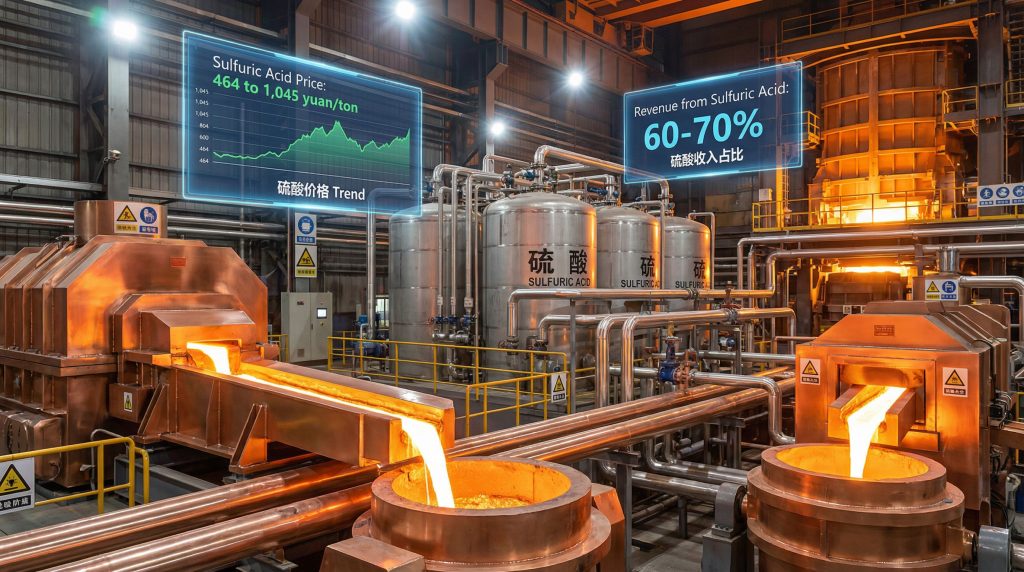
• Sulfuric acid pricing increased from 464 yuan per metric ton to 1,045 yuan per metric ton
• This represents a 125% price surge within approximately twelve months
• Prices had already appreciated 41% in the nine months preceding the September attacks
• Following the geopolitical incident, prices nearly doubled again by year-end
• Over a longer timeframe, prices increased approximately 500% across two and a half years
China's vulnerability to supply disruptions became immediately apparent, with approximately 40% of domestic sulfur requirements dependent on international sources. When major producing regions implement export restrictions or experience production disruptions, importing economies face immediate supply constraints and corresponding price appreciation. Furthermore, these developments have significantly influenced copper prices record highs across global markets.
Secondary Supply Restrictions Compound Market Tightness
Zambia's decision to implement sulfuric acid export restrictions in September 2025 demonstrates how individual nations prioritize domestic industrial requirements during periods of supply tightness. By preserving supplies for domestic mining operations, Zambian authorities reduced international availability while protecting local industry competitiveness.
Similarly, Beijing's November 2025 decision to cap sulfuric acid exports and prioritise domestic fertilizer sector requirements created additional supply constraints. This policy intervention reflects how governments balance industrial export revenues against domestic agricultural sector stability during commodity price volatility periods.
Policy intervention cascades include:
• Export volume limitations from major producing regions
• Domestic supply prioritisation policies affecting international markets
• Strategic inventory management changes by industrial consumers
• Trade route diversification efforts to reduce single-source dependencies
Emerging Demand Centers Transform Market Fundamentals
Traditional sulfuric acid consumption patterns centred heavily on fertiliser manufacturing, which historically represented the dominant demand category. However, emerging industrial applications have fundamentally altered market dynamics, creating new demand centers with substantially different consumption characteristics.
Indonesia's nickel laterite processing industry has emerged as a significant sulfuric acid consumer, with consumption approaching one-tenth of total global sulfur demand. This development reflects Indonesia's strategic shift from raw ore exports toward value-added intermediate processing, requiring substantial chemical inputs for heap leaching and hydrometallurgical operations.
Table: Sulfuric Acid Demand Evolution by Sector
| Industry Application | Historical Share | Projected Growth Rate | Market Impact |
|---|---|---|---|
| Fertiliser Manufacturing | 65-70% | Declining | Stable baseline demand |
| Battery Supply Chain | 8-10% | +85% annually | Rapid expansion |
| Indonesian Nickel Processing | 10-12% | +30% annually | Geographic concentration |
| Traditional Mining Operations | 15-18% | Stable | Established consumption |
China's lithium iron phosphate battery manufacturing sector represents another rapidly expanding demand center. As electric vehicle adoption accelerates and energy storage deployment increases, battery chemical requirements have grown substantially, creating industrial demand that operates independently from traditional agricultural cycles. In addition, this trend has influenced broader copper investment strategies across the resource sector.
Technology Transition Impacts on Chemical Markets
The global energy transition has created entirely new consumption categories for industrial chemicals previously considered commodity products. Battery manufacturing requires high-purity sulfuric acid for cathode production, electrolyte preparation, and recycling operations, creating quality specifications that command premium pricing.
The convergence of electric vehicle expansion, renewable energy storage deployment, and metal processing technology advancement has transformed sulfuric acid from a predictable industrial input into a strategic material subject to supply chain competition.
These emerging applications differ significantly from traditional fertiliser demand in terms of pricing sensitivity, quality requirements, and geographic concentration, creating market segments with distinct supply chain characteristics and volatility patterns.
The Collapse of Traditional Copper Smelting Economics
Chinese copper smelting operations face unprecedented financial pressures as traditional revenue mechanisms deteriorate rapidly. Treatment and refining charges, historically the primary compensation structure for converting copper concentrate into refined metal, fell below zero in December 2024 and reached record negative levels of minus $49 per metric ton in January 2026.
This inversion of fundamental industry economics means smelting facilities now compensate mining companies for access to feedstock, rather than receiving payment for processing services. The structural cause stems from aggressive capacity expansion in Chinese smelting infrastructure while global copper production growth has remained constrained by project delays and operational disruptions.
Smelting capacity expansion dynamics:
• Chinese smelting capacity growth exceeds 9% annually
• Global copper mine output growth significantly lags capacity additions
• Competitive bidding intensity for concentrate supplies increases processing costs
• Mining companies gain negotiating leverage through supply scarcity
Revenue Structure Transformation Analysis
The traditional copper smelting business model relied heavily on treatment charges to cover operational costs, capital investments, and profit margins. Historical revenue structures allocated 45-55% of total revenues to processing fees, with byproduct sales contributing 15-25% through sulfuric acid, precious metal recovery, and other secondary products.
Current market conditions have completely inverted this revenue composition. Processing fees now contribute 0-5% of total revenues, while sulfuric acid sales have expanded to represent 60-70% of revenue streams. This represents a fundamental transformation from service-based compensation to byproduct-dependent profitability.
Table: Revenue Composition Transformation at Major Chinese Smelters
| Revenue Component | Historical Contribution | Current Contribution | Percentage Change |
|---|---|---|---|
| Treatment/Refining Charges | 45-55% | 0-5% | -90% |
| Sulfuric Acid Sales | 15-20% | 60-70% | +250% |
| Precious Metal Recovery | 25-30% | 25-30% | Stable |
| Other Byproducts | 5-10% | 5-10% | Stable |
Yunnan Copper provides a concrete example of this transformation. According to the company's August 2025 half-year results, sulfuric acid sales generated 790 million yuan ($114 million USD), representing approximately 25% of gross profit despite contributing only 1% of total revenue. This extreme margin differential demonstrates how byproduct profitability has become critical to operational viability.
Risk Exposure Through Volatile Byproduct Dependencies
The shift from stable processing fees to volatile byproduct revenues creates substantial operational and financial risks for smelting operations. Sulfuric acid pricing exhibits commodity-like volatility characteristics, subject to geopolitical events, supply disruptions, and demand fluctuations completely unrelated to copper market fundamentals.
Industry analysts express concern about this structural transformation. According to Reuters analysis, sulfuric acid now accounts for more than 64% of smelters' revenue from byproducts and other non-processing sources, compared to a historical 27% allocation. This concentration creates vulnerability to acid market downturns that could rapidly eliminate profitability.
Operational vulnerability factors include:
• Price correlation between acid markets and core copper operations remains minimal
• Acid demand fluctuates independently from copper concentrate availability
• Geopolitical events affecting acid markets impact smelter economics directly
• Traditional risk management tools may not address byproduct price exposure
Smelter Negotiating Behaviour and Market Psychology
Despite elevated sulfuric acid valuations theoretically justifying acceptance of negative processing fees, Chinese smelters have resisted this logic during contract negotiations. Wood Mackenzie analysis suggests that while smelters could theoretically accept negative treatment charges when acid prices exceed 1,000 yuan per metric ton, operational behaviour reflects underlying concerns about price sustainability.
Smelter resistance to negative fees indicates management teams view current acid price levels as unsustainable, preferring to maintain zero or positive processing arrangements even when mathematical analysis might support different decisions. This conservative approach reflects uncertainty about both sulfuric acid price durability and precious metal price stability.
Chilean mining company Antofagasta's December 2025 agreement with Chinese smelters to maintain zero treatment charges represents a significant negotiating outcome. This arrangement indicates mining companies have successfully resisted smelter demands for positive fee structures, suggesting that market power has consolidated around zero-fee equilibrium points. However, the Codelco copper strategy demonstrates alternative approaches to managing these market challenges.
Production Planning Under Revenue Uncertainty
Smelting operations now require fundamentally different production planning approaches when byproduct revenues drive profitability. Traditional capacity utilisation decisions based on processing margins must now incorporate acid price forecasting, inventory management for chemical products, and market timing considerations previously irrelevant to core operations.
Strategic operational adjustments include:
• Maintenance scheduling aligned with acid price cycle projections
• Utilisation rate modifications based on byproduct margin calculations
• Long-term contract negotiations incorporating acid price volatility provisions
• Hedging mechanism development for chemical product price exposure
CRU analysis suggests that significant declines in acid pricing could increase the likelihood of smelters reducing production through extended maintenance periods or lower capacity utilisation rates. This operational flexibility represents a risk management tool when traditional processing revenues remain inadequate.
Financial Risk Management Evolution
The transformation from service-based to commodity-dependent revenue streams requires different financial risk management approaches. Traditional copper smelting operations focused on operational efficiency, feedstock security, and long-term processing contracts. Current market conditions necessitate commodity trading expertise, price forecasting capabilities, and hedging strategies previously outside core competencies.
Some smelting operations are exploring vertical integration opportunities within sulfuric acid value chains, including downstream chemical processing capabilities and direct relationships with major industrial consumers. These strategic developments reflect efforts to reduce exposure to spot market volatility through longer-term supply arrangements.
The next major ASX story will hit our subscribers first
Market Correction Risks and Price Sustainability Analysis
Industry forecasts suggest sulfuric acid pricing may decline 10-30% in coming months due to several converging factors. Demand destruction from elevated pricing levels, new production project commissioning, and Chinese export restrictions prioritising domestic fertiliser supplies could moderate current price premiums.
Price correction catalysts include:
• Industrial demand reduction due to elevated input costs
• New sulfur production capacity additions coming online
• Russian production capacity restoration following infrastructure repairs
• Policy interventions prioritising domestic agricultural sector requirements
The sustainability of current price levels depends largely on whether geopolitical supply disruptions persist and emerging demand centers continue expanding consumption. Indonesian nickel processing growth and Chinese battery manufacturing expansion provide structural demand support, but traditional fertiliser applications may reduce consumption at current pricing levels.
Supply Recovery Timeline Implications
Russian sulfur production recovery represents the most significant potential supply addition, though infrastructure reconstruction timelines remain uncertain. The Astrakhan facility's restoration could restore substantial export capacity, creating immediate market pressure on current pricing levels.
Alternative sulfur source development projects in other regions may provide additional supply relief, though these typically require longer development timelines. New production capacity from non-conflict regions could gradually reduce Chinese import dependency and corresponding price volatility exposure.
The Chinese smelting industry's current dependency on volatile byproduct revenues creates a fundamental misalignment between operational capabilities and profit generation mechanisms, requiring strategic adaptation regardless of near-term price movements.
Strategic Industry Adaptations and Future Viability
Chinese copper smelters are implementing various strategic adjustments to address the fundamental challenges created by processing fee deterioration and byproduct revenue dependency. These adaptations range from operational efficiency improvements to vertical integration initiatives designed to reduce market volatility exposure.
Operational efficiency enhancement strategies:
• Energy consumption optimisation through advanced process control systems
• Automation investments to reduce labour costs and improve operational consistency
• Waste heat recovery systems creating additional revenue streams
• Maintenance optimisation to maximise production during high-margin periods
Some facilities are exploring downstream sulfuric acid processing capabilities, including battery-grade acid production for premium market segments. These value-added processing capabilities could command higher margins while reducing exposure to commodity-grade acid price volatility.
Joint Venture and Partnership Strategies
Strategic partnerships with major industrial consumers represent another adaptation approach. Direct supply relationships with battery manufacturers or Indonesian nickel processors could provide more stable revenue arrangements compared to spot market sales.
Joint venture arrangements for risk sharing among multiple smelting operations offer potential benefits through diversified operational exposure and shared investment requirements. These collaborative approaches could enable investments in downstream processing capabilities that individual facilities might find economically challenging. Furthermore, these developments align with broader copper-uranium investment trends emerging globally.
Global Copper Supply Chain Implications
The challenges facing Chinese smelting operations have broader implications for global copper supply chains. China's dominant position in refined copper production means capacity adjustments in Chinese facilities directly impact global refined copper availability and pricing dynamics.
Global market impact factors:
• Chinese capacity reductions create refined copper supply constraints
• Mining companies may need alternative processing arrangements
• Regional smelting capacity in other areas gains strategic importance
• Long-term copper availability could face structural constraints
Mining Company Response Strategies
Mining companies are adapting to changing smelting industry dynamics through various strategic approaches. Some major producers are considering direct investments in smelting capacity to ensure processing availability for their concentrate production.
Geographic diversification of processing relationships reduces dependency on Chinese smelting capacity while potentially improving negotiating positions during contract discussions. This strategic shift could accelerate smelting capacity development in other regions.
Table: Regional Smelting Capacity Adjustments (2026-2028 Projections)
| Region | Capacity Change | Market Share Impact | Strategic Implications |
|---|---|---|---|
| China | -10% to -15% | Reduced dominance | Industry consolidation pressure |
| Southeast Asia | +5% to +8% | Increased competition | Technology transfer opportunities |
| Americas | +3% to +5% | Market share gains | Supply chain regionalisation |
| Europe/Africa | Stable | Maintained position | Strategic partnership focus |
Investment and Valuation Model Implications
The fundamental transformation of copper smelting economics requires new analytical frameworks for evaluating industry participants. Traditional valuation models based on processing margins and operational efficiency must incorporate commodity price forecasting for byproduct revenues.
Investment analysis considerations include:
• Sulfuric acid price volatility impacts on cash flow projections
• Operational flexibility value during market volatility periods
• Strategic positioning within evolving supply chain structures
• Technology adoption capabilities for operational adaptation
The shift from processing fee revenues to byproduct dependency represents more than a temporary market adjustment; it indicates structural changes in global copper supply chain economics that may persist beyond current market conditions. Additionally, according to China's mining sector reports, regulatory pressures continue to influence industry dynamics.
Long-term Industry Structure Evolution
Consolidation pressures among smaller smelting operations may accelerate as operational complexity increases and capital requirements for competitive positioning expand. Facilities lacking sufficient scale or strategic positioning may face viability challenges regardless of short-term market conditions.
Technology transfer to emerging markets could accelerate as established smelting regions face economic pressures. This geographic shift in smelting capacity would alter global supply chain patterns and potentially improve supply chain resilience through diversification.
The current transformation represents a fundamental reordering of copper industry economics, where traditional service-based revenue models have given way to commodity-dependent profit structures that require entirely different operational and strategic approaches.
Navigating Market Transition and Future Scenarios
The Chinese copper smelting industry faces a complex transition period requiring sophisticated risk management and strategic positioning. Current market conditions where acid not copper is paying China's smelters create both immediate profitability opportunities and longer-term structural vulnerabilities.
Monitoring indicators for industry evolution include:
• Sulfuric acid price stability trends and volatility patterns
• Processing fee recovery timeline and negotiating dynamics
• Capacity utilisation rates across regional smelting operations
• Technology adoption rates for operational flexibility improvements
The industry's ability to adapt to these changing economics will determine long-term viability and global competitiveness. Facilities successfully implementing strategic adaptations may emerge stronger from current challenges, while those unable to manage the transition may face operational difficulties.
Market participants must balance short-term profit opportunities from elevated acid pricing against longer-term strategic positioning for industry structure evolution. This balance requires sophisticated understanding of both copper market fundamentals and chemical commodity dynamics that historically operated independently.
The transformation of Chinese copper smelting from service-based to commodity-dependent revenue structures represents a significant case study in industrial adaptation under changing market conditions, with implications extending far beyond immediate industry participants to global supply chain resilience and commodity market stability.
Ready to Capitalise on Industrial Commodity Market Disruptions?
Discovery Alert's proprietary Discovery IQ model delivers real-time notifications on significant ASX mineral discoveries, including copper and industrial metals opportunities, empowering subscribers to identify actionable trading prospects as major market transformations unfold. Explore why major mineral discoveries can generate substantial returns by visiting Discovery Alert's dedicated discoveries page, showcasing historic examples of exceptional outcomes, and begin your 14-day free trial today to position yourself ahead of evolving commodity markets.