May 15, 2026
How Industrial Equipment Expansion Drives African Mining Competitiveness
Global supply chain disruptions over recent years have fundamentally reshaped strategic thinking around mining equipment procurement. The traditional model of centralised manufacturing and long-distance logistics has proven vulnerable to geopolitical tensions, shipping bottlenecks, and extended lead times that can cripple project timelines. As mining companies across Africa grapple with these realities, Weir expands Africa capacity through strategic investments that signal a pivot toward supply chain resilience and competitive advantage through proximity.
Manufacturing localisation has emerged as a critical response to supply chain vulnerabilities that have plagued the mining sector. When equipment failures occur at remote mining sites, the difference between a two-week repair using locally manufactured components versus a three-month wait for international shipments can translate to millions in lost production. This economic pressure has accelerated investment in regional manufacturing capabilities across key mining corridors, as companies recognise the value of industry innovation trends in addressing these challenges.
Manufacturing Localisation as a Strategic Response to Supply Chain Vulnerabilities
The economics of proximity in high-demand mining markets create compelling advantages beyond simple logistics. Regional manufacturing facilities enable rapid prototyping and customisation for specific geological conditions, allowing equipment modifications that would be prohibitively expensive through international suppliers. This agility becomes particularly valuable in complex mining environments where standard equipment specifications may not address local operational challenges.
Quality control processes benefit significantly from dedicated regional assembly facilities. Local oversight enables real-time adjustments during manufacturing, while proximity to end-users facilitates immediate feedback loops that drive continuous improvement. These operational advantages compound over time, creating sustainable competitive differentiation for mining operations that can access regionally manufactured equipment.
The Economics of Proximity – Reducing Lead Times in High-Demand Markets
Lead time reduction analysis reveals substantial cost benefits when comparing local versus international sourcing strategies. Traditional international procurement cycles for large mining equipment typically span 6-12 months from order to delivery, while regional manufacturing can reduce this timeline to 8-16 weeks. For critical path project components, this acceleration can advance project commissioning dates by quarters, generating significant net present value improvements.
Transportation cost savings represent another major economic driver. Heavy mining equipment incurs substantial freight charges, particularly when shipped to landlocked mining operations. Regional manufacturing eliminates intercontinental shipping costs while reducing handling risks associated with multiple transfer points during international logistics chains. Furthermore, the focus on electrification & decarbonisation initiatives makes localised production increasingly attractive for sustainable operations.
When big ASX news breaks, our subscribers know first
What Does Weir's 1,600m² Alrode Expansion Signal About African Mining Growth?
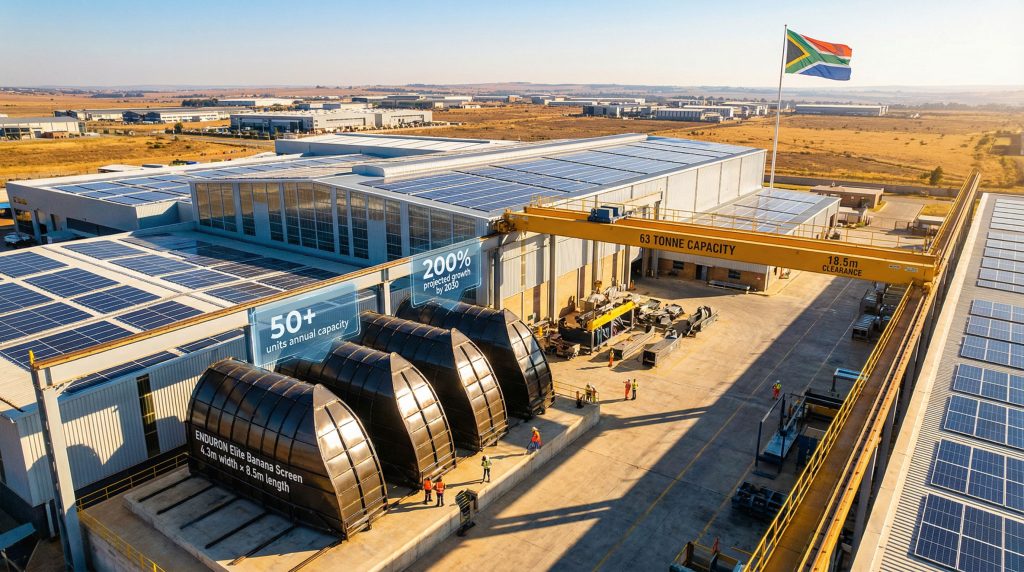
The recent expansion of Weir's manufacturing facility in Alrode, Gauteng, represents a significant investment in African mining infrastructure capacity. The 1,600 square metre addition to the existing facility signals confidence in sustained regional demand for specialised mining equipment, particularly in the screening and processing segments that serve both local and export markets.
Capacity planning indicators across Southern African mining corridors suggest this expansion aligns with broader industry investment patterns. The Gauteng industrial hub has historically served as a manufacturing centre for mining equipment serving markets throughout Southern Africa, with established logistics networks and skilled workforce concentrations that support complex assembly operations.
Capacity Planning Indicators Across Southern African Mining Corridors
Infrastructure investment patterns in Gauteng's industrial hub reflect the region's strategic importance for mining equipment manufacturing. The province's proximity to major mining operations in the Witwatersrand Basin, combined with established rail and road networks connecting to regional markets, creates logistical advantages that support manufacturing expansion decisions. Additionally, the growing focus on renewable energy solutions creates new opportunities for equipment manufacturers to integrate sustainable technologies.
The concentration of technical expertise in the Gauteng region provides additional competitive advantages for manufacturing operations. Decades of mining industry development have created deep pools of specialised engineering and manufacturing skills that support complex equipment assembly and testing requirements.
Infrastructure Investment Patterns in Gauteng's Industrial Hub
Regional manufacturing capacity analysis reveals the strategic positioning of South African facilities within broader African mining supply chains. The country's developed industrial infrastructure, combined with established trade relationships throughout the continent, enables efficient distribution to mining operations across multiple countries.
African Mining Equipment Manufacturing Capacity Overview
| Facility Focus | Typical Size Range | Key Advantages | Primary Markets |
|---|---|---|---|
| Heavy Processing Equipment | 2,000-4,000 m² | Specialised assembly capabilities | Pan-African distribution |
| Screening Systems | 1,200-2,500 m² | Rapid customisation | Regional mining corridors |
| Mobile Equipment | 1,500-3,000 m² | Field service integration | Cross-border operations |
Why Are ENDURON Elite Banana Screens Becoming Critical Infrastructure?
Banana screens have evolved from specialised processing equipment to essential infrastructure components in modern mining operations. Their unique curved design and vibration characteristics enable efficient separation of materials across multiple size fractions, making them indispensable for operations requiring high-volume processing with precise particle classification.
The technical specifications that drive mining efficiency centre on the ability to handle massive throughput volumes while maintaining separation accuracy. Advanced banana screen designs incorporate sophisticated vibration patterns and screen surface configurations that optimise material flow dynamics and extend operational life in demanding mining environments. The integration of data-driven operations enhances their performance monitoring and maintenance scheduling.
Technical Specifications That Drive Mining Efficiency
Modern banana screens integrate several critical engineering innovations:
- Multi-deck configurations that enable simultaneous processing of different material size ranges
- Variable angle designs that optimise material flow velocity and separation efficiency
- Advanced screen media engineered for specific material characteristics and wear resistance
- Vibration isolation systems that minimise structural transmission and extend equipment life
The role of vibration-absorbing technology becomes particularly critical in high-volume processing applications. Sophisticated damping systems protect both the screening equipment and surrounding infrastructure from destructive vibration transmission that can cause premature equipment failure and structural damage.
Applications Across Different Mining Operations
Banana screens find applications across diverse mining operations, from gold processing facilities requiring fine particle separation to iron ore operations handling massive bulk throughput. Each application demands specific technical configurations optimised for material characteristics, processing volumes, and operational constraints.
Copper-gold operations present particularly demanding screening requirements due to the need for precise particle size control in flotation circuits. The ability to maintain consistent separation efficiency while processing varying ore grades makes advanced screening systems essential infrastructure for these operations.
The Role of Vibration-Absorbing Technology in High-Volume Processing
Vibration management represents a critical engineering challenge in large-scale screening operations. Uncontrolled vibration transmission can damage surrounding equipment, create structural integrity issues, and generate excessive maintenance requirements that undermine operational efficiency.
"Advanced testing infrastructure enables comprehensive vibration analysis and equipment optimisation before deployment to remote mining sites, reducing commissioning risks and operational disruptions," according to industry experts.
How Do Regional Manufacturing Hubs Transform Mining Supply Chains?
Regional manufacturing hubs fundamentally alter supply chain dynamics by reducing dependency on long-distance logistics networks while improving response times for critical equipment needs. This transformation extends beyond simple proximity benefits to encompass quality control improvements, skills development, and local economic integration.
Lead time reduction represents the most immediate benefit of regional manufacturing strategies. Complex mining equipment that previously required 8-12 month international procurement cycles can often be delivered within 2-4 months from regional facilities, enabling more responsive project planning and reduced inventory carrying costs.
Lead Time Reduction Analysis – Local vs. International Sourcing
Comparative analysis of regional versus international sourcing reveals significant time advantages:
- Design consultation phase: 2-3 weeks locally vs. 6-8 weeks internationally
- Manufacturing and assembly: 8-12 weeks locally vs. 16-24 weeks internationally
- Logistics and delivery: 1-2 weeks locally vs. 8-12 weeks internationally
- Installation and commissioning support: Immediate vs. 2-4 week specialist deployment
These cumulative time savings enable mining companies to maintain more responsive operational strategies while reducing the working capital requirements associated with extensive equipment inventories.
Quality Control Advantages of Dedicated Assembly Facilities
Dedicated regional assembly facilities provide quality control advantages that extend beyond manufacturing efficiency. Proximity to end-users enables continuous feedback loops that drive design improvements and operational optimisation, while local oversight ensures consistent application of quality standards throughout the manufacturing process.
Regional facilities also enable more effective customisation for local operating conditions. Equipment modifications that address specific geological challenges, climate considerations, or operational preferences become economically viable when manufacturing occurs in proximity to the application environment.
Skills Development and Local Employment Multiplier Effects
The establishment of regional manufacturing hubs creates significant employment multiplier effects throughout local economies. Direct manufacturing employment generates demand for supporting services, while specialised technical training programmes develop valuable skills that benefit broader industrial sectors.
Technology transfer represents another important benefit of regional manufacturing investment. Local technicians and engineers gain exposure to advanced manufacturing processes and equipment technologies, building capabilities that support broader industrial development objectives.
What Role Does Sustainable Manufacturing Play in Mining Equipment Production?
Sustainable manufacturing practices in mining equipment production address both environmental compliance requirements and operational cost optimisation opportunities. The integration of renewable energy systems, environmentally responsible material handling processes, and waste reduction strategies creates long-term competitive advantages while supporting corporate sustainability objectives.
Energy independence through renewable power systems has become increasingly attractive for industrial manufacturing operations. Solar installations and other renewable technologies can significantly reduce operational costs while providing energy security that supports consistent production schedules.
Solar-Powered Operations – Energy Independence in Industrial Manufacturing
Solar power integration in manufacturing facilities offers multiple strategic advantages beyond environmental benefits. Energy cost predictability enables more accurate long-term financial planning, while reduced grid dependency provides operational resilience during power supply disruptions that commonly affect industrial regions.
Manufacturing facilities with integrated renewable energy systems can also leverage carbon offset advantages in customer negotiations, particularly when serving mining companies with their own sustainability commitments and emission reduction targets.
Water-Based Paint Systems and Carbon Footprint Reduction
Water-based coating systems represent significant improvements in environmental performance compared to traditional solvent-based alternatives. These systems eliminate volatile organic compound emissions while providing comparable protection and durability for mining equipment operating in harsh environmental conditions.
The adoption of environmentally responsible coating technologies also supports compliance with increasingly stringent environmental regulations while reducing workplace safety risks associated with hazardous chemical handling.
Alignment with 2030 Emission Reduction Targets
Manufacturing operations increasingly align with corporate and national emission reduction commitments extending through 2030 and beyond. This alignment requires systematic assessment of energy consumption patterns, material selection criteria, and waste management processes throughout manufacturing operations.
"Manufacturing facilities implementing comprehensive sustainability programmes can achieve substantial operational cost reductions while supporting broader environmental objectives through integrated energy management and waste reduction strategies."
Which Major Mining Projects Drive Equipment Demand in Africa?
African mining project development creates substantial equipment demand across multiple commodity sectors, from established gold and platinum operations to emerging battery metal projects that serve global energy transition requirements. Understanding the specific equipment needs of major projects provides insight into regional manufacturing capacity requirements and market development opportunities.
Copper-gold operations represent a significant equipment demand category, requiring sophisticated processing and screening infrastructure to handle complex ore bodies and maintain efficient recovery rates. These operations typically require extensive screening systems, processing equipment, and materials handling solutions throughout their operational lives, with economic impact analysis highlighting their importance to regional development.
Copper-Gold Operations and Their Processing Infrastructure Needs
Large-scale copper-gold developments present unique engineering challenges that drive specific equipment requirements. The need to process varying ore grades while maintaining consistent recovery performance requires flexible screening and processing systems capable of operational optimisation across different material characteristics.
Processing infrastructure for these operations must accommodate:
- Variable throughput requirements based on ore grade and market conditions
- Multi-stage screening systems for optimal particle size classification
- Flexible processing configurations that adapt to changing ore characteristics
- Robust maintenance access for equipment servicing in remote locations
Regional Project Pipeline Analysis Through 2027
African mining project development pipelines through 2027 indicate sustained demand for processing equipment across multiple commodity sectors. Gold projects continue to dominate development activity, while battery metal projects gain significance as global energy transition accelerates.
The geographical distribution of projects across West Africa, East Africa, and Southern Africa creates diverse market opportunities for regional manufacturing facilities. Each region presents distinct logistical challenges and operational requirements that influence equipment specifications and delivery strategies.
Regional Mining Development Overview
| Region | Primary Commodities | Project Count | Equipment Focus |
|---|---|---|---|
| West Africa | Gold, Iron Ore | 15+ major projects | Processing, Screening |
| East Africa | Gold, Copper | 12+ major projects | Processing, Materials Handling |
| Southern Africa | Platinum, Gold, Base Metals | 20+ major projects | Processing, Underground Equipment |
The next major ASX story will hit our subscribers first
How Does Aftermarket Service Strategy Influence Manufacturing Location Decisions?
Aftermarket service capabilities significantly influence manufacturing location decisions by determining long-term customer relationship sustainability and revenue generation potential. Proximity to mining operations enables rapid response times for equipment maintenance, emergency repairs, and technical support that directly impact mining productivity and customer satisfaction.
Service response times become critical factors in remote mining locations where equipment downtime can cost hundreds of thousands of dollars daily. Regional manufacturing facilities that integrate comprehensive aftermarket service capabilities provide competitive advantages that extend far beyond initial equipment supply.
Proximity Benefits for Maintenance and Parts Supply
Regional parts inventory and maintenance support create substantial operational advantages for mining companies. Local parts availability can reduce equipment downtime from weeks to days, while proximity enables more frequent preventive maintenance that extends equipment life and improves performance reliability.
Technical support response times improve dramatically when manufacturing facilities integrate service capabilities. On-site technical assistance can be deployed within days rather than weeks, enabling rapid problem resolution and operational optimisation that maintains production schedules.
Technical Support Response Times in Remote Mining Locations
Remote mining locations present unique challenges for technical support delivery. Regional manufacturing hubs enable more responsive support strategies through:
- Local technical specialist deployment within 24-48 hours
- Regional parts distribution networks that reduce supply delays
- Preventive maintenance programmes that prevent catastrophic failures
- Remote diagnostic capabilities that enable proactive intervention
Training and Certification Programmes for Local Technicians
Comprehensive training programmes for local technicians create sustainable competitive advantages while building regional technical capabilities. Certified local technicians can perform routine maintenance and minor repairs without requiring specialist deployment, reducing service costs while improving response times.
These programmes also contribute to broader industrial development by building technical skills that benefit other industrial sectors and support economic diversification objectives.
What Economic Impact Does Mining Equipment Manufacturing Have on South Africa?
Mining equipment manufacturing generates significant economic impacts across multiple levels of the South African economy. Direct employment creation, supply chain development, export revenue generation, and technology transfer combine to create substantial economic multiplier effects that extend well beyond the immediate manufacturing operations.
Export revenue generation represents a major economic benefit, as specialised mining equipment manufactured in South Africa serves markets throughout Africa and beyond. This export activity generates foreign exchange earnings while building international market reputation for South African manufacturing capabilities, demonstrating how Weir expands Africa capacity contributes to broader economic development.
Export Revenue Generation from Specialised Equipment
Specialised mining equipment exports contribute substantially to South Africa's manufacturing export portfolio. The technical sophistication and quality reputation of South African-manufactured mining equipment enables premium pricing in international markets while building long-term customer relationships throughout the African continent.
Regional distribution networks centred on South African manufacturing facilities serve mining operations across multiple countries, creating sustainable export revenue streams that support continued investment in manufacturing capacity and capability development.
Local Procurement and Supply Chain Development
Local procurement strategies for manufacturing operations create extensive supply chain development opportunities throughout the South African industrial sector. Component suppliers, raw material providers, logistics services, and professional services all benefit from increased manufacturing activity in the mining equipment sector.
Supply chain development extends beyond immediate procurement to encompass capability building in supplier industries. Quality standards and technical requirements associated with mining equipment manufacturing drive improvements throughout the supply chain that benefit other industrial sectors.
Technology Transfer and Skills Enhancement Programmes
Technology transfer through mining equipment manufacturing creates long-term competitive advantages for the South African industrial sector. Exposure to advanced manufacturing processes, quality systems, and technical standards builds capabilities that can be applied across diverse industrial applications.
Skills enhancement programmes associated with manufacturing operations create valuable human capital that supports broader industrial development objectives. Specialised technical skills developed in mining equipment manufacturing can be transferred to other industrial sectors, supporting economic diversification and competitiveness.
Economic Impact Assessment
| Impact Category | Direct Contribution | Supply Chain Effects | Economic Multipliers |
|---|---|---|---|
| Employment Creation | Manufacturing jobs | Supplier employment | Service sector demand |
| Revenue Generation | Export earnings | Local procurement | Tax revenue generation |
| Capability Development | Technical skills | Quality improvements | Innovation transfer |
Where Are the Growth Opportunities in African Mining Equipment Manufacturing?
Growth opportunities in African mining equipment manufacturing extend across multiple dimensions, from geographic market expansion to technology adaptation and partnership development strategies. The combination of increasing mining activity across the continent and growing emphasis on supply chain localisation creates substantial market expansion potential.
Emerging markets beyond traditional mining regions present significant growth opportunities as exploration activity expands into previously underdeveloped areas. These markets often lack established equipment supply chains, creating opportunities for regional manufacturers to establish market presence and build long-term customer relationships. However, as Weir expands Africa capacity, competition intensifies, requiring innovative approaches to market development.
Emerging Markets Beyond Traditional Mining Regions
Frontier mining regions across Africa present unique opportunities for regional manufacturing facilities that can adapt to specific local requirements. These markets often have limited existing infrastructure, creating opportunities for comprehensive equipment and service packages that address multiple operational needs.
Market development in emerging regions requires understanding of local operating conditions, regulatory environments, and logistical constraints. Manufacturers that successfully adapt to these requirements can establish competitive advantages that persist as markets mature.
Technology Adaptation for Local Operating Conditions
African mining operations often face unique challenges related to climate, infrastructure limitations, and skill availability that require equipment modifications and operational adaptations. Regional manufacturing facilities can develop specialised solutions that address these challenges more effectively than standardised international products.
Technology adaptation extends beyond equipment modification to encompass service delivery models, training programmes, and operational support strategies that align with local capabilities and requirements.
Partnership Strategies with Regional Mining Companies
Strategic partnerships with regional mining companies create opportunities for long-term collaboration that extends beyond traditional supplier relationships. These partnerships can encompass equipment development, operational optimisation, and market development initiatives that benefit both parties.
Partnership strategies also enable risk sharing for technology development and market expansion initiatives while building deeper customer relationships that support sustained business development.
FAQ Section
What makes banana screens different from conventional screening equipment?
Banana screens feature a curved profile that optimises material flow dynamics and separation efficiency compared to flat screening surfaces. The variable angle design enables different separation zones along the screen length, improving particle classification while handling higher throughput volumes.
How do dedicated assembly facilities improve product quality?
Dedicated assembly facilities enable specialised quality control processes, consistent workflow optimisation, and immediate feedback integration that improve product reliability and performance. Proximity to end-users also enables rapid customisation and modification capabilities.
Why is South Africa becoming a regional manufacturing hub for mining equipment?
South Africa's combination of established industrial infrastructure, specialised technical workforce, strategic geographic location, and comprehensive logistics networks creates advantages for regional manufacturing operations serving African mining markets.
What are the typical lead times for large-scale screening equipment?
Regional manufacturing can deliver large-scale screening equipment in 8-16 weeks compared to 6-12 months for international procurement, providing significant advantages for project scheduling and capital efficiency. This demonstrates how Weir expands Africa capacity benefits overall project timelines.
Future Outlook – African Mining Equipment Manufacturing Through 2030
The future outlook for African mining equipment manufacturing through 2030 indicates continued growth driven by regional mining development, supply chain localisation strategies, and technology advancement. Projected capacity expansion across the continent reflects confidence in sustained demand growth and competitive advantages of regional manufacturing.
Technology evolution and automation integration will likely reshape manufacturing processes while maintaining the fundamental advantages of regional production and service delivery. The balance between automation efficiency and local employment creation will influence investment strategies and operational approaches throughout the forecast period. The trend where Weir expands Africa capacity reflects broader industry confidence in regional market development.
Projected Capacity Expansion Across the Continent
Manufacturing capacity expansion projections indicate substantial growth potential across multiple African regions. West African gold mining development, East African copper projects, and Southern African platinum operations all contribute to sustained equipment demand that supports continued manufacturing investment.
Regional specialisation trends may emerge as manufacturing facilities develop expertise in specific equipment categories or commodity sectors, creating efficiency advantages while maintaining market responsiveness.
Technology Evolution and Automation Integration
Technology advancement in manufacturing processes will likely focus on efficiency improvements and quality enhancement while maintaining regional employment benefits. Automation integration must balance cost reduction objectives with social and economic development goals throughout African manufacturing regions.
Digital integration and remote monitoring capabilities will enable more sophisticated customer service delivery while supporting operational optimisation and predictive maintenance programmes. These developments align with emerging technology trends that reshape the industry landscape.
Sustainability Standards and Regulatory Compliance
Environmental and social governance requirements will increasingly influence manufacturing strategies and operational approaches. Sustainability standards alignment with international frameworks while addressing local development priorities will require sophisticated management approaches.
Regulatory compliance requirements may drive technology adoption and operational standardisation while creating opportunities for facilities that successfully navigate complex regulatory environments.
"By 2030, regional manufacturing development throughout Africa is expected to fundamentally transform mining equipment supply chains through improved responsiveness, reduced costs, and enhanced local economic integration."
Disclaimer: This analysis contains forward-looking projections and industry assessments that involve uncertainty. Actual market developments may differ from the scenarios presented. Readers should conduct independent research and consult qualified professionals before making investment or business decisions based on this information.
Looking to Capitalise on African Mining Equipment Opportunities?
Discovery Alert's proprietary Discovery IQ model delivers real-time alerts on significant mineral discoveries across the ASX, including companies involved in African mining operations and equipment manufacturing. With the expansion of regional manufacturing capacity driving new opportunities in the sector, subscribers gain actionable insights into mining equipment and infrastructure developments before the broader market recognises their potential. Begin your 14-day free trial today to position yourself ahead of emerging opportunities in this rapidly evolving sector.