
August 7, 2026
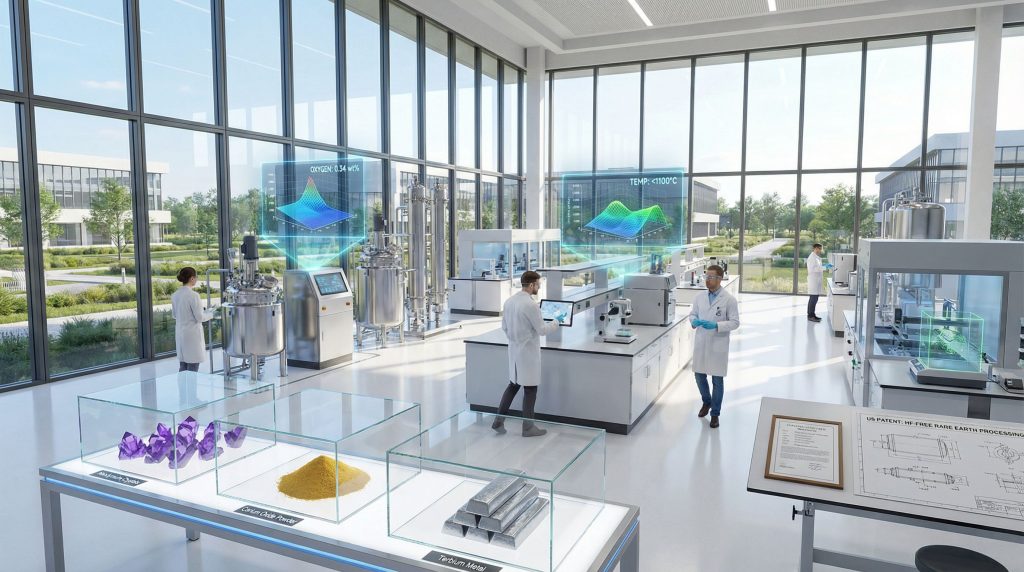
Industrial Safety Transformation Through Alternative Chemistry
The elimination of hydrofluoric acid-free rare earth processing represents a paradigmatic shift in metallurgical safety protocols. Traditional HF-based fluorination methods have created substantial operational hazards that require extensive containment infrastructure and specialised personnel training programmes.
Critical Safety Risk Assessment Parameters
Hydrofluoric acid exposure presents unique physiological dangers that distinguish it from other industrial acids. Unlike typical mineral acids, HF penetrates skin rapidly and interferes with calcium metabolism at the cellular level, creating delayed but severe tissue damage even from minimal contact.
Occupational Exposure Standards:
- OSHA permissible exposure limit: 2.6 mg/m³ (3 ppm) as an 8-hour time-weighted average
- Immediate danger to life concentration: 30 ppm for 30 minutes
- Skin contact threshold for severe burns: concentrations as low as 2%
- Required emergency response time for medical treatment: within 15 minutes
The regulatory framework surrounding HF handling creates substantial compliance burdens for processing facilities. Environmental Protection Agency classifications place hydrofluoric acid under multiple hazardous substance categories, requiring comprehensive emergency response planning and community notification protocols.
Infrastructure Requirements for HF-Based Operations
Traditional rare earth fluorination facilities must incorporate specialised engineering controls that significantly increase capital expenditures:
Primary Containment Systems:
- Corrosion-resistant reactor vessels constructed from Monel or Hastelloy alloys
- Redundant ventilation systems with acid-resistant ductwork
- Emergency neutralisation stations with calcium hydroxide injection capabilities
- Specialised storage tanks with secondary containment barriers
- Automated HF vapour detection networks throughout processing areas
Personnel Protection Infrastructure:
- Self-contained breathing apparatus stations
- Emergency decontamination showers with calcium gluconate solutions
- Specialised protective clothing storage and maintenance facilities
- Medical monitoring equipment for fluoride exposure assessment
- Dedicated training facilities for HF emergency response procedures
These infrastructure requirements can represent 15-25% of total facility construction costs for traditional rare earth processing plants, creating substantial barriers to market entry for new producers.
When big ASX news breaks, our subscribers know first
Process Chemistry Innovation in Fluoride Formation
Alternative fluorination pathways utilise fundamentally different chemical mechanisms to achieve rare earth fluoride formation without hydrofluoric acid involvement. Furthermore, research developments in non-toxic rare earth processing demonstrate that these processes rely on solid-state reactions and controlled atmospheric conditions to generate the required fluorine-containing compounds.
Advanced Metallurgical Pathways
Recent demonstrations have achieved 0.34 wt% oxygen content in rare earth fluorides through HF-free processing methods, substantially exceeding industry specifications that typically require less than 1 wt% oxygen for metallisation-grade feedstock. This 66% improvement over standard requirements indicates superior process control and purity achievement.
The oxygen content achievement is particularly significant because it represents the primary limiting factor in rare earth metal production quality. Lower oxygen levels directly correlate with improved magnetic properties in permanent magnet applications and enhanced electrical conductivity in specialised alloys.
Process Performance Metrics:
- Target oxygen specification: <1.0 wt% for metallisation-grade material
- Demonstrated achievement: 0.34 wt% oxygen content
- Performance margin: 3:1 improvement over industry standard
- Primary oxygen source: Surface-absorbed moisture rather than chemical incorporation
Thermodynamic Advantages in Alternative Processing
Traditional calciothermic reduction of rare earth fluorides operates at temperatures between 900-1100°C, requiring substantial energy inputs and specialised high-temperature equipment. Alternative processing methods can achieve equivalent fluoride formation at significantly reduced thermal requirements.
The elimination of HF vapour management also removes the need for complex gas handling systems that traditionally consume 10-15% of total process energy. This energy reduction translates directly to operational cost savings and reduced carbon footprint for rare earth processing facilities.
Temperature Optimisation Benefits:
- Reduced thermal cycling stress on equipment components
- Lower refractory maintenance requirements
- Decreased cooling system capacity needs
- Simplified process control instrumentation
- Enhanced process stability and reproducibility
Economic Infrastructure Advantages
The transition to hydrofluoric acid-free rare earth processing creates measurable economic advantages across multiple operational categories. These benefits extend beyond simple reagent cost savings to encompass fundamental changes in facility design, insurance requirements, and regulatory compliance burdens.
Capital Expenditure Analysis
Traditional HF-based rare earth processing facilities require specialised materials and equipment that command substantial price premiums over standard chemical processing infrastructure. The elimination of HF handling removes these cost multipliers from facility construction budgets.
| Infrastructure Component | HF-Based Facility Cost | HF-Free Alternative | Cost Reduction |
|---|---|---|---|
| Reactor Vessels | Hastelloy C-276 construction | Standard stainless steel | 60-70% reduction |
| Ventilation Systems | Acid-resistant, redundant design | Standard industrial ventilation | 40-50% reduction |
| Emergency Response Equipment | Specialised HF neutralisation | Standard chemical safety | 70-80% reduction |
| Storage Infrastructure | Secondary containment required | Standard chemical storage | 30-40% reduction |
| Monitoring Systems | HF vapour detection networks | Standard process monitoring | 50-60% reduction |
Operational Cost Optimisation Framework
The elimination of hydrofluoric acid from processing operations removes several significant ongoing cost categories that burden traditional rare earth facilities:
Insurance Premium Reductions:
- Hazardous material handling coverage: 40-60% reduction
- Environmental liability insurance: 30-50% reduction
- Workers' compensation premiums: 20-30% reduction
- Business interruption coverage: 25-35% reduction
Regulatory Compliance Savings:
- Simplified environmental permitting processes
- Reduced hazardous waste disposal requirements
- Elimination of specialised worker certification programmes
- Decreased frequency of mandatory safety inspections
- Lower community emergency response planning obligations
Supply Chain Risk Mitigation Strategies
Hydrofluoric acid supply chains face unique vulnerabilities due to transportation restrictions and limited production capacity. The concentration of HF production in specific geographic regions creates supply security risks for rare earth processors dependent on this reagent.
Transportation Risk Factors:
- DOT hazmat classification requirements increase shipping costs by 200-400%
- Limited carrier availability for HF transport creates delivery delays
- Weather-related shipping restrictions during extreme conditions
- Cross-border transportation requires additional permitting and documentation
- Emergency response requirements during transport increase logistics complexity
Alternative processing methods eliminate these supply chain vulnerabilities while providing greater flexibility in facility location selection. Processors can establish operations closer to end-markets without HF transportation constraints.
Strategic Element Processing Optimisation
Different rare earth elements present varying processing challenges and market value propositions. Heavy rare earth elements command premium pricing due to supply constraints and critical technology applications, making process optimisation particularly valuable for these materials.
Heavy Rare Earth Processing Priorities
Dysprosium and Terbium Applications:
- Permanent magnet additions for high-temperature performance
- Wind turbine generator magnet components
- Electric vehicle motor applications requiring thermal stability
- Defence electronics requiring magnetic field consistency
- Medical imaging equipment demanding precise magnetic properties
Current market pricing reflects the strategic importance of these elements:
- Dysprosium oxide: $350-450/kg depending on purity specifications
- Terbium oxide: $1,200-1,500/kg for 99.9% purity grades
- Neodymium oxide: $55-75/kg for standard industrial grades
The ability to process these elements without hydrofluoric acid constraints enables producers to focus on high-value applications where quality specifications are paramount. Defence sector requirements often mandate domestic processing capabilities, creating additional market premiums for HF-free production methods.
Critical Application Quality Standards
Permanent magnet applications require precise oxygen content control to achieve optimal magnetic properties. Elevated oxygen levels in rare earth metals create oxide inclusions that disrupt magnetic domain alignment and reduce coercivity in finished magnets.
Performance Impact Analysis:
- Oxygen content >1.0 wt%: 15-25% reduction in magnetic energy product
- Oxygen content 0.5-1.0 wt%: 5-15% reduction in magnetic properties
- Oxygen content <0.5 wt%: Minimal impact on magnet performance
- Oxygen content <0.3 wt%: Optimal performance achievement
The demonstrated 0.34 wt% oxygen achievement through hydrofluoric acid-free rare earth processing positions this technology favourably for premium magnet applications where magnetic performance specifications are non-negotiable.
Intellectual Property Development Landscape
Patent protection strategies in rare earth processing focus on securing competitive advantages in process chemistry, equipment design, and operational methodologies. The development of HF-free fluorination represents a significant intellectual property protection opportunity in an industry traditionally dominated by established Chinese processing methods.
Patent Application Strategic Framework
Current patent applications covering HF-free rare earth fluorination encompass multiple technological aspects:
Process Chemistry Patents:
- Novel fluorination reaction pathways and mechanisms
- Reagent selection and optimisation procedures
- Reaction condition control methodologies
- Product purification and quality enhancement techniques
Equipment Design Patents:
- Specialised reactor configurations for HF-free processing
- Automated control systems for process optimisation
- Material handling equipment for improved safety
- Quality testing and monitoring instrumentation
Technology Transfer Considerations
The strategic value of HF-free processing technology extends beyond individual company applications to broader industry transformation potential. Technology transfer arrangements could accelerate adoption across Western rare earth processing facilities while maintaining competitive advantages through licensing structures.
Partnership Development Opportunities:
- Government laboratory collaborations for process scale-up
- Academic research institutions for fundamental chemistry studies
- International allied nation technology sharing agreements
- Industry consortium development for standard-setting initiatives
Patent portfolio development in this sector requires careful consideration of geographic coverage, particularly regarding Chinese rare earth processing dominance and potential technology transfer restrictions.
Geopolitical Supply Chain Realignment
Western rare earth supply chain development has become a strategic priority for advanced economies seeking to reduce dependence on Chinese processing capacity. China currently controls approximately 85% of global rare earth processing capacity, creating supply security vulnerabilities for critical technology sectors.
Moreover, Greenland's critical minerals potential demonstrates how alternative processing technologies could reshape global supply chains.
North American Processing Capacity Development
The establishment of HF-free rare earth processing capabilities in North America addresses multiple strategic objectives:
Supply Security Enhancement:
- Reduced reliance on Chinese rare earth exports
- Improved supply chain resilience for defence applications
- Enhanced technology sector supply stability
- Greater control over critical mineral pricing dynamics
Allied Nation Cooperation Framework:
- Technology sharing agreements with Australia, Canada, and European partners
- Coordinated rare earth exploration and development programmes
- Joint research initiatives for processing technology advancement
- Integrated supply chain planning across allied nations
Environmental Regulatory Alignment
Western environmental standards create competitive advantages for cleaner processing technologies. Traditional Chinese rare earth processing methods have generated significant environmental contamination, including radioactive waste accumulation and groundwater pollution.
Environmental Performance Differentiation:
- Elimination of hydrofluoric acid reduces toxic waste generation
- Improved air quality around processing facilities
- Reduced groundwater contamination risks
- Enhanced worker safety and community acceptance
These environmental advantages can support marketing strategies emphasising sustainable rare earth sourcing for environmentally conscious technology companies and government procurement programmes.
The next major ASX story will hit our subscribers first
Technical Implementation Challenges
Scaling HF-free rare earth processing from laboratory demonstration to commercial production requires addressing multiple technical and operational challenges. Process engineering considerations include equipment design optimisation, quality control system development, and production rate scaling.
Process Engineering Scale-Up Requirements
Laboratory-scale demonstrations achieving 0.34 wt% oxygen content must be replicated in continuous production environments with consistent quality output. This transition requires:
Equipment Design Optimisation:
- Continuous feed systems for rare earth oxide feedstock
- Temperature and atmospheric control systems
- Product separation and purification equipment
- Automated quality monitoring instrumentation
- Process waste handling and recycling systems
Production Rate Scaling Considerations:
- Heat transfer scaling in larger reactor vessels
- Mixing efficiency maintenance at industrial scales
- Residence time optimisation for consistent product quality
- Throughput capacity planning for market demand
- Equipment maintenance scheduling for continuous operation
Quality Control System Development
Commercial rare earth processing requires rigorous quality control systems to ensure consistent product specifications. The development of HF-free processing necessitates new analytical methods and testing protocols.
Analytical Method Requirements:
- Real-time oxygen content monitoring during processing
- Rare earth element purity analysis and certification
- Impurity detection and quantification protocols
- Product consistency verification across production batches
- Customer specification compliance documentation
Process Monitoring Integration:
- Automated sampling systems for continuous quality assessment
- Statistical process control implementation
- Deviation detection and correction protocols
- Product traceability systems for quality assurance
- Customer feedback integration for continuous improvement
Market Transformation Implications
The successful commercialisation of hydrofluoric acid-free rare earth processing technology could fundamentally reshape global rare earth supply chains. Market structure changes would affect pricing dynamics, competitive positioning, and technology adoption patterns across the industry.
In addition, breakthrough developments in cleaner rare earth processing highlight the growing momentum behind these transformative technologies.
Processing Cost Competitiveness Analysis
Achieving cost parity with established Chinese processing methods requires careful analysis of all cost components in HF-free processing operations:
Cost Advantage Categories:
- Reduced capital expenditure for facility construction
- Lower operational costs from simplified infrastructure
- Decreased regulatory compliance and insurance expenses
- Enhanced worker productivity from improved safety conditions
- Greater facility location flexibility reducing transportation costs
Potential Cost Disadvantages:
- Higher initial technology development and implementation costs
- Possible premium pricing for alternative reagents
- Learning curve effects during initial commercial operations
- Quality certification and customer acceptance timelines
- Market penetration investment requirements
Technology Adoption Acceleration Factors
Several market forces could accelerate adoption of HF-free rare earth processing technology:
Regulatory Driving Forces:
- Increasingly stringent environmental regulations on HF handling
- Government preferences for domestic processing capabilities
- Carbon footprint reduction mandates affecting industrial operations
- Worker safety regulations requiring enhanced protection measures
Market Pull Factors:
- Technology company sustainability requirements for supply chains
- Defence sector preferences for secure domestic processing
- Investment community focus on ESG compliance
- Consumer demand for environmentally responsible products
Future Research Development Priorities
Continued advancement in hydrofluoric acid-free rare earth processing will likely focus on several key technical areas:
Process Efficiency Optimisation:
- Reaction rate enhancement for increased throughput
- Energy consumption reduction through process integration
- Yield improvement for maximum material utilisation
- Automation advancement for reduced operational costs
Product Quality Enhancement:
- Ultra-high purity achievement for specialised applications
- Oxygen content reduction below current demonstrated levels
- Impurity profile optimisation for specific end-use requirements
- Product consistency improvement across all production parameters
Furthermore, the intersection with mining industry innovation demonstrates how technological advances in processing complement broader industry transformation.
Sustainability and Environmental Impact Assessment
The environmental implications of transitioning to HF-free rare earth processing extend beyond immediate safety improvements. However, comprehensive sustainable mining transformation initiatives require evaluating the full lifecycle impact of these alternative technologies.
Carbon Footprint Reduction Analysis
Traditional HF-based processing contributes to greenhouse gas emissions through multiple pathways:
Direct Emission Sources:
- Energy-intensive HF vapour management systems
- High-temperature processing requirements
- Complex ventilation and containment infrastructure
- Transportation of hazardous materials
Indirect Emission Sources:
- Specialised equipment manufacturing with exotic alloys
- Extended supply chain logistics for HF procurement
- Waste treatment and disposal operations
- Emergency response infrastructure maintenance
Waste Stream Minimisation
HF-free processing technologies offer opportunities for significant waste reduction:
Eliminated Waste Categories:
- Spent HF solutions requiring neutralisation
- Contaminated protective equipment disposal
- Acid-resistant material replacement cycles
- Secondary containment system maintenance waste
Resource Recovery Opportunities:
- Improved material recovery rates from simplified processing
- Reduced energy consumption enabling renewable energy integration
- Closed-loop water systems without HF contamination concerns
- Recyclable equipment materials replacing exotic alloys
The development of hydrofluoric acid-free rare earth processing represents a significant technological advancement with implications extending far beyond individual company operations. This innovation addresses critical safety, environmental, and supply chain challenges whilst creating opportunities for Western nations to develop competitive rare earth processing capabilities.
As the technology matures and scales to commercial production, it has the potential to reshape global rare earth supply chains and reduce dependence on environmentally problematic processing methods. Consequently, the successful implementation of these technologies will require coordinated efforts across industry, government, and research institutions to overcome technical challenges and accelerate market adoption.
Disclaimer: This analysis contains forward-looking statements regarding technology development and market dynamics. Actual results may vary significantly from projections due to technical, regulatory, and competitive factors. Investment decisions should be based on comprehensive due diligence and professional financial advice.
Looking to Capitalise on Critical Minerals Innovation?
Discovery Alert's proprietary Discovery IQ model delivers instant notifications on significant ASX mineral discoveries, including breakthrough technologies in critical minerals processing and rare earth developments. Explore historic examples of exceptional discovery returns and begin your 14-day free trial today to position yourself ahead of the market in this rapidly evolving sector.