
May 10, 2026
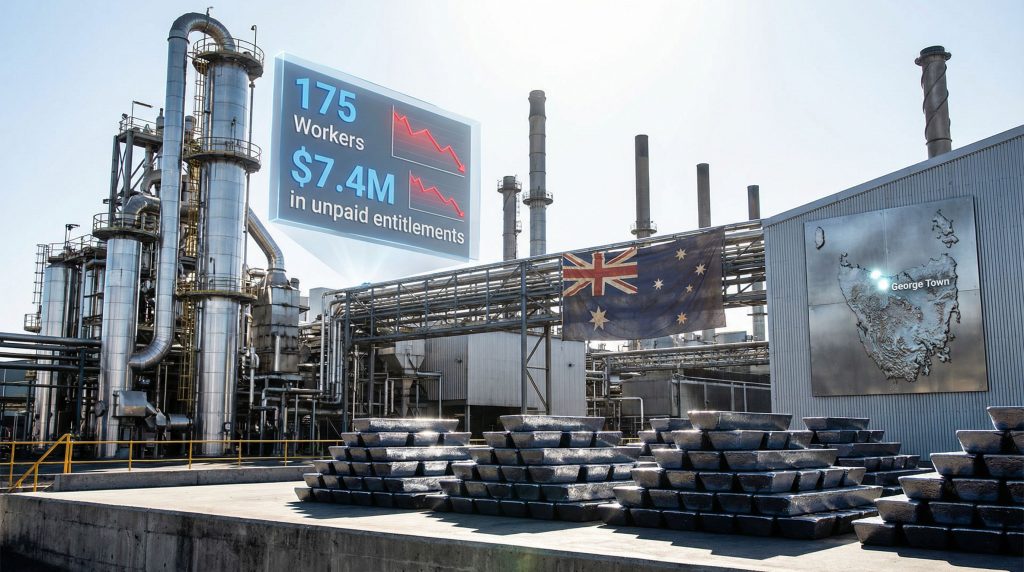
Industrial Sovereignty Under Threat: Australia's Critical Manufacturing Base Faces Unprecedented Vulnerability
Strategic manufacturing capability represents the backbone of national resilience, particularly during periods of global supply chain disruption and geopolitical tension. When essential production facilities face collapse, the ramifications extend far beyond immediate employment concerns to encompass fundamental questions of industrial sovereignty and economic security. The intersection of corporate financial distress with critical infrastructure creates unique vulnerabilities that challenge traditional policy frameworks and expose gaps in strategic asset protection mechanisms.
Australia's heavy industry landscape reflects decades of structural transformation, with domestic processing capacity increasingly concentrated in single-point facilities serving national demand. This concentration amplifies systemic risks when financial or operational crises threaten key installations, creating scenarios where entire industrial capabilities face elimination rather than temporary disruption.
The Liberty Bell Bay smelter workers layoffs crisis exemplifies these broader vulnerabilities while highlighting the complex interplay between private capital, government policy, and strategic national interests in maintaining essential manufacturing capacity.
When big ASX news breaks, our subscribers know first
Strategic Asset Vulnerability: Australia's Sole Manganese Processing Facility Enters Crisis
Liberty Bell Bay operates as Australia's only manganese smelter, representing a critical single-point vulnerability in the nation's metallurgical processing infrastructure. Located at George Town near Launceston, Tasmania, the facility embodies specialised technical capabilities that cannot be readily replicated or substituted through alternative domestic sources.
The facility's strategic importance extends beyond its role as a regional employer to encompass broader questions of industrial resilience and supply chain security. Manganese represents an essential component in steel production, with applications spanning construction, infrastructure, and defence materials strategy manufacturing. The concentration of all domestic processing capacity in a single facility creates unprecedented exposure to supply disruption.
Strategic Vulnerability Assessment:
- Complete dependency on imports for refined manganese following facility closure
- Loss of specialised metallurgical expertise developed over decades of operation
- Reduced manufacturing resilience during supply chain disruptions
- Weakened position in regional steel production networks
- Elimination of domestic processing capacity with no redundancy mechanisms
Industry expert Susie Bower, chief executive of the Bell Bay Advanced Manufacturing Zone, emphasised the broader implications: the facility represents accumulated technical knowledge and operational expertise that cannot be easily reconstituted. This reflects a fundamental characteristic of heavy industry operations where institutional knowledge and specialised workforce capabilities represent irreplaceable assets.
Furthermore, the concentration risk manifests particularly acutely during periods of global uncertainty, when domestic processing capacity provides strategic flexibility unavailable through import-dependent alternatives. Australia's position as a resource-rich nation with limited downstream processing capability creates structural vulnerabilities that the Liberty Bell Bay crisis brings into sharp focus.
Employment Crisis: 175 Workers Face Immediate Termination Amid Administrative Deadlock
Ernst & Young administrators delivered an ultimatum to Liberty Bell Bay workers: accept redundancy packages or take leave without pay beyond April 24, 2026. This deadline represents the cutoff point for payroll funding under current administrative arrangements, creating immediate hardship for the workforce while undermining facility viability for potential buyers.
The Liberty Bell Bay smelter workers layoffs affect not only direct employees but also create cascading impacts throughout the regional economy. According to the ABC's coverage of the crisis, unions for 200 employees at the facility have expressed grave concerns about wage uncertainty.
Employment Impact Analysis:
| Category | Workers Affected | Financial Exposure | Timeline |
|---|---|---|---|
| Immediate layoffs | 175 employees | $7.4M unpaid entitlements | April 24, 2026 |
| Skeleton maintenance crew | 40 workers retained | Ongoing operational costs | 3-6 months |
| Regional contractors | 23 businesses | $1.7M outstanding payments | 0-12 months |
| Total workforce exposure | 216 employees | Combined obligations | Immediate impact |
Australian Workers' Union assistant national secretary Chris Donovan characterised the situation as creating the worst possible outcome for affected workers. The timing compounds existing uncertainty that workers have endured for approximately one year following the broader GFG Alliance financial difficulties.
Worker Financial Obligations Breakdown:
- Wages and salary arrears requiring immediate settlement
- Superannuation contributions accumulated during operational period
- Annual leave entitlements representing significant individual exposure
- Long service leave obligations for longer-term employees
- Other employment-related payments including overtime and allowances
The administrative filing revealed that 216 total employees are collectively owed more than $7.4 million across these categories, representing substantial individual financial exposure for workers facing immediate termination. Union representatives indicated uncertainty regarding administrator commitments to full payment of these obligations.
In addition, cost-of-living pressures compound the employment crisis, with workers facing potential income loss during a period of elevated housing, energy, and essential goods costs. The regional concentration of economic activity around the smelter amplifies these pressures through reduced alternative employment opportunities within commuting distance.
Government Intervention Mechanisms: Limited Capacity for Strategic Asset Support
Tasmania's Minister for Skills and Jobs Felix Ellis explicitly stated that the state government lacks capacity to fund ongoing wage obligations during the administration process. This position reflects broader constraints on government intervention mechanisms when private sector facilities face financial distress.
State Government Position Analysis:
Minister Ellis emphasised that Tasmania's state government does not possess the balance sheet capacity to pay wages for workers involved in administration processes. He positioned responsibility with White Oak as the secured lender, rather than government entities, for meeting ongoing payroll obligations.
This stance illustrates fundamental tensions between public policy objectives and fiscal realities at the state level. While governments possess various theoretical intervention mechanisms, their practical application remains constrained by budgetary limitations and political considerations regarding precedent-setting for similar situations.
Federal Response Considerations:
Federal Labor member for Bass Jess Teesdale attended worker consultations, indicating federal government awareness of the crisis. However, federal authorities have not ruled out future funding contributions to Liberty Bell Bay, suggesting potential intervention remains under consideration despite current non-commitment.
Available Government Intervention Options:
- Emergency wage subsidies to maintain workforce during sale processes
- Strategic asset acquisition through government entities or partnerships
- Transition support packages for displaced workers and affected communities
- Industry development grants to facilitate private sector solutions
- Infrastructure investment to enhance facility competitiveness
- Skills retention programs preserving specialised expertise during transitions
Consequently, union representatives advocated for coordinated state and federal government support to pay worker wages during the transition period. This approach would prioritise workforce preservation over cost minimisation, recognising human capital as essential to facility viability.
The absence of established rapid-response mechanisms for strategic asset preservation exposes gaps in Australia's industrial policy framework. While various support programs exist, their coordination and deployment during crisis situations requires development of more systematic approaches.
Secured Creditor Control: Private Equity Priorities Versus Strategic Interests
White Oak, operating as secured lender to the GFG Alliance, appointed Ernst & Young as administrators in late March 2026, establishing creditor control over asset disposition and operational decisions. This private equity involvement demonstrates how financial sector priorities can diverge from broader strategic and community interests during industrial restructuring.
Creditor Hierarchy Analysis:
- Secured lenders (White Oak) – Priority recovery rights over facility assets
- Employee entitlements – Protected under Fair Work legislation and Fair Entitlements Guarantee
- Unsecured creditors – Limited recovery prospects dependent on asset realisation
- Community interests – No formal legal standing in administration proceedings
The secured creditor position creates inherent tensions between financial optimisation and operational preservation. White Oak's appointment of administrators reflects standard private equity practice prioritising creditor recovery through cost reduction and expedited sale processes.
Minister Ellis positioned responsibility for wage payments with White Oak rather than government entities, emphasising secured lender obligations under administration procedures. This reflects legal frameworks that prioritise creditor rights while potentially undermining strategic asset preservation objectives.
Administrator Decision-Making Constraints:
Ernst & Young faces dual obligations to maximise creditor recovery while maintaining operational viability for potential sale. The decision to implement mass layoffs reflects prioritisation of cost reduction over workforce preservation, potentially compromising facility attractiveness to strategic buyers requiring operational continuity.
The administrator statement that redundancies were necessary to retain a small critical workforce illustrates the tension between financial and operational requirements. For instance, maintaining minimal staff for care and maintenance reduces ongoing costs while preserving basic facility functionality.
Furthermore, private equity control mechanisms can accelerate asset realisation timelines beyond what strategic buyers or government entities might prefer. The April 24 deadline for wage funding reflects creditor urgency rather than optimal transition planning for strategic asset preservation.
Market Interest: Twelve Potential Buyers Navigate Workforce Uncertainty
Twelve expressions of interest from potential bidders indicate significant market confidence in the Liberty Bell Bay facility's underlying value despite operational challenges. However, buyer assessment calculations face disruption from workforce reduction decisions that alter fundamental acquisition assumptions.
Potential Buyer Categories:
- International steel producers seeking vertical integration in manganese processing
- Mining companies requiring downstream processing capability for ore assets
- Private equity firms focused on operational turnaround and financial restructuring
- Government entities preserving strategic assets through public ownership models
Industry expert assessment suggests buyers originally submitted expressions of interest assuming workforce availability for immediate operational restart. Chris Donovan indicated this assumption has fundamentally changed following administrator decisions to terminate approximately 175 workers.
Buyer Consideration Factors:
- Restart costs for recruiting and training replacement workforce
- Knowledge retention risks from dispersal of specialised expertise
- Community relations challenges following mass layoff implementation
- Operational continuity requirements for immediate production capability
- Capital requirements for facility upgrades and operational improvements
Susie Bower emphasised that high buyer interest levels depend critically on workforce preservation, stating that facility sale becomes significantly more difficult without retained employees. This highlights the counterproductive nature of cost-reduction strategies that undermine strategic value proposition.
Moreover, the specialised nature of manganese smelting operations means buyers require either retained operational expertise or willingness to absorb substantial reconstruction costs. Few alternative sources exist for the specialised knowledge and operational experience that longtime Liberty Bell Bay workers possess.
Sale Timeline Pressures:
Administrator urgency to complete sale processes within compressed timeframes may not align with buyer due diligence requirements or operational transition planning. Strategic buyers typically require extended evaluation periods for complex industrial facilities, particularly when workforce disruption complicates operational assessment.
The next major ASX story will hit our subscribers first
What Are the Strategic Implications of Workforce Displacement?
The administrator decision to terminate 175 workers creates fundamental contradictions between cost minimisation and asset value preservation. This paradox illustrates broader tensions in corporate administration processes when applied to strategic industrial facilities requiring specialised expertise.
Restart Cost Analysis:
- Recruitment expenses for identifying qualified metallurgical specialists
- Training investments to achieve operational competency levels
- Knowledge transfer from remaining skeleton crew to new workforce
- Operational ramp-up periods extending timeline to full production capacity
- Quality assurance systems requiring experienced personnel oversight
Industry experts indicate that manganese smelting operations demand specialised expertise that cannot be rapidly replicated through standard recruitment processes. The dispersal of experienced workers creates institutional knowledge loss that potential buyers must factor into acquisition calculations.
Geographic Constraints:
The Liberty Bell Bay location in regional Tasmania limits alternative employment opportunities for displaced workers, increasing likelihood of interstate relocation for those seeking comparable positions. This geographic dispersion makes workforce reconstitution particularly challenging for potential facility buyers.
Specialised metallurgical skills transfer across industries but often require adaptation periods for facility-specific processes and equipment. The loss of Liberty Bell Bay-specific operational knowledge represents irreplaceable assets that new buyers would need to rebuild through extended operational learning.
Community Relations Impact:
Mass layoffs create adverse community sentiment that potential buyers must navigate during acquisition processes. Local government cooperation and community support represent valuable intangible assets for industrial operations, particularly for facilities requiring ongoing regulatory approvals and community engagement.
The timing of layoffs during active sale processes sends conflicting signals to potential buyers about administrator priorities and facility strategic value. Buyers evaluating long-term operational viability may question commitment to maintaining industrial capability when immediate cost reduction takes precedence over strategic considerations.
Regional Economic Multiplier Effects: Tasmania's Manufacturing Ecosystem Under Pressure
Liberty Bell Bay's closure reverberates through George Town and surrounding regions, affecting economic activity levels well beyond direct employment impacts. The facility operates as an economic anchor for regional business networks, infrastructure utilisation, and service provider ecosystems.
The resources sector impact extends beyond immediate employment to encompass broader regional economic considerations. The facility's role in Tasmania's manufacturing ecosystem reflects similar patterns observed across Australia's resource-dependent regions.
Economic Ripple Analysis:
Local Business Impact: Regional retail, hospitality, and service providers face reduced customer base from 175+ displaced workers and their families, creating secondary employment pressures.
Infrastructure Utilisation: Transportation networks, port facilities, and utilities designed around smelter operations face reduced capacity utilisation and cost recovery challenges.
Supply Chain Disruption: Twenty-three regional contractors owed approximately $1.7 million face immediate payment uncertainties and potential business continuity challenges.
The concentration of economic activity around large industrial facilities creates vulnerability to cascading effects when anchor operations face closure. George Town's economic base relies heavily on industrial activity, limiting diversification options for absorbing displaced economic activity.
Regional Skills Migration:
Specialised metallurgical workers facing unemployment may relocate to interstate opportunities, depleting Tasmania's industrial expertise base. This skills migration creates long-term economic development challenges beyond immediate unemployment impacts.
The loss of technical expertise represents intangible regional assets developed over decades of industrial operation. These capabilities support broader manufacturing competitiveness and attract related industry investment that may be deterred by reduced skill availability.
Property and Investment Impact:
Regional property values face pressure from reduced employment prospects and population outmigration. Commercial real estate serving facility workers and contractors confronts reduced demand and potential vacancy increases.
In addition, industrial infrastructure investments designed around smelter operations may face stranded asset risks if facility closure becomes permanent. Port facilities, transportation networks, and utility systems lose anchor customer justifying continued maintenance and upgrade investment.
Federal Strategic Response: Precedent Setting for Industrial Resilience Policy
The federal government's response to the Liberty Bell Bay crisis will establish important precedents for future strategic asset preservation during corporate distress situations. Current policy frameworks lack systematic mechanisms for rapid intervention when critical manufacturing capability faces elimination.
Policy Intervention Considerations:
- Strategic industry classification determining government intervention eligibility
- Early warning systems for monitoring critical facility financial health
- Rapid response protocols coordinating federal and state authorities during crisis situations
- Public-private partnership models balancing commercial viability with strategic objectives
- Workforce transition support maintaining specialised skills during ownership transitions
The federal government maintains various theoretical intervention mechanisms but their practical deployment requires political will and appropriate legal frameworks. Defence procurement policies could potentially justify manganese processing capability preservation on strategic grounds.
International Precedent Analysis:
Comparable industrialised nations have developed mechanisms for preserving strategic manufacturing capability during corporate distress. European Union state aid frameworks permit government intervention for strategic industries under specified conditions, while United States Defence Production Act authorities enable intervention for national security-related industries.
Australia's policy framework lacks equivalent systematic approaches for strategic asset preservation, relying instead on ad hoc responses determined by political circumstances rather than established criteria and procedures.
Long-term Industrial Strategy Implications:
The Liberty Bell Bay outcome will influence government approaches to manufacturing sector support and strategic asset protection. Success in preserving facility operations could encourage development of more proactive intervention mechanisms, while failure may prompt policy reforms recognising strategic asset preservation as a legitimate government function.
Economic sovereignty considerations support government involvement in maintaining critical manufacturing capability, particularly when single-point failures threaten entire industrial capacity elimination. This situation reflects broader industry evolution trends that require systematic policy responses to address vulnerabilities in Australia's manufacturing base.
How Can Australia Develop Better Industrial Resilience Frameworks?
The Liberty Bell Bay smelter workers layoffs crisis exposes fundamental gaps in Australia's industrial resilience framework and highlights the need for systematic approaches to strategic asset preservation. Current policy mechanisms prove inadequate when corporate financial distress threatens elimination of critical manufacturing capability.
Systematic Vulnerability Assessment:
- Single-point failure identification across critical manufacturing sectors
- Supply chain dependency mapping highlighting import vulnerability risks
- Workforce expertise preservation mechanisms during ownership transitions
- Financial health monitoring for early intervention opportunities
- Strategic asset classification determining intervention priorities and mechanisms
Australia's resource-rich economy with limited downstream processing creates structural vulnerabilities that require systematic policy attention. The concentration of processing capability in single facilities amplifies risks that should be addressed through diversification strategies or enhanced resilience mechanisms.
International Competitiveness Factors:
Global manufacturing competition requires policy frameworks that support strategic industry viability while maintaining competitive market discipline. Government intervention mechanisms should preserve essential capability without creating unsustainable subsidy dependencies or market distortions.
Workforce Development Implications:
Specialised industrial skills represent national assets requiring protection during corporate restructuring situations. Training and apprenticeship systems should be designed to maintain expertise continuity even when individual facilities face operational disruption.
The dispersal of specialised workers creates knowledge loss that undermines future industrial development prospects. Policy frameworks should incorporate mechanisms for retaining critical skills during transition periods, particularly relevant to Australia's critical minerals reserve development strategies.
Coordination Mechanisms:
Effective strategic asset preservation requires coordinated federal and state responses that current institutional arrangements do not systematically provide. Crisis situations demand rapid decision-making and resource deployment that existing bureaucratic processes may not accommodate.
Future Policy Development:
The Liberty Bell Bay experience should inform development of comprehensive industrial resilience strategies incorporating early warning systems, rapid response mechanisms, and systematic criteria for strategic intervention. These frameworks would provide predictable processes for addressing future crises while maintaining appropriate limits on government involvement in commercial operations.
Long-term Strategic Implications: Reshaping Australia's Industrial Policy Framework
The resolution of the Liberty Bell Bay crisis will significantly influence Australia's approach to strategic industry support and manufacturing sector resilience. Whether the facility operations continue or cease permanently will demonstrate the effectiveness of current policy mechanisms and highlight areas requiring systematic improvement.
Policy Framework Evolution:
Success in preserving Liberty Bell Bay operations through coordinated government and private sector action could encourage development of more proactive strategic asset protection mechanisms. Conversely, facility closure may prompt recognition that current frameworks inadequately address strategic manufacturing vulnerabilities.
The precedent established will affect government responses to similar future crises across critical industries. Mining, energy, defence manufacturing, and other strategic sectors face comparable single-point failure risks that require systematic policy attention.
Industrial Sovereignty Considerations:
Manganese processing capability represents one element of broader industrial sovereignty questions facing resource-rich nations with limited downstream processing capacity. Australia's strategic position requires policy frameworks that balance competitive market principles with essential capability preservation.
This aligns with European approaches to developing a comprehensive CRM facility strategy for securing strategic materials supply chains and maintaining domestic processing capabilities.
Regional Development Impact:
The outcome will influence regional economic development strategies, particularly for areas dependent on large industrial facilities. Successful preservation of the Liberty Bell Bay operation would demonstrate viable pathways for maintaining manufacturing employment in regional areas facing structural economic challenges.
Investment Climate Implications:
International investors in Australian strategic industries will monitor government responses to the crisis as indicators of policy predictability and support for long-term manufacturing investment. Clear frameworks for strategic asset preservation could enhance investment confidence in complex industrial projects.
However, government intervention mechanisms must balance market efficiency principles with strategic resilience requirements, ensuring that support frameworks enhance rather than undermine long-term industrial competitiveness while preserving essential national capabilities during transition periods.
The Mining Monthly's analysis of the situation highlights how unions have characterised the current arrangement as merely a "stay of execution" for the facility, emphasising the urgent need for sustainable solutions.
The Liberty Bell Bay smelter workers layoffs situation ultimately represents a critical test case for Australia's capacity to maintain strategic industrial capabilities during corporate financial crises. The resolution will establish important precedents for future policy development and industrial resilience strategies.
This analysis examines the complex interactions between corporate financial distress, strategic asset preservation, and industrial policy frameworks. Understanding these dynamics provides essential context for evaluating both immediate crisis responses and longer-term industrial resilience strategies. Further exploration of Australia's manufacturing sector vulnerabilities and international approaches to strategic asset protection offers valuable insights for policy development and investment decision-making.
Ready to Capitalise on Australia's Strategic Industrial Shifts?
The Liberty Bell Bay crisis highlights how rapidly strategic industrial assets can face elimination, creating unique opportunities for investors who can identify undervalued companies before major developments unfold. Discovery Alert's proprietary Discovery IQ model delivers real-time alerts on significant ASX mineral discoveries, empowering subscribers to spot actionable opportunities in Australia's evolving resources landscape while understanding why historic discoveries can generate substantial returns.