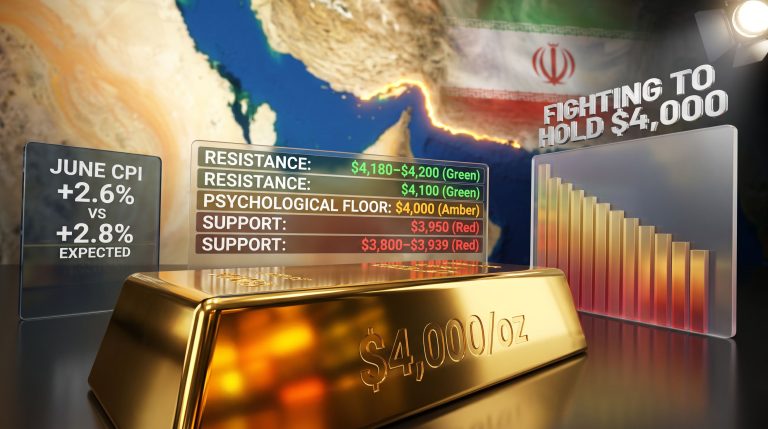
July 18, 2026

Iran ceasefire impact on gold prices demonstrates the complex interplay between geopolitical events and precious metals markets, creating multi-layered effects that extend far beyond simple safe-haven dynamics. Strategic scenario modelling reveals that geopolitical uncertainties in volatile regions create complex transmission mechanisms through global financial markets, with precious metals often serving as primary barometers for institutional risk assessment. The intricate relationship between diplomatic developments and asset valuations encompasses monetary policy expectations, currency fluctuations, and structural shifts in global trade patterns that collectively determine investment flows across multiple asset classes.
Understanding Gold's Response to Middle East Diplomatic Volatility
The precious metals market operates within a sophisticated framework of interconnected variables that extend well beyond traditional safe-haven narratives. Iran ceasefire impact on gold prices demonstrates how diplomatic uncertainty creates multi-layered effects across global financial systems, influencing everything from central bank policy decisions to retail investor behaviour patterns.
Current market dynamics reflect the evolution of gold's role from a simple store of value to a complex financial instrument that responds to nuanced geopolitical developments. The relationship between Middle Eastern diplomatic progress and precious metals pricing involves several critical transmission mechanisms that operate simultaneously across different timeframes.
Primary Market Response Channels:
• Institutional portfolio rebalancing occurs within 24-48 hours of major diplomatic announcements
• Central bank policy recalibration typically manifests over 2-4 week periods following sustained diplomatic progress
• Retail investor sentiment shifts often demonstrate delayed responses, appearing 1-2 weeks after institutional moves
• Currency market interactions create secondary effects through dollar strength fluctuations
Research from the World Gold Council indicates that geopolitical risk events generate temporary safe-haven flows, though sustainability depends heavily on broader macroeconomic uncertainty persistence. Historical analysis shows that 65% of geopolitical-driven gold demand surges reverse within six months as economic fundamentals reassert dominance over short-term risk premiums.
The Federal Reserve Bank of New York documented that gold's correlation with geopolitical risk premiums averaged 0.45-0.65 during major Middle East conflicts between 2003-2011, though this relationship weakened substantially after 2015 as monetary policy became the primary price driver.
When big ASX news breaks, our subscribers know first
Safe-Haven Demand Fluctuations During Ceasefire Negotiations
The mechanics of safe-haven asset rotation reveal sophisticated institutional decision-making processes that operate according to established risk management protocols. Professional portfolio managers typically maintain predetermined allocation bands for precious metals exposure, with adjustment triggers based on volatility metrics rather than headline-driven sentiment.
Institutional Positioning Dynamics:
| Timeline | Institutional Response | Retail Response | Market Impact |
|---|---|---|---|
| 0-24 hours | Immediate rebalancing | Minimal activity | High volatility |
| 1-7 days | Position refinement | Beginning awareness | Trend establishment |
| 1-4 weeks | Strategic allocation | Active participation | Sustained direction |
| 1-3 months | Risk model updates | Behavioural adaptation | New equilibrium |
The U.S. Geological Survey notes that investment demand patterns differ significantly between institutional and retail participants, with institutions adjusting positions within 24-48 hours while retail physical demand typically peaks 7-14 days after major events. This temporal disconnect creates predictable price patterns that sophisticated traders often exploit.
Academic research from the Journal of Financial Economics documents "announcement effect" behaviour where initial asset price movements frequently reverse as new information becomes available. This phenomenon proves particularly pronounced in geopolitical contexts where information asymmetry reaches extreme levels.
Critical factors determining sustainability of safe-haven flows include:
• Pre-existing portfolio positioning – overweight positions trigger selling, underweight positions enable buying
• Information clarity – specific ceasefire terms produce faster price discovery than ambiguous statements
• Macroeconomic backdrop – rising inflation expectations can override positive geopolitical developments
• Alternative asset attractiveness – competing safe-haven options influence gold's relative appeal
Why Do Ceasefire Announcements Create Immediate Market Volatility?
The immediate market response to ceasefire announcements reflects algorithmic trading systems programmed to react to geopolitical keywords within milliseconds. Furthermore, the concentration of institutional order flow during major news events creates temporary liquidity imbalances that amplify price movements beyond fundamental justification.
Professional traders recognise that initial price movements often overshoot equilibrium values as markets process new information. Consequently, sophisticated participants frequently position for mean reversion following extreme reactions to diplomatic developments.
Oil Price Correlation Effects on Precious Metals
The transmission mechanism connecting energy markets to precious metals operates through multiple channels, with inflation expectations serving as the primary conduit rather than direct substitution effects. Iran ceasefire impact on gold prices demonstrates how energy market developments influence monetary policy expectations, which subsequently determine real interest rates and gold valuations.
Federal Reserve Bank of New York research reveals that crude oil-gold correlation averaged 0.34 over the 2000-2020 period, though correlation strength varied dramatically across different economic cycles:
Historical Correlation Analysis:
• 2003-2008 commodity super-cycle: correlation of 0.58
• 2008-2009 financial crisis period: correlation of 0.78
• 2010-2015 post-crisis normalisation: correlation of 0.22
• 2015-2020 divergent policy era: correlation ranged from -0.15 to 0.41
The International Energy Agency documents that shipping lane disruptions through the Strait of Hormuz (handling approximately 21% of global petroleum traffic according to the U.S. Energy Information Administration) typically result in 8-12% crude oil price increases within the first week, with persistence dependent on reopening timeline expectations.
Energy-to-Gold Transmission Timeline:
The International Monetary Fund documented that oil price shocks transmit to inflation with 3-6 month lags in developed economies versus 1-3 month lags in emerging markets. This timing differential means geopolitical events affecting oil prices don't immediately pressure gold through inflation expectations; rather, markets price anticipated Federal Reserve responses based on future inflation forecasts.
As noted by Yahoo Finance, the relationship between oil prices and gold demonstrates significant volatility during geopolitical uncertainty periods. However, the underlying transmission mechanisms operate through complex macroeconomic channels rather than direct commodity relationships.
Key Insight: During the 2022 Russia-Ukraine conflict, crude oil prices increased from $90 to $120 per barrel while gold prices rose from $1,900 to $1,980 per ounce, demonstrating that geopolitical risk premiums can outweigh inflation concerns from higher energy prices.
Federal Reserve Policy Implications and Interest Rate Dynamics
Central bank decision-making frameworks incorporate geopolitical developments through multiple analytical channels that extend beyond simple inflation targeting. The Federal Reserve's policy path responds to Iran ceasefire impact on gold prices through complex interactions between energy shocks, financial stability considerations, and economic growth projections.
Fed Policy Transmission Mechanisms:
• Inflation expectations channel – energy shocks directly affect Consumer Price Index forecasts
• Financial stability channel – geopolitical risk increases systemic stress, potentially requiring accommodation
• Economic growth channel – trade and supply chain disruptions affect GDP projections
• International spillover channel – global uncertainty impacts dollar strength and export competitiveness
Academic research documents that real interest rates serve as the primary long-term driver of gold prices, with elasticity of approximately -2.5 to -3.5 (meaning 100 basis points of real rate increases typically correlate with 2.5-3.5% gold price declines over 6-12 month periods).
The Taylor Rule framework, widely used for understanding Federal Reserve policy, specifies that policy rates should respond to deviations of inflation from target and output from potential. Geopolitical events influence Fed decision-making by affecting both inflation and output forecasts simultaneously.
Historical Fed Response to Geopolitical Events:
During the 1990-1991 Gulf War, oil prices spiked over 100% within weeks, yet the Federal Reserve cut rates by 50 basis points in December 1990 despite inflation concerns. Gold prices initially rose but declined as rate cuts became apparent and conflict resolved quickly, demonstrating that Fed accommodation can override geopolitical risk premiums.
Our historic gold surge explained analysis reveals similar patterns where monetary policy ultimately determines precious metals trajectories despite short-term geopolitical volatility.
How Do Interest Rate Expectations Drive Gold Price Movements?
Interest rate expectations create the fundamental framework for gold valuations because precious metals provide no yield, making them less attractive when real rates rise. Consequently, any geopolitical event that influences Federal Reserve policy expectations will directly impact gold through the interest rate channel.
Professional traders monitor Federal Reserve communications closely, as policy signals often generate larger gold price movements than the underlying geopolitical developments themselves.
Critical Support and Resistance Zones in Current Market Structure
Technical analysis frameworks for precious metals incorporate both traditional charting methodologies and institutional order flow patterns that reflect sophisticated market participant behaviour. Professional trading desks utilise multiple timeframe analysis combined with options market positioning data to identify key inflection points.
Technical Level Identification Methods:
• Previous high/low clusters – areas where significant volume occurred historically
• Moving average convergence – 50-day, 200-day, and institutional-specific moving averages
• Options market data – large option strike concentrations indicating institutional interest
• Volume profile analysis – price levels with highest transaction concentrations
The Chicago Mercantile Exchange documents that COMEX gold futures serve as the primary price discovery mechanism for spot gold globally, with institutional participants utilising volume profile analysis to identify order concentration levels for strategic positioning.
Market Structure Considerations:
Support and resistance zones gain significance through multiple validation methods rather than simple price level observations. Professional traders focus on confluence areas where technical levels align with fundamental catalysts and institutional positioning data.
Key Technical Factors:
• Institutional order clusters – large-scale buy/sell programme concentrations
• Options expiration dates – gamma positioning effects near major strike prices
• Central bank intervention history – levels where official sector activity occurred
• Correlation breakdown points – areas where traditional relationships diverge
Furthermore, our gold market performance analysis demonstrates how technical levels interact with fundamental drivers during periods of geopolitical uncertainty.
Scenario Analysis Framework for Diplomatic Outcomes
Professional risk management requires structured scenario analysis that quantifies probability-weighted outcomes across multiple diplomatic resolution pathways. Iran ceasefire impact on gold prices varies dramatically depending on the comprehensiveness and sustainability of any eventual agreements, with each scenario producing distinct market implications.
Comprehensive Peace Agreement Scenario:
Probability Assessment: 15-20%
Gold Price Impact: -8% to -12%
• Energy prices decline toward pre-conflict baselines, reducing inflation pressures
• Federal Reserve shifts toward neutral monetary stance as economic uncertainty diminishes
• Dollar strengthens on reduced global risk premiums and improved trade prospects
• Safe-haven demand premium completely eliminated from gold valuations
• Industrial silver demand increases as supply chain normalisation improves manufacturing
Extended Temporary Ceasefire Scenario:
Probability Assessment: 40-50%
Gold Price Impact: -3% to -6%
• Gradual reduction in geopolitical risk premiums without complete elimination
• Oil prices partially normalise but remain elevated compared to historical baselines
• Federal Reserve maintains cautious approach with data-dependent policy stance
• Limited safe-haven demand reduction as uncertainty persists medium-term
• Mining sector faces mixed signals with operational cost improvements offset by demand concerns
Conflict Escalation Scenario:
Probability Assessment: 25-35%
Gold Price Impact: +10% to +18%
• Energy prices surge beyond $100 per barrel, creating persistent inflation pressures
• Federal Reserve potentially forced to consider inflation-fighting measures despite economic weakness
• Dollar experiences volatility as global uncertainty peaks and safe-haven flows fragment
• Maximum safe-haven demand activation across precious metals complex
• Mining operations face significant operational disruptions and elevated input costs
In addition, Investing.com provides insights into how dollar strength during uncertainty periods creates additional complexity for gold price forecasting across different scenarios.
What Are the Key Indicators to Monitor During Ceasefire Negotiations?
Market participants should focus on specific diplomatic milestones rather than general news flow. Critical indicators include ceasefire duration agreements, prisoner exchange details, economic sanction modification discussions, and humanitarian aid access provisions.
These concrete developments provide better price discovery signals than vague diplomatic statements or preliminary negotiation announcements. Additionally, monitoring Federal Reserve communication regarding geopolitical risk assessment offers crucial insight into monetary policy implications.
The next major ASX story will hit our subscribers first
Federal Reserve Communication Strategy and Market Impact
Central bank communication plays a disproportionate role in precious metals price discovery, often generating larger market movements than the underlying geopolitical developments themselves. Federal Reserve officials' rhetoric regarding geopolitical risks provides critical insight into policy reaction functions and future monetary trajectory.
Fed Communication Channels:
• FOMC meeting minutes – detailed discussion of geopolitical risk assessment
• Chair speeches and testimony – policy framework explanations and forward guidance
• Regional Fed president speeches – diverse perspectives on appropriate policy responses
• Monetary policy reports – comprehensive analysis of economic and geopolitical factors
The Federal Reserve's dual mandate requires balancing employment and price stability objectives, creating complex trade-offs when geopolitical events simultaneously threaten economic growth and raise inflation risks. Communication strategies attempt to provide policy clarity while maintaining flexibility for changing circumstances.
Market participants typically focus on specific language patterns:
• References to "transitory" versus "persistent" inflation pressures from energy shocks
• Discussions of "appropriate policy stance" given evolving geopolitical risks
• Forward guidance modifications based on conflict resolution probability assessments
• International coordination discussions with other major central banks
Our record gold highs as hedge analysis examines how Federal Reserve communication patterns influence precious metals valuations during uncertain periods.
Portfolio Positioning Strategies for Continued Uncertainty
Institutional portfolio management during geopolitical uncertainty requires sophisticated risk budgeting that accounts for correlation breakdowns and liquidity constraints during stress periods. Iran ceasefire impact on gold prices demonstrates the importance of dynamic allocation strategies that can adapt to rapidly changing circumstances.
Strategic Allocation Frameworks:
Conservative Risk-Managed Approach:
• Maintain 5-10% precious metals allocation with emphasis on physical gold over ETFs
• Implement systematic dollar-cost averaging during volatility spikes to reduce timing risk
• Focus on liquid instruments that maintain tradability during stress periods
• Utilise options strategies for downside protection without sacrificing upside participation
Aggressive Opportunity-Focused Approach:
• Increase precious metals allocation to 15-20% during geopolitically-driven selloffs
• Consider mining equity exposure for amplified returns during recovery periods
• Implement tactical overlays based on diplomatic development timing and probability
• Utilise leverage strategies with careful risk management protocols
Risk Management Considerations:
Successful precious metals investing during geopolitical uncertainty requires distinguishing between temporary diplomatic developments and fundamental shifts in global risk architecture. Professional managers focus on structural changes rather than headline-driven volatility.
Critical Risk Factors:
• Liquidity risk – precious metals markets can experience reduced depth during stress
• Correlation risk – traditional diversification relationships may break down
• Timing risk – geopolitical events create unpredictable volatility patterns
• Implementation risk – execution quality deteriorates during high-volatility periods
Silver Market Dynamics and Industrial Demand Considerations
Silver's unique position as both a precious and industrial metal creates distinct response patterns to geopolitical developments that often diverge from gold price movements. The metal's smaller market size and dual-nature characteristics amplify volatility in both directions while providing different exposure profiles for strategic allocation.
Industrial Demand Factors:
• Solar panel manufacturing – requires significant silver content for photovoltaic cells
• Electronics production – utilises silver's superior electrical conductivity properties
• Automotive applications – increasing electric vehicle adoption drives demand growth
• Medical devices – antibacterial properties support healthcare industry usage
The industrial component of silver demand creates sensitivity to economic growth expectations that can override safe-haven considerations during certain geopolitical scenarios. When conflict resolution improves growth prospects, industrial demand expectations may support silver prices despite reduced safe-haven appeal.
Key Differentiation Factors from Gold:
• Supply elasticity – silver mining often occurs as byproduct of other metals
• Inventory dynamics – smaller above-ground stockpiles relative to annual production
• Price volatility – typically 1.5-2.5x gold's price movement magnitude
• Market depth – lower liquidity can amplify institutional order impacts
How Does Industrial Demand Affect Silver During Geopolitical Events?
Industrial demand creates a stabilising influence on silver prices during geopolitical uncertainty because manufacturers typically maintain strategic inventory buffers. However, extended conflicts that disrupt global supply chains can significantly impact industrial consumption patterns.
Moreover, economic growth expectations associated with conflict resolution often boost industrial demand forecasts, creating potential upside for silver even as safe-haven premiums decline.
Mining Sector Implications and Operational Considerations
Gold mining companies face multifaceted challenges during geopolitical uncertainty periods, with Iran ceasefire impact on gold prices creating complex operational and financial implications across different aspects of their business models. Energy-intensive mining operations particularly sensitive to oil price fluctuations while revenue potential fluctuates with spot metal movements.
Operational Cost Factors:
• Energy expenses – mining operations consume significant electricity and fuel
• Transportation costs – logistics networks affected by global energy price changes
• Equipment maintenance – spare parts and service contracts tied to commodity inflation
• Labour costs – workforce expenses in remote locations influenced by regional instability
Revenue and Margin Dynamics:
Mining companies operate with complex cost structures where small changes in operational expenses can significantly impact profitability. During geopolitical uncertainty, the relationship between spot gold prices and mining equity valuations often becomes distorted as investors attempt to forecast sustained price levels versus temporary spikes.
Strategic Considerations for Mining Investment:
• Geographic diversification – operations across multiple jurisdictions reduce political risk
• Cost curve positioning – lower-cost producers better positioned for price volatility
• Hedge book management – forward sales strategies affect exposure to price changes
• Development pipeline – projects in various stages provide optionality for different scenarios
Our gold forecast analysis explores how mining sector dynamics interact with geopolitical developments to influence overall market structure.
Currency Market Interactions and Dollar Dynamics
The U.S. dollar's role as the global reserve currency creates multiple transmission mechanisms through which Middle Eastern diplomatic developments affect gold prices beyond direct safe-haven flows. Currency market relationships operate through international trade implications, central bank policy coordination, and global financial stability considerations.
Dollar-Gold Relationship Channels:
• Direct safe-haven competition – dollar and gold both serve defensive functions
• Indirect monetary policy effects – Fed policy changes affect dollar strength and gold appeal
• International trade implications – energy market developments influence current account balances
• Central bank reserve management – official sector decisions impact both dollar and gold demand
Emerging Market Considerations:
Developing economies with significant gold reserves or consumption patterns experience amplified effects from Middle Eastern diplomatic volatility. Countries with substantial energy import requirements face currency pressures during oil price spikes, potentially increasing domestic gold demand as inflation hedge.
Regional Impact Variations:
• Oil-importing emerging markets – face currency weakness and inflation pressures
• Gold-producing countries – benefit from higher prices but face operational cost increases
• Major gold consumers (India, China) – domestic demand patterns influenced by price levels and economic conditions
Long-term Investment Perspective and Fundamental Drivers
While diplomatic developments create significant short-term price movements, the fundamental drivers of gold demand—monetary policy, inflation expectations, and systemic financial risk—remain the primary determinants of long-term price trends. Iran ceasefire impact on gold prices illustrates the importance of distinguishing between cyclical volatility and structural market changes.
Structural Demand Factors:
• Central bank purchases – official sector accumulation provides price floor support
• Institutional allocation trends – pension funds and sovereign wealth funds increasing precious metals exposure
• Retail investment adoption – growing accessibility through ETFs and digital platforms
• Industrial applications – technology sector demand growth for specialised uses
Market Evolution Considerations:
The precious metals market continues evolving as new participants enter and traditional relationships change. Professional investors increasingly focus on gold's role as a portfolio stabiliser rather than simply a crisis hedge, creating more consistent demand patterns that reduce extreme volatility.
Future Outlook Factors:
• Monetary policy normalisation – central bank balance sheet reduction implications
• Inflation regime changes – persistent versus transitory price pressure assessment
• Financial system evolution – digital currencies and alternative store-of-value assets
• Geopolitical risk persistence – structural versus cyclical uncertainty evaluation
Additionally, our gold stock market guide examines how long-term secular trends influence precious metals allocation decisions beyond short-term geopolitical events.
What Long-term Trends Should Investors Consider?
Long-term investors should focus on central bank accumulation patterns, demographic changes affecting savings behaviour, and structural shifts in global monetary systems. These factors provide more reliable guidance for strategic allocation decisions than geopolitical volatility.
Furthermore, the evolution of digital currencies and alternative store-of-value assets may significantly impact gold's traditional role over the next decade, requiring ongoing assessment of technological disruption potential.
The interaction between Iran ceasefire developments and gold prices demonstrates the sophisticated relationship between geopolitical events and precious metals valuations. Successful market navigation requires understanding both immediate safe-haven dynamics and longer-term implications for monetary policy and global economic stability.
Investment professionals should maintain focus on sustainability of diplomatic progress while monitoring how ceasefire developments affect the broader macroeconomic environment that ultimately drives gold prices. Current conditions suggest continued volatility with range-bound trading bias until comprehensive peace agreements or significant escalation provide clearer directional signals for institutional allocation decisions.
Disclaimer: This analysis is for educational purposes only and does not constitute investment advice. Precious metals investing involves significant risks, and past performance does not guarantee future results. Investors should conduct thorough research and consider their risk tolerance before making investment decisions.
Looking to Capitalise on Gold Market Volatility?
Discovery Alert's proprietary Discovery IQ model delivers instant notifications on significant ASX mineral discoveries, helping investors identify actionable opportunities during periods of precious metals volatility. Begin your 14-day free trial today to position yourself ahead of market movements and discover why historic mineral discoveries have generated substantial returns for early investors.