July 24, 2026
Global energy markets face mounting complexity as critical maritime chokepoints experience unprecedented restrictions. The interconnected nature of international shipping routes means that disruptions in one region can cascade through multiple energy sectors, affecting crude oil, liquefied natural gas, and petroleum product flows across continents. When geopolitical tensions intersect with these essential trade corridors, the resulting market dynamics reshape everything from pricing mechanisms to strategic reserve policies, particularly affecting Iran Japan shipping arrangements through critical waterways.
Understanding these disruption patterns becomes crucial for energy security strategies, as traditional supply chains must adapt to rapidly changing access parameters and risk assessments that influence both immediate operations and long-term infrastructure investments.
How Iran Japan Shipping Relations Navigate Strategic Waterway Access
The diplomatic framework surrounding maritime transit through the Strait of Hormuz has evolved into a complex system of bilateral negotiations and case-by-case approvals. Iran's Foreign Minister Abbas Araghchi has indicated potential accommodation for Japanese-linked vessels, though formal bilateral statements remain absent from both governments' official communications according to recent diplomatic reports.
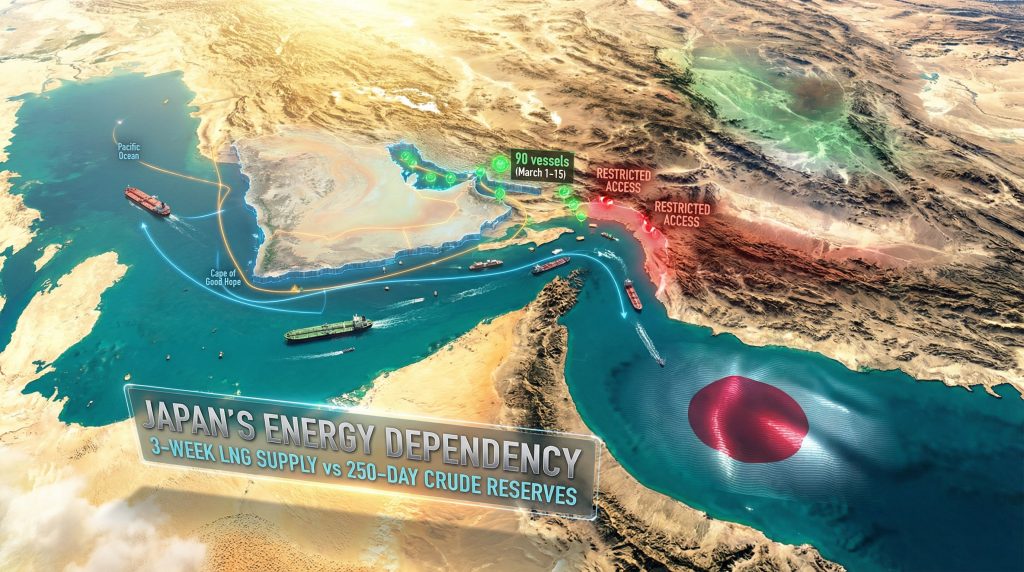
This selective access mechanism reflects broader geopolitical positioning rather than operational constraints. Current vessel traffic data from Lloyd's List Intelligence shows approximately 90 ships transited the strait between March 1-15, representing a significant decline from historical averages. The approval process operates on individual vessel assessment rather than blanket permissions, creating uncertainty for shipping operators and cargo planners.
Strategic Maritime Diplomacy Framework
Iran maintains public positioning that the Strait of Hormuz remains accessible to all nations except the United States and its allies, yet practical implementation involves nuanced diplomatic engagement. Countries including India, Pakistan, China, and Turkey have secured transit permissions for their flagged vessels through ongoing bilateral discussions.
Current Approved Transit Nations:
- India: LPG tankers receiving clearance with officials confirming additional vessel discussions
- Pakistan: Oil tankers successfully crossing with mid-March documented transits
- China: Vessels maintaining informal clearance arrangements for continued passage
- Turkey: Single vessel approval following Iran coordination protocols
The absence of formal agreements means each transit requires individual diplomatic validation, creating operational inefficiencies but maintaining political flexibility for all parties involved. This approach allows Iran to demonstrate selective cooperation while preserving broader strategic messaging about regional access control.
Japan's Energy Import Vulnerability Analysis
Japan's energy security architecture reveals critical dependencies that amplify the significance of Hormuz Strait access. The nation's strategic petroleum reserves provide approximately 250 days of crude oil supply capacity, while LNG storage infrastructure maintains only three weeks of consumption coverage. This disparity creates asymmetric vulnerability patterns across energy sectors.
The geographic concentration of Japan's energy imports through Middle Eastern suppliers increases exposure to single-point-of-failure risks. When combined with limited domestic production capacity and restricted nuclear generation following safety protocol implementations, alternative supply route planning becomes essential for Iran Japan shipping coordination and energy security maintenance.
Japan's Energy Security Metrics:
| Energy Type | Strategic Reserve Capacity | Primary Source Regions | Vulnerability Index |
|---|---|---|---|
| Crude Oil | 250 days | Middle East (80%) | Medium |
| LNG | 21 days | Australia/Indonesia (60%) | High |
| Refined Products | 45 days | Domestic/Regional | Low |
Price transmission mechanisms amplify these vulnerabilities through currency exchange rate effects and industrial demand adjustments. Furthermore, oil price movements amid trade wars create additional pressure on energy-intensive manufacturing sectors that must implement demand management protocols when supply disruptions create cost escalation pressures on operational margins.
When big ASX news breaks, our subscribers know first
Alternative Energy Import Strategies and Route Diversification
Maritime route alternatives present varying cost-benefit profiles for Japanese energy imports during Hormuz Strait restrictions. Cape of Good Hope routing extends voyage times by approximately 14-18 days while increasing fuel costs by 15-20% compared to direct Persian Gulf transit. These extended timelines require additional vessel capacity allocation and inventory management adjustments.
Suez Canal alternatives face capacity constraints during peak transit periods and geopolitical risks from regional stability factors. The canal's daily throughput limitations create bottlenecks when multiple shipping operators simultaneously seek alternative routing options, potentially driving additional delays and cost escalations.
Pacific Basin Energy Supplier Assessment
Australian LNG Export Capacity:
- Current production: 88 million tonnes per annum
- Available export volumes for spot market purchases
- Transportation distance advantage reducing delivery timelines
Indonesian Energy Resources:
- LNG export capacity constraints limiting immediate availability
- Bilateral trade relationship facilitating preferential access negotiations
- Geographic proximity enabling shorter transportation routes
North American LNG Options:
- US export terminal capacity exceeding 12 billion cubic feet per day
- Panama Canal transit requirements creating operational dependencies
- Pricing mechanisms tied to Henry Hub natural gas benchmarks affecting US natural gas forecasts
Strategic diversification requires infrastructure investments in receiving terminal capacity, storage expansion, and flexible supply contract negotiations. Long-term energy security planning must balance cost optimisation with supply reliability across multiple source regions and transportation corridors.
Current Hormuz Strait Traffic Patterns and Access Dynamics
Vessel transit volumes through the Hormuz Strait have experienced substantial reduction following heightened regional tensions. The documented 90-vessel count for the March 1-15 period represents significantly curtailed activity compared to normal operations, with traffic restrictions affecting both commercial shipping decisions and operational risk assessments.
Flag state considerations have emerged as critical factors determining transit approval likelihood. Vessels registered under approved national flags benefit from streamlined clearance processes, while those flagged to restricted nations face operational barriers regardless of cargo type or operator nationality.
Country-Specific Access Analysis
Approved Nation Categories:
-
India: Strategic partnership enabling LPG tanker transit
- Multiple vessel clearances documented
- Ongoing bilateral discussions for expanded access
-
Pakistan: Historical diplomatic relationship facilitating approvals
- Oil tanker transit confirmed in mid-March
- Case-by-case evaluation continuing
-
China: Informal clearance arrangements
- Multiple vessel types maintaining passage
- Economic partnership influencing access decisions
-
Turkey: Diplomatic coordination enabling selective approvals
- Single vessel permission following Iran coordination
- Potential for expanded arrangement negotiations
Seeking Access Nations:
- Japan: Diplomatic discussions ongoing without confirmed transits
- France: European coordination seeking bilateral engagement
- Italy: Parallel diplomatic initiatives for vessel access
The restriction mechanism operates through political rather than operational criteria, creating market uncertainty that extends beyond direct shipping costs to include insurance premiums, alternative routing expenses, and inventory management adjustments for Iran Japan shipping operations.
Maritime Insurance and Risk Assessment Evolution
Insurance market responses to Hormuz Strait restrictions reflect broader risk perception changes affecting Persian Gulf operations. War risk insurance premiums have experienced escalation as underwriters reassess exposure profiles for vessels transiting through geopolitically sensitive waterways.
Protection and Indemnity (P&I) clubs face increasing claims potential from operational delays, cargo damage, and political risk factors. These cost increases ultimately transmit to energy prices through shipping expense adjustments and supply chain risk premiums.
Risk Assessment Factors:
- Attack concerns driving reduced traffic volumes beyond official restrictions
- Flag state considerations creating insurance premium differentials
- Alternative routing costs requiring comprehensive risk-return analysis
- Cargo delay insurance becoming essential for energy shipment planning
Commercial shipping operators implement enhanced security protocols including convoy coordination, communication procedures, and emergency response planning. Consequently, these operational adjustments add complexity and cost to routine energy transportation activities.
Geopolitical Implications of Selective Access Policies
Iran's selective vessel access approach demonstrates strategic use of energy infrastructure for diplomatic leverage. By maintaining differentiated treatment based on bilateral relationships rather than applying blanket restrictions, Iran preserves economic relationships with key trading partners while signalling policy flexibility.
Regional alliance dynamics shift as nations navigate between energy security requirements and geopolitical positioning. Countries with approved access status may face pressure to maintain neutral diplomatic stances, while restricted nations seek alternative supply arrangements and transportation routes.
Asian Energy Partnership Realignment
China-Iran Maritime Cooperation:
- Continued vessel access reflecting economic partnership priorities
- Informal clearance arrangements suggesting institutional cooperation
- Strategic alignment on regional energy infrastructure development
India-Iran Energy Relationship:
- LPG tanker approvals demonstrating maintained commercial ties
- Bilateral discussion framework enabling ongoing negotiation
- Strategic balancing between regional partnerships and broader alliances
Pakistan-Iran Border Dynamics:
- Oil tanker transit approvals reflecting geographic and historical ties
- Economic cooperation priorities overriding broader regional tensions
- Energy import dependency influencing diplomatic positioning
European coordination efforts reveal challenges in collective bargaining approaches when dealing with selective access policies. Individual nation negotiations may prove more effective than multilateral diplomatic initiatives for securing specific vessel transit permissions. However, these developments also reflect broader OPEC production impact on regional energy relationships.
What Are the Long-Term Energy Trade Relationship Transformations?
The current restrictions accelerate existing trends toward energy supply diversification and strategic reserve expansion. Iran Japan shipping arrangements must adapt to incorporate higher supply chain resilience factors, potentially accepting premium costs for reduced geopolitical exposure.
Technology partnerships become increasingly important for LNG infrastructure development, floating storage regasification units, and flexible supply contract structures. These investments enable rapid supply source switching when geopolitical disruptions affect traditional trade routes.
Supply Chain Diversification Imperatives
Pacific Basin Integration:
- Australian LNG expansion projects targeting Asian demand growth
- Indonesian energy infrastructure development enabling increased export capacity
- North American LNG facility construction creating Atlantic Basin alternatives
Strategic Reserve Policy Evolution:
- LNG storage capacity expansion addressing critical vulnerability areas
- Crude oil reserve rotation procedures optimising supply source flexibility
- Emergency sharing agreement activation protocols for crisis management
Bilateral Energy Agreement Framework:
- Long-term purchase contracts incorporating force majeure protection clauses
- Flexible delivery point specifications accommodating alternative transportation routes
- Price adjustment mechanisms reflecting transportation cost variations
Energy security planning increasingly emphasises redundancy and flexibility over cost optimisation, recognising that geopolitical disruptions can rapidly alter traditional supply chain economics and operational assumptions. Moreover, energy transition challenges in other regions add complexity to global energy interdependence patterns.
The next major ASX story will hit our subscribers first
Crisis Management and Energy Security Contingencies
Short-term crisis management protocols require coordination between government energy agencies, commercial importers, and infrastructure operators. Emergency petroleum sharing agreements provide mechanisms for rapid supply reallocation when traditional import routes experience disruption.
Industrial demand management becomes essential when energy supply constraints require consumption prioritisation. Power generation fuel switching capabilities enable grid stability maintenance while preserving strategic reserves for critical economic sectors.
Emergency Response Framework
Immediate Crisis Actions (0-30 days):
- Strategic petroleum reserve drawdown authorisation
- Alternative supplier contract activation
- Emergency shipping arrangement implementation
- Industrial demand curtailment coordination
Medium-Term Adjustments (1-6 months):
- Infrastructure capacity reallocation for alternative supplies
- Bilateral energy agreement negotiation acceleration
- Transportation route diversification investment
- Regional cooperation framework enhancement
Long-Term Structural Changes (6+ months):
- Energy import source geographic rebalancing
- Strategic reserve capacity expansion planning
- Renewable energy deployment acceleration
- Regional energy integration infrastructure development
Technology deployment priorities shift toward energy efficiency improvements, storage capacity expansion, and demand flexibility enhancement. These investments reduce overall import dependency while providing operational flexibility during supply disruption periods.
How Do Regional Partnerships Adapt to Maritime Restrictions?
Asian energy partnerships demonstrate varying degrees of resilience when facing maritime transit restrictions. The bilateral relationship between Japan and regional suppliers becomes crucial for maintaining energy flow continuity during geopolitical tensions. Additionally, strategic partnerships with Australia, Indonesia, and other Pacific Basin suppliers offer alternative pathways for energy imports.
Japan's diplomatic engagement with Iran reflects the complex balance between energy security requirements and broader international alliance commitments. According to analysis of Japan-Iran relations, these relationships require careful navigation of competing geopolitical pressures while maintaining essential energy supply arrangements.
In addition, regional cooperation frameworks enable collective bargaining power when negotiating with energy suppliers and transit authorities. These multilateral approaches provide greater diplomatic leverage than individual nation strategies, particularly for smaller Asian economies dependent on Middle Eastern energy imports.
The development of alternative energy corridors through Central Asia and renewable energy partnerships represents long-term strategic planning beyond traditional maritime routes. However, these alternatives require substantial infrastructure investments and extended implementation timelines that cannot address immediate supply disruption risks.
Investment Disclaimer: This analysis discusses geopolitical scenarios and energy market dynamics that involve substantial uncertainty and risk. Energy security planning requires comprehensive risk assessment and professional consultation. Market conditions, diplomatic relationships, and transportation route availability can change rapidly, affecting energy supply arrangements and pricing. Readers should conduct independent research and seek professional advice before making investment or policy decisions based on this analysis.
The evolution of Iran Japan shipping relationships through the Hormuz Strait demonstrates how energy security intersects with diplomatic engagement and strategic planning. As global energy markets continue adapting to geopolitical complexities, the development of flexible supply arrangements and crisis management capabilities becomes essential for maintaining energy security in an uncertain international environment.
Ready to Invest in the Next Major Mineral Discovery?
Discovery Alert instantly alerts investors to significant ASX mineral discoveries using its proprietary Discovery IQ model, turning complex mineral data into actionable insights. Understand why major mineral discoveries can lead to significant market returns by exploring Discovery Alert's dedicated discoveries page, showcasing historic examples of exceptional outcomes and begin your 14-day free trial today to position yourself ahead of the market.