July 22, 2026
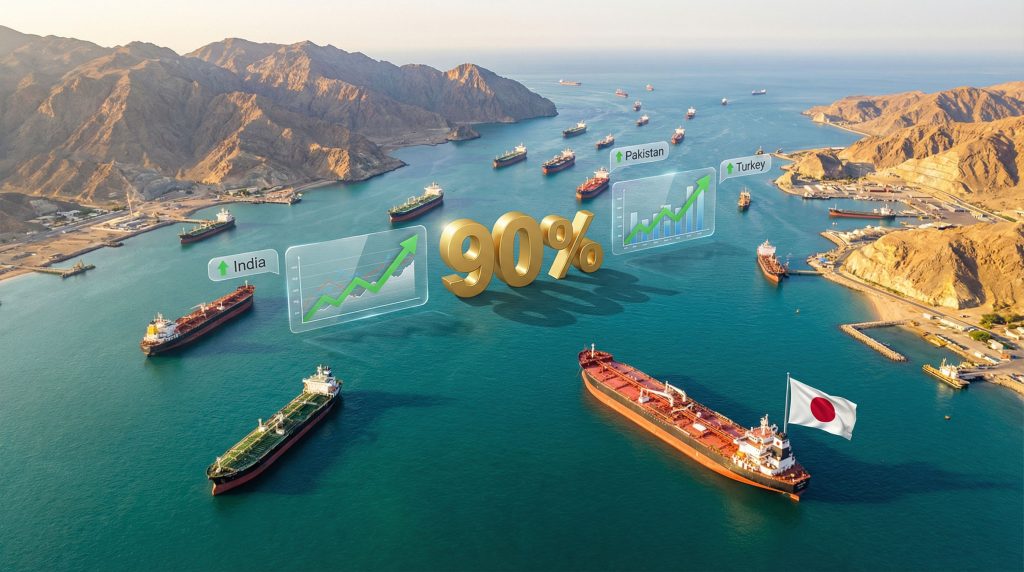
The ongoing tensions in the Persian Gulf have highlighted critical vulnerabilities in global energy supply chains, particularly as Iran ready to let Japanese vessels transit Hormuz becomes a focal point of diplomatic negotiations. The Strait of Hormuz, through which approximately 20% of global petroleum liquids transit daily, represents the world's most strategically important energy corridor. When geopolitical tensions transform routine commercial shipping into selective diplomatic concessions, the fundamental architecture of international energy markets undergoes rapid recalibration.
Maritime chokepoint diplomacy creates cascading effects across interconnected energy systems, forcing nations to balance immediate supply security against long-term strategic independence. The complexity of modern energy supply chains means that disruptions at single transit points can trigger systematic vulnerabilities across multiple sectors simultaneously.
Strategic Calculus Behind Selective Maritime Access
Iran's approach to Hormuz transit negotiations demonstrates sophisticated diplomatic leverage through controlled maritime access rather than complete blockade strategies. This selective authorisation model allows Tehran to maintain diplomatic channels while exercising economic pressure on specific nations. Furthermore, the strategy reflects calculated risk management, as complete closure would trigger immediate international military intervention while selective access creates negotiation opportunities.
Economic Implications of Controlled Transit Policies
Japan's extraordinary dependency on Hormuz transit exemplifies the vulnerability of energy-importing nations. With approximately 90% of Japan's oil shipments passing through this single waterway, Tokyo faces existential energy security challenges when transit becomes uncertain. This dependency ratio significantly exceeds most other major economies, making Japan particularly susceptible to supply disruption.
The four-week conflict period beginning in late February 2026 created immediate market volatility, prompting strategic petroleum reserve releases across multiple consuming nations. Japan's response to deploy emergency reserves within weeks of supply uncertainty demonstrates both the rapid market adaptation mechanisms available and their inherent limitations through finite storage capacity. Consequently, these developments have contributed to a broader oil price rally affecting global markets.
Alternative Supply Route Analysis and Cost Premiums
Energy security contingency planning involves complex cost-benefit calculations for alternative shipping routes. Traditional alternatives to Hormuz transit include:
• Cape of Good Hope routing adding 15-20 days transit time and 15-25% shipping cost premiums
• Suez Canal alternative pathways requiring Middle Eastern political stability
• Pipeline infrastructure development bypassing maritime chokepoints entirely
• Regional supply diversification reducing single-source dependencies
These alternatives require significant lead time for implementation and carry substantial economic penalties compared to direct Hormuz passage. The premium costs associated with alternative routing create ongoing economic incentives for diplomatic resolution rather than permanent supply chain restructuring. Moreover, analysis of WTI and Brent trends indicates how such disruptions influence global pricing mechanisms.
When big ASX news breaks, our subscribers know first
Diplomatic Frameworks for Transit Negotiations
Contemporary maritime diplomacy operates through multiple communication channels, as evidenced by Iran's use of Japanese news agency Kyodo for policy communication rather than formal diplomatic statements. This multi-track approach allows for policy signaling while maintaining plausible deniability and negotiation flexibility.
Japan's Constitutional Constraints in Maritime Security
Japanese participation in Hormuz security operations faces fundamental constitutional limitations established by the post-war pacifist framework. However, 2015 security legislation provides legal mechanisms for overseas force deployment under specific conditions requiring threats to Japan's survival when no alternative means exist for resolution.
Prime Minister Sanae Takaichi's March 2026 briefing to President Trump emphasised these legal constraints rather than policy preferences, indicating Japan's measured approach to balancing alliance obligations with constitutional compliance. This legal framework shapes Japan's negotiation position by limiting military options while emphasising diplomatic solutions.
Bilateral Versus Multilateral Negotiation Structures
The emerging Iran-Japan negotiations represent bilateral engagement models that may establish precedents for other nations seeking transit access. This approach contrasts with multilateral frameworks that could reduce transaction costs but increase stakeholder management complexity.
In addition, the willingness of Tehran to engage in selective negotiations while maintaining broader chokepoint control demonstrates sophisticated diplomatic strategy that balances economic leverage with international relations management.
Timeline Analysis of Negotiation Development
Based on documented diplomatic communications, Iran-Japan discussions reached preliminary stages within the four-week conflict period, suggesting accelerated negotiation timelines during crisis conditions. Foreign Minister Abbas Araghchi's indication that Tehran had "started talks" with Tokyo implies negotiations were nascent as of March 2026, providing baseline data for monitoring diplomatic progress.
Global Energy Market Response Mechanisms
Energy markets demonstrated rapid adaptation to supply uncertainty through established crisis management protocols. The documented sequence of conflict escalation leading to Hormuz closure, subsequent oil price spikes, and strategic reserve releases illustrates the hierarchy of market response mechanisms during supply disruptions.
Strategic Petroleum Reserve Deployment Strategies
Multiple nations activated strategic petroleum reserves within the four-week crisis period, indicating coordinated energy security responses among major consuming countries. This synchronised reserve deployment suggests established international coordination mechanisms for supply crisis management, though specific volume releases and duration planning remain strategically sensitive information.
Oil Price Volatility and Market Psychology
The spike in global oil prices during the conflict period reflects market psychology responses to supply uncertainty rather than actual shortage conditions. Strategic reserve releases from Japan and other nations helped moderate price volatility, demonstrating the market-stabilising function of government-controlled strategic storage systems.
Regional Energy Security Assessment Framework
Different regions demonstrated varying vulnerability levels to Hormuz disruption:
• East Asian economies showing highest dependency ratios and immediate response requirements
• European markets with greater supply diversification but still significant exposure
• North American energy systems with domestic production capacity reducing vulnerability
• Gulf Cooperation Council states facing proximity-based security risks despite production capacity
Geopolitical Implications of Maritime Chokepoint Diplomacy
The precedent established by selective Hormuz passage rights could influence maritime security approaches at other strategic waterways globally. International maritime law frameworks face interpretation challenges when sovereign nations exercise selective passage control over international waters traditionally governed by freedom of navigation principles.
US-Japan Alliance Dynamics Under Energy Security Pressure
President Trump's March 20, 2026 meeting with Prime Minister Takaichi revealed alliance tension regarding burden-sharing expectations for maritime security operations. Trump's unsuccessful pressure on allies to deploy warships for Hormuz reopening demonstrates the limitations of alliance mechanisms when member nations face constitutional or strategic constraints.
The distinction between US expectations for Japanese military support and Japan's actual legal capacity indicates potential alliance system stress testing under energy security threats. Japan's emphasis on legal limitations rather than policy preferences suggests careful navigation between alliance obligations and constitutional compliance.
Three-Party Diplomatic Complexity
The Iran-Japan-US relationship involves asymmetric pressures creating complex diplomatic dynamics:
| Actor | Primary Objective | Leverage Mechanism | Constraints |
|---|---|---|---|
| Iran | Selective market access control | Chokepoint geography | International isolation risk |
| Japan | Energy supply security | Economic diplomacy | Constitutional limitations |
| United States | Alliance burden-sharing | Military capability | Allied autonomy |
This triangular relationship demonstrates how energy security crises create multiple pressure points requiring sophisticated diplomatic management across competing national interests.
Why Does Iran's Selective Transit Policy Matter?
Iran ready to let Japanese vessels transit Hormuz represents more than bilateral negotiation—it establishes precedents for how energy chokepoints might be managed diplomatically rather than militarily. This approach could influence future conflict resolution mechanisms across other strategic maritime corridors.
Long-Term Infrastructure Transformation Scenarios
Energy security vulnerabilities exposed during chokepoint crises accelerate infrastructure investment decisions that might otherwise develop gradually over decades. The documented Japanese deployment of strategic reserves as immediate crisis response suggests energy-dependent nations view existing storage capacity as first-line defence while considering longer-term infrastructure alternatives.
Pipeline Infrastructure Development Imperatives
Hormuz alternatives require substantial capital investment in pipeline infrastructure connecting Gulf production regions with Asian consuming markets through overland routes. These projects involve multi-year development timelines and complex international agreements spanning multiple transit countries.
Energy Storage Capacity Expansion Planning
Strategic petroleum reserve capacity expansion represents immediate-term infrastructure responses to supply security concerns. Nations dependent on single maritime routes face pressure to increase emergency storage duration from current 90-day standards toward 180-day capabilities for extended disruption scenarios.
Renewable Energy Transition Acceleration
Supply security vulnerabilities create political momentum for renewable energy transition as long-term energy independence strategies. While renewable technologies cannot immediately replace petroleum for transportation and industrial applications, supply disruption experiences strengthen policy support for diversification initiatives.
Economic Modelling for Future Transit Scenarios
Scenario planning for energy security requires sophisticated modelling frameworks accounting for diplomatic, economic, and operational variables across multiple potential outcomes. The complexity of modern energy markets necessitates probabilistic analysis rather than single-point forecasting for strategic planning purposes.
Cost-Benefit Framework Analysis
Economic assessment of different transit arrangements reveals varying cost structures and implementation requirements:
| Scenario Type | Implementation Timeline | Economic Impact Level | Diplomatic Requirements |
|---|---|---|---|
| Bilateral Agreements | 2-6 months | Moderate cost premiums | High negotiation intensity |
| Multilateral Frameworks | 6-18 months | Reduced transaction costs | Complex stakeholder management |
| Military Escort Systems | Immediate-3 months | High operational expenses | Escalation risk management |
Supply Chain Resilience Testing Methodologies
Energy security planning requires stress testing supply chain resilience under various disruption scenarios. These assessments evaluate alternative supply sources, transportation routes, and storage capacity utilisation under different duration and intensity assumptions for chokepoint closure events.
Risk Assessment for Chokepoint-Dependent Systems
Investment decision frameworks must incorporate chokepoint vulnerability assessments when evaluating energy infrastructure projects. Single-point failure analysis becomes critical for infrastructure investments exceeding 20-year operational lifespans in politically volatile regions.
The next major ASX story will hit our subscribers first
Strategic Lessons for Energy Security Architecture
The Japan-Iran transit negotiations provide contemporary examples of diplomatic engagement effectiveness during active military conflicts, supporting strategic frameworks emphasising negotiation mechanisms alongside military deterrence capabilities. The documented maintenance of communication channels through crisis periods validates multi-track diplomacy approaches for energy security management.
Diversification Imperatives for Critical Resources
Japan's 90% dependency on Hormuz transit exemplifies vulnerability profiles requiring systematic diversification across supply sources, transportation routes, and storage systems. Energy security architecture must incorporate redundancy across all supply chain components rather than optimising for cost efficiency alone.
Investment Portfolio Implications
Energy infrastructure investment strategies require risk assessment methodologies incorporating geopolitical stability analysis alongside traditional financial metrics. Projects dependent on single maritime chokepoints carry systematic risk premiums requiring higher return thresholds for capital allocation decisions.
Regional Cooperation Framework Development
Collective energy security strategies offer economies of scale for infrastructure development while distributing political risks across multiple participating nations. Regional cooperation reduces individual nation exposure to supply disruption while creating diplomatic leverage for transit negotiations.
What Are the Technology Development Priorities?
Supply disruption experiences identify technology development priorities for energy security enhancement, including advanced energy storage systems, alternative transportation methods, and supply chain monitoring capabilities. Investment in these technologies provides long-term resilience against chokepoint vulnerability.
Furthermore, nations face significant energy transition challenges when balancing immediate security needs with long-term sustainability goals.
Monitoring Diplomatic Progress
The contemporary Iran ready to let Japanese vessels transit Hormuz negotiations demonstrate that even during active military conflicts, diplomatic channels remain functional for energy security discussions when mutual economic interests align with strategic necessities. According to Iran International, these discussions continue to evolve as both nations seek mutually beneficial arrangements.
This precedent validates frameworks emphasising diplomatic engagement as primary tools for energy security management while maintaining military capabilities as backup options. However, the situation remains fluid, and the ultimate success of these negotiations will influence future approaches to maritime chokepoint diplomacy.
The complexity of balancing constitutional constraints, alliance obligations, and energy security requirements creates challenging diplomatic scenarios that require sophisticated management approaches. As Iran ready to let Japanese vessels transit Hormuz becomes reality, other nations will closely monitor these negotiations to understand potential frameworks for similar arrangements.
Disclaimer: This analysis is based on publicly available information and should not be considered investment advice. Energy market conditions and geopolitical situations can change rapidly, affecting the accuracy of forward-looking assessments. Readers should consult qualified energy security specialists and financial advisors before making investment decisions based on chokepoint vulnerability analysis.
Looking for Energy Security Investment Opportunities?
Discovery Alert's proprietary Discovery IQ model delivers real-time alerts on significant ASX mineral discoveries, including critical energy transition minerals that are essential for securing alternative energy infrastructure. As geopolitical tensions highlight the vulnerabilities of traditional energy supply chains, investors who position themselves in companies discovering the minerals powering energy independence gain a strategic advantage in this rapidly evolving market.