June 3, 2026
Market conditions during periods of extreme geopolitical uncertainty demonstrate how interconnected global energy systems can amplify regional conflicts into worldwide economic shocks. Historical precedents reveal that when oil prices surge beyond conventional market expectations, the ripple effects extend far beyond traditional supply and demand fundamentals, triggering cascading transformations across financial markets, industrial sectors, and strategic policy frameworks.
Understanding Iran's Strategic Oil Price Warning
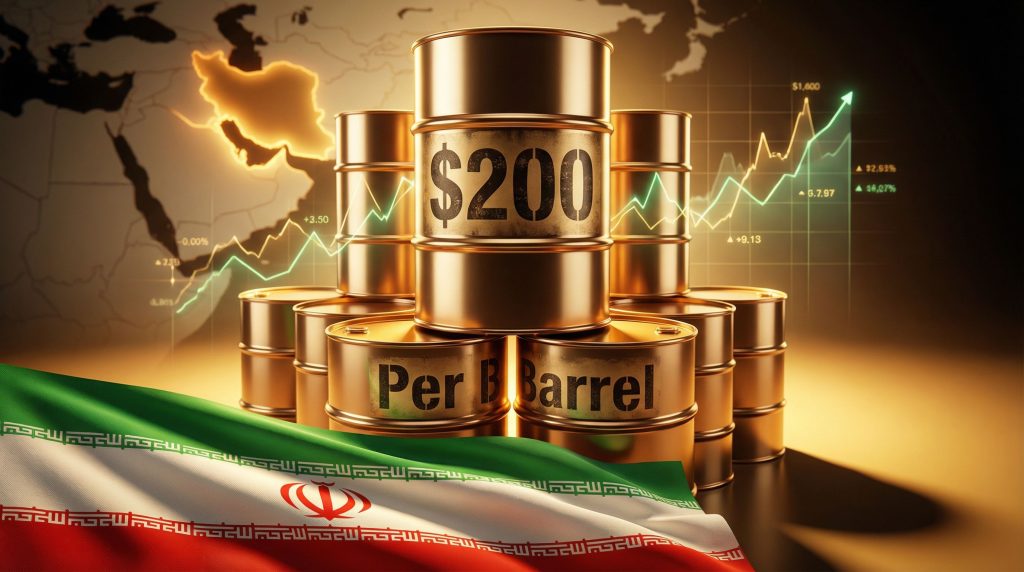
Iran warns of $200 a barrel oil price as regional tensions escalate, signalling a calculated effort to leverage energy markets as instruments of geopolitical pressure. This dramatic price forecast reflects sophisticated understanding of global energy vulnerabilities rather than mere rhetorical posturing. When examining the mechanics behind such extreme price scenarios, several critical factors emerge that could potentially drive crude oil to unprecedented levels.
The current global oil supply operates with minimal buffer capacity, maintaining only 2-3% spare production above daily consumption requirements. This razor-thin margin creates systemic vulnerability to supply disruptions, particularly when critical transportation chokepoints face potential blockade or attack. Furthermore, the Strait of Hormuz alone handles approximately 21% of global petroleum liquids transit, representing roughly 21 million barrels daily through a narrow waterway vulnerable to both military action and strategic mining operations.
Critical Infrastructure Vulnerabilities in Global Energy Supply
Energy market analysts recognise that modern oil distribution systems exhibit far greater complexity and fragility compared to previous decades. The interconnected nature of global supply chains means that disruptions in one region can rapidly cascade through multiple market segments. Consequently, this creates amplification effects that traditional economic models struggle to predict accurately, particularly when considering oil price movements during crisis periods.
Key Vulnerability Points Include:
- Strategic shipping lanes handling multiple petroleum product categories
- Integrated refining and storage facilities concentrated in conflict-prone regions
- Just-in-time inventory systems lacking substantial buffer stocks
- Financial market mechanisms that can multiply physical supply concerns through speculation
The concentration of critical energy infrastructure in geopolitically unstable regions creates what energy security experts term "systemic chokepoint risk." Unlike localised supply disruptions that markets can typically absorb through alternative sourcing, simultaneous threats to multiple critical nodes can overwhelm available mitigation strategies.
When big ASX news breaks, our subscribers know first
Historical Context: Lessons from Previous Oil Crisis Events
Examining past energy crises provides valuable insights into how extreme price scenarios develop and persist. The 1973 Oil Embargo demonstrated how coordinated supply restrictions could drive prices from $3 to $12 per barrel – representing a 300% increase that, when adjusted for inflation, equals approximately $80 per barrel in current terms.
During the Iran-Iraq War (1980-1988), the "Tanker War" phase showed how sustained attacks on shipping infrastructure maintained elevated price volatility for extended periods. Oil prices remained consistently elevated throughout the conflict, with periodic spikes exceeding $40 per barrel (inflation-adjusted: $130+ today). However, the OPEC meeting impact during such crises often determines whether price increases become sustained trends or temporary spikes.
Modern Amplification Factors Include:
- Global energy demand exceeding 100 million barrels daily versus 60 million in 1980
- Reduced strategic petroleum reserve levels following COVID-19 emergency releases
- Increased financial market interconnectedness amplifying price volatility
- Just-in-time supply chain management reducing inventory buffers across industries
These historical precedents suggest that Iran warns of $200 a barrel oil price based on documented market behaviour patterns during sustained regional conflicts, rather than speculative projections without empirical foundation.
Economic Warfare Dynamics and Strategic Calculations
Iran's dramatic oil price predictions reflect sophisticated economic warfare doctrine that views energy markets as force multipliers in asymmetric conflicts. This approach recognises that extreme oil prices can inflict disproportionate economic damage on adversaries whilst potentially generating windfall revenues for remaining producers despite reduced export volumes.
The strategy operates on multiple levels simultaneously. Revenue maximisation occurs when higher prices offset sanctions-related export volume reductions, maintaining economic viability during periods of international isolation. In addition, economic pressure on Western economies supporting regional adversaries creates domestic political challenges for sustained military engagement. Moreover, market influence demonstration shows continued ability to affect global economic conditions despite military disadvantages.
Negotiation Leverage Enhancement
Extreme price scenarios serve as implicit bargaining positions in potential diplomatic resolutions. The prospect of sustained $200 oil creates powerful incentives for international intervention to prevent such outcomes, potentially strengthening Iran's negotiating position in future conflict resolution discussions. Furthermore, analysis of oil price stagnation factors reveals how such dramatic forecasts can influence market sentiment even before actual supply disruptions occur.
This calculated approach reflects understanding that energy price shocks can achieve strategic objectives that conventional military capabilities cannot accomplish directly, particularly when facing technologically superior adversaries.
Transportation Sector Transformation Under Extreme Price Scenarios
When Iran warns of $200 a barrel oil price, the implications for global transportation systems extend far beyond simple cost increases. Such extreme pricing would trigger fundamental structural changes across multiple transportation segments, potentially accelerating technological transitions that might otherwise require decades to implement.
Immediate Transportation Impacts (0-6 months):
- Petrol prices potentially reaching $8-12 per gallon in major consumer markets
- Freight transportation costs increasing 200-400%, reshaping global trade patterns
- Emergency adoption of alternative transportation fuels and efficiency measures
- Rapid deployment of electric vehicle charging infrastructure in commercial sectors
Long-term Structural Changes (6-24 months):
- Supply chain regionalisation as long-distance shipping becomes uneconomical
- Massive acceleration in electric vehicle adoption across commercial fleets
- Development of hydrogen fuel networks for heavy-duty transportation
- Potential economic recession in oil-importing economies triggering demand destruction
However, the transportation sector's response to extreme oil prices would likely demonstrate unprecedented speed in adopting alternative technologies, driven by economic necessity rather than environmental policy mandates.
Financial Market Mechanisms and Speculation Dynamics
Oil markets exhibit extreme sensitivity to geopolitical risk premiums, with historical evidence showing that fear-driven speculation can amplify physical supply disruptions by 300-500%. During the 1979 Iranian Revolution, speculative trading drove price increases far beyond levels justified by actual supply shortages, creating self-reinforcing cycles of panic buying and inventory hoarding.
Modern financial market structures could potentially amplify such effects through several mechanisms. Additionally, the trade war oil impact demonstrates how geopolitical tensions can create sustained volatility patterns that persist beyond immediate crisis periods, according to recent analysis by energy market experts.
Derivative Market Amplification:
- Futures contracts allowing leveraged positions that multiply price volatility
- Algorithmic trading systems responding to price signals faster than fundamental analysis
- Exchange-traded funds and commodity indexes creating passive investment flows
- Options markets generating delta hedging requirements during extreme price movements
Institutional Response Patterns:
- Strategic petroleum reserve releases coordinated among major consuming nations
- Central bank interventions to manage currency impacts from energy import costs
- Emergency credit facilities for energy-dependent industries facing cash flow crises
- International cooperation frameworks for sharing available supply during shortages
Renewable Energy Acceleration and Infrastructure Investment
Sustained oil prices approaching $200 per barrel would create unprecedented economic incentives for renewable energy development, potentially compressing decades of planned energy transition into accelerated timeframes through pure market forces rather than policy mandates. Consequently, this acceleration would demonstrate how market mechanisms can drive technological adoption more effectively than regulatory frameworks.
Technology Acceleration Pathways:
- Solar and wind projects achieving sub-2 year payback periods in most markets
- Battery storage investments surging as grid stability becomes critical infrastructure
- Hydrogen economy development accelerating through industrial demand
- Advanced biofuels and synthetic fuel production becoming economically viable
Infrastructure Investment Reshaping:
- Massive expansion of renewable generation capacity to replace fossil fuel dependence
- Smart grid deployment for demand management during supply constraints
- Alternative fuel distribution networks for transportation and industrial sectors
- Energy efficiency retrofits achieving immediate return on investment
Such dramatic price scenarios would justify previously uneconomical infrastructure investments, potentially creating permanent shifts in global energy system architecture that persist even after geopolitical tensions resolve.
Regional Geopolitical Realignments and Alliance Structures
Extreme oil price scenarios would likely accelerate existing trends toward energy security partnerships, potentially reshaping traditional alliance structures based on shared vulnerability to supply disruptions rather than conventional security concerns. Furthermore, these changes would create new dynamics around oil price rally dynamics that could persist long after immediate crises resolve.
Emerging Cooperation Patterns:
- Enhanced coordination between major oil importers on strategic reserve management
- Technology-sharing agreements between renewable energy development leaders
- New partnerships among importing nations for collective bargaining power with producers
- Infrastructure cooperation for alternative energy transportation and storage networks
Regional Power Dynamics:
- Dramatic empowerment of smaller oil producers through windfall revenue increases
- Weakening of import-dependent economies facing unsustainable energy costs
- Potential breakdown of existing trade relationships as transportation costs become prohibitive
- Acceleration toward energy self-sufficiency as national security priority
These realignments could create lasting changes in international relations that persist beyond the immediate crisis period, fundamentally altering global power balances based on energy resource control and technological capabilities.
Central Bank Policy Challenges and Monetary System Impacts
When Iran warns of $200 a barrel oil price, the implications for global monetary policy create unprecedented challenges for central banking institutions worldwide. Energy-driven inflation spikes of such magnitude would force fundamental reconsiderations of traditional monetary policy frameworks. Moreover, central banks would need to balance competing objectives of price stability and economic growth under extreme stress conditions.
Monetary Policy Dilemmas:
- Inflation targeting becomes extremely difficult with energy-driven price shocks
- Interest rate policies must balance recession risks against accelerating inflation
- Currency interventions to manage import cost pressures on national economies
- Potential coordination requirements between central banks to prevent competitive devaluations
Emergency Financial Mechanisms:
- Enhanced liquidity provision for energy-intensive industries facing cash flow crises
- Special credit facilities for strategic petroleum reserve financing
- International swap lines to support economies facing balance of payment pressures
- Potential development of energy-based financial instruments for crisis management
Market Structure Adaptations and Trading Evolution
Extreme price volatility scenarios would likely trigger fundamental changes in how energy markets operate, potentially leading to new trading mechanisms and risk management frameworks designed to handle previously unimaginable price ranges. For instance, market participants would need enhanced tools to navigate the unprecedented volatility that such scenarios could create.
Financial Market Evolution:
- Enhanced volatility management tools for institutional energy trading
- New derivative instruments specifically designed for extreme scenario hedging
- Potential implementation of circuit breakers for commodity markets during crisis periods
- Development of alternative pricing mechanisms during supply disruption events
Supply Chain Resilience Building:
- Inventory level increases across all energy-dependent industries
- Geographic diversification of critical supply sources and storage facilities
- Investment in alternative transportation fuels and energy efficiency technologies
- Development of local and regional energy production capabilities
The next major ASX story will hit our subscribers first
Long-Term Energy Security Strategy Development
The prospect of $200 oil would likely trigger the largest peacetime energy transition in modern history, driven by economic necessity rather than environmental policy considerations. This transition would demonstrate how extreme price signals can accomplish technological changes that decades of regulatory frameworks have struggled to achieve. Additionally, such scenarios would accelerate investment in technologies previously considered economically unfeasible.
Strategic Technology Priorities:
- Grid-scale energy storage achieving cost competitiveness with fossil fuel alternatives
- Industrial process electrification replacing petroleum-dependent manufacturing
- Advanced synthetic fuel development for aviation and shipping sectors
- Microreactor and distributed generation technologies for energy independence
Infrastructure Development Focus:
- Massive renewable energy generation capacity expansion programmes
- High-voltage transmission networks for efficient renewable energy distribution
- Smart grid technologies enabling demand response during supply constraints
- Alternative fuel production and distribution infrastructure for transportation sectors
Such infrastructure investments would create permanent structural changes in global energy systems, potentially establishing energy independence capabilities that provide long-term strategic advantages beyond the immediate crisis response.
Risk Assessment and Scenario Planning Frameworks
Understanding the pathways to extreme oil price scenarios requires sophisticated risk assessment methodologies that consider multiple simultaneous disruption vectors rather than isolated supply interruptions. However, effective planning must account for cascade effects that could amplify initial disruptions beyond traditional modelling assumptions.
Critical Risk Factors:
- Multiple chokepoint closures: Simultaneous disruption of Strait of Hormuz, Suez Canal, and Bab el-Mandeb
- Cascading conflict expansion: Regional conflicts spreading to involve additional major oil producers
- Infrastructure degradation: Sustained attacks on refining and storage facilities across multiple countries
- Financial market amplification: Speculative trading multiplying physical supply disruption effects
Mitigation Strategy Development:
- International emergency response coordination mechanisms
- Alternative transportation route development and capacity building
- Strategic reserve sharing agreements among major consuming nations
- Technology transfer programmes for rapid renewable energy deployment
Investment Strategy Implications for Extreme Price Scenarios
When Iran warns of $200 a barrel oil price, investors must consider portfolio strategies that can navigate both the immediate crisis period and potential long-term structural changes in global energy markets. Consequently, strategic positioning requires understanding both defensive and opportunistic investment approaches during extreme volatility periods, as highlighted by energy market analysis from industry experts.
Defensive Investment Considerations:
- Energy security technologies offering protection against supply disruptions
- Transportation alternatives that maintain functionality during extreme price periods
- Food security investments as energy costs affect agricultural production and distribution
- Currency hedging strategies for economies heavily dependent on energy imports
Opportunistic Investment Areas:
- Renewable energy infrastructure projects with accelerated payback periods
- Energy storage technologies becoming economically viable at extreme price levels
- Efficiency technologies offering immediate return on investment
- Alternative fuel production capabilities serving desperate market demand
Market Preparation and Risk Management
Understanding the full spectrum of potential outcomes from Iran's oil price warnings requires comprehensive risk assessment that extends beyond traditional energy market analysis. Furthermore, investors and policymakers must prepare for scenarios that could fundamentally reshape global economic relationships.
Strategic Preparation Areas:
- Diversification across energy sources and geographic regions
- Investment in technologies that reduce energy dependency
- Development of flexible supply chain arrangements
- Enhanced cooperation frameworks for crisis response
Long-term Structural Changes:
- Permanent shifts toward energy independence initiatives
- Accelerated technological development in renewable energy sectors
- New international cooperation frameworks for energy security
- Fundamental changes in transportation and industrial energy consumption patterns
Disclaimer: The analysis presented here involves speculative scenarios based on historical precedent and current geopolitical tensions. Actual market outcomes may differ significantly from projected scenarios. Investment decisions should be based on comprehensive risk assessment and professional financial advice appropriate to individual circumstances.
The strategic implications of Iran's $200 oil warning extend far beyond immediate price movements, representing potential catalysts for fundamental transformations across energy systems, geopolitical alliances, and technological development pathways. Understanding these interconnected dynamics enables better preparation for various potential outcomes, from temporary price spikes to sustained high-price environments that could permanently reshape global energy architecture.
Ready to Navigate Energy Market Volatility?
Discovery Alert's proprietary Discovery IQ model delivers real-time alerts on significant ASX mineral discoveries, instantly empowering subscribers to identify actionable opportunities in energy and commodity markets ahead of broader market movements. With extreme oil price scenarios potentially reshaping global energy investments, understand why major mineral discoveries can lead to significant market returns by exploring Discovery Alert's dedicated discoveries page, showcasing historic examples of exceptional outcomes during volatile market conditions.