July 22, 2026
When Tankers Become Weapons: The Geopolitics of Maritime Chokepoints
Throughout modern energy history, the world's most consequential conflicts have rarely begun in boardrooms or on trading floors. They begin in narrow straits, aboard vessels flying obscure flags, and in the early hours before news wires carry the first bulletins. Iran seizes sanctioned oil tanker in Gulf of Oman incidents are not new, but the speed at which tanker seizures now transmit into crude futures, airline balance sheets, and consumer fuel prices has accelerated dramatically.
Understanding how a single boarding operation in the Gulf of Oman can ripple across Asian refineries, European airlines, and American gas stations requires unpacking a supply chain that most people never think about until prices spike. Furthermore, crude oil geopolitical risks have increasingly made these waterway tensions a central driver of global energy pricing.
When big ASX news breaks, our subscribers know first
The Strait of Hormuz: A 33-Kilometre Bottleneck With Global Consequences
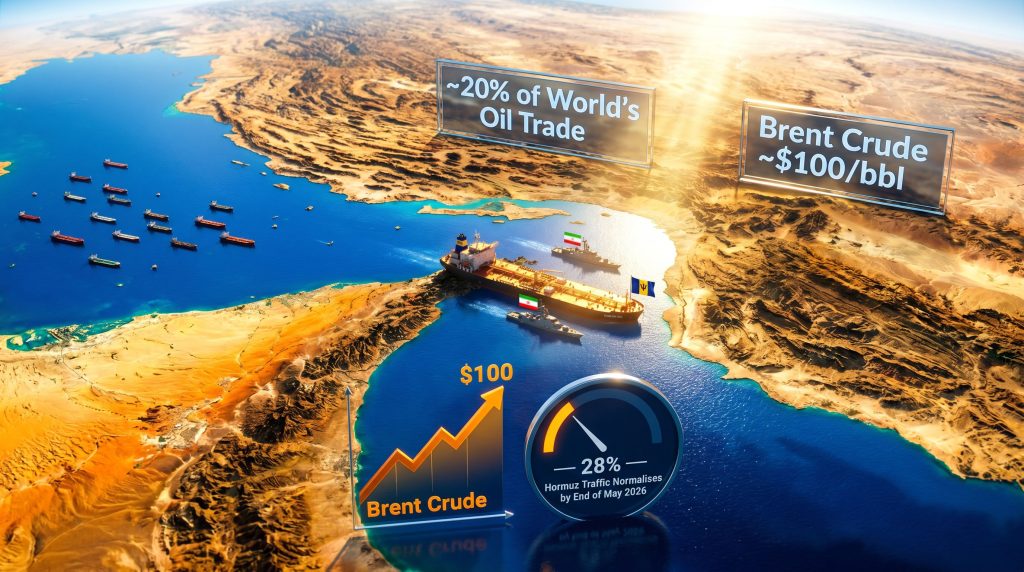
The Strait of Hormuz is, by most energy security assessments, the single most consequential maritime passage on earth. Roughly 20% of the world's total traded oil moves through this narrow channel connecting the Persian Gulf to the Gulf of Oman. At its narrowest navigable point, the waterway measures approximately 33 kilometres wide, with designated inbound and outbound shipping lanes each spanning just a few kilometres. There is no structurally equivalent alternative for the volume of crude it facilitates.
What makes the Strait uniquely fragile is the geographic compression of interests it creates. Iran controls the northern coastline. The UAE and Oman border the southern and eastern edges. U.S. naval assets transit the corridor. Every major crude importer in Asia depends on uninterrupted passage. When military exchanges, tanker seizures, and political ultimatums collide in that space simultaneously, the consequences scale globally and immediately.
Iran has a documented history of using maritime enforcement as a dual-purpose instrument: a legal mechanism on paper, and a geopolitical pressure tool in practice. Seizures are typically presented under domestic legal frameworks involving anti-smuggling operations, sanctions violations, or interference with national petroleum interests. The underlying function, however, is strategic signalling directed at adversaries, trading partners, and international institutions simultaneously.
Iran Seizes Sanctioned Oil Tanker in Gulf of Oman: The Ocean Koi Incident
The most recent iteration of this pattern crystallised when Iran seizes sanctioned oil tanker in Gulf of Oman, with Iranian army commandos boarding the Barbados-flagged tanker Ocean Koi, also known by the alternate vessel name Jin Li. Iranian authorities directed the vessel toward Iran's southern coastline following the boarding operation. According to Reuters, the seizure was confirmed by Iranian state media shortly after the operation concluded.
The Ocean Koi had been operating under U.S. Office of Foreign Assets Control (OFAC) sanctions since February 2025, placing it within the broader category of vessels that navigate outside standard Western insurance, flagging, and tracking frameworks. Iran's official state news agency IRNA characterised the seizure as a military enforcement action, describing the vessel as one that had been transporting Iranian crude oil whilst attempting to interfere with the country's export operations.
Semi-official outlet Tasnim similarly framed the seizure as a response to perceived interference with Iranian energy interests, though neither outlet provided independent documentation of the alleged cargo details or the vessel's operational mandate at the time of reporting.
The dual naming of the vessel — Ocean Koi and Jin Li — is itself a detail worth scrutinising. Vessels operating in the sanctioned tanker ecosystem frequently undergo name changes, re-flagging operations, and ownership restructuring as evasion mechanisms. A ship that was the Jin Li under one flag registry becomes the Ocean Koi under another, with the paper trail deliberately fragmented across multiple jurisdictions.
The Shadow Fleet: How Sanctioned Tankers Operate
The Ocean Koi's OFAC-sanctioned status raises a less-discussed structural question about how these networks actually function. Iran's shadow tanker fleet operates as a logistical grey zone, relying on several overlapping mechanisms:
- Non-Western flagging: Using registries in jurisdictions with limited enforcement capacity or political alignment with Western sanctions regimes
- AIS manipulation: Disabling or spoofing Automatic Identification System transponders to obscure vessel location and movement history
- Fragmented ownership: Layering ownership through shell companies across multiple jurisdictions to prevent attribution
- Informal insurance: Substituting standard Protection and Indemnity club coverage with informal arrangements that offer no recourse under Western legal frameworks
- Port-to-port obscurity: Using ship-to-ship transfers at sea to mask cargo origins before entering legitimate port networks
The irony embedded in the Ocean Koi incident is considerable. A vessel operating outside the Western sanctions compliance framework was then seized by the very government whose oil it was allegedly carrying. This layered contradiction reflects the fundamental instability of shadow fleet operations: exposure to U.S. enforcement actions from one direction, and potential Iranian seizure from another, with no diplomatic protection available from any quarter.
The Military Exchange That Preceded the Seizure
The tanker seizure did not occur in isolation. U.S. Central Command (CENTCOM) reported that Iranian forces launched a combined missile and drone barrage targeting three U.S. warships transiting the Hormuz chokepoint. No American vessels were struck. U.S. forces subsequently conducted retaliatory strikes against Iranian missile and drone launch infrastructure along the corridor.
Iranian state broadcaster Press TV alleged that U.S. forces targeted two Iranian oil tankers in the Hormuz area during these exchanges and struck civilian areas along Iran's southern coast, including Qeshm Island, with what Tehran described as cooperation from unnamed regional partners. These claims were not independently corroborated at the time of reporting.
The United Arab Emirates, positioned directly in the trajectory of Iranian retaliatory fire, confirmed that its air defence systems were actively intercepting inbound Iranian missiles and drones targeting Emirati territory. This confirmation from a third party provides corroborating evidence that the military exchange involved real ordnance directed at multiple targets beyond U.S. naval assets.
President Trump publicly maintained that a month-long ceasefire framework remained nominally in effect, whilst simultaneously warning Tehran that failure to accept a peace agreement and reopen the Hormuz chokepoint would result in intensified military action. The simultaneous assertion of ceasefire status and escalation warnings reflects the ambiguous operational environment in which the Ocean Koi seizure occurred.
The suspension of the administration's proposed naval tanker escort programme, referred to in market commentary as Project Freedom, added another destabilising variable. The pause removed a mechanism that had been providing some assurance to tanker operators considering Hormuz transits, and its suspension directly contributed to renewed vessel strandings and elevated market risk premiums (OilPrice.com, May 8, 2026).
How Oil Markets Are Pricing the Crisis
Financial markets have moved decisively in response to the compounding disruptions. Current crude oil prices showed Brent crude futures trading at approximately $100 per barrel during the height of the crisis, with WTI futures holding near $94 per barrel (OilPrice.com, May 8, 2026). Average U.S. retail gasoline prices surpassed $4.50 per gallon, approaching levels not seen in roughly four years.
*Prediction market data from Polymarket placed the probability that Strait of Hormuz traffic returns to normal by the end of May 2026 at just 28%, with 73% odds favouring continued disruption beyond that date. This represents a market-derived consensus that the crisis is structural rather than episodic.*
The downstream consequences extend well beyond crude benchmarks:
- Global jet fuel exports reached a 10-year seasonal low in April 2026, reflecting compounding supply disruptions across the refinery and shipping ecosystem
- More than 40 India-bound vessels remained stranded near Hormuz, with cascading implications for India's refining sector and domestic inflation trajectory
- Lufthansa publicly assessed that a sustained Hormuz closure could add an estimated $2 billion in additional fuel costs to its operations, illustrating how energy supply disruptions transmit rapidly through the aviation sector (OilPrice.com, May 8, 2026)
- Germany moved to secure emergency jet fuel supplies from Israel as normal European supply channels were constrained by the transit disruption
- Iraq, seeking to maintain buyer interest despite elevated transit risk premiums, offered significant discounts on crude shipments routed through Hormuz
Crude Price Scenario Modelling
| Scenario | Probability (Polymarket, May 2026) | Key Conditions | Brent Price Implication |
|---|---|---|---|
| Hormuz normalises by end of May 2026 | 28% | Ceasefire stabilises; diplomatic framework agreed | Correction toward $80-$85/bbl |
| Prolonged disruption through Q3 2026 | ~50% | Negotiations stall; intermittent military posturing | Sustained $100-$115/bbl range |
| Full Hormuz closure or major escalation | ~22% | Direct conflict expansion; breakdown of ceasefire | Spike potential above $130/bbl |
Disclaimer: Price scenarios and probability estimates reflect prediction market data and analyst assessments available as of early May 2026 and are not investment advice. Energy market conditions can shift rapidly in response to geopolitical developments.
OPEC+ Fractures and the UAE's Strategic Production Reserve
Beyond the immediate price disruption, the crisis is accelerating structural changes within OPEC+. These developments are further compounding existing OPEC market influence concerns that analysts had already flagged heading into 2025. UBS Energy Research, drawing on analysis from Kpler's Middle East and OPEC+ Research division, assessed that the UAE's effective exit from OPEC's coordinated production framework materially erodes the group's long-term price management capacity.
The UAE controls approximately 30% of OPEC's total spare production capacity, making its alignment or defection a pivotal variable in any supply response scenario (OilPrice.com, May 8, 2026). The UAE's nameplate production capacity stands at approximately 5 million barrels per day (mb/d), versus its conflict-period output of roughly 2.1 mb/d. This gap of nearly 2.9 mb/d represents an enormous theoretical buffer against further supply shocks. In practice, however, that buffer is being managed carefully to avoid triggering a price war with Saudi Arabia.
The variation in recovery timelines across OPEC+ members reveals a structural asymmetry that markets rarely price in during peacetime:
- Saudi Arabia and the UAE can restore pre-conflict production levels within weeks, owing to disciplined shutdown protocols and well-maintained infrastructure
- Iraq and Kuwait may require up to 6 months to return to prior output levels, reflecting less structured shutdown processes during the conflict period and greater infrastructural disruption
This disparity means that even if a ceasefire holds, the crude supply restoration curve will be uneven across producing nations, sustaining price premiums longer than a simple reopening of Hormuz would imply.
The next major ASX story will hit our subscribers first
Who Carries the Greatest Exposure? Asia, Europe, and the Supply Chain Cascade
Asian economies bear the most concentrated exposure to Hormuz disruption. India, South Korea, Japan, and China collectively represent the dominant consumer base for Persian Gulf crude, and their import dependency on the Strait creates structural vulnerability that cannot be hedged away in the short term.
The arrival of the first oil tanker to reach South Korea through Hormuz since the conflict began was reported as a notable milestone, underscoring how severely prior transit restrictions had curtailed normal supply flows (OilPrice.com, May 8, 2026). In addition, oil market trade shocks of this magnitude have historically reshaped sourcing relationships for years beyond the initial disruption.
Brazil has emerged as an emergency alternative crude supplier for Asian buyers, with its Atlantic-basin exports filling portions of the supply void created by Hormuz disruptions. This geographic pivot reflects a broader restructuring of global crude trade flows that is likely to persist even after Hormuz reopens, as buyers diversify sourcing to reduce chokepoint concentration risk.
European energy markets face a different but equally serious exposure profile:
- Traders were pricing in scenarios where European gas prices could double ahead of winter, reflecting compounding supply anxieties
- EU imports of Yamal LNG hit record levels ahead of an anticipated ban on Russian LNG, compressing the range of viable alternatives
- Energy security pressures prompted the EU to reconsider existing domestic gas drilling restrictions, signalling a shift in the political calculus around fossil fuel production
Meanwhile, U.S. fuel exports reached record highs as the Hormuz crisis reshuffled global energy trade patterns. American refiners and exporters captured market share vacated by disrupted Gulf supply chains, a dynamic that simultaneously benefits U.S. producers and underscores the structural shift underway in global energy geography.
The Infrastructure Gap: Why There Is No Quick Alternative to Hormuz
A frequently raised question in the wake of any Hormuz disruption is whether alternative export routes can absorb the volume currently flowing through the strait. The honest answer, as assessed by energy analysts consulting for UBS Energy Research, is that the Iran conflict may well catalyse meaningful investment in pipeline infrastructure designed to bypass Hormuz, but any such capacity will require a minimum of 2 to 3 years to develop into operationally significant throughput (OilPrice.com, May 8, 2026).
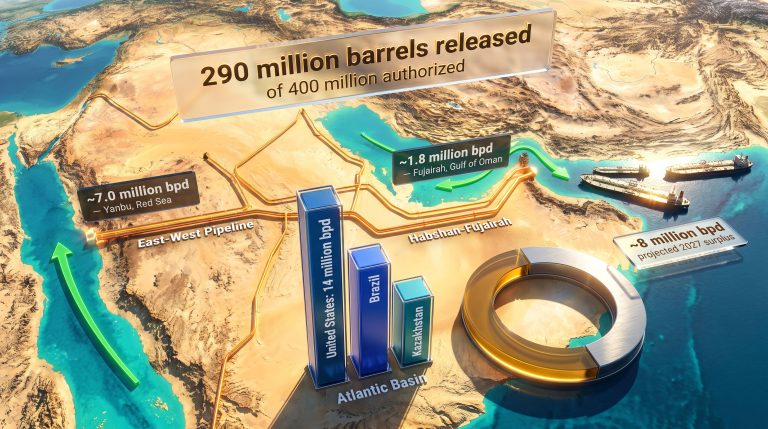
Pakistan has opened Iran land corridors as regional actors scramble to identify viable transit alternatives. Saudi Arabia operates the East-West Pipeline with capacity to move crude to Red Sea export terminals, partially bypassing Hormuz. The UAE's Habshan-Fujairah pipeline provides a partial bypass route. However, none of these existing alternatives approach the volume capacity of the Strait itself.
This infrastructure gap is not merely a logistical inconvenience. It is the fundamental reason that Hormuz retains its outsized geopolitical leverage. Consequently, until alternative routes achieve comparable throughput, the Strait remains irreplaceable, and any actor capable of threatening transit can extract disproportionate strategic concessions from a global economy that has no short-term workaround. This reality is further complicated by broader geopolitical trade disruption patterns that are simultaneously pressuring supply chains across multiple regions.
Frequently Asked Questions
Why did Iran seize the Ocean Koi tanker?
Iranian authorities characterised the seizure as a military enforcement action against a Barbados-flagged vessel they alleged was interfering with Iran's oil export operations. The Ocean Koi had been subject to U.S. OFAC sanctions since February 2025. Iranian commandos boarded the vessel in the Gulf of Oman and directed it toward Iran's southern coast. Reporting from Bloomberg confirmed that Iranian army forces detained the tanker, though the specific cargo claims and operational details provided by Iranian state media had not been independently verified at the time of reporting.
What is the shadow tanker fleet and how does it operate?
The shadow fleet refers to vessels that circumvent Western sanctions by operating outside standard insurance, flagging, and tracking frameworks. Common operational characteristics include non-Western flag registries, disabled or spoofed AIS transponders, layered shell company ownership structures, and informal insurance arrangements. These vessels exist in a regulatory grey zone that exposes them simultaneously to Western enforcement actions and, as the Ocean Koi incident demonstrates, potential seizure by the states whose interests they ostensibly serve.
When might Hormuz traffic return to normal?
Prediction market data as of early May 2026 indicated only a 28% probability that Hormuz traffic normalises by the end of May 2026. The dominant market expectation reflected continued disruption, with sustained Brent crude pricing in the $100 to $115 range under the base case scenario. Full closure represents a tail risk scenario with potential to drive Brent above $130 per barrel.
How long would it take to build alternative pipeline routes?
Energy analysts assessed that meaningful new pipeline capacity capable of bypassing the Strait of Hormuz would require a minimum of 2 to 3 years to develop. Existing partial bypass routes, including Saudi Arabia's East-West Pipeline and the UAE's Habshan-Fujairah pipeline, fall significantly short of the transit volumes currently dependent on Hormuz passage.
This article is intended for informational purposes only and does not constitute investment, financial, or legal advice. All price data, probability estimates, and geopolitical assessments reflect conditions reported as of May 8, 2026, and are subject to rapid change. Readers should consult qualified advisers before making financial decisions based on energy market conditions.
Want to Profit From the Commodity Volatility Driving Today's Energy Crisis?
Geopolitical shocks like the Hormuz disruption send cascading effects through commodity markets well beyond crude oil — and Discovery Alert's proprietary Discovery IQ model scans ASX announcements in real time, delivering instant alerts on significant mineral discoveries that position subscribers to act ahead of the broader market. Explore how historic mineral discoveries have generated substantial returns and start your 14-day free trial today to secure a market-leading edge before the next major opportunity emerges.